

TL;DR:
- Lean manufacturing maintenance practices use proactive strategies to improve equipment reliability and reduce downtime. They build on Total Productive Maintenance by involving all production roles in ownership and continuous improvement efforts. Success depends on proper implementation, management commitment, and combining TPM with preventive maintenance and kaizen principles.
Lean manufacturing maintenance practices are proactive, waste-reducing strategies that keep equipment running reliably while minimizing the cost of unplanned downtime. The recognized industry term for the most complete version of this approach is Total Productive Maintenance, or TPM, a production system developed by the Japan Institute of Plant Maintenance (JIPM) that extends maintenance responsibility across every production role. When combined with preventive maintenance scheduling and continuous improvement methods like kaizen, these practices target the Six Big Losses that erode Overall Equipment Effectiveness (OEE). Operations managers who apply them systematically see measurable gains in throughput, labor efficiency, and asset life.
How lean manufacturing maintenance practices build on TPM

TPM is not a maintenance department program. It is a production system that distributes equipment ownership across operators, technicians, and managers. That distinction matters because most OEE losses originate at the operator level, not in the maintenance shop.
The “Total” in Total Productive Maintenance signals total participation across all production roles. This shifts accountability for basic equipment health from a specialized team to every person who touches a machine.
TPM is built on eight pillars, and three of them drive the majority of early results:
| TPM Pillar | Core Activity | Primary Outcome |
|---|---|---|
| Autonomous maintenance | Operators clean, inspect, and lubricate their own equipment | Early detection of abnormalities before failures occur |
| Planned maintenance | Technicians schedule tasks using failure data and criticality rankings | Reduced unplanned downtime and lower repair costs |
| Focused improvement | Cross-functional teams run kaizen events targeting specific losses | Measurable OEE gains tied to defined loss categories |
A mature TPM program regularly achieves 15–20 point improvements in OEE scores within 18–24 months. That is not a marginal gain. A 15-point OEE improvement on a single production line can translate directly into additional output without adding capital equipment.
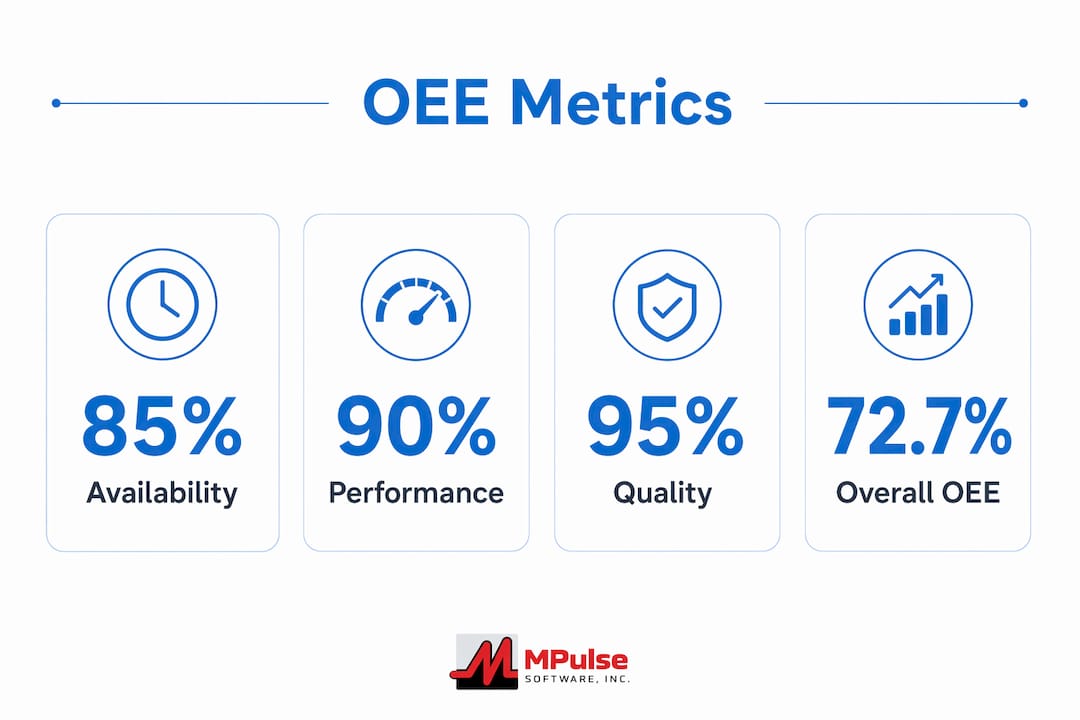
OEE is the gold standard metric in lean maintenance, combining availability, performance, and quality into one number. Tracking OEE weekly gives operations managers a clear signal when a pillar is underperforming.
Pro Tip: Start TPM implementation with focused improvement projects on your highest-loss equipment before rolling out autonomous maintenance plant-wide. Early, visible wins build the management commitment that sustains the harder cultural work ahead.
TPM implementation typically follows a phased approach: initial 5S and cleaning, then autonomous maintenance training, then planned maintenance integration, then full pillar deployment. Skipping phases to accelerate results is the most common failure mode. Teams that rush past operator training find that autonomous maintenance benefits evaporate within months.
What are the best preventive maintenance practices within lean manufacturing?
Preventive maintenance (PM) is the scheduled, condition-aware servicing of assets before failures occur. Within lean production systems, PM works alongside TPM to reduce reactive work orders and stabilize throughput. The two approaches reinforce each other: TPM builds operator ownership, while PM gives technicians a data-driven schedule to follow.
PM programs succeed when they include four foundations: asset criticality analysis, data-driven scheduling, technician training, and continuous program review. Programs that lack even one of these elements show high failure and inefficiency rates.
A practical PM implementation follows this sequence:
- Build an asset inventory. Catalog every piece of equipment with its function, age, and failure history before writing a single PM task.
- Rank by criticality. Assign each asset a criticality score based on its impact on safety, quality, and throughput. High-criticality assets get more frequent and detailed PM tasks.
- Select the right strategy. Not every asset needs time-based PM. Some assets are better served by condition-based monitoring or reliability-centered maintenance principles.
- Set schedules using real data. Use actual failure history and operating context, not just OEM recommendations. OEM intervals assume ideal conditions that rarely exist on a production floor.
- Train technicians on task execution. A PM task is only as good as the person performing it. Documented procedures and skills verification reduce task variation.
- Track KPIs and adjust. Measure PM compliance, mean time between failures (MTBF), and unplanned downtime monthly. Adjust intervals when data shows over-maintenance or under-maintenance.
Treating PM primarily as a compliance activity causes inefficiency and waste. Compliance-driven PM produces checklists that get signed without genuine inspection. Reliability-focused PM produces data that improves the schedule over time.
Pro Tip: Review your PM schedule quarterly and flag any task that has never found a defect in 12 months. That task is a candidate for extended intervals or elimination, freeing technician time for higher-value work.
The frequency-without-data scheduling error is the most damaging PM mistake in lean environments. Over-maintenance introduces iatrogenic failures, meaning failures caused by the maintenance activity itself, such as disturbed seals or misaligned components after unnecessary disassembly.
How do continuous improvement and value stream mapping enhance lean maintenance?
Continuous improvement, known in lean production as kaizen, applies structured problem-solving to maintenance processes the same way it applies to production processes. The goal is to eliminate waste in how maintenance work is planned, executed, and reviewed, not just in what gets maintained.
Value stream mapping (VSM) is the most effective tool for identifying waste in maintenance workflows. A maintenance VSM traces the full path of a work order from fault detection through parts procurement, scheduling, execution, and closure. Teams that map this process typically find delays in parts availability, unclear task prioritization, and redundant approval steps that add no reliability value.
Structured problem-solving cycles strengthen this work. The most widely used methods in lean maintenance are:
- 5 Why analysis. Ask “why” five times after a failure to reach the root cause rather than the symptom. A bearing failure is not caused by wear. It is caused by inadequate lubrication, which was caused by an unclear PM task, which was caused by missing technician training.
- Fishbone diagrams. Map all potential causes of a failure across categories: machine, method, material, manpower, measurement, and environment. This prevents teams from fixing only the most obvious cause.
- Focused improvement (kobetsu kaizen). Assign a cross-functional team to a specific, measurable loss. Set a target, run a structured improvement cycle, and verify results before closing the project.
- Operator feedback loops. Operators who run equipment daily notice early signs of degradation that maintenance schedules miss. A formal process for capturing and acting on operator observations is a low-cost, high-return improvement tool.
Focused improvement projects targeting the Six Big Losses generate the majority of OEE improvements in early TPM phases. This means the biggest gains come not from better PM schedules alone, but from kaizen events that attack specific, named losses with measurable targets.
Lean maintenance stabilizes manufacturing value streams by reducing micro-stops from equipment issues. Without this stability, Just-in-Time production cannot sustain flow because small, frequent equipment interruptions break the production rhythm that JIT depends on. Pairing VSM with design for manufacturability principles at the product design stage reduces maintenance complexity before equipment ever reaches the floor.
What common mistakes undermine lean maintenance implementation?
Most lean maintenance programs fail not because the methods are wrong, but because implementation shortcuts create gaps that compound over time. Recognizing these patterns early prevents costly regression.
The most damaging mistakes include:
- Treating autonomous maintenance as cleaning only. Most operations managers wrongly prioritize equipment cleaning over operator skill-building. Cleaning is step one of seven in autonomous maintenance. Teams that stop there miss the inspection, lubrication, and standardization steps that deliver lasting reliability gains.
- Frequency-without-data scheduling. Relying on OEM maintenance intervals without adjusting for actual operating conditions creates PM schedules that are either too frequent or too infrequent. Both outcomes increase costs and failure rates.
- Weak management commitment. Sustained autonomous maintenance requires ongoing training, audits, and visible management support. When leadership treats TPM as a one-time project rather than an operating standard, gains disappear within months.
- Skipping criticality analysis. Applying the same PM intensity to every asset wastes technician time on low-risk equipment while under-serving critical assets.
- No KPI tracking. Teams that do not measure OEE, PM compliance, and MTBF cannot distinguish between a program that is working and one that is stagnating.
The corrective actions are direct. Use audit gates at each TPM phase to verify operator competency before advancing. Invest in personnel qualification tracking to document training completion and skill verification. Build PM intervals from actual failure data, and review them on a fixed quarterly cycle. Assign a senior operations leader as the TPM sponsor with visible, regular involvement in pillar reviews.
Key Takeaways
Lean manufacturing maintenance practices deliver the greatest results when TPM, preventive maintenance, and continuous improvement work together as a single system rather than separate initiatives.
| Point | Details |
|---|---|
| TPM requires total participation | Distribute equipment ownership to operators, not just the maintenance department. |
| OEE drives decision-making | Track availability, performance, and quality weekly to identify which TPM pillar needs attention. |
| PM schedules need real data | Use actual failure history and operating context to set intervals, not OEM defaults alone. |
| Kaizen targets named losses | Run focused improvement events against specific Six Big Losses for measurable OEE gains. |
| Management commitment sustains gains | Autonomous maintenance benefits disappear without ongoing audits, training, and leadership visibility. |
What I’ve learned from watching lean maintenance programs succeed and fail
I’ve watched well-funded TPM programs collapse within a year of launch, and I’ve seen modest programs at mid-size manufacturers deliver consistent OEE gains for a decade. The difference is almost never the methodology. It is always the cultural infrastructure around it.
The programs that succeed treat the improve maintenance strategy conversation as a leadership priority, not a maintenance department project. Senior operations managers attend pillar reviews. They ask specific questions about OEE trends. They hold line supervisors accountable for autonomous maintenance audit scores. That visibility signals to operators that the program is real and permanent.
The programs that fail delegate TPM to a maintenance manager and then disappear. Within six months, operators stop doing autonomous maintenance tasks because no one checks. PM compliance drops because the schedule was never adjusted from the initial OEM defaults. The CMMS becomes a work order log rather than a reliability tool.
Technology matters, but it is the second priority, not the first. A CMMS that automates PM scheduling and tracks KPIs is genuinely valuable. But a CMMS installed without operator training and management commitment becomes expensive shelfware. Get the cultural foundation right first. Then use technology to scale and sustain what your team has already built.
The operations managers I respect most treat lean maintenance as a permanent operating discipline, not a project with a completion date. They review OEE data the same way they review production output, every week, without exception.
— Mark
MPulse Software supports your lean maintenance program
Implementing lean maintenance techniques requires more than good intentions. It requires a system that tracks assets, schedules PM tasks, monitors KPIs, and keeps your team accountable across every shift.
MPulse Software gives operations managers the tools to run a disciplined, data-driven maintenance program. The platform automates preventive maintenance scheduling, tracks asset status in real time, and integrates IIoT monitoring to catch developing failures before they cause downtime. Over 3,500 customers trust MPulse Software, with documented efficiency improvements of up to 40%. If you are ready to put lean maintenance into practice, MPulse CMMS gives your team the structure to make it stick.
FAQ
What is the difference between TPM and preventive maintenance?
TPM is a production system that involves all employees in equipment care, while preventive maintenance is a scheduled servicing strategy managed primarily by technicians. TPM includes preventive maintenance as one of its eight pillars.
How is OEE calculated in lean maintenance?
OEE equals availability multiplied by performance multiplied by quality. It is the primary metric for measuring lean maintenance effectiveness and tracking TPM progress over time.
How long does it take to see results from lean maintenance practices?
A mature TPM program typically achieves 15–20 point OEE improvements within 18–24 months. Early focused improvement projects can deliver measurable gains within the first 90 days.
What role does a CMMS play in lean manufacturing maintenance?
A CMMS centralizes work order management, automates PM scheduling, and tracks KPIs like MTBF and PM compliance. It gives operations managers the data needed to make reliable, data-driven maintenance decisions.
How do you implement lean maintenance without disrupting production?
Start with a focused improvement project on one high-loss asset rather than a plant-wide rollout. Demonstrate measurable results, then expand the program using those early wins to build operator and management buy-in.