Home > About Us > Industries > Healthcare
Healthcare CMMS Software for Hospitals That Have to Prove It
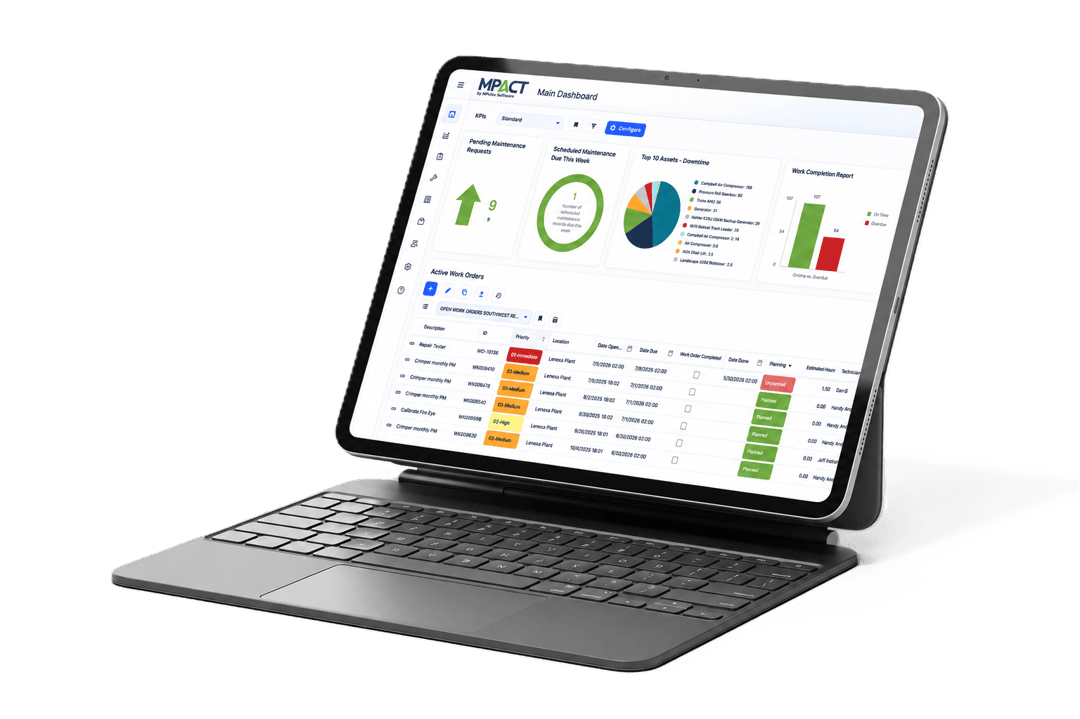
In a hospital, maintenance is a patient safety function with a survey date. MPACT CMMS by MPulse Software gives healthcare facilities teams the schedules, records, and reporting to keep critical systems running and to show the surveyor exactly what was done, when, and by whom.

What Is Healthcare CMMS Software?
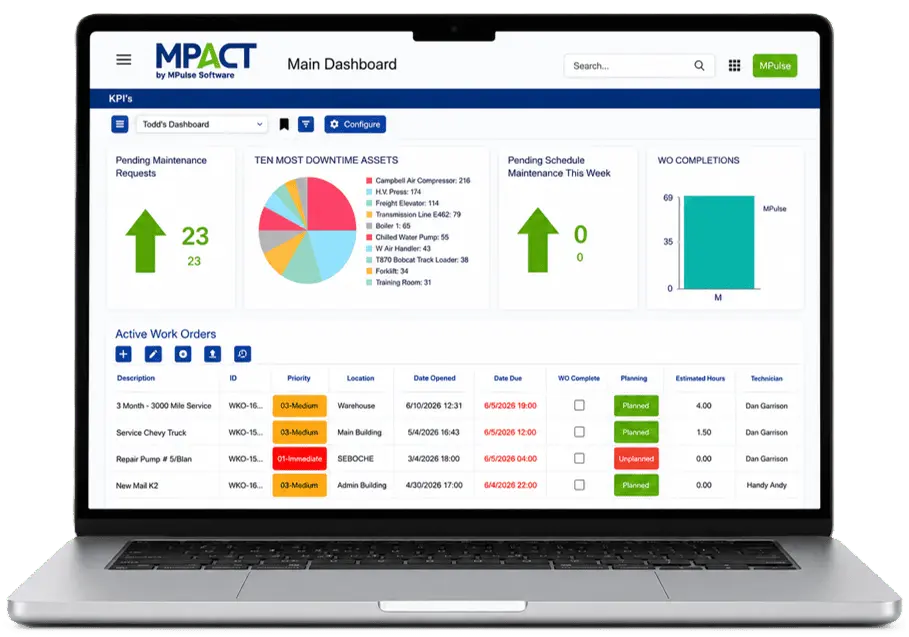
Healthcare CMMS software is a computerized maintenance management system built for hospitals, clinics, and health systems. It schedules preventive maintenance on life safety, HVAC, and medical support equipment, tracks work orders and asset history, and produces the documentation that Joint Commission surveys and CMS conditions of participation require. MPACT is the cloud CMMS from MPulse Software, used by healthcare facilities teams since 1995.
Two Teams, One System of Record
Hospital maintenance splits between facilities (the building, the plant, the environment of care) and clinical engineering (the devices that touch patients). They answer to different standards and often run different tools, and the gaps between those tools are where findings live. MPACT holds both: building systems and equipment as assets in one hierarchy, with separate permissions, separate views, and one searchable history when the surveyor asks how the generator and the nurse-call system were both maintained last quarter.
Built for the Environment of Care
Life safety on a schedule that does not slip
Fire doors, dampers, emergency lighting, generators, and medical gas systems each carry their own inspection interval. MPACT schedules them by date or meter, generates the work orders, escalates anything overdue, and keeps the completed record on the asset. For the program view, see hospital preventive maintenance benefits. See preventive maintenance →

HVAC and pressure relationships
Air handlers, filters, and pressure-monitored spaces (isolation rooms, ORs, pharmacy) get recurring PMs with required readings. When the reading is logged, the record exists; when it is missed, the escalation fires.
Medical support equipment as assets with history
Sterilizers, chillers serving imaging suites, lab refrigeration, patient lifts. Each asset carries documents, meters, criticality, and every work order ever closed against it, so the history is a lookup and not a reconstruction. See asset management →
Work orders with required fields
Checklists and required fields make documentation a condition of closeout. A work order does not close without the readings, the parts, and the signature the record needs. See work order software →
Criticality that puts patient-facing systems first
Assign criticality to assets so the OR air handler outranks the office thermostat in every queue, automatically. See asset criticality →
Reporting a surveyor can read
Dashboards, custom reports, and PDF, XLS, or CSV exports produce the inspection history, PM completion rate, and open-item list in the format the reviewer asks for. See reporting →
The Survey Is a Records Request
Joint Commission Environment of Care and Life Safety standards, CMS conditions of participation, and state health department inspections all reduce to the same question: show the records. MPACT keeps complete work histories with dates, readings, and documentation attached to the asset, controls who can edit what, and retains data without limits. When the survey window opens, preparation is an export, not a week of binder assembly. MPACT supports your documentation; your compliance program and its interpretation of the standards remain yours.
Requests From Every Floor, at No Cost per Nurse
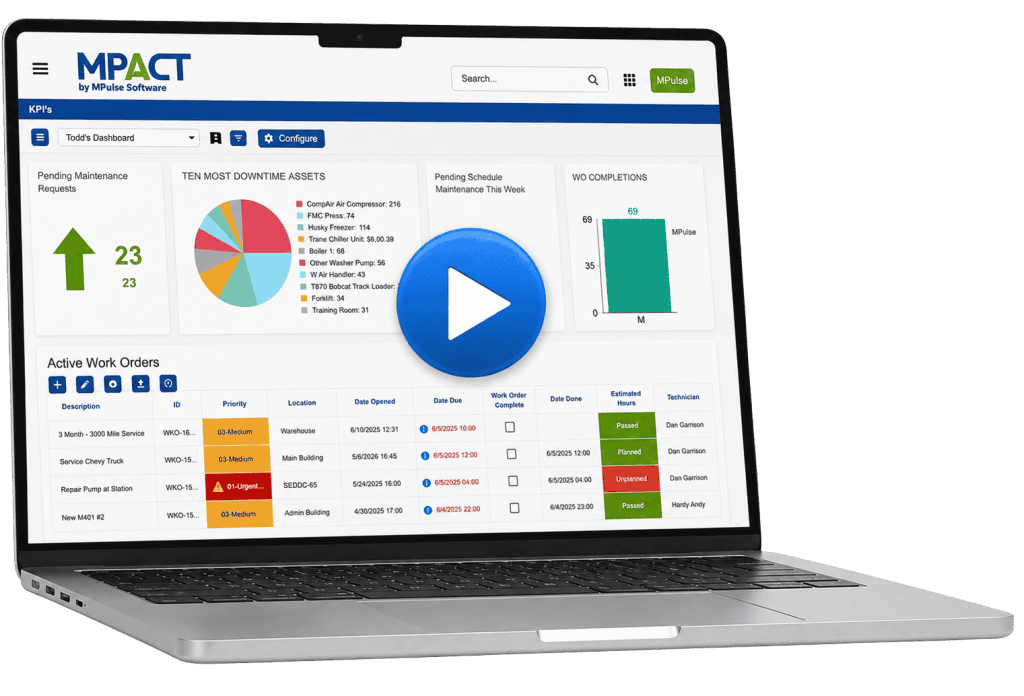
A hospital has hundreds of people who notice problems and a handful who fix them. Requester accounts in MPACT are free and unlimited, so charge nurses, unit clerks, and environmental services report a problem from a web form or by scanning the asset’s QR code, get automatic status updates, and stop calling the shop. Your team converts requests to work orders on one screen.
Frequently Asked Questions
MPACT CMMS by MPulse Software is a cloud CMMS used by hospitals and health systems for preventive maintenance on life safety and HVAC systems, work order management, asset history, and the documentation surveys require. Editions start at $29 per user per month, and requester accounts for clinical staff are free and unlimited.
By producing the records. A CMMS schedules the required inspections, enforces documentation at closeout, and stores the completed history on the asset, so the Environment of Care and Life Safety evidence a surveyor asks for is an export rather than a search. The CMMS supports the documentation; the compliance program itself stays with your team.
The environment of care. A healthcare CMMS handles life safety intervals, pressure-relationship readings, criticality for patient-facing systems, and permissions across facilities and clinical engineering teams, with reporting shaped for surveys. Generic tools can be configured toward this; MPACT is configured for it and refined further to your program.
Yes, as assets: sterilizers, imaging support systems, lab refrigeration, patient lifts, and similar equipment carry records, documents, meters, criticality, and full work history in MPACT.
Free tiers exist in the market, but healthcare teams usually outgrow them at the first survey. MPACT’s model is different: managers and technicians are licensed, and everyone who reports problems, which in a hospital is nearly everyone, is free. Most of the building costs nothing to onboard.
It depends on the asset base and the number of campuses. MPulse Software’s implementation services handle data migration, configuration, and live training, with the system operational before on-site training begins. See implementation →
Health Systems, Multiple Campuses, One Standard
Location-based permissions give each hospital or clinic its own queue while the system director sees the whole network. Shared work types, forms, and PM templates keep the standard consistent from the flagship hospital to the outpatient center across town. Custom dashboards per role mean the plant manager, the facilities director, and the VP of operations each see the version built for their question.