
Cloud vs. On‑Premise CMMS: A Decision Framework for Compliance‑Heavy Industries

If you work in a regulated or security‑sensitive environment, choosing between a cloud CMMS and an on‑premise CMMS isn’t just an IT decision. It affects how you protect your data, meet compliance requirements, manage risk, and budget for the long haul. This guide breaks down the real‑world tradeoffs in a straightforward way. We’ll look at data sovereignty, security, compliance frameworks, and the true total cost of ownership. The goal is simple: help you make a confident, defensible decision that fits your operational reality. Why This Decision Matters More Than Ever Maintenance teams today rely on data for every part of their work. Asset histories, work orders, technician notes, IoT readings, and audit trails all feed the decisions that keep operations running. That information is sensitive, and in many industries, it is also heavily regulated. The stakes are high, which means one question becomes central to any CMMS decision: where should that data live, and who should control it. Cloud CMMS platforms offer speed, flexibility, and lower upfront costs. They reduce the burden on internal IT teams and make it easier to scale as your organization grows. On-premise systems offer a different set of advantages. They provide full control, complete isolation, and predictable security boundaries that can be essential in tightly regulated or restricted environments. Neither model is better in every situation. The right choice depends on your compliance landscape, your internal IT capacity, and your organization’s tolerance for risk. When you understand those factors clearly, you can choose the deployment model that protects your data and supports your long term operational goals. Data Sovereignty: Where Your Data Lives (and Why It Matters) Data sovereignty is one of the most important factors influencing CMMS deployment decisions. It refers to the laws and regulations that govern where your data is stored, how it is handled, and who has the legal right to access it. For maintenance teams that manage sensitive operational information, these rules can shape the entire technology strategy. When you choose your CMMS software, you are also choosing home for your data. For some organizations, the flexibility of cloud hosting works perfectly. For others, the rules are strict enough that only a fully controlled environment will do. Cloud CMMS: What to Expect On-Premise CMMS: What You Control If your organization must guarantee that data never leaves a specific physical location or jurisdiction, on-premise deployment is usually the safer and more compliant choice. Cloud platforms offer strong security, but they cannot always meet the strictest sovereignty rules. Understanding your regulatory landscape makes the decision much clearer. Security: Control vs. Shared Responsibility Security is often the point where cloud and on-premise debates become the most intense. Both deployment models can be secure, but they distribute responsibility in very different ways. Understanding that difference is essential for choosing the model that fits your organization’s risk profile. Cloud CMMS Security Cloud vendors operate under a shared responsibility model. They manage the infrastructure, the physical environment, the patching, and the core platform security. You manage user access, device hygiene, and internal policies that govern how your team interacts with the system. Upsides Tradeoffs On-Premise CMMS Security With on-premise deployment, the responsibility shifts almost entirely to your organization. You control the environment, the network, the patching schedule, and the security posture. Upsides Tradeoffs Cloud deployment gives you a stronger baseline security posture because vendors invest heavily in infrastructure and continuous updates. On-premise deployment gives you tighter control and isolation, which can be essential in regulated or restricted environments. The right choice depends on how much control you need and how much responsibility your team is prepared to take on. IT Infrastructure Costs: CapEx vs. OpEx Financial differences between cloud and on‑premise CMMS deployments become most apparent when you look at whether the costs fall under capital expenditures or operational expenditures. The two models follow very different cost structures, and understanding those differences helps teams plan realistically for both short term and long term budgets. Cloud deployment follows an operating expense (OpEx) model: Choosing the option for cloud CMMS often wins on predictability and simplicity. You pay for what you use, you avoid large capital investments, and you eliminate the hidden costs that come with maintaining physical infrastructure. On-premise deployment blends capital expenses with ongoing operating costs (CapEx + OpEx): Choosing on-premise CMMS can make sense if you already have the infrastructure and staff in place. However, when you account for hardware refresh cycles, licensing, and labor, it is rarely the cheaper option over time. Regulatory Compliance: The Deciding Factor for Many For compliance heavy industries, regulations often determine the deployment model before cost or convenience even enter the conversation. Some frameworks allow cloud hosting with the right controls. Others require full isolation and direct ownership of the environment. Cloud CMMS can support: Cloud vendors invest heavily in certifications and third party audits, which can help organizations meet a wide range of regulatory requirements. On-premise is often required for: In these cases, regulations prohibit third party hosting or require strict physical and jurisdictional control. When that is true, the decision is simple. You need on-premise. Total Cost of Ownership: The Five‑Year View Here’s a simplified comparison: Category Cloud On‑Premise Licensing Subscription Perpetual + support Hardware None Required IT Labor Low High Upgrades Automatic Project-based Security Vendor-managed Customer-managed Downtime Risk Low Medium–High Compliance Costs Lower (if vendor certified) Higher (internal audits) For most organizations, cloud ends up being 30–60% cheaper over a five‑year period. Cloud vs. On‑Premise CMMS: A Practical Decision Framework Here’s a simple way to evaluate your options and choose the CMMS model that truly fits your organization: Visual Checklist: Cloud vs. On-Premise CMMS 1. Compliance Requirements 2. Data Sovereignty 3. IT Capacity 4. Cost Structure 5. Operational Realities Your Likely Fit Industry‑Specific Recommendations Different industries operate under distinct requirements and regulations. Here’s a general overview of what each one needs. Industry Best Fit Why Healthcare Cloud or On‑Premise HIPAA‑compliant cloud is common; some prefer on‑prem for PHI control Defense & Aerospace On‑Premise ITAR, NOFORN,
How to Prioritize Maintenance Tasks So You Can Get Stuff Done

I planned my whole schedule today—a list of tasks and plenty of time to complete them all. Guess how many I finished? Yep. Zero. It wasn’t because I didn’t do anything. It was because my phone started ringing. Maintenance managers know what I’m talking about. Stuff happens. Emergencies come up. And we’ve all re-prioritized tasks based on who’s yelling the loudest. But as more maintenance departments move from a reactive to a proactive maintenance strategy (thanks to CMMS software), there’s less yelling because preventive maintenance means fewer emergencies and breakdowns. However, prioritizing your maintenance tasks becomes even more important. You want to get the important stuff done first, of course. However, you don’t want other things to slip through the cracks. So how do you prioritize your maintenance tasks? The Four Levels of Maintenance Tasks Priorities I start by categorizing maintenance tasks into one of four categories: Emergency tasks are urgent health/safety problems or operational disruptions. Some examples include loss of power or water supplies, HVAC failure, natural disasters, fire, key asset breakdowns, and major security problems. Obviously, those immediately go to the top of the list, no matter how long that list is. Next, you have high-priority tasks that will directly affect operations in the near future. These might include leaking roofs, high-use equipment that is not performing well, repairs to key assets, and safety inspections. Then comes the medium priority tasks, which typically include preventive maintenance schedules. These tasks will affect operations eventually and need to be performed to maintain optimum production. Examples include replacing filters, changing oil, checking belts, scheduling vendor services, etc. Last but not least, maintenance teams always have low-priority requests or tasks that need to be done as fill-in work but are not vital to day-to-day operations. These tasks might include non-critical repairs, furniture installation or replacement, decorative painting, etc. Priority Level Definition Typical Examples When It Should Be Done Priority 1: Emergency / Critical Tasks that pose immediate safety risks, cause production stoppage, or threaten asset failure. Safety hazards, equipment breakdowns, leaks, electrical faults. Immediately on same shift, often before anything else. Priority 2: High Priority Tasks that significantly impact operations or asset health but aren’t emergencies. Overdue PMs, issues that could become failures, compliance-related tasks. Within 24–72 hours, depending on risk and resources. Priority 3: Medium Priority Tasks that improve performance or reliability but have low operational impact. Minor repairs, adjustments, non-urgent PMs, cosmetic issues. Scheduled during normal workload or next available window. Priority 4: Low Priority / Nice-to-Have Tasks that don’t affect safety or operations and can be delayed without consequence. Painting, labeling, minor housekeeping, low-impact upgrades. As time allows, often grouped with other tasks. Calculate the Value of Maintenance Obviously, emergencies and breakdowns take precedence. But what about the rest? It’s not as simple as going down the list in order from high to low. Maintenance operations are far more complicated than that. Maintenance managers can start by understanding the value of each maintenance task. When I prioritize tasks, I’m looking at four things… Value to my organization Time to complete Proximity and/or location Potential loss if not completed. I use these four things as a proportional tool to figure out what needs to happen when. Obviously, value to the organization is a big part of the equation. You want to prioritize tasks on key assets that directly affect your operations. Next, estimate how much time each task will take. CMMS software provides historical information about time and costs, which will give you the information you need to make data-driven decisions. But if you’re new to the CMMS world, make an educated guess. Then, consider the proximity and/or location where the tasks take place. This factor is particularly important for organizations with large facilities, multiple locations, or off-site assets. Finally, consider the potential impact if not done. For example, what happens if you don’t change a component on time and the failure disrupts maintenance operations. You want to keep those lower-priority tasks from becoming high-priority or emergency situations. So how do you decide what to tackle first? I use a prioritization matrix. This simple scoring tool also helps maintenance teams rank work orders using consistent criteria. Instead of relying on gut instinct, the matrix provides a numerical score that shows which tasks should rise to the top. How the Matrix Works I evaluate each task across several factors. For each factor, you assign a: Score (typically 1–5) Weight (how important that factor is relative to the others). You multiply the score by the weight to get a weighted score. Next, add all weighted scores together to get the task’s total priority score. Higher scores indicate higher priority. Common Factors in a Maintenance Prioritization Matrix You also want to consider the following factors when prioritizing maintenance tasks: Asset Criticality: How essential the asset is to safety or operations Risk of Delay: What happens if the task is postponed Time to Complete: Short tasks may be bumped up as quick wins Proximity / Efficiency: Whether the technician is already near the asset Safety or Compliance Impact: Whether the task reduces risk or meets regulatory requirements. Example of a Prioritization Matrix This example shows how a prioritization matrix works. Factor Score (1–5) Weight Weighted Score Asset criticality 5 0.4 2.0 Time to complete 3 0.2 0.6 Proximity 4 0.1 0.4 Risk of delay 5 0.3 1.5 Total — — 4.5 A total score of 4.5 indicates a high-priority task. It’s not an emergency, but it should be scheduled soon to prevent operational or safety issues. This approach reduces arguments about what teams should do first, helps planners justify decisions to leadership, keeps technicians focused on the highest‑value work, and prevents low‑impact tasks from clogging the schedule. It also works effectively inside a CMMS, especially when automated. How Do I Prioritize Maintenance Tasks? Let’s look at some real-world scenarios. Combining Tasks. A key asset needs a major repair. Your tech is working on the same components that have a PM scheduled for next week. The
CMMS Implementation Success Blueprint: Avoid These 7 Costly Mistakes

Rolling out new CMMS software offers one of the fastest ways to modernize maintenance, boost reliability, and finally get clean data you can trust. But here’s the part most vendors won’t say out loud: CMMS implementations fail all the time. Not because the software is bad, but because the rollout wasn’t set up for success. This practical, real‑world guide helps you roll out maintenance software without the headaches. It walks you through the seven mistakes that derail CMMS projects most often, why they happen, and how to avoid them. Mistake #1: Treating CMMS as “Just Software” Instead of a Change in How People Work What Usually Goes Wrong Teams buy the tool, install it, and assume everyone will magically start using it. But CMMS does more than add new buttons to click. It reshapes how work is requested, assigned, documented, and measured. That means it disrupts habits, routines, and long‑held expectations about how things have always been done. This mistake is where most implementations stumble. The challenge is not the software itself. It is the people side of the transition. Technicians may worry the system will slow them down or be used to scrutinize their work. Supervisors may feel overwhelmed by new workflows and data requirements. Leadership may underestimate the time and support needed to shift behaviors. Without intentional change management that includes training, communication, role clarity, and ongoing reinforcement, CMMS becomes just another tool that never reaches its potential. Technology can only deliver value when the people using it understand why it matters and feel supported in changing the way they work. Why It Matters A Better Approach Real‑World Example A food processing plant rolled out CMMS without involving technicians in the design of workflows or data entry processes. Adoption stalled at 22 percent because the system didn’t match how work was actually performed on the floor. After bringing technicians into the redesign process by mapping real workflows, simplifying forms, and adjusting task steps, adoption jumped to 91 percent in just three months. The difference wasn’t the software. It was ownership, clarity, and collaboration. Mistake #2: Importing Messy Data and Hoping It’ll Fix Itself What Usually Goes Wrong Organizations often rush the setup and import old spreadsheets directly into the software without taking time to clean or standardize the data. It feels efficient in the moment. But this shortcut creates long‑term headaches. Years of inconsistent naming, outdated assets, mismatched fields, and one‑off spreadsheet quirks get carried straight into the new system. The result is software that starts off cluttered and confusing. Duplicate assets appear under slightly different names. Critical fields are missing or misaligned. Preventive maintenance tasks do not match real equipment or actual maintenance practices. Instead of launching with a clean, reliable foundation, the organization ends up with a system that mirrors the chaos of the old spreadsheets. From day one, the software is harder to use, harder to trust, and harder to fix. What should have been a fresh start becomes a continuation of old problems, only now they are embedded in a system that was supposed to solve them. Why It Matters A Better Approach Real‑World Example A university imported 14,000 assets into their new CMMS without a data review. After go‑live, they discovered 3,200 of those assets were duplicates created over years of inconsistent spreadsheets. A full cleanup reduced the list to 9,800 verified assets. With accurate data and clearer PM assignments, their preventive maintenance compliance increased by 27 percent. Mistake #3: Designing Workflows That Look Great on Paper but Don’t Work in Real Life What Usually Goes Wrong Teams often set out with the best intentions: build an airtight workflow that captures every detail and leaves nothing to chance. In a meeting room, this version looks great and makes leadership feel confident everything is under control. But once that same workflow hits the shop floor, reality pushes back hard. To technicians, the workflow feels like a maze. Every additional field becomes another interruption. Every approval step becomes another delay. What looked like thoughtful structure in a conference room turns into extra taps, extra scrolling, and extra time they don’t have. Instead of helping them do their jobs, the workflow slows them down at the exact moment they need to move quickly. And the outcome is entirely predictable: technicians avoid the system whenever they can. They skip fields just to get through the form. Or they just enter placeholder text. They find shortcuts or revert to paper because it’s faster and doesn’t fight them. The workflow designed to create consistency ends up creating a widening gap between what the CMMS says is happening and what’s actually happening on the floor. Why It Matters A Better Approach Real‑World Example A manufacturing plant launched a CMMS with 18 required fields on every work order. Technicians pushed back immediately, and completion rates plummeted. After reviewing the workflow with a small pilot group, they reduced the required fields to six. Within weeks, work order completion rates increased by 40 percent, and the system finally reflected real maintenance activity. Mistake #4: Skimping on Training Because “The Software Is Intuitive” What Usually Goes Wrong Teams often assume that everyone will simply figure it out once CMMS goes live. But for technicians who have spent years working from paper job tickets, whiteboards, radio calls, or spreadsheets, it’s not a minor tweak. It’s a fundamental change in how they request work, document tasks, track parts, and communicate with supervisors. What feels intuitive to the project team can feel foreign, disruptive, or even intimidating to the people doing the work. Without structured, role‑specific training, users naturally fall back on what they know. They rely on memory instead of the system. If they’re unsure what belongs in a field, they skip it. They enter incomplete data or make honest mistakes that ripple through reports and KPIs. And when the system slows them down or they’re afraid of doing it wrong, they avoid it altogether. The result is predictable: inconsistent data, frustrated technicians, and software
Top CMMS Software in 2026
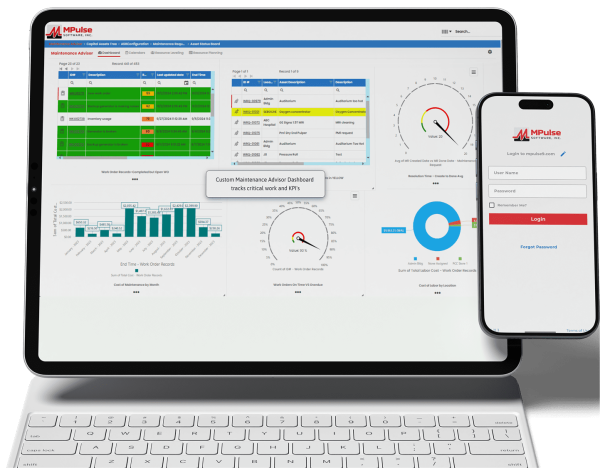
Maintenance teams face pressure to do more with fewer resources, but the top CMMS software platforms in 2026 are meeting the challenge. Today’s leading solutions go beyond basic work order tracking, providing preventive and predictive maintenance, real-time asset insights, mobile-friendly design, and data-driven reporting to support smarter, more proactive operations. Whether your team manages a single facility or a global asset portfolio, modern CMMS platforms improve reliability, reduce downtime, and gain clear insight into maintenance performance. As a result, finding the right software choice serves as the foundation for the year ahead. Whether you’re moving away from spreadsheets or replacing an existing system, this comparison highlights several of today’s leading CMMS solutions to help you find the right fit. 1. MPulse CMMS MPulse CMMS stands out as a flexible, enterprise-ready solution designed to support proactive maintenance strategies across a wide range of industries. Top features include comprehensive asset management through a centralized system that captures asset details, maintenance histories, warranties, and documentation. All this data links directly to work orders, parts, and schedules for full lifecycle visibility. Work order management is straightforward, with easy creation, scheduling, and tracking supported by automated alerts and maintenance calendars. Preventive and predictive maintenance capabilities allow teams to schedule work based on time, usage, or condition data, with optional integrations supporting predictive initiatives. Inventory and purchasing tools help track spare parts, monitor stock levels, and automate purchasing to avoid downtime caused by missing components. Reporting and dashboards provide clear insights into KPIs, costs, and performance metrics, while integrations with ERP, accounting, and other business systems support scalable, connected operations. Biggest Benefit of MPulse CMMS = Adaptability MPulse’s biggest benefit lies in its ability to adapt to organizations of all sizes while improving asset reliability and reducing downtime. The customizable design supports industries ranging from manufacturing and utilities to healthcare, education, and government facilities. MPulse can be deployed in the cloud or on-premises, allowing organizations to align with their IT and compliance requirements. Its concurrent licensing model is especially helpful for teams that work in shifts, as it allows multiple users to share a limited number of licenses, keeping costs under control. MPulse CMMS User Reviews Users frequently praise MPulse for balancing depth and usability. Many note that its strong reporting tools and flexibility make it a long-term solution rather than a system teams quickly outgrow. Reviewers also recommend MPulse’s affordable implementation services to speed adoption and ensure success. Users praised MPulse for: MPulse has allowed us to track hundreds of assets across multiple types and accurately schedule maintenance for those assets. Before MPulse, our preventive maintenance simply didn’t get done, and our spare parts inventory tracking was stuck in the stone age. We were never sure what parts we had or where to find them. Now we’re able to track inventory accurately and always have the necessary spare parts on hand. – Caleb C. on Capterra MPulse makes it easy to track assets and manage work orders and work order history. You can log machine hours and set hour-based work orders. – Vern B. on G2 For our campus, it made submitting requests easier for users, and they are able to receive email notifications based on the status of their work orders. Building users appreciate its ease of use when submitting requests to the Physical Plant. Maintenance staff can be held accountable for performance, and with preventive maintenance procedures being scheduled and completed, downtime for critical equipment has decreased. – Christopher B. on Capterra We’ve been using MPulse for the last four years and have no plans to stop. We appreciate how it helps us keep track of all our devices without relying on stacks of spreadsheets for updating, tracking, and monitoring. MPulse does the work for us. – Joel S. on Software Advice Strengths of MPulse CMMS Customers consistently give MPulse strong scores on Software Advice, with overall ratings around 4.5 out of 5 stars and an excellent user satisfaction rating of about 91%, meaning the vast majority of users would recommend it. Many users say MPulse substantially improves their maintenance operations by streamlining work order tracking, preventive maintenance, and asset management workflows. One verified reviewer described it as a “very comprehensive and complete CMMS” that they’re glad they chose after evaluating alternatives. Customers frequently emphasize responsive and helpful customer support, with numerous reviews pointing out how support staff assist quickly with questions or issues, helping keep operations moving. Another common positive theme is that once MPulse is properly configured, it can simplify tracking maintenance tasks, inventory, and historical data, freeing teams from paper logs or spreadsheets. Long-term customers like St. George Steel, IKEA US West, Reed College, and Northwell Health mention that MPulse “simplified keeping track of what we do” and that it’s easy to tailor the program to facility maintenance needs. Affordable Pricing Pricing for MPulse varies based on deployment type, number of users, and selected modules. Plans generally start around $49 per user per month, with additional costs for advanced features such as predictive maintenance and enterprise reporting. A free demo and custom quote are available. 2. Maintenance Connection Maintenance Connection is a robust CMMS designed for organizations that need deep asset management, strong preventive maintenance capabilities, and enterprise-level scalability. The platform focuses on helping maintenance teams plan, track, and continuously improve their operations through data-driven decision-making. Key features include advanced work order management with configurable workflows, preventive and predictive maintenance scheduling based on time, meter readings, or condition data, and detailed asset tracking with full maintenance histories and documentation. Maintenance Connection also offers inventory and parts management, labor tracking, and comprehensive reporting tools that help teams analyze performance, costs, and compliance metrics. Mobile access enables technicians to receive assignments, update work orders, and access asset data in the field. User Reviews Organizations choose Maintenance Connection for its depth, configurability, and suitability for complex environments. The platform is suited for teams managing large asset portfolios and strict compliance requirements. Although it requires much aid and experience with the application, once