A Practical Guide to Simplifying Facility Maintenance with CMMS

Facility maintenance teams face a steady stream of demands every day. Priorities can change quickly, and the pressure to keep everything running smoothly never really stops. For many facility maintenance managers, staying organized is one of the hardest parts of the job. They oversee buildings, equipment, people, and budgets, often all at the same time. CMMS software simplifies facility maintenance in several important ways. These tools do more than track maintenance tasks. They help maintenance teams manage information, people, and assets across an entire organization. This practical guide to simplifying facility maintenance will get your team started. Simplifying Facility Maintenance with CMMS Systems Integration Facility maintenance teams share information with other departments, making clear and consistent data access essential. Purchasing relies on up-to-date maintenance records to manage budgets, approve work, and track parts and inventory costs. Human resources may need visibility into labor hours, certifications, and staffing requirements, while executives depend on accurate reporting to evaluate performance, prioritize capital investments, and make informed strategic decisions. Centralizing information and making it easily accessible helps maintenance teams avoid duplicate data entry and reduce errors. This transparency improves coordination across departments and allows maintenance managers to spend less time compiling reports and more time focusing on planning, reliability, and long-term improvements. CMMS software allows information to move easily between systems, with data flowing both in and out so the same information does not have to be entered multiple times. This capability saves hours of paperwork and reduces errors. With less time spent on forms and reports, more time can be devoted to planning and problem-solving. Scalability After a facility maintenance department implements CMMS software, the system must continue to evolve as facilities grow and operational demands expand. Adding new buildings, equipment, and infrastructure increases the number of assets to track, the volume of work orders to manage, and the amount of data required for planning and reporting. A scalable CMMS can accommodate this growth by supporting additional users, locations, and assets without sacrificing performance or usability. It allows maintenance teams to adjust workflows, preventive maintenance schedules, and reporting structures as complexity increases. When a CMMS is designed to scale, it helps departments maintain consistency, control, and visibility across all facilities, even as workloads grow and operations become more demanding. CMMS software should make it straightforward to add users, enable new features, and onboard and train new employees without disrupting daily operations. This adaptability allows the maintenance team to manage a growing workload more effectively and to maintain consistency across facilities. Rather than outgrowing technology, scalability enables teams to adjust and configure the system to match a continually changing environment, supporting long-term growth and stability. User Management User management also plays a key role in effective facility maintenance operations, especially as teams grow and responsibilities become more specialized. Features such as MPulse Role-Based Access Control allow organizations to define who can view, enter, and modify information. Maintenance technicians, supervisors, managers, and service requestors can only access the tools and data relevant to their roles. This approach keeps the system intuitive for everyday users, reduces clutter, and minimizes the risk of errors caused by unnecessary or confusing options. At the same time, role-based access strengthens data security by restricting sensitive information, such as labor details, costs, or administrative settings. For facility maintenance managers, this controlled access protects critical data while still enabling teams to work efficiently and independently. Security Security is another area where CMMS software makes a difference. Managing access across a large organization can be a significant challenge, especially with multiple locations. CMMS software helps teams stay organized and compliant by centralizing security-related data, reducing paperwork, and controlling access, allowing facility managers to maintain both efficiency and safety. Security demands have also increased substantially over the past decade, with new regulations, stricter controls, and additional oversight requiring more documentation and accountability. These changes have added significant administrative workload to maintenance operations. Without the right tools in place, managing this level of tracking would be extremely difficult. For example, lost or misplaced keys create safety risks and often lead to wasted time and unnecessary follow-up. By using tools like MPulse Key and Lock Management, maintenance teams can track keys and authorized users in one centralized system. They can see who has a key, when it was checked out, and when it is due to be returned. This visibility reduces time spent searching for keys or tracking down staff. It also supports more consistent security practices across an organization. Mobility Maintenance work rarely happens behind a desk. Technicians spend most of their time in the field, moving between buildings and responding to issues as they arise. A mobile-friendly CMMS like MPulse supports this reality by giving team members real-time access to the system wherever they are. Mobile CMMS enables technicians to report problems, receive assignments, update work orders, and record labor and parts directly from their devices. They don’t need to return to the office to check schedules or enter information at the end of a shift. This immediate access keeps work moving without unnecessary delays and helps reduce equipment downtime. As a result, supervisors gain better visibility into job status. Additionally, technicians stay informed about priorities and changes as they happen. Mobile access also improves communication across the team, ensuring that everyone is working with the most current information. The result is faster response times, more accurate data, and a more efficient maintenance operation overall. CMMS Supports Facility Maintenance Teams Together, these features show how CMMS software supports modern facility management. It helps teams stay organized, improve security, and make better use of their time. Facility maintenance management is about more than fixing equipment. It is about creating safe, reliable spaces where people can work, learn, and live. By reducing paperwork, improving visibility, and supporting smarter decisions, CMMS software helps facility managers do their jobs better. It’s easy to get started. Contact us.
Best CMMS Software in 2025
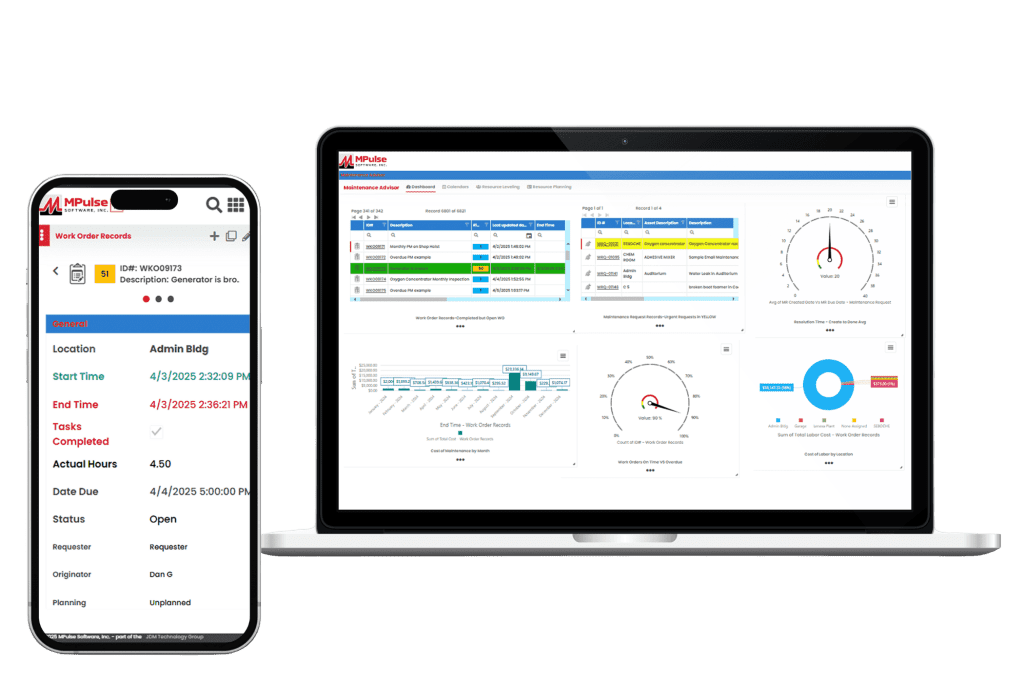
CMMS helps maintenance teams plan, track, and improve their operations. It handles everything from preventive maintenance scheduling and work orders to inventory tracking and performance reporting. As a result, your maintenance operations can get tasks done efficiently and easily measure the results. Most quality CMMS platforms include core features like work order management, maintenance scheduling, asset tracking, inventory control, reporting, and mobile access. These tools help teams prevent breakdowns, eliminate backlogs, manage parts, and control costs. The ultimate goal is to streamline operations and reduce downtime. Whether you’re transitioning from spreadsheets or replacing your current system, this in-depth comparison will help you choose the right solution. 1. MPulse CMMS Top Features Biggest Benefits MPulse CMMS is designed to help organizations of all sizes streamline their maintenance operations, improve asset reliability, and reduce downtime. What Do Users Like About MPulse? Users highlight MPulse’s balance between functionality and user-friendliness. The system’s adaptability to different industries and strong reporting tools make it a favorite for organizations seeking both flexibility and depth in their CMMS solution. Many recommend purchasing one of MPulse’s affordable implementation services to streamline the process even further. “MPulse has been instrumental in helping us transition from reactive maintenance to a proactive approach. The scheduling and tracking tools are excellent, and the reporting gives us clear visibility into our maintenance costs.” – James K. on Capterra “What I appreciate most is that MPulse can grow with your organization. It’s easy to start small and add modules or integrations as your needs expand. The support team is also responsive and knowledgeable.” – Verified User in Manufacturing on G2 “MPulse makes it easy to organize maintenance work and asset data. The ability to customize fields and workflows means we can tailor the software to fit how we operate instead of the other way around.” – Sarah M. on G2 Pricing MPulse offers flexible pricing tiers depending on deployment type (cloud or on-premises), number of users, and selected modules. Plans generally start around $49 per user per month, with additional costs for advanced features like predictive maintenance, API access, and enterprise reporting. A free demo and custom quote are available upon request. 2. Limble CMMS Limble CMMS is a cloud-based platform that helps organizations manage and improve their maintenance operations. With an solid interface and a range of practical features, it supports teams across industries in organizing workflows, reducing downtime, and maintaining asset performance. Top Features Why Users Like Limble CMMS Companies like G2, Capterra, Reddit, Software Advice, and more make it easy to hear from software users about their experience. Here are some of the most useful reviews. What Do Users Dislike About Limble CMMS? 3. Fiix CMMS Fiix CMMS is a cloud-based maintenance management platform that integrates AI and machine learning for maintenance efficiency and asset performance. Its interface and scalable design make it a strong choice for small to mid-sized businesses with distributed assets. Top Features What Do Users Like About Fiix? Users report that overall, Fiix is a useful tool for helping organize and execute maintenance and equipment servicing. They also report a good relationship with customer service and overall improved work order coordination across teams. What Do Users Dislike About Fiix? Reviewers note that there is room for improvement in the way the system facilitates communications with work requestors who don’t have user licenses. They also comment on the lack of customizability for some features. Pricing Fiix CMMS uses a tiered pricing structure, beginning with a free plan that covers essential maintenance functions, then expanding to paid tiers with more advanced capabilities. The Basic plan costs $45 per user per month, and the Professional plan is $75, both adding tools such as advanced scheduling, analytics, and reporting. For larger organizations with specialized needs, the Enterprise plan provides customized solutions with pricing available upon request. 4. UpKeep UpKeep positions itself as a mobile-first CMMS built to simplify maintenance and operations management for businesses of all sizes. Its interface and features enable users to manage work orders, track assets, and streamline maintenance activities from both mobile devices and desktops. Top Features What Do Users Like About UpKeep? UpKeep customers report it to be a significant upgrade from paper and manual processes, especially for the cost. They also appreciate its useability and visual appeal. What Do Users Dislike About UpKeep? While UpKeep is rated highly overall, some users report a lack of customizability, bugginess, and technical difficulties with some features. Pricing UpKeep offers a tiered pricing structure based on the number of users and the level of features needed. They do not offer a long-term free plan but do provide a 14-day free trial. Plans range from a “lite” level that includes basic maintenance management tools at $20 per user per month. Advanced options that include predictive maintenance, reporting analytics, and integrations can cost as much as $120 with additional products and add-ons like IoT connectivity for additional fees. 5. MaintainX MaintainX is a mobile-first CMMS that emphasizes the advantages of managing maintenance through its mobile app. It offers an interface and tools for handling work orders, performing inspections, and tracking assets from smartphones or tablets. The platform is geared toward organizations with distributed teams and frontline workers who need real-time access to information and tasks while on the move. Top Features What Do Users Like About MaintainX? MaintainX delivers the basics for its users, including an intuitive interface, real-time communication, and efficient work order management. Many report having a more organized and more mobile operation as a result of using the system. What Do Users Dislike About MaintainX? Smaller teams or startups may find that MaintainX’s pricing is higher for the features offered than some other solutions. Some users report occasional bugs or limited options for customization and integration with other tools. Pricing MaintainX provides four pricing tiers, starting with a free basic plan that includes unlimited work orders and messaging. The Essential plan, priced at $16 per user per month, adds features like recurring work orders and reporting. The Premium plan costs $49 per