Asset Lifecycle Management: Know What Every Asset Costs You
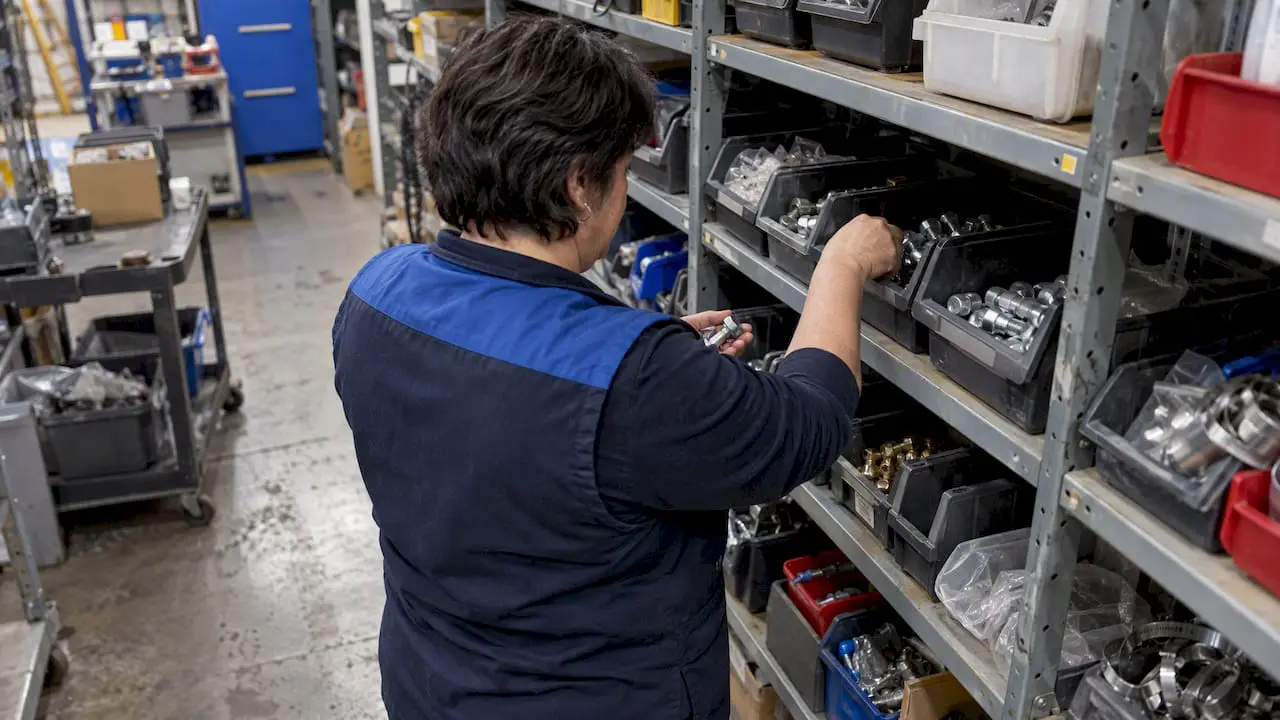
Everyone on your team already knows how a shopping cart works. MPACT CMMS by MPulse Software uses that instinct for parts: add items to a cart, check them out against the work, and keep inventory honest without a clipboard in sight.
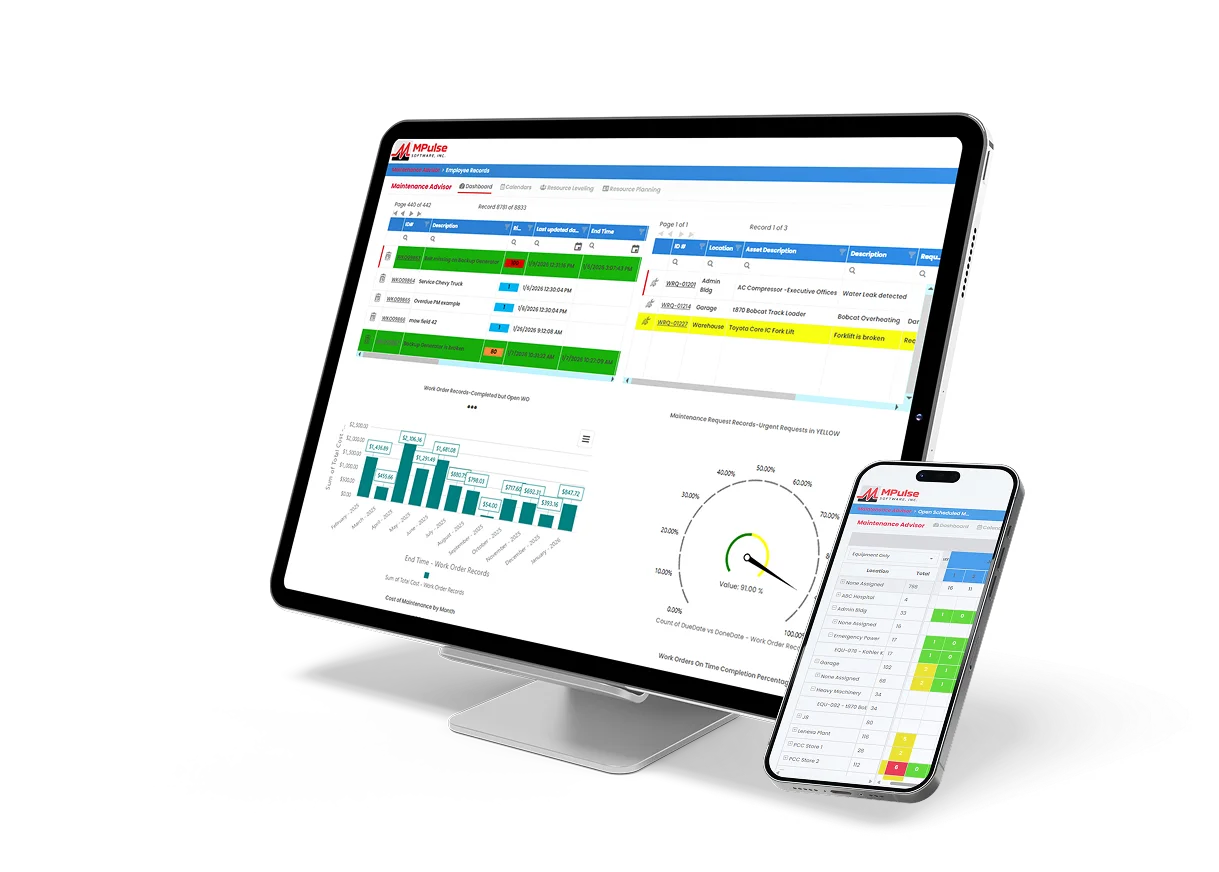
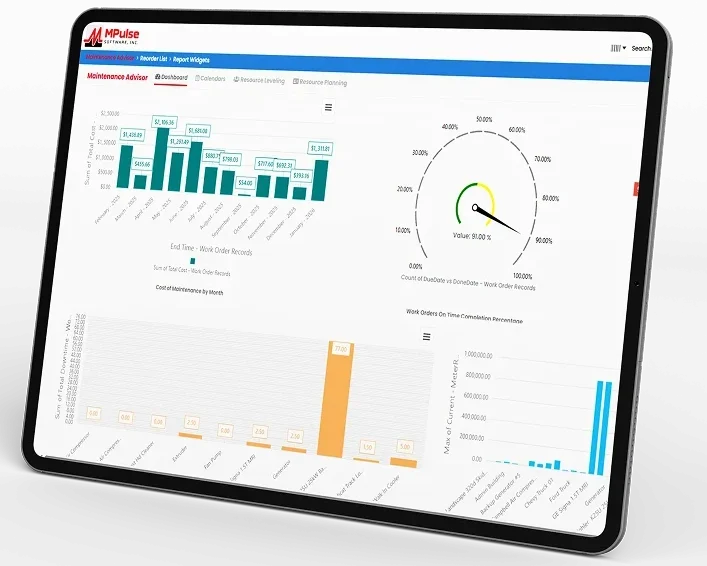
Asset lifecycle management tracks an asset across its whole service life: acquisition, operation, maintenance, and replacement. The goal is financial as much as mechanical: knowing what each asset has cost, what it will cost to keep, and when replacement beats repair. In MPACT, lifecycle management is not a separate system to feed; it is a view built on the maintenance records your team already creates. Every work order posts labor, parts, and downtime to its asset, and the Asset Status Board rolls that history into the numbers lifecycle decisions run on.
The Lifecycle Data on Every Asset
Purchase, warranty, and lifetime data
Track when each asset was acquired, what it cost, when the warranty ends, and how long it is expected to serve, so nothing gets replaced under warranty or trusted past its lifetime.
Life-of-asset financials
Maintenance costs accumulate on the asset from every work order: labor, parts, and downtime. Total cost of ownership is a running number, not a year-end reconstruction from invoices and memory.
MTTF and MTTR from real history
Mean time to failure and mean time to repair calculate from your actual work records, giving reliability conversations numbers instead of impressions. An asset failing more often and taking longer to fix is an asset announcing its retirement.
Budgets and cost centers
Organize asset costs by cost center, department, type, or location, so the analysis matches how your organization budgets and the numbers land in the right ledger. (Confirm cost-center terminology against the verified MPACT matrix before publication.)
The Four Stages, and Where the Money Hides
Acquisition is the cost everyone sees. Operation and maintenance are where lifecycle costs actually accumulate: a machine that cost $40,000 to buy can quietly absorb that much again in labor, parts, and downtime over a hard decade. Disposal is the decision nobody wants to own without numbers.
Lifecycle management software exists for the middle stages. When every work order posts its costs to the asset, the operating total is always current, the trend is visible, and the disposal decision stops being an argument and starts being arithmetic.
The Four Stages, and Where the Money Hides
Acquisition is the cost everyone sees. Operation and maintenance are where lifecycle costs actually accumulate: a machine that cost $40,000 to buy can quietly absorb that much again in labor, parts, and downtime over a hard decade. Disposal is the decision nobody wants to own without numbers.
Lifecycle management software exists for the middle stages. When every work order posts its costs to the asset, the operating total is always current, the trend is visible, and the disposal decision stops being an argument and starts being arithmetic.
Lifecycle Management Without a Second System
Standalone asset lifecycle management software asks your team to maintain a second database that goes stale the week after implementation. MPACT’s approach is different: the lifecycle view is generated by the maintenance work itself. Technicians close work orders; the lifecycle data updates. Nobody reconciles anything, which is why the numbers stay true.
Frequently Asked Questions about Lifecycle Asset Management
What is asset lifecycle management software?
Software that tracks assets from acquisition through disposal, accumulating cost, usage, and reliability data to support repair-or-replace and budgeting decisions. In MPACT, it is the Asset Status Board: a financial and lifecycle layer built on your live maintenance records.
How is this different from asset management?
Asset management is the registry: records, hierarchy, history, and documents. The Asset Status Board is the financial layer built on that history: costs, warranties, lifecycle stage, and reliability metrics.
Where do the cost numbers come from?
From the work. Labor hours, parts, and downtime post to work orders, work orders post to assets, and the status board rolls it up. No separate data entry.
Can lifecycle data support capital planning?
Yes. Warranty dates, expected lifetimes, and cost trends across the asset base show which replacements are coming, which is the raw material of a capital plan that finance believes.
Can I export the financials?
Yes. MPACT reports export to PDF, XLS, and CSV, so asset lifecycle financials travel to budget decks and finance models intact.
Find the Budget Eaters
Bring your three most suspect assets to a demo and see what their status board would show.