
People Skills in the Maintenance Profession

Maintenance professionals are known for their technical skills—it’s at the top of the list for any job posting. But another skillset might be almost as important. For employees who spend a lot of time with machinery and equipment, people skills contribute significantly to success in the maintenance field. Why Do Maintenance Professionals Need People Skills? People skills are related to interpersonal communication—including the ability to actively listen, explain issues in a way someone else can understand, build trust, show patience, make suggestions, work with others, and display empathy. [related-content] Sooner or later, everyone needs the maintenance team—from the operator on the phone calling about an emergency breakdown, to the vendor working on a warranty job, to the manager asking for an update on a repair. These are a maintenance team’s “customers,” whether they are people paying for services (like building tenants) or internal departments that need something done (that’s everyone, from accounting to production to the executive team). And people skills are key to working with customers. Sometimes these interactions are challenging, because maintenance professionals often work in highly stressful situations where they need to discuss unpleasant information. They also typically need to explain details to other people who might not have the same technical background, as well as educate users about the assets in their care. So, it’s important that maintenance professionals prepare by developing—and refining—people skills to work in this demanding environment. How Can I Help My Team Develop People Skills? Some people are naturally good at people skills. And others need training. Just like you train your people to repair equipment, you need to make sure they have the training and support to develop these “soft” skills. It’s also vital to give your team the tools they need to make communication effective. For example, CMMS software enables maintenance teams to improve customer service by streamlining communication and increasing access to information. Those two things make it easier for your maintenance team to provide quick response times and detailed answers to questions and/or problems. Technical skills will always be a priority for maintenance technicians. But don’t overlook the importance of people skills as well. What’s your experience? What have you found that works? Leave a comment or contact us.
MPulse Software Launches Single-Sign-On (SSO) / Active Directory Integration for Cloud-Hosted Customers

As part of its continuous efforts to advance CMMS technology, MPulse Software, Inc. is pleased to announce improved secure access with its new Single Sign On (SSO) option. MPulse now supports SAML SSO, enabling its cloud-based CMMS software to integrate with security directories that determine who gets access to what computers, networks, applications, and services. No other third parties are required. This new feature supports multiple identity providers as well as user self-provisioning and custom claims for populating user data. “SSO offers many advantages for organizations that want to streamline and control access to cloud-based software,” explained Randall Brous, MPulse’s Chief Technology Officer. “With our SSO option, MPulse users can log into their computers once and have immediate access to their hosted CMMS from MPulse.” MPulse’s SSO option extends an organization’s internal directory to the MPulse cloud environment. This ability offers many advantages to current and potential customers, including… Improved security for user authentication Simplified user experience Streamlined implementation for large user bases Better control over user access and authority The new SSO option continues MPulse’s dedication to system security, scalability, and compliance for its hosted CMMS software. It’s available on all MPulse Editions of our cloud-based software. Current MPulse customers can enable SSO on their cloud-hosted MPulse software by contacting our support team. For more information or a free CMMS software quote, contact MPulse at (800) 944-1796 (USA and Canada) or +1 (541) 302-6677 (outside of USA and Canada), or visit the MPulse website at www.mpulsesoftware.com.
CMMS Helps Improve Capital Planning

Capital planning is an extension of two other key elements of maintenance management—creating and monitoring budgets. Like any budgeting process, accurate information significantly improves the ability to plan. And CMMS software gathers maintenance information with every work order, inventory item, or subcontracted repair—making it a treasure trove of data when you need it. With CMMS data, you’re basing your plan on hard numbers instead assumptions. That’s how CMMS software makes capital planning easier and more accurate, helping your organization stay efficient and competitive. What’s Capital Planning? Capital planning typically includes physical assets like equipment and machinery, but can also include product expansions, research & development, property, and other major capital expenditures. While creating a capital plan usually involves multiple departments, maintenance will likely be a big part of the process because you work closely with an organization’s key assets. And that’s where CMMS software becomes essential. How Does CMMS Software Help? The first step to developing a solid capital plan is knowing what you have. You can use CMMS software to create an asset list and gather data on each of those assets. This data includes key information like purchase date, life-to-date (LTD) maintenance expenses, and other key financial details. Often CMMS data can spot potential trouble, which helps with long-term planning. For example, if your CMMS reports indicate an increasing number of emergency repairs to a key asset, it’s time to take a closer look and what’s really going on. That includes determining if it’s better to replace it, rather than repairing it. This information also helps you prioritize your organization’s capital expenditures, so you know what you should focus on first—and what can wait until later. How Can I Use My CMMS Data? CMMS data helps you verify and justify capital expenditures as well as prepare for them. The process creates better visibility into your maintenance operations, as well as the documentation to back up your plan. That’s important when you need to explain your decisions. Capital planning with CMMS software is another example of data-driven management, which means your decisions are backed by reliable data. Technological advances like CMMS software help make more and more detailed, relevant maintenance data available. You can use that to your advantage. What challenges do you face with capital planning? Contact us. We want to know.
Quick and Easy Budgeting with CMMS

Many maintenance departments create annual budgets based on prior expenses. It’s a simple process—pull all the expenditures, check to see if something unusual happened during that time, and increase the budgeted amount by other planned expenses you see coming. But CMMS data goes far beyond just showing expenses. You’ll also find valuable insights into how your department is functioning, and what you can do to improve. And that information can make your budget process easier and much more accurate. Creating Your Maintenance Budget A maintenance budget includes employee salaries and benefits, as well as direct costs such as parts, equipment replacement, vendor services, and special projects. Every maintenance manager knows that it’s hard to create a realistic budget without historical information. CMMS software tells you exactly what you’ve spent in the past, so you have a strong foundation for budget forecasting. Preventive maintenance schedules make it easy to estimate labor and inventory costs for key assets. Historical data about labor costs, special projects, and staff training are other areas where CMMS software can help you accurately estimated future costs. Unplanned maintenance is more unpredictable, of course. But again, CMMS data can provide information about emergency repairs on assets and what it took to get them running again, giving you a better idea about what to expect. Analyzing a Maintenance Budget Maintenance costs affect any organization’s bottom line in two ways: the money spent and the prevention of additional expenditures via preventive/predictive maintenance. That’s why CMMS software is vital to controlling maintenance costs—and determining where the department can improve. Real-world examples of what MPulse customers have found when they created their budgets from MPulse data include… The cost of overtime labor made it more efficient to hire another person than continue to pay overtime or outsource the work. Too much overstocked inventory was sitting on shelves, quickly becoming unusable. Expedited shipping fees were costing more than stocking certain parts. Some equipment was costing more to maintain than it was to replace. Employee productivity was improving after specific training classes. Some work was less expensive to outsource, so employees could focus on their core tasks. Next time, we’ll talk about a related topic—tracking your maintenance budget with CMMS software. In the meantime, contact us with your specific questions about how MPulse can make your maintenance budgeting process much easier.
Three Lessons from a Maintenance Technician

Mateo is the maintenance tech you want on your team. He has a knack for troubleshooting and a persistent nature that makes him the “go to” person when something goes wrong. After 30 years in the business, Mateo knows a lot about maintaining equipment. One of his jobs is to mentor some of his younger team members with hands-on technical instruction. And, as usual, Mateo goes above and beyond—offering his coworkers more general guidance that applies off the shop floor as well. While we aren’t all lucky enough to work with Mateo, we could benefit from his advice. Here’s what he shared with us. 1. Use What You Know Now It’s the maintenance team’s job to avoid failure whenever possible—either by preventing it in the first place or fixing something when it breaks. So, it’s natural that many people strive to avoid failure. [related-content] But Mateo sees failure differently. “I learned a lot from failure,” he told us. “It gives you an advantage because now you know what doesn’t work. Use it to move forward and find what works—and how to prevent it in the future.” 2. Don’t Give Up Maintenance techs know fixing something isn’t always simple. It’s easy to get frustrated when things are going wrong. Mateo has learned that taking a break and refreshing his mind helps him refocus on the problem. He also recommends asking for help when you’re stuck. “Sometimes I need to work through a problem with a coworker,” he explained. “Two heads are better than one, and a different perspective can help.” 3. Take Responsibility Mateo is the first to say that he isn’t perfect. He doesn’t hide his mistakes. “If I screw something up, I take responsibility,” he explained. “Hiding it or denying it just makes it harder in the long run. Admitting your mistakes shows true professionalism.” And in the end, Mateo knows those mistakes also help you prevent making other mistakes. “You learned from it, and now you can use your mistake to improve,” he said. “And if you share that experience with others, you’re probably going to prevent someone else from making the same mistake too. Mateo’s advice applies to everyone—no matter where you work or what you do. What’s the best advice you’ve ever gotten? Leave a comment or contact us.
CMMS a “Must Have” for Distribution Centers

From automated storage & retrieval systems to conveyors & sorters, modern distribution centers focus on throughput, equipment reliability, and uptime—just like any other production-oriented business. And just like other organizations, more distribution centers are turning to CMMS software for help. “In our environment, maintenance is all about keeping the company assets in like-new condition while minimizing the impact to our operation,” explained Randall, MPulse customer and facility manager for an international online retailer. More Automation, More Assets to Maintain Distribution center employees face more pressure than ever to get orders out the door, thanks in part to a surge in online sales over the past decade and high expectations for quick deliveries. Randall’s company has invested heavily in automated material handling systems to meet the growing demand—but more equipment also means more maintenance work for his team. Most distribution centers need CMMS software like MPulse to manage a wide range of equipment, from modern materials handling systems to more typical facility assets such as HVAC systems, dock doors, lighting, and plumbing. “Maintenance teams in distribution centers require diversity in their skillsets, however, some co-workers are becoming more specialized,” Randall explained. “MPulse allows you to assign a person to an asset, and so once the asset is set up, it automatically gets assigned to the proper individual with the right skill set.” And like any maintenance manager, Randall needs to track costs—particularly labor costs—as well as set benchmarks and KPIs. “It is impossible to cut costs if you don’t know where the money goes,” he said. “Uptime, extended life expectancies, and minimal operational impact is what all maintenance department should be striving for—at the lowest cost to the business.” Data Integration Distribution center maintenance teams also have discovered the benefits of CMMS software coupled with Industrial Internet of Things (IIoT) technology. The combination enables maintenance teams to gather information directly from multiple devices, which can be almost anything with a sensor—including computers, vehicles, smartphones, appliances, building automation systems, and production equipment. Maintenance teams can use that information to proactively perform maintenance and even predict asset failures—saving both time and money. The rapidly changing technology found in distribution centers means that maintenance software is no longer optional. Contact us to learn how MPulse can improve your maintenance team’s productivity and efficiency.
How to Write a Request for Proposals for CMMS Software

Last time, we talked about why you might want to consider writing a Request for Proposal (RFP) for your CMMS software purchase. If you’ve decided that’s the right option for you, we’ve listed some tips on how to get the most out of the process. An RFP outlines your requirements, so you can find the right software for your organization. You’ll send it to potential vendors, who will respond with documentation on how their software meets those needs. Important Details We recommend providing background information about your organization. These details help vendors respond appropriately. For example, your RFP should include… A description of your organization and its market Size of your organization and maintenance team Number of assets Main objectives for CMMS software Timelines Existing software and hardware Available internal resources (i.e., IT personnel, support staff, etc.) IT Infrastructure Describe your existing IT infrastructure. If you know now, specify if you’re looking for local or cloud-based solutions. If you don’t, be sure to mention you’re looking at both options. Specific Requirements The biggest part of your RFP will be your CMMS software requirements. It’s important to be specific in an RFP, but not so specific that you eliminate viable options. We recommend… Identifying requirements that every proposal must meet Identifying the requirements that are optional or “wish list” items Separating your list of requirements by function, such as IT requirements, reporting, software integration, etc. Prioritizing requirements, if necessary Including an area for vendors to respond to these requirements and identify what’s part of their basic package and what requires customization, a feature extension, or an upgrade Including a section for vendors to outline the price—include optional features or additional charges Training, Implementation & Support Options Include information about your training, implementation, and support requirements. Provide an area for vendors to outline exactly what services they offer, and how much they cost. Once you’ve written an RFP, you’ll send it out to vendors. Give them ample time to respond—at least two weeks, preferably three. It takes time and effort to write an RFP, but the payoff is worth it if you save yourself the pain that comes with making the wrong decision. Questions? We have answers. Contact us. We’re here to help.
Give the Maintenance Department Some Credit

The maintenance department hasn’t always gotten the respect it deserves. In the past organizations were more likely to ignore the maintenance department—until something went wrong. Once overlooked, it’s time to give the maintenance department some credit! Our customers have seen it happen—like Henry, the vice president of operations for a manufacturing company. Henry has a vision for his organization. It’s simple—make high-quality products to sell at reasonable prices, and back it all up with strong customer service. Henry realized, much faster than many, that this vision rested on the shoulders of people who often don’t get the credit they deserve—the maintenance team. Maintenance Makes It Happen Henry’s factory has invested in a lot of high-tech equipment. His employees are focused, monitoring the equipment from computer screens throughout the building. His production and maintenance departments work closely together. “Most manufacturers focus on production workers—the people who are turning out the products on the line,” he said. “Not as many see that maintenance is the center of the hub, the place where everything connects. Because your production team is only as efficient as their equipment. And the maintenance crew makes it happen.” Maintenance Makes a Difference Henry’s also invested in his people to keep that equipment running smoothly. He’s had to think outside the box, he explained. “It’s hard to find good people,” Henry said. “We’ve invested in attracting younger people through our in-house training program. We’re creative about how we recruit new employees. We work closely with local high schools and colleges to find people with the right aptitude, even if they don’t have the skills right away.” And he works hard to make his company a place where people feel valued. “It’s not all about the paycheck. Today’s employees are looking for meaningful work where they feel like they make a difference,” he said. So Henry has emphasized the contributions of his maintenance team, making sure everyone understands the important role they play in the company. He believes it has helped his organization survive—and prosper—while others have struggled. Henry was an early adapter. But his perspective about maintenance is spreading—and it will continue to do so as more organizations see the light. “Maintenance keeps our organization moving forward,” he said. “A successful maintenance department contributes to our success as a company.” What’s your experience? Has your organization realized the value of investing in maintenance? Leave a comment or contact us.
CMMS Success: Porocel Goes From Zero to 60
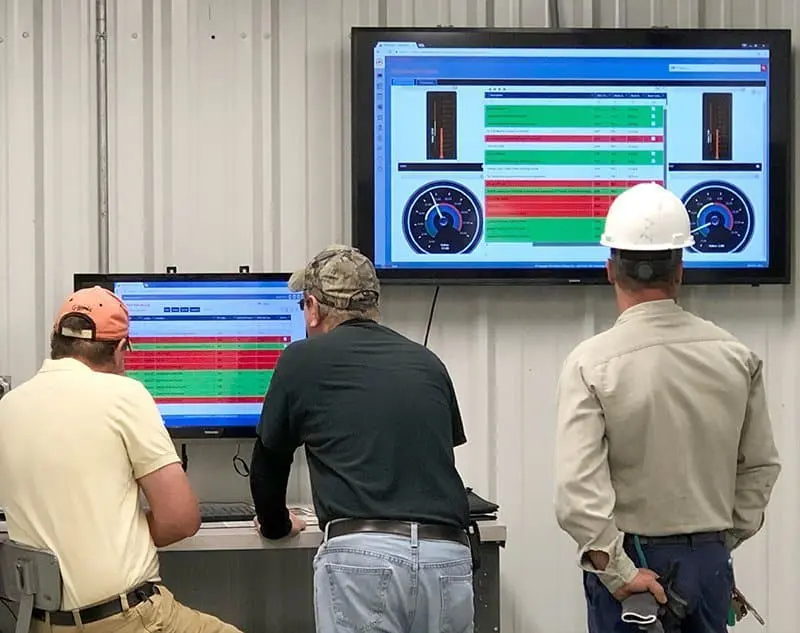
Today, we bring you a CMMS success story. Maintenance professionals often need to hit the ground running. That was certainly the case when Mike Goldman, Porocel maintenance planner, started his job with the company in late 2017. Mike quickly realized maintenance processes at his location hadn’t kept pace with the company’s rapid growth. Porocel’s 16-person maintenance team at the company’s Little Rock, Arkansas, site was primarily reactive—and it wasn’t working for the techs or the company. “They were like Indiana Jones running in front of that stone,” Mike explained. “If you’re small company, you can run maintenance off someone’s clipboard. That doesn’t work as things get bigger. They didn’t know what they didn’t know.” Mike was hired to help Porocel figure what they needed to know. His former work with a high-tech defense contractor meant he understood how to create a more structured maintenance environment. His first step was assessing how the maintenance department was currently run—the who, what, when, where, and why. His next step was finding the way forward. In what he describes as “divine intervention,” he discovered the solution on the company’s server: MPulse Gold. And in the next 60 days, he got the Little Rock plant on and using MPulse to effectively and efficiently manage their maintenance workload. Solution Porocel bought MPulse 7 Gold in 2011, and it was used by some of the company’s other sites. But the Little Rock plant had never fully implemented it, and it was left mostly unused on the local servers. Mike started experimenting with MPulse to see what it could do. He soon realized it made more sense to upgrade for free to the faster, more full-featured MPulse 8. He also decided to take advantage of MPulse’s free cloud hosting, where the software would run in a dedicated, professionally managed environment and he didn’t have to worry about hardware. After getting buy-in from other Porocel sites and his IT team, Mike made the changes. “I called MPulse and asked them how quickly we could make it happen,” said Mike. “When I came in the next morning, it was done. I put in my login and password—and it worked.” But Mike wasn’t done yet. He also needed buy-in from his techs, about a quarter of whom were uncomfortable with computers. Using MPulse 8’s Advanced Customization features, Mike designed his MPulse work orders so it took techs just a few clicks to enter information, thanks to the custom fields, nested fields, and custom prompts. “I created form view and record view layouts that had everything the guys need to see—and nothing they don’t need to see,” Mike said. “The latter is as just important, or more so.” Benefits Using resources from MPulse’s support portal and a few calls to MPulse phone support, Mike got MPulse working the way he wanted. After working through some internal training with his techs, he saw immediate benefits: Work Order Management Work order management is the heart of Mike’s new strategy. Before, the company’s work assignments were physically handed out after morning meetings, which delayed the maintenance team’s ability to start work as soon as possible. Now Porocel’s operators create work orders directly in MPulse, and they’re assigned electronically. Mike estimates each tech gains about 30-60 minutes of work time each day using this process. Preventive Maintenance Schedules Mike also wanted to move his team from 100% reactive to a more balanced reactive/proactive strategy. With help from Porocel’s operators and maintenance techs, Mike set up PM schedules in MPulse for key assets. “Our first automatically generated work orders occurred last weekend,” he said. “I checked MPulse on my phone and could track them through from issued to completed and closed.” ISO Certification Porocel is ISO 9000 certified, and Mike knew from experience that he needed to track the details of the manufacturer’s increasingly complex maintenance operation to maintain that certification. He’s started the process with MPulse by setting up a PM program that will help the company pass inspections and audits—and avoid a last-minute rush to set things in order. Inventory Another big item in Mike’s plan is inventory management for consumables—filters, belts, etc. Mike plans to manage inventory and assign locations in MPulse. “We’ll be able to use MPulse to see if we have filters and where they are,” he said. “And it’s more likely that filters will actually be on the shelf when we go look.” From Zero to 60 Mike and Porocel have come a long way in just 60 days. Mike believes more companies need help from a CMMS analyst like him, but they don’t know it—and some don’t even know it’s possible. “It’s the art of marrying the tool with the process,” he explained. “In the end, you need documentable and repeatable processes to use tools most effectively to support the assets you want to maintain.” Want to know how MPulse can jump start your maintenance operations? Contact us.
CMMS Software Checklist

When you’re researching CMMS software, a demo from the vendor is a great way to get direct answers to your questions about how their software works—and how it would work for your maintenance team. Take advantage of this opportunity. Below are five questions you should ask in every CMMS demo. 1. Will the Software Meet Our Needs? Before you’ve made it to the demo process, you’ve probably made a list of your pain points and “must have” features. Here’s your chance to get specific with vendors. Have them walk you through a sample workflow so you can see the steps firsthand. Ask what can be customized to meet your needs, and if the software is scalable as your maintenance operations change. 2. Can Our Users Work with It Comfortably? CMMS software that is never used is wasted money and time. Involve all the stakeholders early in the process and include key users in the demos so they can see it firsthand. Encourage them ask questions that relate to how they’ll use the software. 3. What Are the Specifications? Find out what hardware and system requirements are required. This process will likely involve your IT department or technology support staff. Go through each requirement and make sure it works for you. If you’re moving towards mobile maintenance, don’t forget to include the type of devices—such as desktops, tablets and smartphones. Also, ask questions about how the CMMS software integrates with other organizational software, like accounting or financial software. 4. What Implementation, Support and Training Options Are Available? It takes a lot more than installing software to get your CMMS software up and running. The best way to make your CMMS software a success is investing in the right resources to get you to “Go Live” day. Ask for specifics about a vendor’s services—including implementation, training and support. Determine what you will be responsible for versus the vendor. 5. What Does It Cost? You’ve probably already gotten a ballpark number to determine if the software is in the realm of possibility. Now it’s time to get specific about your needs, so vendors can be accurate with their price quote. You may realize you need to refine some of your requirements… and that’s okay. Use your CMMS demo time wisely, and you’ll be that much farther along in getting the right software for you. More questions? We have answers. Contact us.