
TL;DR:
- Compliance tracking for maintenance contractors involves continuous verification of safety, insurance, and licensing adherence. Automating alerts and enforcement reduces delays, minimizes errors, and ensures contractors are compliant before work begins. Transitioning from manual to system-enforced compliance enhances operational efficiency and audit readiness.
Compliance tracking for maintenance contractors is the continuous process of monitoring, verifying, and enforcing adherence to safety standards, insurance requirements, certifications, and regulatory obligations across every stage of contractor engagement. The role of compliance tracking for maintenance contractors extends far beyond paperwork. It determines which vendors can legally and safely perform work, protects organizations from liability, and keeps maintenance operations running without costly interruptions. Poor compliance management carries serious financial consequences. A single data breach costs organizations an average of USD 4.44 million. That figure reflects the broader cost of letting compliance gaps go unaddressed in any operational context.
What are the core components of compliance tracking for maintenance contractors?
Compliance tracking in maintenance covers several distinct verification layers. Each layer addresses a specific category of risk, and missing any one of them creates exposure across the entire contractor relationship.
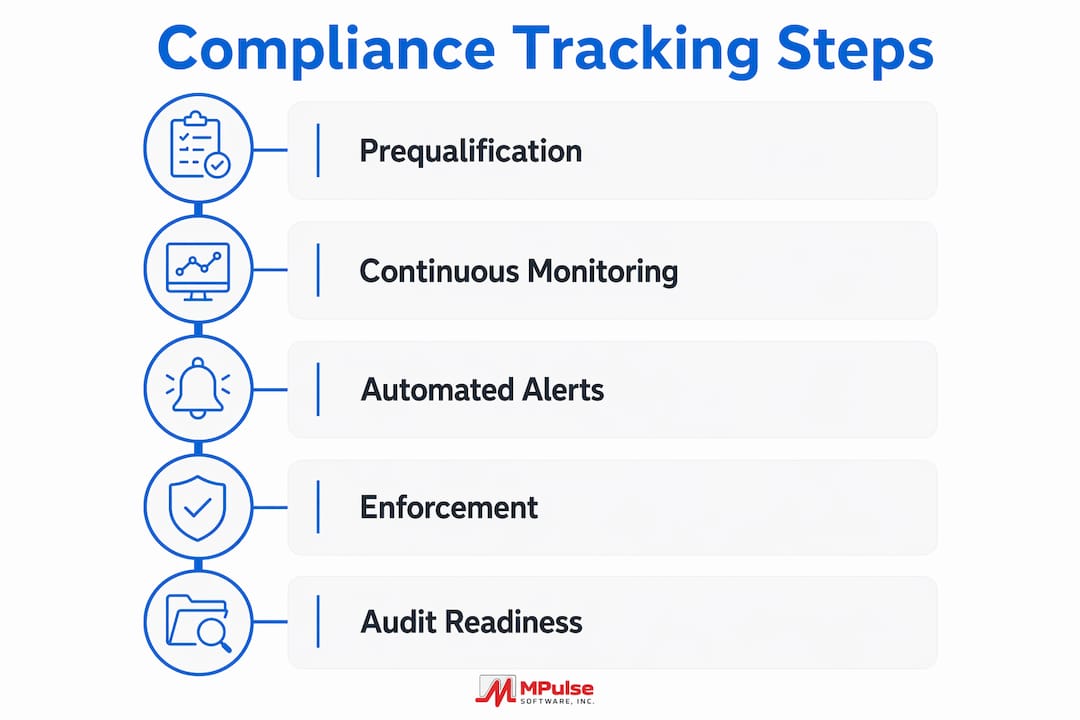
The foundational layer is prequalification. Before a contractor performs any work, compliance officers must confirm the following documents are current and valid:
- General liability and workers’ compensation insurance certificates
- Trade licenses and professional certifications
- Safety training records, including OSHA certifications where applicable
- Signed legal agreements, including indemnification and confidentiality clauses
- Background check results where required by site or client policy
Prequalification is not a one-time gate. Certificates expire, licenses lapse, and training records go stale. Continuous monitoring of expirations and renewals is what separates a functioning compliance program from a filing exercise. A structured contractor compliance program integrates prequalification, ongoing monitoring, and enforcement to maintain safety and legal standards throughout the contractor lifecycle.
Major contractor management platforms require contractors to maintain A or B grade safety and insurance scores to remain eligible for work. That grading standard reflects how seriously regulated industries treat ongoing compliance status, not just initial approval.

Manual tracking methods, including spreadsheets and email chains, consistently produce gaps. Expiration dates get missed. Renewed documents sit in inboxes rather than central records. Technology consolidates these records, automates renewal alerts, and creates a single source of truth for every contractor’s compliance status.
Pro Tip: Set automated alerts at 60, 30, and 7 days before any certificate or license expiration. This gives contractors enough time to renew without creating a gap in their work eligibility.
How does ongoing compliance tracking improve operational efficiency?
Embedding compliance tracking into daily maintenance workflows produces measurable efficiency gains. The most direct impact comes from enforcing vendor eligibility at the point of dispatch.
-
Eligibility blocking at dispatch. Enforcing vendor eligibility at dispatch prevents non-compliant contractors from being assigned work orders. This removes the need for manual pre-work checks and eliminates the risk of human error at the scheduling stage.
-
Reduction of manual verification steps. When compliance status is linked directly to the work order system, schedulers do not need to cross-reference separate spreadsheets or call compliance officers before assigning jobs. The system enforces the rule automatically.
-
Faster vendor approvals. Integrating compliance requirements directly into maintenance workflows accelerates vendor approvals and minimizes project delays. Contractors who maintain current documentation move through the approval queue without friction.
-
Reduced rework and project delays. Non-compliant vendors entering workflows create systemic liability. That liability compounds across multiple properties and projects in large maintenance portfolios. Catching eligibility issues before dispatch prevents the downstream cost of stopping work mid-project.
-
Improved scheduling accuracy. When compliance status is visible in real time, maintenance managers can plan work assignments with confidence. They know every contractor on the schedule meets current requirements.
Pro Tip: Use your digital work order system to flag compliance status directly on each work order. Technicians and schedulers see eligibility at a glance without leaving the platform.
Compliance-led vendor management also reduces the administrative burden on compliance officers. When the system handles routine verification and alerts, compliance teams can focus on exception management and audit preparation rather than daily document chasing.
What are the key challenges in maintenance contractor compliance management?
Compliance management for contractors fails in predictable ways. Understanding these failure patterns is the first step toward preventing them.
Control drift is the most common and most damaging failure mode. Treating compliance as a continuous discipline rather than a periodic audit prevents control drift and keeps safety and regulatory processes aligned with changing requirements. When compliance reviews happen quarterly or annually, the gaps between reviews become windows of unmanaged risk.
Fragmented documentation compounds the problem. When insurance certificates live in one folder, training records in another, and license copies in email threads, no one has a complete picture of any contractor’s status. Auditors do not accept partial records. Evidence on demand and a centralized, auditable compliance repository are what modern regulators require to confirm that compliance is actively followed, not just claimed.
Delayed renewals create eligibility gaps that go unnoticed until an incident or audit surfaces them. Without automated alerts, renewals depend on someone remembering to check. That is not a reliable system.
The table below compares the two primary approaches to compliance tracking:
| Approach | Method | Audit readiness | Risk level |
|---|---|---|---|
| Manual tracking | Spreadsheets, email, paper files | Low. Evidence is scattered and hard to retrieve quickly. | High. Gaps are common and often invisible until an incident occurs. |
| Automated tracking | Centralized platform with alerts and eligibility gating | High. Records are current, searchable, and exportable on demand. | Low. System enforces compliance before work begins. |
The practical fix for each challenge follows the same pattern: centralize records, automate alerts, and enforce eligibility at the point of work assignment rather than after the fact. Contractors operating in high-turnover environments or across large property portfolios benefit most from this shift. Keeping compliance processes updated as business and regulatory requirements change is a continuous operational responsibility, not a project with an end date.
How can technology platforms enforce compliance tracking in maintenance operations?
The shift from document tracking to enforcement-based compliance is the defining change in how maintenance contractors manage regulatory risk. Document tracking confirms that a certificate exists. Enforcement-based compliance confirms that a contractor is eligible to work today, and blocks the work order if they are not.
Embedded compliance checks in permit-to-work and dispatch workflows prevent non-compliant contractors from being assigned tasks. This shifts compliance from a checkpoint to a control layer. The difference matters because checkpoints can be bypassed under scheduling pressure. Control layers cannot.
Key features to look for in a compliance tracking platform include:
- Automated renewal alerts triggered at defined intervals before expiration
- Eligibility gating that blocks work order assignment for non-compliant vendors
- Centralized document storage with version control and expiration tracking
- Audit trail generation that produces timestamped records of every compliance action
- Integration with maintenance workflows so compliance status is visible at the scheduling and dispatch stage
Automation of renewals, alerts, and eligibility gating reduces operational slack and maintains audit readiness with minimal manual intervention. Platforms that connect compliance data directly to maintenance subcontractor management workflows eliminate the gap between knowing a contractor’s status and acting on it.
MPulse Software integrates compliance status directly with work orders and preventive maintenance schedules. Compliance officers and maintenance managers see the same data in real time. That shared visibility removes the back-and-forth that typically delays vendor approvals and work assignments. MPulse Software has built this capability for over 3,500 customers globally, with documented efficiency improvements of up to 40%.
Key Takeaways
Compliance tracking for maintenance contractors is most effective when it shifts from periodic documentation to continuous, system-enforced eligibility control at every stage of vendor engagement.
| Point | Details |
|---|---|
| Compliance is continuous | Treating compliance as an ongoing discipline prevents control drift and keeps vendor eligibility current. |
| Centralize all records | A single auditable repository makes audit-ready evidence available on demand without manual searching. |
| Enforce eligibility at dispatch | Blocking non-compliant vendors at the work order stage eliminates manual error and systemic liability. |
| Automate renewal alerts | Alerts at 60, 30, and 7 days before expiration prevent eligibility gaps from forming unnoticed. |
| Integrate with maintenance workflows | Connecting compliance status to scheduling and dispatch removes approval delays and improves project timelines. |
Why compliance tracking must become an operational control, not a checklist
I have spent years watching compliance programs fail in the same way. They start strong, with thorough prequalification and careful document collection. Then the daily pressure of operations takes over. Renewals get missed. A contractor whose insurance lapsed three weeks ago is still on the approved vendor list because nobody updated the spreadsheet. An audit arrives, and the compliance team spends two days reconstructing records that should have been current all along.
The uncomfortable truth is that most compliance failures are not caused by bad intentions. They are caused by systems that require humans to remember things that software should track automatically. When compliance depends on someone’s calendar reminder, it will eventually fail.
The contractors and compliance officers I respect most have made one clear decision: they treat compliance status as a live operational signal, not a historical record. They do not ask “was this contractor compliant when we hired them?” They ask “is this contractor compliant right now, before we assign this job?” That question, answered automatically by an integrated platform, is what separates organizations that pass audits from those that scramble through them.
The next evolution in this space is AI-assisted compliance monitoring, where systems flag anomalies in contractor behavior patterns, not just document expirations. That capability is coming faster than most compliance officers expect. The organizations positioned to benefit are the ones that have already moved their compliance data into centralized, structured platforms. You cannot apply AI to a spreadsheet.
— Mark
How MPulse Software supports compliance tracking for maintenance contractors
Maintenance contractors and compliance officers who need a connected system for tracking vendor eligibility, automating renewals, and maintaining audit-ready records will find MPulse Software built for exactly that purpose.
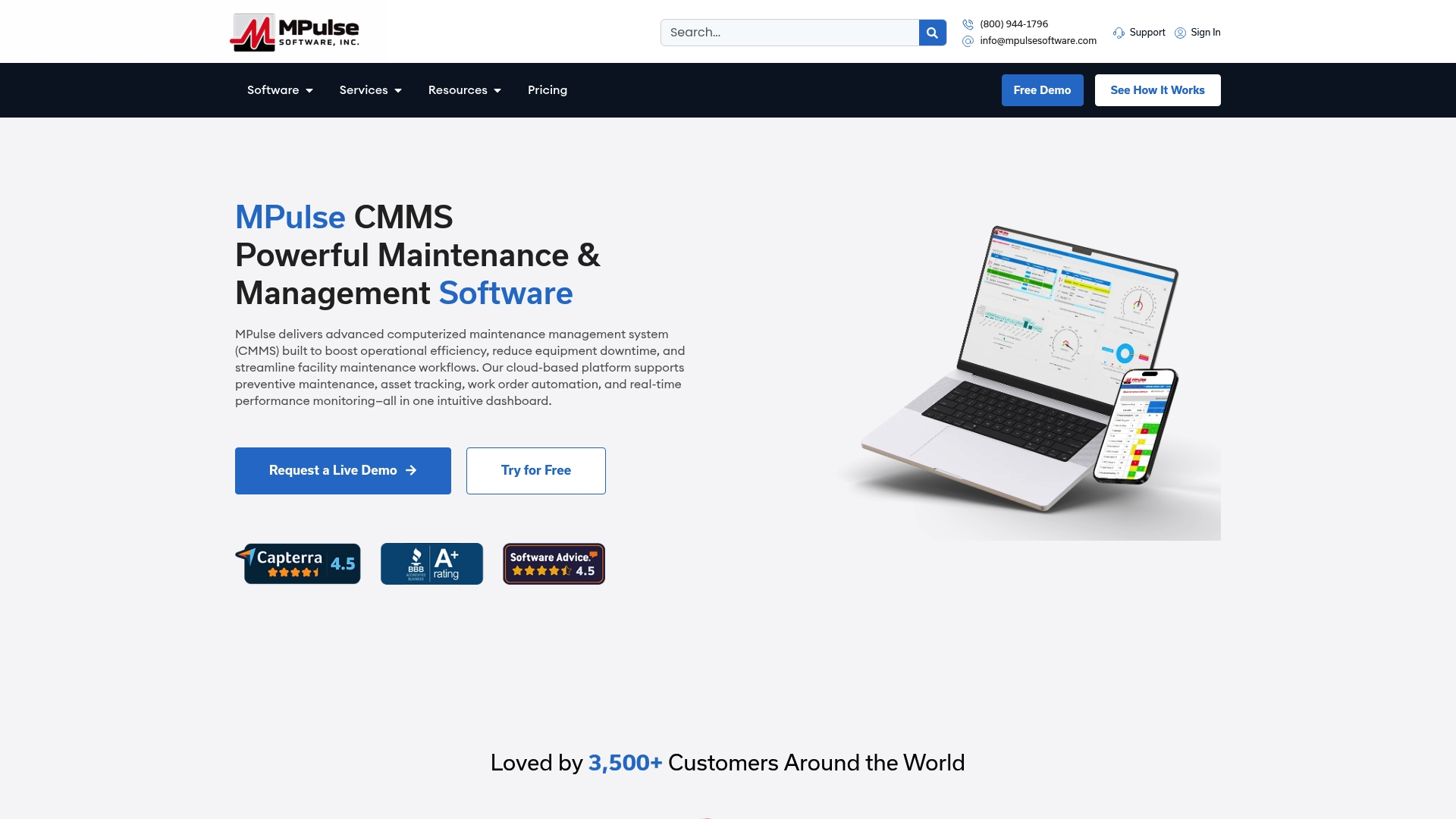
MPulse Software connects compliance status directly to work orders, preventive maintenance schedules, and vendor management workflows. When a contractor’s insurance or certification lapses, the system flags the issue before any work is assigned. Compliance officers get real-time visibility. Maintenance managers get accurate scheduling data. The result is fewer delays, fewer compliance gaps, and faster audit response. With over 3,500 customers globally and efficiency improvements of up to 40%, MPulse Software gives maintenance teams the tools to enforce compliance-led maintenance management without adding administrative overhead. Explore MPulse Software at mpulsesoftware.com.
FAQ
What is compliance tracking for maintenance contractors?
Compliance tracking for maintenance contractors is the ongoing process of verifying and enforcing contractor adherence to insurance, licensing, safety training, and regulatory requirements throughout the contractor engagement lifecycle. It is a continuous operational discipline, not a one-time approval step.
Why does compliance tracking matter for operational efficiency?
Enforcing vendor eligibility at the point of dispatch prevents non-compliant contractors from entering workflows, eliminating manual pre-work checks and reducing project delays caused by mid-work eligibility issues.
What documents does a contractor compliance program typically monitor?
A structured contractor compliance program monitors general liability and workers’ compensation insurance, trade licenses, safety certifications, signed legal agreements, and background check results, with continuous tracking of expiration and renewal dates.
How does automation improve maintenance contractor compliance?
Automation of renewal alerts, eligibility gating, and centralized document storage reduces manual intervention, prevents expiration gaps, and keeps compliance records audit-ready without relying on individual team members to track deadlines manually.
What is the biggest risk of manual compliance tracking?
Manual tracking creates fragmented documentation and missed renewals, which produce eligibility gaps that remain invisible until an audit or incident surfaces them. Centralized, automated platforms eliminate this risk by enforcing compliance at the system level.