
The Best Software for Electrical Businesses That Manage Recurring Asset Maintenance

If you run an electrical business, you already know how quickly recurring maintenance stacks up. Panels, breakers, switchgear, and lighting systems all come with their own inspection intervals, testing requirements, and documentation trail. Multiply that across multiple sites or customers, and suddenly you’re juggling spreadsheets, emails, photos, and handwritten notes just to keep everything straight. That’s where the right software makes a real difference. A strong software platform doesn’t just store information. It also brings order to the chaos. The Advantages of CMMS for Electrical Businesses CMMS, also called maintenance management software, offers big advantages: automated scheduling, standardized checklists, real‑time updates, and easy reporting tools. CMMS turns recurring maintenance from a scramble into a smooth process that supports your business instead of overwhelming it. Maintenance software keeps your asset data organized, helps you stay aligned with NFPA 70B requirements, and gives your team a predictable workflow for every recurring service visit. Instead of scrambling to remember what was done last time or hunting for missing paperwork, you get a system that keeps everything consistent and traceable. With the right tools in place, recurring maintenance stops feeling like a moving target and starts feeling like a smooth, reliable part of your business. As a result, your business continues to build on a foundation that supports compliance, strengthens customer relationships, and reduces stress for everyone involved. What Electrical Teams Actually Need from Maintenance Software Recurring electrical maintenance only works when everything is consistent and documented. The right software doesn’t just store information. It creates a predictable rhythm for your entire maintenance program. A strong CMMS platform helps you in different ways. Track every asset with clear history and details A good system gives you a complete picture of each asset: installation dates, past inspections, test readings, repairs, and known issues. When techs can see the full story, they make better decisions in the field. That helps them avoid repeating work or missing critical steps. Set up recurring maintenance schedules that run automatically Instead of manually rebuilding the same jobs every month or quarter, the software generates them for you. Automated scheduling keeps your NFPA 70B intervals on track, reduces admin time, and ensures nothing slips through the cracks when workloads spike. Keep NFPA 70B documentation tidy and easy to find Electrical maintenance comes with a heavy documentation load. A good platform organizes test results, inspection forms, photos, and reports so you can quickly prove compliance during audits or customer reviews. No more digging through folders or chasing down missing paperwork. Give techs simple checklists and testing steps in the field Clear, repeatable workflows help techs stay consistent across sites and teams. Whether they’re performing IR scans, torque checks, breaker testing, or visual inspections, the software guides them step‑by‑step, so the work is done the same way every time. Produce reports your customers can understand Clean, professional reports turn raw data into something meaningful. Customers can see what you inspected, what you found, and what needs attention, without getting lost in technical jargon. Good reports build trust and makes renewal conversations easier. Build steady recurring revenue without extra admin work When your maintenance program runs smoothly, you spend less time scheduling, chasing paperwork, or re‑explaining findings. That efficiency translates into predictable revenue, stronger customer relationships, and more time to focus on growth instead of busywork. Helpful Software Features for Electrical Asset Management A strong maintenance platform should make it easy to manage every asset across every customer site. Look for features like: Why CMMS Software Makes Recurring Electrical Maintenance Easier CMMS gives you the structure and visibility you need to keep recurring electrical maintenance running smoothly. Instead of relying on memory or manual scheduling, everything lives in one organized system that keeps your team aligned and your customers confident. Some of the biggest advantages of CMMS software include: Find the Best Software for Electrical Businesses Good software feels like a quiet partner in the background: organizing your asset data, generating recurring jobs automatically, guiding techs through inspections, and producing reports without extra effort. When the system fits the way your team actually works, everything becomes smoother. In the end, the best software isn’t just the one with the longest feature list. It’s the one that simplifies your day, supports your workflows, and helps you deliver consistent, reliable maintenance without the constant scramble. It’s easy to get started. Contact us. What is the best software for electrical businesses that handle recurring asset maintenance? The best software is the one that removes your biggest bottlenecks and keeps your team moving without extra stress. Every electrical business has different pressure points. Some struggle with documentation, others with scheduling, others with keeping asset histories straight across multiple sites. The right platform should take those headaches off your plate, not add new ones. What features should electrical maintenance software include? Look for features like asset tracking, recurring scheduling, mobile checklists, barcode scanning, documentation storage, test result capture, and customer‑friendly reporting. These tools help electrical teams stay organized and consistent across every job. How does software help with NFPA 70B compliance? Maintenance software supports NFPA 70B by automating inspection intervals, storing documentation in one place, and keeping complete asset histories. These features make it easier to prove compliance during audits and ensure nothing gets missed. Why should electrical contractors use CMMS for recurring maintenance? CMMS provides structure and automation. It reduces admin work, standardizes workflows, improves compliance, and gives you real‑time visibility into what’s due or overdue. It also helps you scale recurring service into predictable revenue. Can electrical maintenance software help technicians in the field? Yes. Most platforms, like MPulse, include mobile apps with checklists, testing steps, barcode scanning, photo capture, and offline access. Techs can complete inspections, update asset records, and submit reports directly from the job site. What types of electrical assets can I track in maintenance software? You can track panels, breakers, switchgear, transformers, lighting systems, generators, UPS units, and any other electrical equipment that requires inspections or testing. Each asset gets its own
Work Order Management Software for Small Business

A small business runs smoother when work orders stop living on sticky notes or in someone’s head. Work order management software for small business gives you a single place to create, assign, track, and complete tasks without the complexity or cost of enterprise systems. This guide helps you understand what work order management software is, why it matters, and how to choose the right platform for your small business. Why Small Businesses Need Work Order Management Software Small teams move quickly, which is great until tasks start slipping through the cracks. Work order software, also called CMMS software, gives you one shared hub where every work order, request, and update lives. Instead of chasing people down or trying to remember who said what, you can see the full picture in seconds. Work order software helps small businesses: For many small businesses, the biggest benefit is clarity. Work order software makes it easy to see what is happening, what is overdue, and what needs attention next. That kind of visibility helps teams stay aligned without adding extra meetings or complicated processes. The Problems Work Order Software Solves for Small Teams If your current system involves notebooks and memory, you already know the pain points. Tasks get missed. Two people might do the same job without realizing it. Customers wait longer than they should. And when someone asks for an update, you have to dig through messages or walk across the building to find the answer. Work order software solves these problems by pulling everything into one shared space. Instead of scattered information, you get a single source of truth. That means: Work order management software also helps small businesses build better habits. When your team uses the same system every day, you get reliable data that helps you plan maintenance and make smarter decisions about equipment and staffing. Features in Work Order Software That Matter for Small Business Small teams do not need a giant feature list. They need tools that make life easier without adding complexity. Work order software like MPulse Maintenance Software is designed with that balance in mind. It gives you the structure you need without overwhelming your team. Key features that support small businesses include: MPulse is known for being easy to adopt, even for teams that are not excited about new technology. The interface is clean, the workflows are intuitive, and the learning curve is gentle. When software feels approachable, your team actually uses it, which is the whole point. Why MPulse Stands Out Compared to Other Tools There are plenty of work order tools out there, but MPulse has a few advantages that make it especially appealing for small businesses. Small businesses choose MPulse because it feels like the right balance of power and simplicity. You get the features you need without the heavy feel of enterprise systems. How to Choose the Right MPulse Plan for Your Team Choosing the right MPulse plan starts with understanding how your team works today and what you want to improve. A few helpful questions include: Most small businesses benefit from starting with the essentials. MPulse makes it easy to add features as your needs evolve. The goal is to get your team using the system consistently so you can build good habits and get reliable data. Work Order Management Software for Small Business If you are searching for work order management software for small business, MPulse is a strong choice. It keeps things simple, reduces downtime, and gives your team the clarity they need to stay organized. Modern CMMS platforms like MPulse are affordable, easy to learn, and built to help small businesses operate with confidence. When your work orders live in one place and your team has a clear process to follow, everything runs smoother. Customers get faster service, employees feel more organized, and you get more time to focus on growing the business instead of chasing down tasks. Get started today. Contact us. What is work order software for small business? Work order software for small business is a digital tool that helps teams create, assign, track, and complete tasks in one place. It replaces paper, spreadsheets, and scattered communication so small teams can stay organized and reduce downtime. How does work order software help small businesses? Work order software helps small businesses by centralizing requests, improving communication, reducing missed tasks, and giving managers real‑time visibility into what is happening across the team. Why do small businesses need work order software? Small businesses need work order software to prevent tasks from slipping through the cracks, avoid duplicate work, speed up response times, and keep maintenance and service operations running smoothly. What features should small businesses look for in work order software? Small businesses should look for mobile access, simple work order creation, asset tracking, inventory tracking, preventive maintenance scheduling, reporting tools, and pricing that fits a small business budget. Is work order software easy for small teams to use? Yes. Most modern work order platforms are designed to be simple and intuitive so small teams can get started quickly without long training sessions. Can work order software help reduce downtime? Yes. Work order software reduces downtime by organizing tasks, scheduling preventive maintenance, and making it easier to track issues before they become bigger problems. Does work order software work on mobile devices? Most work order software includes mobile friendly tools so technicians and staff can update jobs, upload photos, and close out work orders from anywhere. Can work order software track equipment and asset history? Yes. Work order software stores asset details, past work orders, manuals, and maintenance history in one place so teams always know what happened last time. How much does work order software cost for small businesses? Pricing varies by vendor, but many platforms offer affordable plans designed specifically for small teams, often with monthly or per‑user pricing. Can work order software replace paper and spreadsheets? Yes. Work order software centralizes tasks, communication, and asset data so small businesses can move away
Cloud vs. On‑Premise CMMS: A Decision Framework for Compliance‑Heavy Industries

If you work in a regulated or security‑sensitive environment, choosing between a cloud CMMS and an on‑premise CMMS isn’t just an IT decision. It affects how you protect your data, meet compliance requirements, manage risk, and budget for the long haul. This guide breaks down the real‑world tradeoffs in a straightforward way. We’ll look at data sovereignty, security, compliance frameworks, and the true total cost of ownership. The goal is simple: help you make a confident, defensible decision that fits your operational reality. Why This Decision Matters More Than Ever Maintenance teams today rely on data for every part of their work. Asset histories, work orders, technician notes, IoT readings, and audit trails all feed the decisions that keep operations running. That information is sensitive, and in many industries, it is also heavily regulated. The stakes are high, which means one question becomes central to any CMMS decision: where should that data live, and who should control it. Cloud CMMS platforms offer speed, flexibility, and lower upfront costs. They reduce the burden on internal IT teams and make it easier to scale as your organization grows. On-premise systems offer a different set of advantages. They provide full control, complete isolation, and predictable security boundaries that can be essential in tightly regulated or restricted environments. Neither model is better in every situation. The right choice depends on your compliance landscape, your internal IT capacity, and your organization’s tolerance for risk. When you understand those factors clearly, you can choose the deployment model that protects your data and supports your long term operational goals. Data Sovereignty: Where Your Data Lives (and Why It Matters) Data sovereignty is one of the most important factors influencing CMMS deployment decisions. It refers to the laws and regulations that govern where your data is stored, how it is handled, and who has the legal right to access it. For maintenance teams that manage sensitive operational information, these rules can shape the entire technology strategy. When you choose your CMMS software, you are also choosing home for your data. For some organizations, the flexibility of cloud hosting works perfectly. For others, the rules are strict enough that only a fully controlled environment will do. Cloud CMMS: What to Expect On-Premise CMMS: What You Control If your organization must guarantee that data never leaves a specific physical location or jurisdiction, on-premise deployment is usually the safer and more compliant choice. Cloud platforms offer strong security, but they cannot always meet the strictest sovereignty rules. Understanding your regulatory landscape makes the decision much clearer. Security: Control vs. Shared Responsibility Security is often the point where cloud and on-premise debates become the most intense. Both deployment models can be secure, but they distribute responsibility in very different ways. Understanding that difference is essential for choosing the model that fits your organization’s risk profile. Cloud CMMS Security Cloud vendors operate under a shared responsibility model. They manage the infrastructure, the physical environment, the patching, and the core platform security. You manage user access, device hygiene, and internal policies that govern how your team interacts with the system. Upsides Tradeoffs On-Premise CMMS Security With on-premise deployment, the responsibility shifts almost entirely to your organization. You control the environment, the network, the patching schedule, and the security posture. Upsides Tradeoffs Cloud deployment gives you a stronger baseline security posture because vendors invest heavily in infrastructure and continuous updates. On-premise deployment gives you tighter control and isolation, which can be essential in regulated or restricted environments. The right choice depends on how much control you need and how much responsibility your team is prepared to take on. IT Infrastructure Costs: CapEx vs. OpEx Financial differences between cloud and on‑premise CMMS deployments become most apparent when you look at whether the costs fall under capital expenditures or operational expenditures. The two models follow very different cost structures, and understanding those differences helps teams plan realistically for both short term and long term budgets. Cloud deployment follows an operating expense (OpEx) model: Choosing the option for cloud CMMS often wins on predictability and simplicity. You pay for what you use, you avoid large capital investments, and you eliminate the hidden costs that come with maintaining physical infrastructure. On-premise deployment blends capital expenses with ongoing operating costs (CapEx + OpEx): Choosing on-premise CMMS can make sense if you already have the infrastructure and staff in place. However, when you account for hardware refresh cycles, licensing, and labor, it is rarely the cheaper option over time. Regulatory Compliance: The Deciding Factor for Many For compliance heavy industries, regulations often determine the deployment model before cost or convenience even enter the conversation. Some frameworks allow cloud hosting with the right controls. Others require full isolation and direct ownership of the environment. Cloud CMMS can support: Cloud vendors invest heavily in certifications and third party audits, which can help organizations meet a wide range of regulatory requirements. On-premise is often required for: In these cases, regulations prohibit third party hosting or require strict physical and jurisdictional control. When that is true, the decision is simple. You need on-premise. Total Cost of Ownership: The Five‑Year View Here’s a simplified comparison: Category Cloud On‑Premise Licensing Subscription Perpetual + support Hardware None Required IT Labor Low High Upgrades Automatic Project-based Security Vendor-managed Customer-managed Downtime Risk Low Medium–High Compliance Costs Lower (if vendor certified) Higher (internal audits) For most organizations, cloud ends up being 30–60% cheaper over a five‑year period. Cloud vs. On‑Premise CMMS: A Practical Decision Framework Here’s a simple way to evaluate your options and choose the CMMS model that truly fits your organization: Visual Checklist: Cloud vs. On-Premise CMMS 1. Compliance Requirements 2. Data Sovereignty 3. IT Capacity 4. Cost Structure 5. Operational Realities Your Likely Fit Industry‑Specific Recommendations Different industries operate under distinct requirements and regulations. Here’s a general overview of what each one needs. Industry Best Fit Why Healthcare Cloud or On‑Premise HIPAA‑compliant cloud is common; some prefer on‑prem for PHI control Defense & Aerospace On‑Premise ITAR, NOFORN,
CMMS Implementation Success Blueprint: Avoid These 7 Costly Mistakes

Rolling out new CMMS software offers one of the fastest ways to modernize maintenance, boost reliability, and finally get clean data you can trust. But here’s the part most vendors won’t say out loud: CMMS implementations fail all the time. Not because the software is bad, but because the rollout wasn’t set up for success. This practical, real‑world guide helps you roll out maintenance software without the headaches. It walks you through the seven mistakes that derail CMMS projects most often, why they happen, and how to avoid them. Mistake #1: Treating CMMS as “Just Software” Instead of a Change in How People Work What Usually Goes Wrong Teams buy the tool, install it, and assume everyone will magically start using it. But CMMS does more than add new buttons to click. It reshapes how work is requested, assigned, documented, and measured. That means it disrupts habits, routines, and long‑held expectations about how things have always been done. This mistake is where most implementations stumble. The challenge is not the software itself. It is the people side of the transition. Technicians may worry the system will slow them down or be used to scrutinize their work. Supervisors may feel overwhelmed by new workflows and data requirements. Leadership may underestimate the time and support needed to shift behaviors. Without intentional change management that includes training, communication, role clarity, and ongoing reinforcement, CMMS becomes just another tool that never reaches its potential. Technology can only deliver value when the people using it understand why it matters and feel supported in changing the way they work. Why It Matters A Better Approach Real‑World Example A food processing plant rolled out CMMS without involving technicians in the design of workflows or data entry processes. Adoption stalled at 22 percent because the system didn’t match how work was actually performed on the floor. After bringing technicians into the redesign process by mapping real workflows, simplifying forms, and adjusting task steps, adoption jumped to 91 percent in just three months. The difference wasn’t the software. It was ownership, clarity, and collaboration. Mistake #2: Importing Messy Data and Hoping It’ll Fix Itself What Usually Goes Wrong Organizations often rush the setup and import old spreadsheets directly into the software without taking time to clean or standardize the data. It feels efficient in the moment. But this shortcut creates long‑term headaches. Years of inconsistent naming, outdated assets, mismatched fields, and one‑off spreadsheet quirks get carried straight into the new system. The result is software that starts off cluttered and confusing. Duplicate assets appear under slightly different names. Critical fields are missing or misaligned. Preventive maintenance tasks do not match real equipment or actual maintenance practices. Instead of launching with a clean, reliable foundation, the organization ends up with a system that mirrors the chaos of the old spreadsheets. From day one, the software is harder to use, harder to trust, and harder to fix. What should have been a fresh start becomes a continuation of old problems, only now they are embedded in a system that was supposed to solve them. Why It Matters A Better Approach Real‑World Example A university imported 14,000 assets into their new CMMS without a data review. After go‑live, they discovered 3,200 of those assets were duplicates created over years of inconsistent spreadsheets. A full cleanup reduced the list to 9,800 verified assets. With accurate data and clearer PM assignments, their preventive maintenance compliance increased by 27 percent. Mistake #3: Designing Workflows That Look Great on Paper but Don’t Work in Real Life What Usually Goes Wrong Teams often set out with the best intentions: build an airtight workflow that captures every detail and leaves nothing to chance. In a meeting room, this version looks great and makes leadership feel confident everything is under control. But once that same workflow hits the shop floor, reality pushes back hard. To technicians, the workflow feels like a maze. Every additional field becomes another interruption. Every approval step becomes another delay. What looked like thoughtful structure in a conference room turns into extra taps, extra scrolling, and extra time they don’t have. Instead of helping them do their jobs, the workflow slows them down at the exact moment they need to move quickly. And the outcome is entirely predictable: technicians avoid the system whenever they can. They skip fields just to get through the form. Or they just enter placeholder text. They find shortcuts or revert to paper because it’s faster and doesn’t fight them. The workflow designed to create consistency ends up creating a widening gap between what the CMMS says is happening and what’s actually happening on the floor. Why It Matters A Better Approach Real‑World Example A manufacturing plant launched a CMMS with 18 required fields on every work order. Technicians pushed back immediately, and completion rates plummeted. After reviewing the workflow with a small pilot group, they reduced the required fields to six. Within weeks, work order completion rates increased by 40 percent, and the system finally reflected real maintenance activity. Mistake #4: Skimping on Training Because “The Software Is Intuitive” What Usually Goes Wrong Teams often assume that everyone will simply figure it out once CMMS goes live. But for technicians who have spent years working from paper job tickets, whiteboards, radio calls, or spreadsheets, it’s not a minor tweak. It’s a fundamental change in how they request work, document tasks, track parts, and communicate with supervisors. What feels intuitive to the project team can feel foreign, disruptive, or even intimidating to the people doing the work. Without structured, role‑specific training, users naturally fall back on what they know. They rely on memory instead of the system. If they’re unsure what belongs in a field, they skip it. They enter incomplete data or make honest mistakes that ripple through reports and KPIs. And when the system slows them down or they’re afraid of doing it wrong, they avoid it altogether. The result is predictable: inconsistent data, frustrated technicians, and software
A Complete Guide to Maintenance Types and When to Use Them

Choosing the right maintenance strategy plays a major role in saving money, keeping workers safe, and preventing downtime. When maintenance is delayed or overlooked, small warning signs can turn into equipment failures, safety hazards, or costly shutdowns. What starts as a loose bolt, a worn seal, or a missed inspection can quickly grow into a problem that affects an entire facility. In 2018, a large power plant on the East Coast had a major equipment failure that caused a long blackout in the surrounding area. Investigators later found that several parts inside the plant had not been inspected or replaced on time. A few low‑cost repairs could have prevented the entire shutdown. This example shows how poor maintenance can lead to serious consequences. A strong maintenance plan that includes preventive, corrective, and condition‑based strategies can stop many problems before they become dangerous or expensive. Maintenance is not only about preventing issues. It also includes fixing equipment after something breaks. The right mix depends on your industry, the type of equipment you use, and what happens if something fails. For example, replacing a broken microwave in a school cafeteria is simple and low‑risk. But a broken HVAC system in a hospital can put lives at risk. This guide explains the main types of maintenance, when to use them, and how to put them into practice. Key Takeaways Understanding Different Types of Maintenance Most maintenance falls into two main groups: Inside these groups are more specific approaches, such as corrective maintenance for known issues and unplanned corrective maintenance for sudden failures. Let’s look at the main preventive strategies in more detail. Preventive Maintenance Strategies Preventive maintenance can be divided into three main types. 1. Time‑Based Maintenance Time‑based maintenance happens on a set schedule, no matter what condition the equipment is in. It is like getting your teeth cleaned every six months even if nothing hurts. This approach works well for equipment that: For example, in water treatment plants, filters must be replaced on a strict schedule to keep drinking water safe. In printing factories, rollers and belts are changed after a certain number of hours because they wear down at a steady rate. 2. Corrective (Condition‑Based) Maintenance Corrective maintenance happens when equipment shows signs of wear or damage. Instead of following a fixed schedule, workers monitor the equipment and act when something changes. This approach includes: For example, in a paper mill, machines that press and dry paper are checked for changes in vibration. If vibration increases, it may mean a bearing is wearing out. In a bakery, ovens are monitored for temperature changes that can signal a failing heating element. 3. Predictive Maintenance Predictive maintenance uses technology to predict when equipment will fail. Sensors collect data, and software analyzes it to spot early warning signs. Predictive maintenance often includes: For example, wind farms use sensors on turbines to track vibration, blade movement, and motor temperature. Small changes can warn technicians long before a breakdown. In large warehouses, conveyor systems use sensors to track motor power and belt tension so repairs can be planned before the system stops working. Reactive Maintenance Strategies Reactive maintenance happens after equipment breaks. It is sometimes called run to failure. This approach can be useful when the equipment is low cost, easy to replace, or not critical to safety. Reactive maintenance includes two main types: Reactive maintenance is not always a bad thing. For example, in a school, a broken pencil sharpener can simply be replaced when it stops working. In a grocery store, a small display light can be fixed after it burns out without causing major problems. But reactive maintenance becomes risky when the equipment is important for safety or production. A broken cooling pump in a chemical plant or a failed emergency alarm in a factory can cause serious harm. In these cases, waiting for failure is not an option. Comparing Preventive and Reactive Maintenance Both preventive and reactive maintenance have a place in a good maintenance plan. The key is knowing when to use each one. Preventive maintenance works best when: Reactive maintenance works best when: For example, a large food processing plant may use preventive maintenance for refrigeration units because failure could spoil thousands of pounds of food. At the same time, the same plant may use reactive maintenance for small conveyor rollers that are cheap and easy to swap out. How to Choose the Right Maintenance Mix There is no single plan that works for every facility. The right mix depends on your equipment, your industry, and the risks involved. Many organizations aim for about 80 percent preventive maintenance and 20 percent reactive maintenance. This ratio helps reduce downtime while still allowing flexibility for simple repairs. To choose the right mix, consider: For example, a warehouse might use predictive maintenance for forklifts because they are essential for daily operations. At the same time, the warehouse might use reactive maintenance for office printers because they are not critical to safety or production. Putting Your Maintenance Plan Into Action A good maintenance plan is only effective if it is carried out correctly. Success depends on strong communication, clear steps, and teamwork. To implement your plan: For example, a packaging plant might train workers to listen for unusual sounds in sealing machines. If workers report changes early, technicians can fix problems before the machines break down. Prevent Problems Before They Start Maintenance is more than fixing things. It is a strategy that protects people, saves money, and keeps operations running smoothly. By understanding the different types of maintenance and choosing the right mix for your facility, you can prevent many problems before they start. A strong maintenance plan helps you stay ahead of failures, reduce downtime, and create a safer workplace. Whether you manage a small building or a large industrial site, the right approach makes all the difference. Get started today. Contact us. Frequently Asked Questions What are the types of maintenance? The main types of maintenance are preventive maintenance, reactive maintenance,
A Practical Guide to Simplifying Facility Maintenance with CMMS

Facility maintenance teams face a steady stream of demands every day. Priorities can change quickly, and the pressure to keep everything running smoothly never really stops. For many facility maintenance managers, staying organized is one of the hardest parts of the job. They oversee buildings, equipment, people, and budgets, often all at the same time. CMMS software simplifies facility maintenance in several important ways. These tools do more than track maintenance tasks. They help maintenance teams manage information, people, and assets across an entire organization. This practical guide to simplifying facility maintenance will get your team started. Simplifying Facility Maintenance with CMMS Systems Integration Facility maintenance teams share information with other departments, making clear and consistent data access essential. Purchasing relies on up-to-date maintenance records to manage budgets, approve work, and track parts and inventory costs. Human resources may need visibility into labor hours, certifications, and staffing requirements, while executives depend on accurate reporting to evaluate performance, prioritize capital investments, and make informed strategic decisions. Centralizing information and making it easily accessible helps maintenance teams avoid duplicate data entry and reduce errors. This transparency improves coordination across departments and allows maintenance managers to spend less time compiling reports and more time focusing on planning, reliability, and long-term improvements. CMMS software allows information to move easily between systems, with data flowing both in and out so the same information does not have to be entered multiple times. This capability saves hours of paperwork and reduces errors. With less time spent on forms and reports, more time can be devoted to planning and problem-solving. Scalability After a facility maintenance department implements CMMS software, the system must continue to evolve as facilities grow and operational demands expand. Adding new buildings, equipment, and infrastructure increases the number of assets to track, the volume of work orders to manage, and the amount of data required for planning and reporting. A scalable CMMS can accommodate this growth by supporting additional users, locations, and assets without sacrificing performance or usability. It allows maintenance teams to adjust workflows, preventive maintenance schedules, and reporting structures as complexity increases. When a CMMS is designed to scale, it helps departments maintain consistency, control, and visibility across all facilities, even as workloads grow and operations become more demanding. CMMS software should make it straightforward to add users, enable new features, and onboard and train new employees without disrupting daily operations. This adaptability allows the maintenance team to manage a growing workload more effectively and to maintain consistency across facilities. Rather than outgrowing technology, scalability enables teams to adjust and configure the system to match a continually changing environment, supporting long-term growth and stability. User Management User management also plays a key role in effective facility maintenance operations, especially as teams grow and responsibilities become more specialized. Features such as MPulse Role-Based Access Control allow organizations to define who can view, enter, and modify information. Maintenance technicians, supervisors, managers, and service requestors can only access the tools and data relevant to their roles. This approach keeps the system intuitive for everyday users, reduces clutter, and minimizes the risk of errors caused by unnecessary or confusing options. At the same time, role-based access strengthens data security by restricting sensitive information, such as labor details, costs, or administrative settings. For facility maintenance managers, this controlled access protects critical data while still enabling teams to work efficiently and independently. Security Security is another area where CMMS software makes a difference. Managing access across a large organization can be a significant challenge, especially with multiple locations. CMMS software helps teams stay organized and compliant by centralizing security-related data, reducing paperwork, and controlling access, allowing facility managers to maintain both efficiency and safety. Security demands have also increased substantially over the past decade, with new regulations, stricter controls, and additional oversight requiring more documentation and accountability. These changes have added significant administrative workload to maintenance operations. Without the right tools in place, managing this level of tracking would be extremely difficult. For example, lost or misplaced keys create safety risks and often lead to wasted time and unnecessary follow-up. By using tools like MPulse Key and Lock Management, maintenance teams can track keys and authorized users in one centralized system. They can see who has a key, when it was checked out, and when it is due to be returned. This visibility reduces time spent searching for keys or tracking down staff. It also supports more consistent security practices across an organization. Mobility Maintenance work rarely happens behind a desk. Technicians spend most of their time in the field, moving between buildings and responding to issues as they arise. A mobile-friendly CMMS like MPulse supports this reality by giving team members real-time access to the system wherever they are. Mobile CMMS enables technicians to report problems, receive assignments, update work orders, and record labor and parts directly from their devices. They don’t need to return to the office to check schedules or enter information at the end of a shift. This immediate access keeps work moving without unnecessary delays and helps reduce equipment downtime. As a result, supervisors gain better visibility into job status. Additionally, technicians stay informed about priorities and changes as they happen. Mobile access also improves communication across the team, ensuring that everyone is working with the most current information. The result is faster response times, more accurate data, and a more efficient maintenance operation overall. CMMS Supports Facility Maintenance Teams Together, these features show how CMMS software supports modern facility management. It helps teams stay organized, improve security, and make better use of their time. Facility maintenance management is about more than fixing equipment. It is about creating safe, reliable spaces where people can work, learn, and live. By reducing paperwork, improving visibility, and supporting smarter decisions, CMMS software helps facility managers do their jobs better. It’s easy to get started. Contact us.
Top CMMS Software in 2026
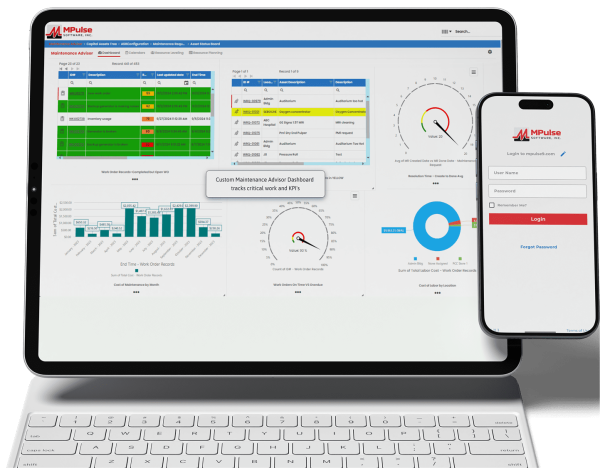
Maintenance teams face pressure to do more with fewer resources, but the top CMMS software platforms in 2026 are meeting the challenge. Today’s leading solutions go beyond basic work order tracking, providing preventive and predictive maintenance, real-time asset insights, mobile-friendly design, and data-driven reporting to support smarter, more proactive operations. Whether your team manages a single facility or a global asset portfolio, modern CMMS platforms improve reliability, reduce downtime, and gain clear insight into maintenance performance. As a result, finding the right software choice serves as the foundation for the year ahead. Whether you’re moving away from spreadsheets or replacing an existing system, this comparison highlights several of today’s leading CMMS solutions to help you find the right fit. 1. MPulse CMMS MPulse CMMS stands out as a flexible, enterprise-ready solution designed to support proactive maintenance strategies across a wide range of industries. Top features include comprehensive asset management through a centralized system that captures asset details, maintenance histories, warranties, and documentation. All this data links directly to work orders, parts, and schedules for full lifecycle visibility. Work order management is straightforward, with easy creation, scheduling, and tracking supported by automated alerts and maintenance calendars. Preventive and predictive maintenance capabilities allow teams to schedule work based on time, usage, or condition data, with optional integrations supporting predictive initiatives. Inventory and purchasing tools help track spare parts, monitor stock levels, and automate purchasing to avoid downtime caused by missing components. Reporting and dashboards provide clear insights into KPIs, costs, and performance metrics, while integrations with ERP, accounting, and other business systems support scalable, connected operations. Biggest Benefit of MPulse CMMS = Adaptability MPulse’s biggest benefit lies in its ability to adapt to organizations of all sizes while improving asset reliability and reducing downtime. The customizable design supports industries ranging from manufacturing and utilities to healthcare, education, and government facilities. MPulse can be deployed in the cloud or on-premises, allowing organizations to align with their IT and compliance requirements. Its concurrent licensing model is especially helpful for teams that work in shifts, as it allows multiple users to share a limited number of licenses, keeping costs under control. MPulse CMMS User Reviews Users frequently praise MPulse for balancing depth and usability. Many note that its strong reporting tools and flexibility make it a long-term solution rather than a system teams quickly outgrow. Reviewers also recommend MPulse’s affordable implementation services to speed adoption and ensure success. Users praised MPulse for: MPulse has allowed us to track hundreds of assets across multiple types and accurately schedule maintenance for those assets. Before MPulse, our preventive maintenance simply didn’t get done, and our spare parts inventory tracking was stuck in the stone age. We were never sure what parts we had or where to find them. Now we’re able to track inventory accurately and always have the necessary spare parts on hand. – Caleb C. on Capterra MPulse makes it easy to track assets and manage work orders and work order history. You can log machine hours and set hour-based work orders. – Vern B. on G2 For our campus, it made submitting requests easier for users, and they are able to receive email notifications based on the status of their work orders. Building users appreciate its ease of use when submitting requests to the Physical Plant. Maintenance staff can be held accountable for performance, and with preventive maintenance procedures being scheduled and completed, downtime for critical equipment has decreased. – Christopher B. on Capterra We’ve been using MPulse for the last four years and have no plans to stop. We appreciate how it helps us keep track of all our devices without relying on stacks of spreadsheets for updating, tracking, and monitoring. MPulse does the work for us. – Joel S. on Software Advice Strengths of MPulse CMMS Customers consistently give MPulse strong scores on Software Advice, with overall ratings around 4.5 out of 5 stars and an excellent user satisfaction rating of about 91%, meaning the vast majority of users would recommend it. Many users say MPulse substantially improves their maintenance operations by streamlining work order tracking, preventive maintenance, and asset management workflows. One verified reviewer described it as a “very comprehensive and complete CMMS” that they’re glad they chose after evaluating alternatives. Customers frequently emphasize responsive and helpful customer support, with numerous reviews pointing out how support staff assist quickly with questions or issues, helping keep operations moving. Another common positive theme is that once MPulse is properly configured, it can simplify tracking maintenance tasks, inventory, and historical data, freeing teams from paper logs or spreadsheets. Long-term customers like St. George Steel, IKEA US West, Reed College, and Northwell Health mention that MPulse “simplified keeping track of what we do” and that it’s easy to tailor the program to facility maintenance needs. Affordable Pricing Pricing for MPulse varies based on deployment type, number of users, and selected modules. Plans generally start around $49 per user per month, with additional costs for advanced features such as predictive maintenance and enterprise reporting. A free demo and custom quote are available. 2. Maintenance Connection Maintenance Connection is a robust CMMS designed for organizations that need deep asset management, strong preventive maintenance capabilities, and enterprise-level scalability. The platform focuses on helping maintenance teams plan, track, and continuously improve their operations through data-driven decision-making. Key features include advanced work order management with configurable workflows, preventive and predictive maintenance scheduling based on time, meter readings, or condition data, and detailed asset tracking with full maintenance histories and documentation. Maintenance Connection also offers inventory and parts management, labor tracking, and comprehensive reporting tools that help teams analyze performance, costs, and compliance metrics. Mobile access enables technicians to receive assignments, update work orders, and access asset data in the field. User Reviews Organizations choose Maintenance Connection for its depth, configurability, and suitability for complex environments. The platform is suited for teams managing large asset portfolios and strict compliance requirements. Although it requires much aid and experience with the application, once
Scheduled Maintenance That Actually Prevents Problems

When equipment breaks down, work stops, money is lost, and people get frustrated. That’s why many companies schedule maintenance tasks to take care of equipment before it breaks. But planning and tracking that work can get complicated. CMMS and scheduled maintenance prevent problems by helping your team plan, document, and track maintenance work. It makes sure the right tasks happen at the right time, and it keeps everyone organized. What Is Scheduled Maintenance? Scheduled maintenance is the practice of doing regular check-ups on equipment so problems don’t have a chance to grow. Instead of waiting for something to break, maintenance teams check equipment and other assets early, replace worn parts, and make adjustments before things go wrong. You prevent the problem by staying ahead of it. Some common scheduled maintenance tasks include: These tasks may seem simple. But skipping them can lead to expensive breakdowns in the future. CMMS can remind you when something needs to be done. Often, problems happen because maintenance teams don’t have a good system to keep track of everything. They may forget tasks, lose paperwork, or miss an important warning sign. Sometimes maintenance teams are so busy fixing emergencies that they don’t have time to focus on routine work. That means more downtime, more repair costs, and more stress for everyone. How CMMS Helps Prevent Real Problems CMMS prevents many of the issues that make scheduled maintenance difficult. It keeps all maintenance information in one place and makes it easy for teams to stay organized. Here are some ways CMMS software and scheduled maintenance work together to prevent problems. 1. Automated Reminders CMMS sends alerts when it’s time to do a task. No one has to remember dates or search through paperwork. The system tells workers what needs to be done and when. 2. Easy-to-Follow Work Orders Work orders explain what task needs to happen, where it is, what tools are needed, and how long it should take. CMMS organizes all of this data so maintenance teams can follow clear instructions. 3. Real-Time Updates When a technician finishes a task, they can check it off in CMMS right away, even from a phone or tablet in the field. This capability keeps everyone up to date, including managers who want to see what’s been completed. 4. Data That Helps You Make Better Decisions CMMS tracks the history of each piece of equipment. Over time, it shows patterns like how often an asset breaks down or which parts wear out the fastest. This information helps teams choose the best time to replace equipment, order parts early, and prevent failures. 5. Less Paperwork, Less Stress Instead of storing piles of binders, clipboards, and sticky notes, CMMS keeps everything electronically. It’s easier to find information, and nothing gets lost. The Benefits of Scheduled Maintenance Done Right When scheduled maintenance is supported by a CMMS, everyone benefits. What Makes a CMMS Effective? Not all CMMS programs are the same, but the best ones share a few important features: Scheduled maintenance software doesn’t have to be complicated to work well. In fact, simple systems are often the most effective because people are more likely to use them every day. Getting Started with CMMS and Scheduled Maintenance If your team is new to scheduled maintenance or wants to improve its current system, starting with CMMS is a smart step. Begin by entering your equipment list, setting up basic preventive tasks, and scheduling reminders. Over time, you can add more details, track performance, and fine-tune your maintenance plans. You don’t have to fix everything at once. Even small changes, like doing regular inspections or tracking tasks electronically, can prevent big problems later. Scheduled Maintenance Prevents Problems Scheduled maintenance works best when it’s organized, consistent, and supported by good tools. CMMS makes this possible by turning simple reminders and tasks into a complete system for keeping equipment healthy. When used well, it helps companies avoid breakdowns, reduce costs, and stay productive. In the end, scheduled maintenance isn’t just about fixing machines. It’s about preventing problems before they happen. CMMS is one of the best ways to make that happen. Get started today. Contact us.
Top Three CMMS Platforms Right Now
If you’re shopping for CMMS software, narrowing the field to three solid contenders makes the decision a lot easier. These top three CMMS platforms each bring different strengths to the table. Which one you pick depends on whether you prioritize depth of features, ease of use, or speed of adoption. Let’s walk through what each does best, who it’s best for, and the pricing highlights you’ll want to know. #1: MPulse CMMS MPulse positions itself as a mature CMMS for teams that need comprehensive preventive maintenance scheduling, detailed work-order workflows, inventory and vendor tracking, and strong reporting. Additionally, the product emphasizes adaptability across devices and offers tiered packages that scale from small teams to enterprise setups. MPulse also highlights a long track record and thousands of customers using its platform. On pricing, MPulse publishes a Professional edition price point intended for small to midsized organizations. Their published per-concurrent-user figure is intended as a baseline though enterprise needs. MPulse provides implementation and training services designed to streamline and accelerate the rollout process. If you have complex equipment hierarchies, compliance reporting needs, or want deeper labor and vendor controls, MPulse is built for that flexibility. Who Should Consider MPulse MPulse is a great choice for facilities or manufacturing teams that need tried-and-true CMMS capabilities and good software support. Customers are typically ready to invest in configuration, training, and reporting to squeeze operational gains. #2: Limble Limble focuses on making maintenance simple and fast for teams that want mobile apps, dashboards, and asset histories. Limble often touts itself as highly rated for ease of use and places emphasis on unlimited assets and user-friendly work order management. These features can help small to medium teams adopt quickly and get measurable uptime wins. Pricing for Limble includes tiered plans (including a Standard plan in the low-to-mid tens of dollars per user per month and higher tiers for expanded inventory, analytics, and advanced features). They also provide a calculator to estimate pricing based on user counts and required modules. #3: MaintainX MaintainX is built around the frontline user: quick work-order creation from mobile devices, checklists and SOPs for technicians, QR/barcode scanning for assets, and simple inventory controls. Lately MaintainX has emphasized AI-driven suggestions to help reduce unplanned downtime, alongside a limited freemium model that lets small teams start for free and upgrade as needs grow. MaintainX’s pricing structure includes a free/basic tier and paid plans that add preventive maintenance scheduling, condition-based triggers, and expanded parts and permissions features. That makes it suitable for smaller sites, multi-location franchises, or operations teams that want a modern interface and lower friction to get started. The Right CMMS for Your Team The right CMMS depends on factors such as your team size, the complexity of your assets, your available budget, and how quickly you need to see results. A small maintenance crew managing a handful of critical machines will have very different priorities than a multi-site operation with thousands of assets and a dedicated reliability team. To make the evaluation process manageable, start by identifying your top three “must-have” capabilities. These should be the features that directly impact your day-to-day operations. For example, the ability to set preventive maintenance schedules, track and control spare-parts inventory, or ensure technicians can access work orders offline when connectivity is limited. Once those priorities are clear, schedule short demos with each vendor and keep the focus tightly on those use cases. This approach helps you see how the system performs in the areas that matter most. Have questions? We can help. Contact us.
Facility Maintenance KPIs to Track in CMMS

Tracking the right facility maintenance KPIs in your CMMS helps you measure performance, reduce downtime, control costs, and keep your operations running smoothly. When you purchase or upgrade your CMMS, you expect things to improve. Maybe you want faster repairs, fewer breakdowns, or better tracking. But how do you know if the upgrade is actually working? The answer is simple: you measure it. CMMS helps you understand what’s going well, where you need to improve, and how your facility is performing over time. These metrics give you real numbers that you can use to make better decisions and keep your team on the right path. Below are the key CMMS KPIs facility managers should focus on right after implementation. Core Facility Maintenance KPIs After your CMMS purchase or upgrade, you want to focus on three core maintenance metrics: Mean Time to Repair (MTTR), asset uptime, and work order completion rates. These facility performance indicators help you understand the basics of how well your maintenance program is working day to day. Mean Time to Repair (MTTR) MTTR measures the average time it takes to repair equipment once it breaks down. A lower MTTR means your team is fixing issues faster. If your new CMMS improves scheduling, communication, or access to documentation, you should see MTTR go down within the first few months. If it doesn’t, that might mean your workflows need more fine-tuning or your team needs additional training. Asset Uptime Asset uptime tracks how often your equipment is up and running compared to when it is down. High uptime means your critical systems (i.e., HVAC units, production machines, or building controls) are available when you need them. After upgrading your CMMS, one of the first things you should notice is better visibility into preventive maintenance schedules. Watching this KPI should help prevent breakdowns and increase uptime overall. Work Order Completion Rate This KPI shows how many work orders are being completed on time. If your CMMS offers improved mobile access, automated alerts, or easier data input, your completion rate should rise. A high on-time completion rate means your maintenance team is staying organized and responding quickly to requests. It also shows that your CMMS is helping your team work more efficiently. Efficiency and Utilization Maintenance Metrics Once you have a good handle on the core KPIs, the next step is to look at how efficiently your team is working. These maintenance metrics reveal whether your resources, time, and equipment are being used effectively. Technician Productivity Technician productivity measures how much work each technician is completing. CMMS should make it easier for technicians to receive assignments, find instructions, and update progress. After implementation, look for an increase in the number of tasks completed per technician or a decrease in time spent moving between jobs. Scheduled vs. Reactive Work Every facility aims to increase scheduled maintenance and reduce emergency repairs. Tracking the percentage of planned work versus reactive work gives you a clear picture of the stability of your maintenance program. CMMS should shift your team toward more preventive work, which usually costs less and takes less time in the long run. Inventory Turnover If your CMMS includes inventory tracking, this KPI helps you understand how often parts and supplies are used and restocked. Strong turnover means you’re keeping the right amount of inventory, not too much and not too little. This KPI is especially important if you manage a large stockroom or want to prevent delays caused by missing parts. CMMS Cost and Sustainability Indicators Your facility performance indicators should also include metrics that track costs and environmental impact. These numbers help you make smart budget decisions and support sustainability goals. Maintenance Cost per Asset This KPI shows how much you’re spending to maintain each asset. It includes labor, parts, and time. If you upgraded to a more powerful CMMS, you should gain better insight into which assets cost the most to maintain. This data can help you decide whether to repair, replace, or upgrade specific equipment. Energy Usage Some modern CMMS platforms allow you to track energy consumption. Even if yours doesn’t, you can still connect utility data to your maintenance program. Watching energy usage over time helps you spot inefficient equipment or areas where upgrades could save money. Waste Reduction and Sustainability Metrics If your facility has sustainability goals, a CMMS can help track things like reduced paper use, fewer emergency callouts, or lower emissions from equipment. By logging inspections and preventive maintenance, you can also prevent leaks, wasted materials, or environmental hazards. How to Use Dashboards to Visualize Results Dashboards are one of the most powerful tools in any CMMS. They turn raw data into clear charts, graphs, and alerts that help you understand your facility maintenance KPIs at a glance. A good dashboard shows you what’s happening right now, what needs attention, and how your numbers are trending over time. In MPulse, for example, you can set up dashboards to monitor your most important KPIs, such as open work orders, overdue tasks, upcoming preventive maintenance, and asset performance. You can also create custom views for each department or technician. For example, a technician might need to see their daily assignments, while a facility manager might need a high-level view of total costs and workload. Dashboards also help you communicate with leadership. Instead of digging through spreadsheets, you can show them graphs that make it easy to understand improvements or justify budget requests. When used correctly, dashboards turn your CMMS into a real-time decision-making tool. Ready to Improve Your Performance? Tracking the right facility maintenance KPIs is the best way to measure success after upgrading your CMMS. These metrics give you a clear picture of performance, efficiency, and cost savings. They also help you catch problems early and keep your facility running smoothly. Get started. Contact us.