TL;DR:
- Preventive maintenance in hospitals involves scheduled servicing of equipment to prevent failures and reduce downtime. Hospitals implementing proactive strategies experience significantly fewer unplanned outages, longer asset lifespans, and better compliance records. Utilizing data-driven and predictive maintenance further lowers failures and operational costs while enhancing patient safety.
Preventive maintenance in hospitals is defined as the scheduled, proactive servicing of medical equipment and building systems to prevent failures before they occur. The industry term is “planned preventive maintenance” (PPM), and it stands in direct contrast to reactive, break-fix approaches. Hospitals using proactive maintenance strategies see 52.7% fewer unplanned downtime events compared to reactive approaches. That figure alone makes the case for PPM as a core operational discipline, not an optional budget line. The benefits of preventive maintenance in hospitals extend from patient safety and regulatory compliance to measurable cost savings and longer asset life.
1. How does preventive maintenance reduce unplanned downtime?
Unplanned downtime in a hospital is not just an inconvenience. It disrupts surgical schedules, delays diagnostic imaging, and forces staff to improvise with backup equipment that may not meet the same performance standards. The financial and clinical costs compound quickly.
Hospitals that schedule preventive maintenance perform repairs during planned windows, minimizing disruption to critical care and improving patient throughput. This means maintenance teams work during overnight hours or low-census periods rather than pulling equipment offline during peak clinical demand.
The reliability gains are significant:
- Proactive maintenance programs produce 78.5% fewer equipment failures compared to reactive strategies.
- Scheduled inspections catch worn seals, degraded calibration, and electrical faults before they cause full system failures.
- Planned parts replacement eliminates the scramble for emergency procurement, which carries both cost premiums and lead-time risk.
- Maintenance windows can be coordinated with clinical scheduling systems to protect high-priority care areas.
Pro Tip: Integrate your preventive maintenance calendar with real-time condition monitoring alerts. When sensor data shows a parameter trending outside normal range, you can advance the next scheduled service rather than waiting for a failure.
2. In what ways does preventive maintenance extend equipment lifespan?
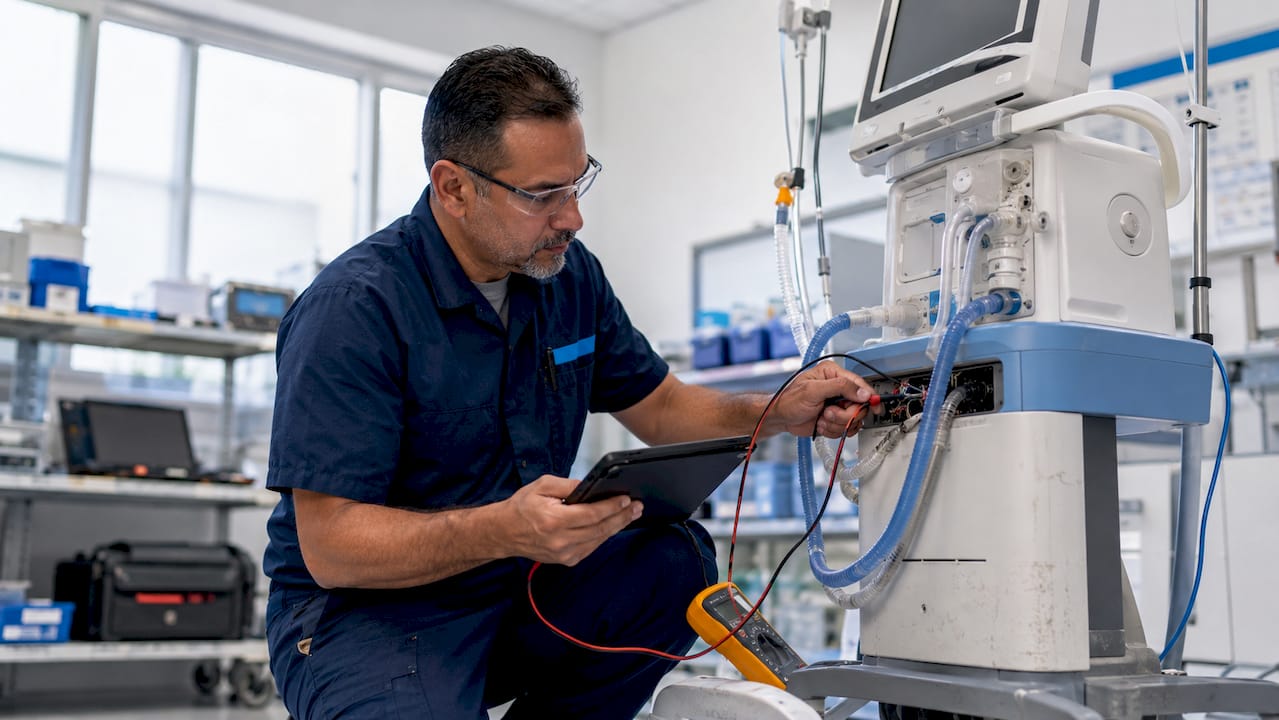
Regular maintenance prolongs medical equipment lifespan by preventing minor issues from escalating into major failures. A ventilator with a worn filter works harder, generates more heat, and degrades faster than one serviced on schedule. The same principle applies to MRI cooling systems, sterilization autoclaves, and HVAC units serving operating rooms.
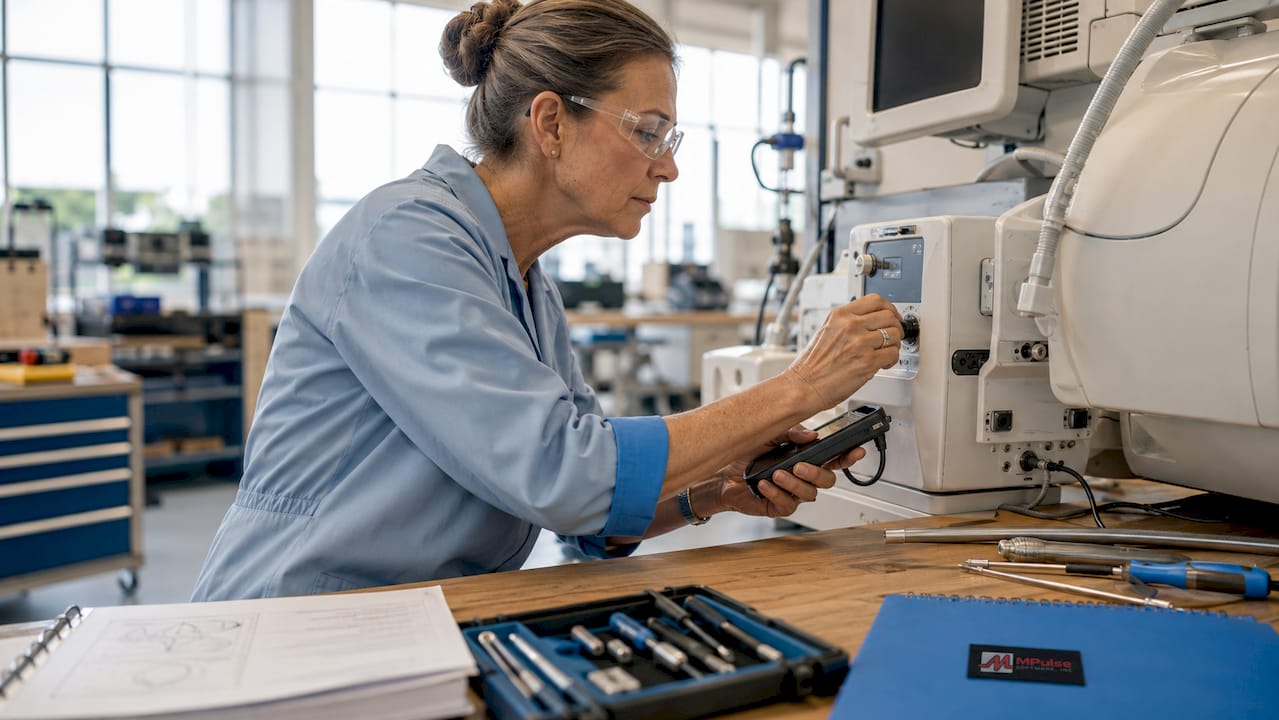
Timely servicing includes lubrication, calibration, filter replacement, and firmware updates. Each of these tasks addresses a specific failure mode before it compounds into a larger problem. Hospitals that skip or delay these intervals pay for it in shortened asset life and higher total cost of ownership.
The table below illustrates the practical difference that consistent PPM makes on common hospital assets.
| Asset Type | Typical Lifespan Without PPM | Typical Lifespan With PPM |
|---|---|---|
| Ventilators | 6–8 years | 10–12 years |
| HVAC systems | 10–12 years | 15–20 years |
| Sterilization autoclaves | 8–10 years | 12–15 years |
| Imaging equipment (MRI/CT) | 8–10 years | 12–15 years |
These ranges reflect general industry experience and will vary by manufacturer specifications and usage intensity. The core point is consistent: scheduled preventive maintenance leads to longer service life for hospital assets, which directly reduces capital replacement expenditure over a five to ten year planning horizon.
3. What safety and compliance benefits does PPM deliver?
Patient safety depends on equipment that performs within its designed specifications every time it is used. A defibrillator that has not been tested, a surgical light with a failing power supply, or an infusion pump with a drifting flow rate all create direct clinical risk. Preventive maintenance eliminates these risks through systematic verification.
Preventive maintenance supports compliance with regulatory requirements and quality standards, reducing liability and strengthening patient safety. Regulatory bodies including The Joint Commission, the FDA, and the Centers for Medicare and Medicaid Services (CMS) require documented evidence that medical equipment is maintained, calibrated, and inspected on defined schedules. A PPM program generates that documentation automatically.
Key safety and compliance benefits include:
- Documented maintenance records that satisfy Joint Commission Environment of Care standards.
- Calibration logs that demonstrate FDA medical device performance requirements are met.
- Reduced risk of sentinel events caused by equipment malfunction.
- Audit-ready records that reduce the time and cost of accreditation surveys.
- Consistent performance data that supports root cause analysis when incidents do occur.
Facilities that cannot produce maintenance records during a Joint Commission survey face citations, corrective action plans, and potential accreditation risk. A structured PPM program removes that exposure entirely. For how a CMMS keeps records audit-ready across regulations, see how CMMS becomes your compliance command center.
4. How does preventive maintenance reduce costs and improve budget predictability?
Reactive repairs create unmanageable budget uncertainty, whereas proactive maintenance converts emergency costs into predictable operational expenses, improving financial planning. That observation from Getinge service expert Duane Hawkins reflects what facility managers experience every budget cycle: emergency repair costs are unpredictable, inflated, and disruptive to capital planning.
The cost contrast between reactive and preventive approaches is stark.
| Cost Category | Reactive Maintenance | Preventive Maintenance |
|---|---|---|
| Parts procurement | Emergency pricing, expedited shipping | Planned purchasing, standard pricing |
| Labor | Overtime, after-hours call-out rates | Scheduled shifts, standard labor rates |
| Downtime impact | Unplanned, revenue-disrupting | Minimal, planned during low-census periods |
| Budget predictability | Low, highly variable | High, forecastable annually |
| Asset replacement frequency | Higher, due to accelerated wear | Lower, due to extended asset life |
Scheduled preventive maintenance leads to a significant reduction in emergency parts and labor costs. Hospitals conducting preventive maintenance programs often realize a positive return on investment within 6–12 months due to lower repair costs and improved operational efficiency. That payback period is short relative to the multi-year budget cycles most hospital administrators manage.
Pro Tip: Track your ratio of planned to unplanned work orders monthly. A healthy PPM program typically achieves 80% planned work or higher. If your ratio falls below that threshold, your program needs more coverage or better scheduling discipline.
5. How can hospitals use data-driven maintenance to strengthen PPM programs?
Predictive maintenance is the next step beyond standard PPM. Where preventive maintenance follows fixed time intervals, predictive maintenance uses real-time condition data to trigger service only when equipment performance indicates an emerging problem. The distinction matters because it eliminates both over-maintenance and under-maintenance.
Data-driven maintenance utilizing IoT and AI technologies enhances early fault detection and optimizes maintenance intervals, maximizing uptime. Sensors on HVAC compressors, imaging equipment, and sterilization systems feed continuous performance data into a CMMS platform, which flags deviations before they become failures.
The performance gains from adding predictive capabilities to a PPM foundation are measurable. Predictive maintenance supported by real-time condition monitoring can reduce unplanned downtime by an additional 18.5% and failures by 87.3% compared to basic preventive maintenance alone. That improvement is significant enough to justify the investment in sensor infrastructure and analytics software for most mid-size to large hospitals.
Steps to adopt a data-driven maintenance approach:
- Audit current assets to identify which systems carry the highest failure risk or replacement cost.
- Install condition monitoring sensors on critical equipment, starting with HVAC, imaging, and sterilization.
- Connect sensor data to a CMMS that can generate automated work orders based on threshold alerts.
- Review condition trends monthly and adjust maintenance intervals based on actual equipment performance data.
- Train maintenance technicians to interpret condition reports alongside traditional inspection checklists.
The benefits of preventive maintenance in hospitals grow substantially when condition data replaces calendar-only scheduling. Facilities that make this transition report fewer emergency calls, better technician utilization, and stronger compliance documentation.
Key takeaways
Preventive maintenance is the single most effective strategy hospitals can use to reduce equipment failures, control costs, and protect patient safety simultaneously.
| Point | Details |
|---|---|
| Downtime reduction | Proactive programs produce 52.7% fewer unplanned downtime events than reactive approaches. |
| Equipment lifespan | Consistent PPM extends asset life by 25–50%, reducing capital replacement costs. |
| Compliance readiness | Documented PPM records satisfy Joint Commission, FDA, and CMS audit requirements. |
| Budget predictability | Scheduled maintenance converts unpredictable emergency costs into forecastable operational expenses. |
| Predictive upgrade | Adding IoT condition monitoring reduces failures by up to 87.3% beyond standard PPM alone. |
Why I think most hospitals are still leaving money on the table
After years of working with facility managers across healthcare, I keep seeing the same pattern. A hospital invests in a preventive maintenance program, runs it well for 18 months, and then lets scheduling discipline slip when staffing gets tight. The ratio of planned to unplanned work orders drops from 80% to 55%, and within two quarters, emergency repair costs climb back toward where they started.
The problem is not the program design. The problem is that most hospitals treat PPM as a facilities task rather than an operational strategy. When the CFO and the CNO see maintenance as a cost center rather than a patient safety function, it gets cut first when budgets tighten.
The hospitals that sustain results connect maintenance data to clinical outcomes. They show leadership that equipment downtime delays procedures, that calibration failures create liability, and that every dollar spent on scheduled service saves three to five dollars in emergency repairs. That framing changes the conversation from “how do we cut maintenance costs” to “how do we protect this investment.”
The technology side is also moving faster than most hospital teams realize. Real-time monitoring through IIoT is no longer a large health system luxury. Mid-size community hospitals can now deploy condition monitoring on critical assets without a massive capital outlay. The facilities teams that start building that data foundation now will have a significant operational advantage within three years.
My honest recommendation: stop measuring your maintenance program by how many work orders you close. Start measuring it by the percentage of planned work, the trend in emergency repair costs, and the age of your asset fleet relative to manufacturer end-of-life dates. Those three numbers tell you everything about the health of your program.
— Mark
How MPulse Software supports hospital maintenance programs
Hospital facility managers need more than a spreadsheet to run a compliant, effective preventive maintenance program. MPulse Software gives maintenance teams a purpose-built CMMS for healthcare facilities that automates scheduling, tracks work orders, and generates audit-ready compliance reports in one platform.
MPulse Software serves over 3,500 customers globally and delivers documented efficiency improvements of up to 40%. Its calendar interface makes it straightforward to schedule PPM tasks around clinical operations, and its reporting tools produce the documentation that Joint Commission and CMS surveyors require. Facility managers can explore the full feature set with a free demo of MPulse and see how automated maintenance scheduling reduces both downtime and administrative burden from day one.
FAQ
What are the main benefits of preventive maintenance in hospitals?
The primary benefits include reduced unplanned downtime, extended equipment lifespan, improved patient safety, regulatory compliance, and lower long-term maintenance costs. Hospitals using proactive maintenance strategies see 52.7% fewer unplanned downtime events compared to reactive approaches.
How quickly do hospitals see a return on preventive maintenance investment?
Hospitals conducting preventive maintenance programs often realize a positive return on investment within 6–12 months due to lower repair costs and improved operational efficiency.
What regulations require hospitals to maintain preventive maintenance records?
The Joint Commission, the FDA, and the Centers for Medicare and Medicaid Services (CMS) all require documented evidence that medical equipment is maintained, calibrated, and inspected on defined schedules.
What is the difference between preventive and predictive maintenance in hospitals?
Preventive maintenance follows fixed time intervals for scheduled service, while predictive maintenance uses real-time condition data from IoT sensors to trigger service only when equipment performance indicates an emerging problem. Predictive maintenance can reduce failures by 87.3% beyond standard preventive programs alone.
What software do hospitals use to manage preventive maintenance programs?
Hospitals use computerized maintenance management systems (CMMS) to schedule, track, and document preventive maintenance activities. Platforms like MPulse Software automate work order generation, compliance reporting, and asset tracking in a single system.