TL;DR:
- Mobile maintenance management enables real-time asset monitoring, reduces repair times by up to 35%, and cuts costs through on-site resolutions. It improves communication, compliance, and predictive maintenance by integrating IoT sensors and automating workflows across multiple sites. The most significant ROI occurs in fleet, construction, and multi-site operations when workflows are redesigned before implementing mobile tools.
Mobile maintenance management is the practice of using mobile devices, CMMS software, and IoT-connected tools to execute, track, and optimize maintenance tasks from any location. Operations managers and maintenance professionals who adopt this approach gain real-time visibility into asset health, faster work order resolution, and measurable cost reductions. Platforms like MPulse Software and eWorkOrders have demonstrated that the benefits of mobile maintenance management extend well beyond convenience. Teams report up to 40% efficiency improvements, significant reductions in unplanned downtime, and stronger compliance records. The following sections break down exactly how those gains are achieved.

1. Real-time data access improves maintenance decisions
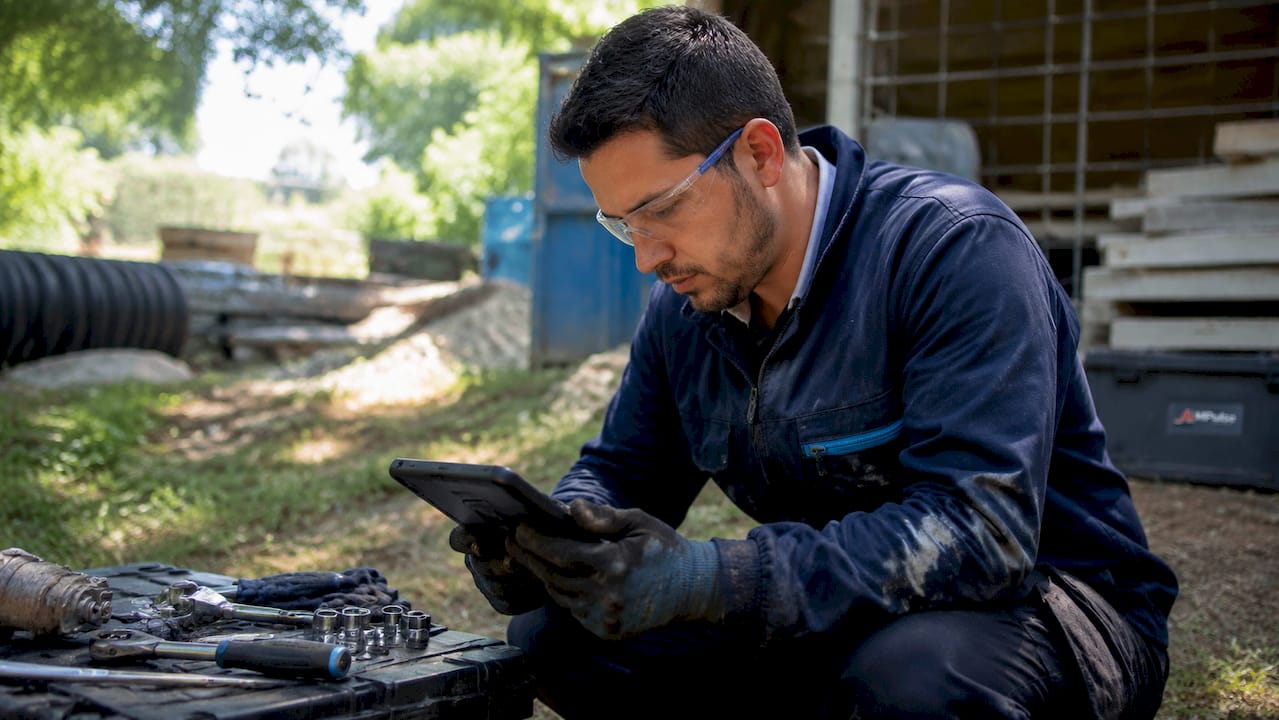
Field technicians no longer need to return to a terminal or call dispatch to pull asset history. With a mobile CMMS, they access full equipment records, service manuals, and open work orders directly from a smartphone or tablet at the point of work.
The operational impact is significant. Mobile CMMS reduces MTTR by 20–35% because technicians spend less time gathering information and more time on actual repairs. That reduction in mean time to repair translates directly into higher asset availability and fewer production interruptions.
IoT sensor integration pushes this further. When a sensor detects a threshold breach, the system generates an alert and routes it to the nearest qualified technician in real time. The technician arrives with context, not just a work order number.
Pro Tip: Configure your mobile CMMS to attach asset-specific checklists and torque specs to each work order. Technicians who arrive prepared complete jobs faster and with fewer callbacks.
- Supervisors see live work order status without calling the field
- Technicians scan QR codes or barcodes to pull instant asset histories
- NFC-based inspection tools eliminate manual data entry errors and speed up inspection routes
- Push notifications replace radio calls and paper-based dispatch logs
2. Reduced operational costs and downtime
The financial case for mobile maintenance solutions is concrete. Mobile units resolve 80–90% of common commercial vehicle issues on-site, eliminating towing costs that run from $500 to $3,000 per incident. For a fleet running 50 vehicles, even a modest reduction in tow events produces five-figure annual savings.
Beyond towing, on-site repairs eliminate the “dead period” when equipment sits idle waiting for shop availability. Scheduling service during off-hours avoids production downtime during peak operations and increases billable hours. Construction and fleet operations that adopt mobile service trucks or oil and grease skids see the clearest gains here.
Parts accuracy also improves. When technicians log parts usage in real time from the field, inventory records stay current. That accuracy prevents both overordering and the costly scenario of a technician arriving on-site without the right component.
| Scenario | Traditional shop-based | Mobile maintenance |
|---|---|---|
| Towing cost per incident | $500–$3,000 | $0 (on-site repair) |
| Repair scheduling | Shop hours only | Off-hours capable |
| Asset downtime per event | Hours to days | Minutes to hours |
| Parts data accuracy | Updated after the fact | Updated in real time |
Pro Tip: Track your tow-event frequency for 90 days before deploying mobile maintenance. That baseline makes your ROI calculation concrete and defensible when presenting to leadership.
3. Faster, cleaner communication across teams
Paper-based and terminal-based maintenance systems create reporting lags. A technician finishes a repair, writes a paper ticket, and the record reaches the system hours or days later. Mobile maintenance eliminates that gap entirely.
Work orders are accepted, updated, and closed from the field the moment the job is complete. Supervisors see accurate status in real time. Audit trails are timestamped automatically, which matters significantly for organizations with regulatory compliance requirements.
Consider how this changes multi-site operations:
- A technician at Site A completes a PM task and closes the work order from their device.
- The system automatically schedules the next PM interval and notifies the assigned technician.
- A supervisor at the central office sees completion data without making a single phone call.
- The timestamped record is available immediately for any compliance audit.
“Mobile device management standardizes tools and reduces troubleshooting variability, which is especially important for organizations managing multiple sites.” — Dan Schlicht, IT security professional, Platinum Systems
Standardization is a practical benefit that often goes unmentioned. When every technician uses the same mobile platform with the same protocols, the quality of maintenance records becomes consistent across locations. That consistency is what makes compliance audits manageable rather than stressful.
4. Predictive maintenance through IoT and AI integration
Calendar-based maintenance schedules are a blunt instrument. They trigger service based on time intervals, not actual equipment condition. Mobile maintenance systems connected to IoT sensors shift that model to condition-driven maintenance, where service happens when the data says it should.
IoT-connected mobile CMMS platforms generate automated corrective work orders before asset failures occur. A vibration sensor on a motor detects abnormal readings, the system creates a work order, and a technician is dispatched before the motor fails. That sequence prevents unplanned downtime rather than reacting to it.
The practical benefits of this approach include:
- Higher first-time fix rates because technicians arrive with diagnostic data already in hand
- Fewer repeat visits to the same fault because root causes are identified from sensor trends
- Reduced parts waste because replacements happen at the right interval, not the scheduled one
- Stronger asset reliability records that support capital planning decisions
Preventive maintenance software from MPulse Software integrates this IoT-to-work-order workflow directly, giving operations managers a single interface for both sensor monitoring and technician dispatch.
5. Workflow automation that scales across sites
Organizations without structured CMMS spend 60–80% of their maintenance budget on reactive work. That figure represents the cost of firefighting rather than planning. Mobile CMMS adoption shifts that ratio by automating the workflows that previously required manual coordination.
Automated scheduling, parts reordering triggers, and escalation rules all run in the background. A technician closes a work order, and the system handles the next steps without dispatcher involvement. That automation compounds over time, freeing supervisors to focus on planning rather than coordination.
Multi-site organizations benefit most from this scalability. A single mobile platform can enforce the same maintenance protocols across 10 facilities as easily as across one. Scheduled maintenance software from MPulse Software supports this model with a calendar interface that makes PM compliance visible at a glance.
6. Stronger compliance and audit readiness
Maintenance records that exist only on paper are a liability during audits. They can be lost, altered, or simply incomplete. Mobile maintenance systems create timestamped, immutable records at the moment of task completion.
Every inspection, repair, and parts replacement is logged with the technician’s ID, the time, and the asset identifier. That data structure satisfies the documentation requirements of regulatory frameworks in manufacturing, healthcare facilities, and food processing. Compliance officers can pull a full asset history in seconds rather than searching through filing cabinets.
The audit readiness benefit extends to internal reviews as well. Operations managers can identify which assets are generating the most corrective work orders, which technicians have the highest first-time fix rates, and where PM compliance is slipping. That visibility supports continuous improvement decisions grounded in actual data.
7. Where mobile maintenance delivers the greatest ROI
Mobile maintenance advantages are not uniform across all operations. The highest return on investment appears in specific contexts, and knowing those contexts helps you prioritize where to deploy mobile tools first.
The strongest ROI scenarios include:
- Fleets with fixed yards and repeat routes: Mobile service trucks can follow predictable schedules and handle the majority of PM tasks without pulling vehicles from service.
- Construction equipment at remote job sites: Oil and grease skids can cut PM service time in half by bringing lubrication and fluid services directly to the equipment.
- Multi-site manufacturing facilities: Standardized mobile workflows reduce variability and make cross-site performance comparisons meaningful.
- Operations with high compliance requirements: Timestamped mobile records reduce audit preparation time and documentation risk.
The hybrid model is the most effective deployment strategy. Mobile maintenance handles 80–90% of routine and minor tasks on-site, while complex repairs requiring specialized tooling go to a fixed shop. That division maximizes the speed and cost advantages of mobile work without overextending mobile capabilities.
Key takeaways
Mobile maintenance management delivers measurable gains in repair speed, cost control, and compliance when deployed in the right operational contexts with the right CMMS platform.
| Point | Details |
|---|---|
| MTTR reduction | Mobile CMMS cuts mean time to repair by 20–35% by giving technicians instant data access. |
| On-site cost savings | Resolving 80–90% of issues on-site eliminates $500–$3,000 towing costs per incident. |
| Compliance strength | Timestamped mobile records satisfy regulatory audit requirements without manual documentation. |
| Predictive maintenance | IoT-connected mobile platforms generate work orders before failures occur, reducing unplanned downtime. |
| Hybrid model ROI | Combining mobile on-site work with shop-based complex repairs maximizes both speed and cost efficiency. |
The shift I’ve seen that most teams underestimate
After years of watching maintenance teams adopt mobile tools, the pattern I see most often is this: organizations focus on the technology and underestimate the workflow redesign required to capture the full benefit.
A mobile CMMS does not fix a broken process. It accelerates whatever process you already have. Teams that move from paper to mobile without rethinking their work order structure, their parts staging, or their technician dispatch logic often see modest gains and conclude that mobile maintenance was overhyped. The teams that see 30–40% efficiency improvements are the ones that redesigned their workflows first and then deployed the technology to support those workflows.
The shift from reactive to proactive maintenance is real, but it requires commitment to using the data your mobile system generates. IoT alerts only prevent failures if someone acts on them. Timestamped records only improve compliance if managers review them regularly. The technology creates the opportunity. The operational discipline captures it.
My honest recommendation: start with one high-value asset class, deploy mobile maintenance there, measure the results for 90 days, and use that data to build the case for broader rollout. That approach manages change resistance and produces the concrete numbers leadership needs to approve wider investment.
— Mark
See how MPulse Software supports mobile maintenance workflows
MPulse Software gives operations managers and maintenance professionals a CMMS built for the demands of mobile-first maintenance. The platform connects preventive maintenance automation with real-time IoT monitoring, giving your team the tools to act on asset data before failures occur.
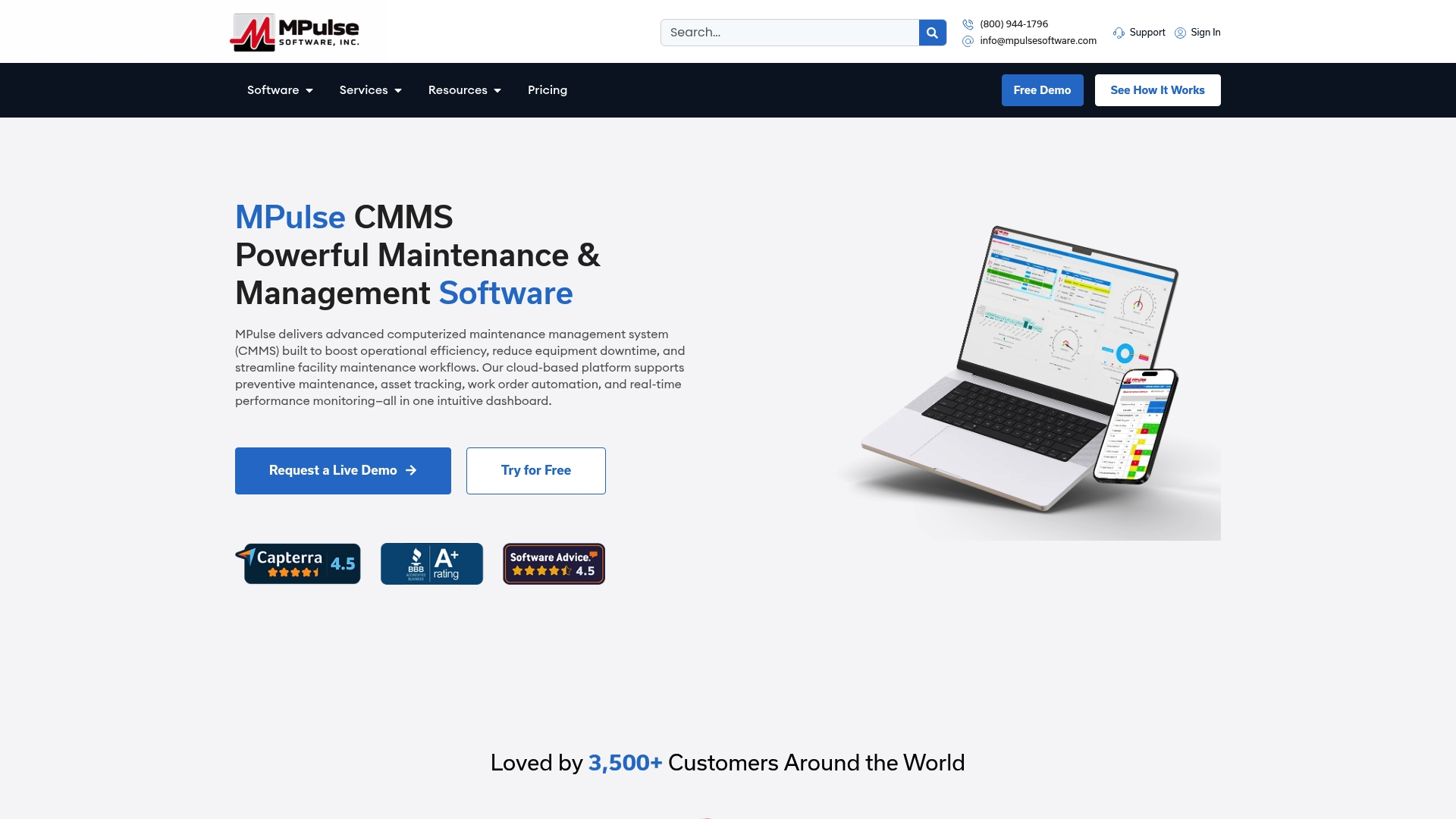
Over 3,500 organizations trust MPulse Software to manage their maintenance workflows, and the platform’s track record includes documented efficiency improvements of up to 40%. Whether you manage a single facility or a distributed fleet, MPulse’s mobile CMMS capabilities are built to reduce downtime, control costs, and keep your compliance records audit-ready. Start a free trial to see the difference in your own operation.
FAQ
What are the main benefits of mobile maintenance management?
Mobile maintenance management reduces mean time to repair by 20–35%, cuts towing and transport costs, improves compliance documentation, and enables predictive maintenance through IoT integration. Teams also gain real-time visibility into work order status without relying on phone calls or paper logs.
How does mobile maintenance management work in practice?
Technicians use smartphones or tablets to receive work orders, access asset histories, log repairs, and close jobs from the field. The CMMS syncs all data in real time, giving supervisors live status updates and generating automatic records for compliance purposes.
When does mobile maintenance deliver the best ROI?
The highest returns appear in fleet operations, construction sites, and multi-site manufacturing facilities where equipment cannot easily travel to a shop. On-site resolution of 80–90% of common issues eliminates towing costs and reduces asset downtime significantly.
What is the difference between mobile CMMS and traditional CMMS?
Traditional CMMS requires technicians to access the system from a fixed terminal, creating delays between task completion and data entry. Mobile CMMS puts the same functionality on a handheld device, eliminating those delays and improving data accuracy.
Can mobile maintenance management support compliance requirements?
Mobile maintenance systems create timestamped records at the moment of task completion, tied to the technician’s ID and asset identifier. That audit trail satisfies documentation requirements in regulated industries including manufacturing, healthcare, and food processing.
Recommended