

TL;DR:
- Preventive maintenance reduces liability by proactively addressing hazards before failures occur and documenting efforts. It supports OSHA compliance, lowers costs, and protects against legal claims through systematic records. Implementing a CMMS enhances documentation, accountability, and risk management for facility managers.
Preventive maintenance is defined as scheduled, proactive servicing of equipment and facilities before failure occurs, and its role in reducing liability is foundational to sound risk management. Facility managers who treat maintenance as a compliance function rather than a technical chore protect their organizations from OSHA citations, insurance claim denials, and costly litigation. Structured preventive programs cut total maintenance costs by 25–40% and extend equipment life by 40–60%, returning roughly $5 for every $1 invested. Those numbers reflect more than operational efficiency. They represent a direct reduction in the financial and legal exposure that follows equipment failures, workplace injuries, and regulatory violations.
What are the key preventive maintenance benefits that reduce liability?
Preventive maintenance benefits compound across three distinct liability categories: safety, compliance, and cost. Each one reinforces the others, creating a protection layer that reactive maintenance cannot replicate.

Safety and incident prevention
Equipment failures create hazards. Hazards create injuries. Injuries create lawsuits. Preventive maintenance breaks that chain by catching deteriorating components before they fail in operation. A worn conveyor belt identified during a scheduled inspection is a work order. The same belt failing during a shift is a workers’ compensation claim, a potential OSHA citation, and possible litigation. The difference between those two outcomes is a calendar and a documented inspection.
Compliance protection
OSHA’s General Duty Clause holds employers liable for recognized hazards causing injury even when no specific regulation addresses the exact condition. That standard is broader than most facility managers realize. A facility can follow every published OSHA rule and still face citation if a known hazard goes unaddressed. Preventive maintenance programs, when documented properly, demonstrate that management identified and mitigated hazards proactively.
Financial liability reduction
Unplanned downtime carries a steep price. Manufacturing plants lose approximately $50,000 per hour during unplanned outages, with automotive sector losses exceeding $2.3 million per hour. Beyond lost production, unplanned failures trigger emergency repair costs, potential property damage claims, and third-party liability if the failure affects customers or contractors on site.
- Fewer equipment failures mean fewer injury events and associated claims
- Documented inspections provide legal defense in audits and litigation
- Consistent servicing keeps insurance policies valid and premiums stable
- Scheduled work reduces emergency contractor costs and rushed repairs
- Compliance records support lease and financing agreement obligations
Pro Tip: Schedule preventive maintenance tasks by risk priority, not just by calendar interval. High-consequence assets, such as elevators, boilers, and electrical panels, warrant shorter inspection cycles regardless of manufacturer recommendations.
How does preventive maintenance support regulatory and contractual compliance?
Regulatory and contractual liability are two distinct but related risks. Preventive maintenance programs address both simultaneously when they are designed with documentation in mind.
OSHA’s General Duty Clause and recognized hazards
Regulatory compliance alone does not eliminate liability. OSHA’s General Duty Clause requires employers to address any recognized hazard that could cause serious harm, regardless of whether a specific standard exists. This means a facility manager who knows a piece of equipment is degrading but delays service has created documented liability exposure. Preventive maintenance removes that exposure by converting known risks into scheduled work orders before incidents occur.
Facilities that proactively engage state OSHA offices for voluntary inspections without citation risk tend to identify hazards earlier and improve their legal risk profiles significantly. That proactive posture is only credible when backed by maintenance records showing consistent, scheduled attention to equipment condition.
Insurance policy conditions
Insurance carriers routinely include maintenance obligations in commercial property and general liability policies. Missing maintenance records can void claims outright, leaving organizations to absorb losses that should have been covered. A roof that fails after years of documented inspections is a covered claim. A roof that fails with no inspection history is a disputed claim, and often a denied one.
Lease and financing agreements
Preventive maintenance requirements appear in lease agreements and equipment financing contracts more often than facility managers expect. Skipping scheduled service on leased HVAC systems or financed production equipment can trigger breach of contract findings. Those breaches carry consequences ranging from accelerated loan repayment to repossession and litigation.
“If it is not written down, it did not happen.” Maintenance records are the primary proof in audits, insurance claims, and legal cases. Integrated, accessible records are not optional for liability defense. They are the defense.
Legal experts stress that preventive maintenance paired with clear contractual indemnity and insurance coverage provides the most complete liability protection available. Maintenance alone is necessary but not sufficient. The legal framework around it must be equally deliberate.
What are the differences between preventive and reactive maintenance in managing liability?
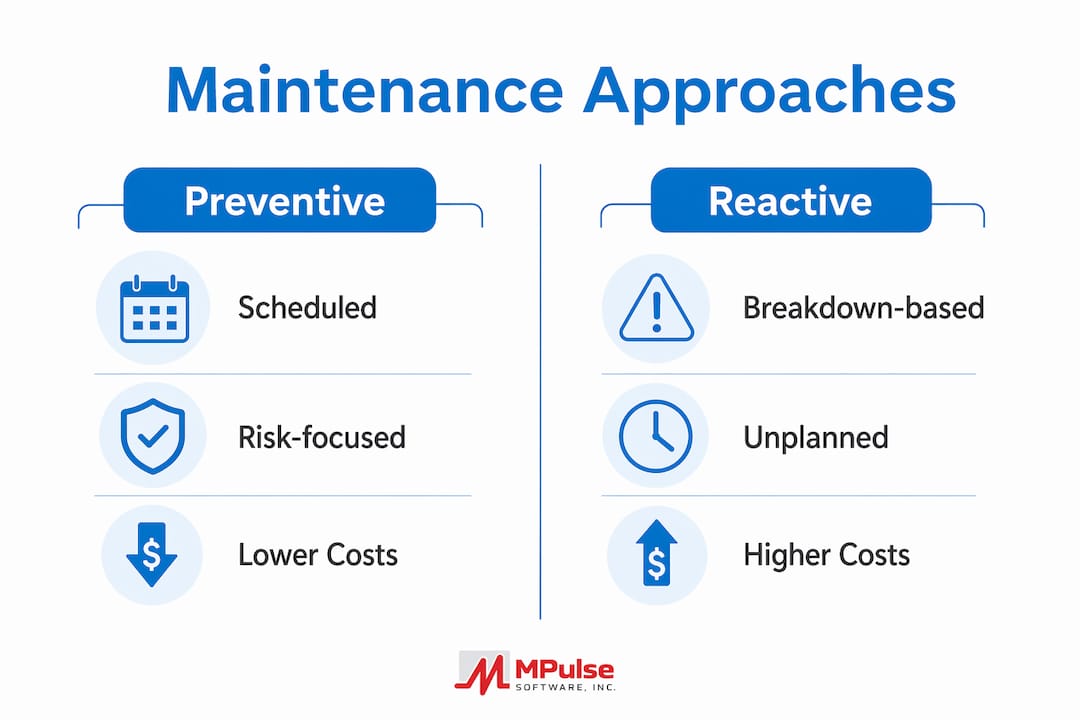
Reactive maintenance, also called run-to-failure maintenance, addresses equipment only after it breaks down. Preventive maintenance addresses equipment on a schedule before failure occurs. The liability implications of that timing difference are significant.
Reactive maintenance costs three to five times more than scheduled preventive maintenance. That cost gap reflects emergency labor rates, expedited parts procurement, and collateral damage from uncontrolled failures. It also reflects the liability costs that follow unplanned failures: injury claims, property damage, regulatory fines, and contract penalties.
| Dimension | Preventive maintenance | Reactive maintenance |
|---|---|---|
| Failure timing | Controlled, scheduled | Uncontrolled, unpredictable |
| Hazard creation | Minimized through inspection | Elevated during failure events |
| Documentation | Systematic and audit-ready | Inconsistent, often absent |
| Insurance standing | Supports valid claims | Risks claim denial |
| Regulatory posture | Demonstrates due diligence | Creates citation exposure |
| Cost profile | Predictable, lower per event | High, variable, emergency-driven |
Reactive maintenance is justifiable for low-consequence, easily replaceable assets where failure carries no safety or compliance risk. A burned-out light bulb in a storage room is a reasonable candidate for reactive replacement. A faulty pressure relief valve on a boiler is not. The liability calculus depends entirely on the consequence of failure, not the probability.
Pro Tip: Review your reactive maintenance strategy annually. Any asset that has caused an injury, triggered a near-miss, or generated a regulatory inquiry should move immediately to a preventive schedule.
What strategies maximize preventive maintenance’s liability reduction benefits?
Designing a preventive maintenance program that actually reduces liability requires more than a spreadsheet of service intervals. It requires structure, documentation, and accountability at every level.
- Conduct a risk-based asset inventory. Catalog every asset by its failure consequence, not just its replacement cost. Assets that can injure people, trigger regulatory violations, or breach contracts belong at the top of your maintenance schedule.
- Implement a CMMS for documentation and scheduling. A computerized maintenance management system creates the audit trail that liability defense requires. Manual logs and paper work orders are too easily lost, altered, or incomplete to hold up under legal scrutiny.
- Build vendor accountability into contracts. Outsourced maintenance work carries its own liability exposure. Clear indemnification clauses and insurance requirements in vendor contracts allocate risk properly and protect your organization when contractor work causes harm.
- Schedule regular safety audits. Preventive maintenance addresses known assets on known schedules. Safety audits catch emerging hazards that fall outside existing work orders. Both are necessary for complete liability coverage.
- Train staff on documentation standards. A completed inspection that goes unrecorded provides no legal protection. Every technician who performs maintenance work must understand that the record is as important as the task.
Facility managers should also review their maintenance contract scope to confirm that outsourced work includes audit rights, certification requirements, and clear performance standards. Contracts without those provisions create gaps that liability claims will find.
- Align maintenance intervals with manufacturer specifications and regulatory requirements
- Store records in a centralized, searchable system accessible to legal and compliance teams
- Review and update maintenance schedules after any incident, near-miss, or equipment modification
- Track deferred maintenance separately and document the risk assessment behind each deferral
Pro Tip: Never defer maintenance on a safety-critical asset without a written risk assessment signed by a responsible manager. That document demonstrates deliberate decision-making rather than neglect, which matters significantly in litigation.
Key takeaways
Preventive maintenance is the most reliable liability reduction strategy available to facility managers because it converts uncontrolled failure risks into documented, scheduled, and defensible management decisions.
| Point | Details |
|---|---|
| Documentation is legal defense | Maintenance records are the primary evidence in audits, insurance claims, and litigation. |
| OSHA exposure goes beyond specific rules | The General Duty Clause creates liability for any recognized hazard, making proactive maintenance critical. |
| Reactive maintenance multiplies costs | Reactive repairs cost three to five times more than preventive work and increase legal exposure. |
| Contracts embed maintenance obligations | Lease and financing agreements often require scheduled service; skipping it can trigger breach findings. |
| CMMS creates the audit trail | A computerized maintenance management system produces the systematic records that liability defense requires. |
The case for treating maintenance as a risk management function
Facility managers often inherit maintenance programs that were designed around budget cycles, not risk profiles. That design flaw shows up in liability claims. The assets that generate the most expensive incidents are rarely the ones that receive the most maintenance attention. They are the ones that seemed stable until they were not.
What I have observed across years of working with facility operations is that the organizations with the strongest liability profiles share one characteristic: they treat maintenance as a risk management function, not a facilities function. That distinction changes everything about how schedules are built, how deferrals are approved, and how records are kept.
The uncomfortable reality is that minimum regulatory compliance is not a liability strategy. OSHA’s General Duty Clause means that knowing about a hazard and failing to address it creates exposure regardless of whether a specific rule was violated. The only reliable defense is a documented record of proactive attention to equipment condition, and that record only exists if someone built a system to create it.
The preventive maintenance ROI conversation tends to focus on cost savings and uptime. Those are real benefits. But the liability reduction benefit is the one that protects the organization from outcomes that no budget can absorb after the fact. A single serious injury claim, a voided insurance policy, or a contract breach can cost more than years of deferred maintenance savings. The math is not complicated. The discipline to act on it is the harder part.
— Mark
MPulse Software: built for compliance-driven maintenance programs
Facility managers who need to build and sustain a documented preventive maintenance program have a direct path forward with MPulse Software.
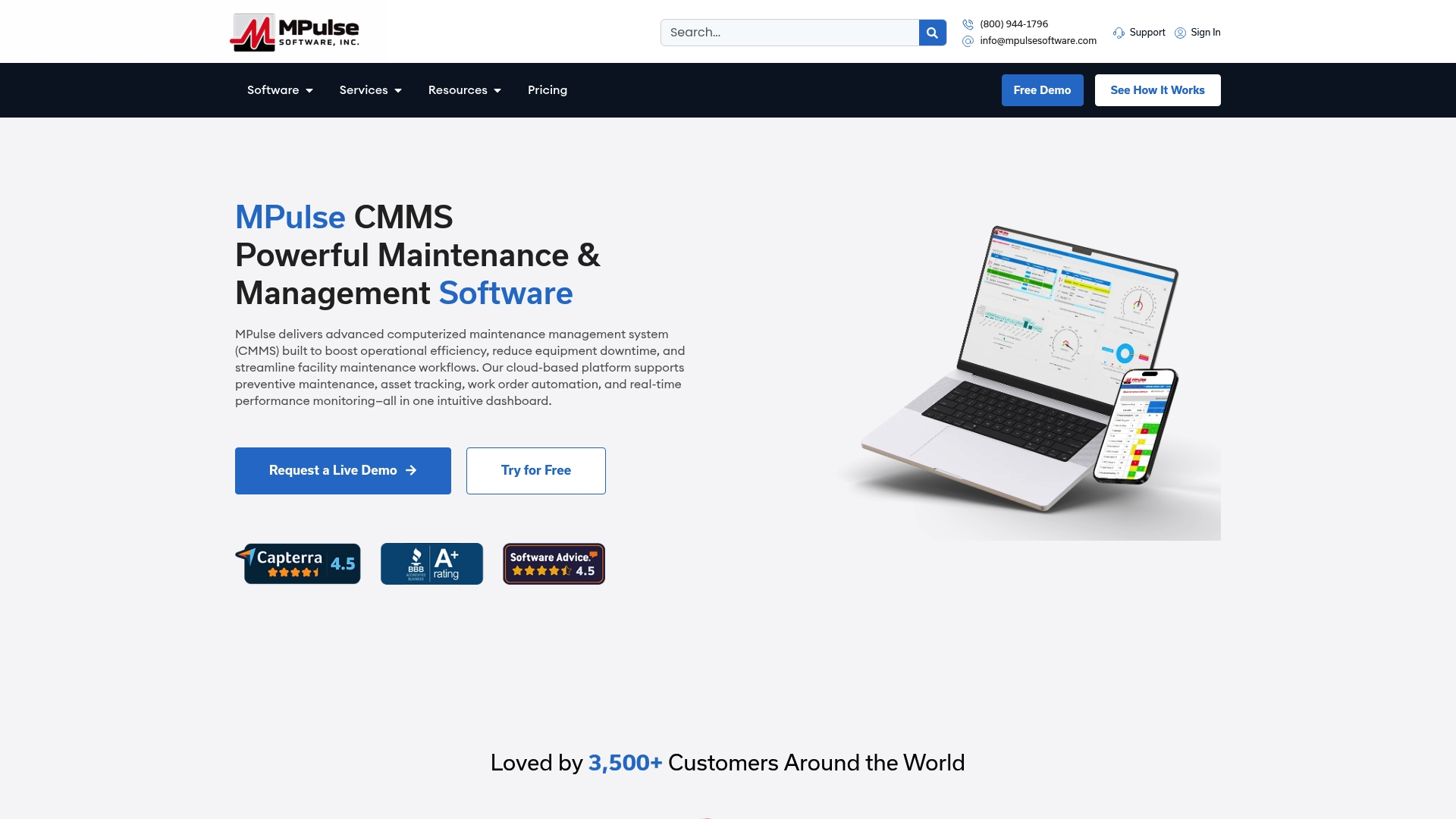
MPulse Software’s CMMS platform serves over 3,500 customers globally and delivers up to 40% efficiency improvements through automated scheduling, real-time performance monitoring, and centralized record-keeping. The platform’s calendar interface makes it straightforward to assign, track, and document every maintenance task across your asset inventory. Compliance teams get the audit-ready records they need. Technicians get clear work orders. Risk managers get the documentation trail that liability defense requires. MPulse Software also offers real-time monitoring capabilities that flag equipment anomalies before they become failures, giving your team the lead time that reactive programs never provide.
FAQ
What is the role of preventive maintenance in reducing liability?
Preventive maintenance reduces liability by addressing equipment hazards before they cause injuries, regulatory violations, or contract breaches. Documented maintenance records provide legal defense in audits, insurance claims, and litigation.
How does preventive maintenance support OSHA compliance?
OSHA’s General Duty Clause holds employers liable for recognized hazards even without a specific rule violation. Preventive maintenance programs demonstrate proactive hazard mitigation, which is the primary defense against General Duty Clause citations.
Can missing maintenance records void an insurance claim?
Missing maintenance records can void insurance claims and trigger contractual penalties. Insurance carriers routinely require evidence of scheduled servicing before honoring property and liability claims.
How much more does reactive maintenance cost compared to preventive maintenance?
Reactive maintenance costs three to five times more than scheduled preventive maintenance. That gap includes emergency labor, expedited parts, collateral damage costs, and the liability exposure that follows uncontrolled failures.
What is the best tool for documenting preventive maintenance for liability purposes?
A computerized maintenance management system, or CMMS, is the most reliable tool for creating audit-ready maintenance records. It centralizes work orders, inspection logs, and compliance documentation in a searchable, tamper-evident format.