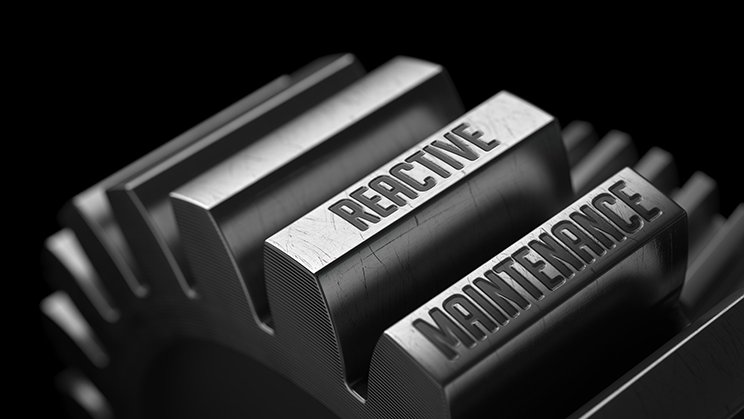
A reactive maintenance strategy is simple—when something breaks, fix it. And it’s still very common today in many maintenance departments.
Replacing non-essential lightbulbs, fixing broken windows—a reactive approach works fine and makes sense for plenty of maintenance tasks.
There’s a time, however, when it becomes more effective to move from reactive to proactive. That’s what happened to MPulse customer Gerry.
The Value of Proactive Maintenance
If you’ve ever had a day where something breaks at the wrong time (production equipment during the busy season or an HVAC failure during a heat wave), the value of proactive maintenance becomes clear.
Gerry’s team had that day. They had six breakdowns on high-use assets that brought production to a screeching halt. His techs were trying to troubleshoot problems or find replacement parts, while Gerry and his foreman were on the phone with frustrated coworkers, angry bosses, and vendor reps.
“We called it D-day,” he said. “The ‘D’ stands for dreadful—or for something else not suitable for polite conversation.”
Afterwards, the team decompressed by talking about what they could do to prevent it from happening again. The first step was easy. Gerry explained, “We needed a proactive maintenance program that worked for us.”
Getting a preventive maintenance program off the ground can feel intimidating at first. Gerry’s team started like many maintenance departments, with simple spreadsheets. But the limits of this manual system were soon evident.
So, Gerry turned to CMMS software.
CMMS Software for Preventive Maintenance
CMMS software will generate a schedule of PM tasks, making it simpler to follow the manufacturer’s guidelines.
Scheduling preventive maintenance (PM) tasks—replacing filters, conducting safety inspections, check oils and fluids—often prevents those stressful situations and emergency repairs, not to mention the expenses related to these types of breakdowns.
You can schedule maintenance intervals based on time, usage, or on asset/part condition, which triggers a work order just before the point when system inefficiencies or failures begin to occur. Regular preventive maintenance tracking also ensures equipment is properly calibrated and lubricated.
Ignoring preventive maintenance leads to more breakdowns. That translates into lost dollars and intense pressure on the maintenance team to get production running again.
Proactive maintenance lowers costs, improves reliability, and helps with compliance reporting. Contact us to learn more.