
A patient safety maintenance checklist is a structured, documented system covering every critical facility domain that directly affects patient outcomes. The five core domains every healthcare facility must address are Fire & Life Safety, Medical Equipment, Utility Systems, Infection Control, and Physical Environment. Regulatory compliance anchors all five: the Joint Commission’s Environment of Care standards, CMS Conditions of Participation, and NFPA codes including NFPA 99 and NFPA 101 set the minimum requirements your facility must meet and document. Without a formalized checklist, gaps in any one domain can cascade into adverse events, failed surveys, or both.
The checklist’s role extends beyond survey readiness. Documented, repeatable processes create an audit trail that protects your facility legally, supports staff accountability, and provides the data needed to identify recurring failures before they harm patients. Regular review of the checklist itself, at minimum annually and whenever standards change, keeps your program aligned with current regulatory expectations.
Core domains at a glance:
- Fire & Life Safety: Alarm systems, sprinklers, fire doors, egress routes, extinguishers
- Medical Equipment: Calibration, electrical safety testing, preventive maintenance (PM) schedules, defective equipment removal
- Utility Systems: HVAC/ventilation, medical gas, emergency power, water management
- Infection Control: Environmental cleaning, hand hygiene supports, disinfection protocols, Legionella prevention
- Physical Environment: Structural integrity, accessible egress, medication storage, electrical safety
How fire and life safety systems fit into your checklist
Fire and life safety maintenance is the domain most directly tied to life-threatening risk, and the Joint Commission’s Environment of Care standards treat it accordingly. NFPA 101 and NFPA 99 set the inspection frequencies and documentation requirements your team must follow.
- Test fire alarm systems and smoke detectors per NFPA 72 schedules, typically quarterly for notification appliances and annually for full system tests.
- Inspect automatic sprinkler systems monthly (visual) and annually (full flow test), with five-year internal inspections per NFPA 25.
- Verify fire door integrity, including self-closing mechanisms, latching hardware, and gap tolerances, at least annually.
- Check fire extinguisher charge, pin, and tamper seal monthly; conduct annual maintenance inspections with a certified technician.
- Confirm emergency lighting and exit signage function with a 30-second monthly test and a 90-minute annual test.
- Document all inspections with technician name, date, findings, and corrective actions taken.
- Train staff on fire response procedures and evacuation routes at hire and annually thereafter, per OSHA recordkeeping standards.
Pro Tip: Keep a dedicated fire and life safety binder at each nursing station with the most recent inspection reports. Joint Commission surveyors frequently request these on-site.
Medical equipment maintenance protocols for patient safety
Equipment failures cause direct patient harm. A glucometer that reads inaccurately can lead to a wrong insulin dose; a ventilator with a degraded alarm can miss a life-threatening event. The Joint Commission’s 2025 National Patient Safety Goals underscore this connection by requiring two patient identifiers at every care stage, a standard that depends on accurately functioning identification and monitoring devices.
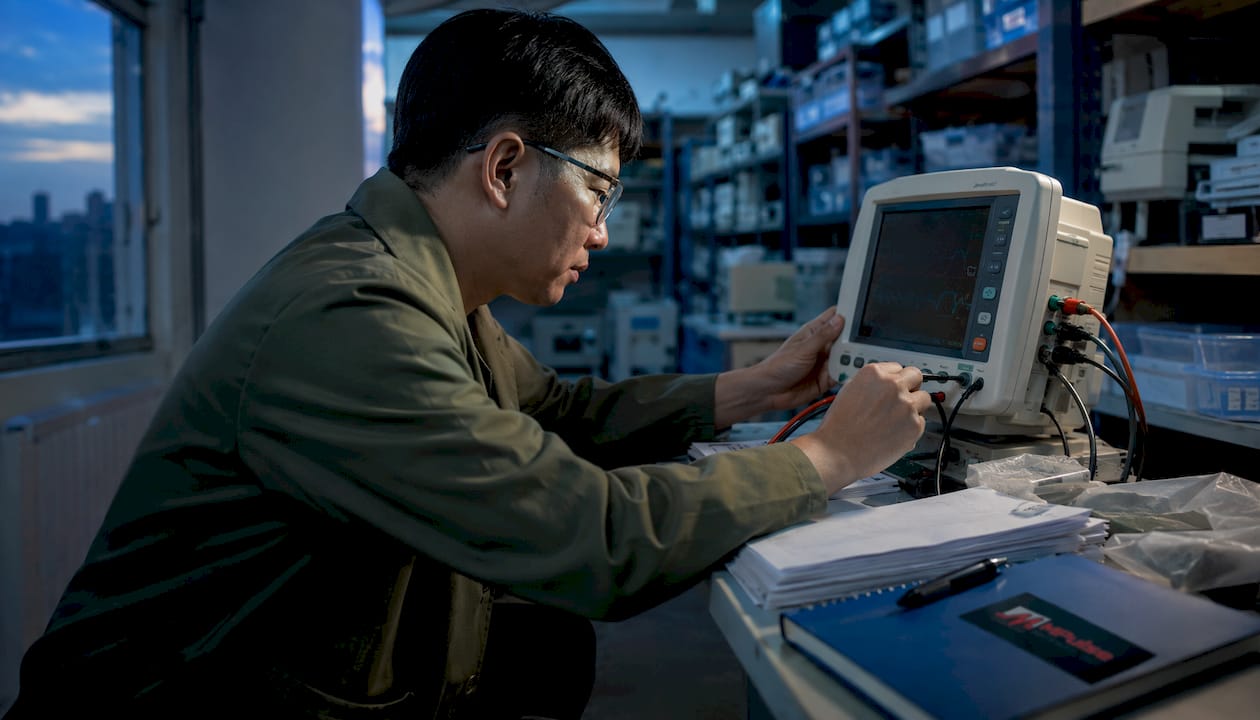
- Maintain a complete biomedical equipment inventory with manufacturer, model, serial number, purchase date, and location for every device.
- Perform electrical safety testing and calibration on all critical devices upon installation and per manufacturer-recommended intervals.
- Attach visible PPM stickers to each piece of equipment showing the next scheduled maintenance date, matched to the digital record in your equipment management system.
- Tag and immediately remove defective equipment from service; document the removal and notify clinical staff.
- Follow a structured medical device recall process: verify availability, prepare a recall record, remove from use, notify the supplier, and file documentation in the equipment file.
- Keep service and operator manuals accessible to clinical staff for all in-house equipment.
- Ensure critical equipment has a documented backup or alternative available during scheduled downtime.
For a deeper look at calibrating medical devices and the documentation practices that support compliance, MPulse Software’s biomedical maintenance resources provide practical guidance.
Utility systems: HVAC, medical gas, and emergency power
Utility systems are the infrastructure layer that makes clinical care possible. A ventilation failure in an operating room or a generator that does not start during a power outage creates immediate patient risk. Maintenance teams must treat these systems with the same rigor applied to clinical equipment.
- Inspect and service HVAC systems to maintain ventilation rates per ASHRAE 170 standards, which specify air changes per hour and pressure relationships for different care areas.
- Test medical gas systems, including oxygen, nitrous oxide, and medical air, for pressure, purity, and alarm function per NFPA 99 requirements.
- Conduct monthly generator load tests and annual full-load tests; verify automatic transfer switch operation and document fuel levels.
- Implement a written water management program targeting Legionella and other waterborne pathogens, including regular temperature monitoring, disinfection events, and water system testing.
- Integrate utility system inspection records with your infection control program, since HVAC and water system failures are leading contributors to healthcare-associated infections.
Infection control maintenance measures for patient safety
Infection control is not solely a clinical nursing function. Facility maintenance directly determines whether the physical environment supports or undermines Standard Precautions, the CDC’s baseline framework for preventing pathogen transmission in all patient care settings.
- Verify that environmental cleaning protocols are followed in patient rooms, procedure areas, and high-touch surfaces, with documented completion by environmental services staff.
- Confirm hand hygiene dispenser placement and supply availability at every point of care, including room entries, medication preparation areas, and procedure rooms.
- Maintain water management plan documentation, including Legionella risk assessments, corrective action logs, and test results.
- Inspect and document disinfection of patient-care equipment between uses, particularly shared devices such as blood pressure cuffs, pulse oximeters, and portable monitors.
- Align facility maintenance schedules with Joint Commission infection control goals, including construction and renovation infection control risk assessments (ICRA) for any active projects.
Pro Tip: Assign a maintenance team member as the infection control liaison. This person attends infection control committee meetings and translates clinical priorities into facility work orders.
Physical environment and operational safety maintenance checklist
The physical environment generates patient safety risks that clinical staff often cannot see or address themselves. Ceiling tile water damage, malfunctioning call buttons, and improperly stored hazardous materials are all facility maintenance responsibilities with direct patient safety consequences.
- Inspect patient rooms for structural risks including water-stained or sagging ceiling tiles, damaged flooring, and loose fixtures; patient call buttons must be tested for responsiveness at each inspection cycle.
- Verify all egress routes are clear, properly marked, and free of stored equipment or obstructions.
- Confirm medications and hazardous chemicals are stored in locked, labeled areas with appropriate secondary containment.
- Test ground fault circuit interrupter (GFCI) outlets in wet areas monthly and document results.
- Audit power strip use in patient care areas; extension cords and daisy-chained strips are prohibited under NFPA 99 and OSHA standards.
- Document staff training and competency verification for safety-related operations, including lockout/tagout procedures, chemical handling, and emergency equipment use.
Risk management maintenance checklists critical to patient safety
Risk management in facility maintenance goes beyond fixing what breaks. It requires anticipating failure modes, tracking regulatory changes, and building interdisciplinary communication into the maintenance workflow.
- Establish a formal process for managing medical device recalls: verify device presence, remove from service, document the action, and confirm resolution with the supplier.
- Maintain a sharps injury prevention program with documented container replacement schedules, disposal logs, and staff training records per OSHA 29 CFR 1910.1030.
- Document hazardous waste management procedures, including chemical inventory, labeling, and disposal, per OSHA’s Hazard Communication Standard (29 CFR 1910.1200).
- Link maintenance failure scenarios to your emergency operations plan, identifying which failures trigger escalation and who is responsible for each response.
- Review and update all maintenance checklists at least annually, incorporating new Joint Commission standards, updated NFPA codes, and lessons learned from internal incidents.
- Engage clinical staff, infection control, and risk management in quarterly checklist reviews to surface hazards that maintenance teams may not observe directly.
How CMMS technology transforms patient safety maintenance management
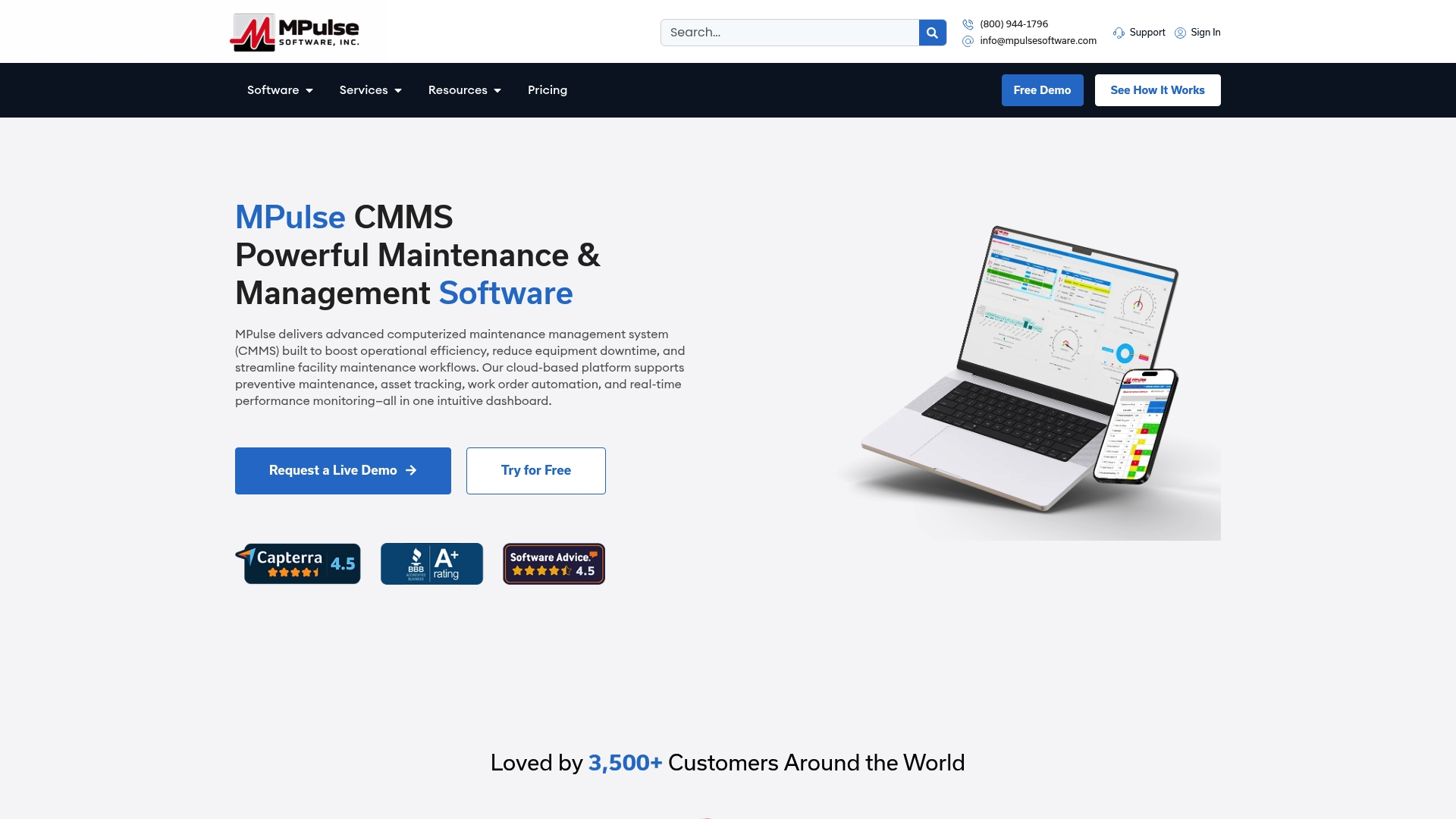
Manual, paper-based maintenance programs create gaps that put patients at risk and surveyors on alert. A computerized maintenance management system (CMMS) addresses those gaps by automating scheduling, centralizing documentation, and providing real-time visibility into asset status across the facility.
- Automate preventive maintenance scheduling so no inspection or calibration is missed due to staff turnover or scheduling conflicts.
- Monitor critical assets in real time, receiving alerts when equipment performance deviates from acceptable parameters before a failure occurs.
- Generate complete, timestamped audit trails for every work order, inspection, and corrective action, satisfying Joint Commission and OSHA documentation requirements.
- Track personnel qualifications and training completion within the same system, linking staff competency records to the maintenance tasks they are authorized to perform.
- Integrate regulatory updates directly into maintenance workflows, so when NFPA or Joint Commission standards change, your PM schedules reflect the new requirements automatically.
MPulse Software serves over 3,500 customers and reports efficiency improvements of up to 40% for facilities that adopt its preventive maintenance platform. For healthcare facilities managing complex compliance requirements, that kind of documented performance record translates directly into survey readiness and reduced adverse event risk.
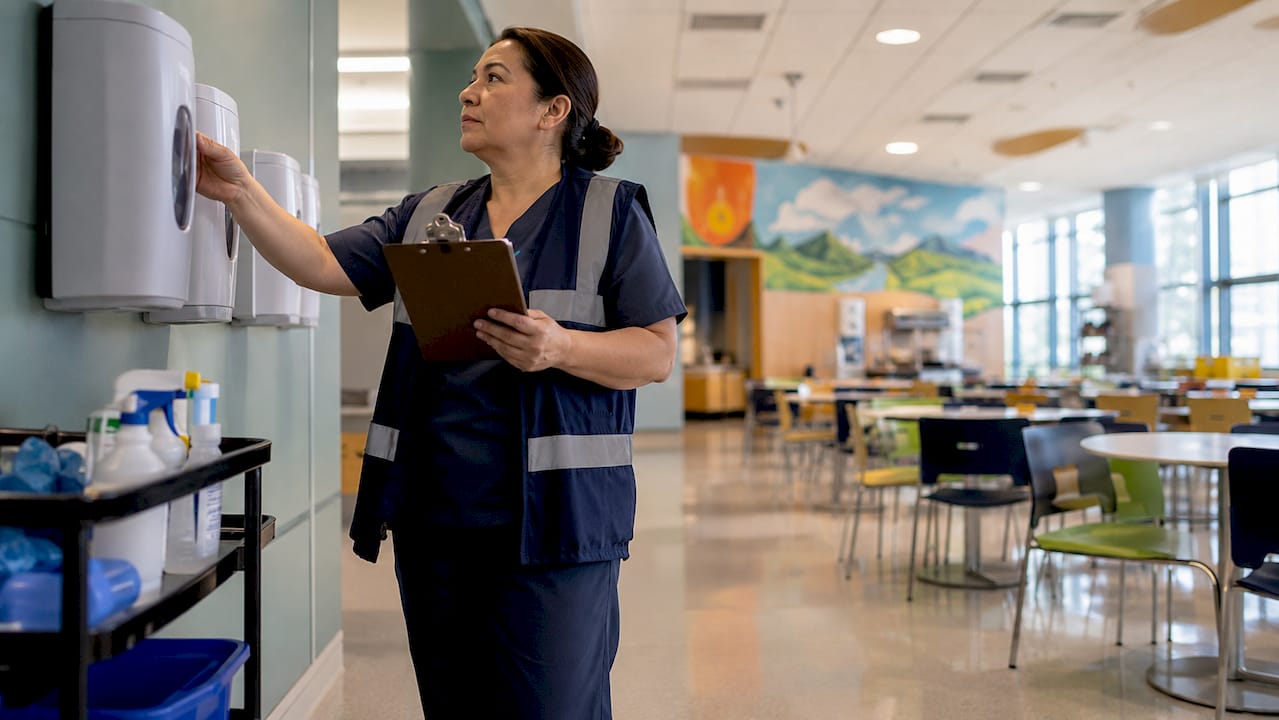
What a comprehensive hospital system maintenance checklist covers
A complete hospital maintenance checklist addresses every system that touches patient safety, not just the ones that appear on survey forms. The scope runs from the roof to the basement and from clinical equipment to the parking structure lighting.
| System Category | Key Maintenance Tasks | Primary Standard |
|---|---|---|
| Fire & Life Safety | Alarm tests, sprinkler inspections, fire door checks | NFPA 101, NFPA 72 |
| Medical Equipment | Calibration, electrical safety, PM schedules | Joint Commission EC |
| HVAC & Ventilation | Air change verification, filter replacement, pressure testing | ASHRAE 170 |
| Medical Gas | Pressure checks, alarm tests, cylinder storage | NFPA 99 |
| Emergency Power | Generator load tests, transfer switch verification | NFPA 99 |
| Water Systems | Legionella management, temperature monitoring | CDC Water Management |
| Physical Environment | Ceiling, flooring, egress, electrical safety | Joint Commission EC |
| Infection Control | Cleaning verification, disinfection logs, ICRA | CDC Standard Precautions |
Why structured, checklist-driven maintenance reduces patient harm
Data-driven, standardized maintenance workflows reduce catastrophic risks and operating costs far beyond what reactive maintenance programs can achieve. The American Society for Health Care Engineering (ASHE) makes this point explicitly: facilities that rely on ad hoc maintenance rather than structured programs face greater variability in outcomes and higher survey deficiency rates.
Checklists work because they remove reliance on individual memory and create accountability at every step. When a technician signs off on a fire door inspection, that signature creates a record. When that record is missing, the gap is visible. This visibility is what allows facility managers to identify systemic failures rather than treating each incident as an isolated event.
Patient safety protocols and clinical safety checklist examples
Clinical patient safety protocols and facility maintenance checklists overlap more than most teams realize. The AHRQ’s PSNet identifies checklists as a foundational tool for reducing preventable harm across care settings, from surgical suites to general medical floors.
Practical examples of where maintenance and clinical safety intersect:
- Surgical site safety: Verified functioning of surgical lights, suction equipment, and electrosurgical units before each procedure
- Medication safety: Calibrated infusion pumps and glucometers, with PM records available to pharmacy and nursing
- Fall prevention: Bed alarm functionality checks, call button responsiveness, and non-slip flooring condition
- Isolation rooms: Verified negative pressure differentials for airborne infection isolation rooms, documented daily
The Joint Commission’s Universal Protocol for preventing wrong-site surgery also depends on properly functioning equipment. A malfunctioning imaging device or mislabeled specimen container can undermine the protocol entirely, connecting facility maintenance directly to surgical safety outcomes.
How maintenance checklists integrate with hospital accreditation
Joint Commission accreditation surveys evaluate your Environment of Care (EC) and Life Safety (LS) chapters directly. Surveyors review maintenance records, interview staff, and conduct physical walkthroughs. A hospital compliance workflow that ties every work order to a specific EC or LS standard gives your facility a defensible paper trail.
CMS Conditions of Participation require hospitals to maintain a safe physical environment and document that maintenance. Facilities that cannot produce inspection records on demand face immediate jeopardy findings. The practical implication is that your checklist is not just an operational tool. It is a legal document.
When and how to update your patient safety maintenance checklist
A checklist that was accurate in 2023 may not meet 2026 standards. NFPA codes update on three-year cycles, Joint Commission standards change annually, and new medical technologies introduce maintenance requirements that did not exist when your current checklist was written.
Build a formal review schedule into your maintenance program:
- Annual review: Align with Joint Commission’s annual standard updates and OSHA’s 29 CFR 1904 recordkeeping review cycle.
- Post-incident review: After any adverse event or near-miss linked to a facility system, update the relevant checklist section within 30 days.
- Technology additions: When new equipment or systems are installed, add PM requirements to the checklist before the equipment goes live.
- Regulatory notifications: Subscribe to NFPA, Joint Commission, and CMS update alerts so your team receives changes as they are published.
Assign checklist ownership to a named individual, typically the director of facilities or the safety officer, with a deputy who can act when the primary owner is unavailable.
Emergency response procedures when maintenance failures affect patients
Maintenance failures that affect patient safety require a response protocol that is faster and more structured than a standard work order. Your emergency operations plan should specify exactly what happens when a critical system fails.
When a fire suppression system goes offline, NFPA 101 requires immediate notification to the authority having jurisdiction and implementation of a fire watch. When emergency power fails to transfer, clinical staff need to know within seconds which equipment is on battery backup and for how long. These are not decisions to make in the moment. They must be documented, trained, and rehearsed.
Key elements of a maintenance failure emergency response protocol:
- Defined escalation contacts for each critical system failure type
- Pre-established interim life safety measures (ILSMs) for fire and life safety system outages
- Communication templates for notifying clinical leadership, patients, and regulatory bodies
- Post-incident documentation requirements, including root cause analysis and corrective action timelines
Linking your CMMS to your emergency operations plan means that when a work order is flagged as a critical system failure, the escalation sequence triggers automatically rather than depending on a technician remembering to make a phone call.
Key Takeaways
A patient safety maintenance checklist requires documented, repeatable coverage of all five core domains: Fire & Life Safety, Medical Equipment, Utility Systems, Infection Control, and Physical Environment, with annual reviews aligned to Joint Commission, CMS, and NFPA standards.
| Point | Details |
|---|---|
| Five core domains | Cover Fire & Life Safety, Medical Equipment, Utility Systems, Infection Control, and Physical Environment in every checklist cycle. |
| Regulatory anchors | Align all maintenance tasks to Joint Commission EC standards, CMS Conditions of Participation, NFPA 99, and NFPA 101. |
| Equipment documentation | Attach PPM stickers to every device and match them to digital records; remove and tag defective equipment immediately. |
| Checklist review cycle | Review annually at minimum, after every incident, and whenever new equipment or updated standards require changes. |
| CMMS advantage | MPulse Software reports up to 40% efficiency improvements for facilities using automated preventive maintenance scheduling. |
FAQ
What is a patient safety checklist?
A patient safety checklist is a structured document that guides healthcare teams through required inspections, tests, and maintenance tasks across clinical and facility systems to prevent patient harm and meet regulatory standards.
What does a maintenance checklist include?
A hospital maintenance checklist covers fire alarm and sprinkler testing, medical equipment calibration and PM schedules, HVAC and medical gas inspections, water management for Legionella prevention, environmental cleaning verification, and physical environment safety checks.
What are the 7 steps of patient safety?
Definitions vary by framework, but a widely referenced approach includes: identify risks, assess severity, implement controls, train staff, document actions, monitor outcomes, and review and update protocols based on findings.
What are the 5 P’s of patient safety?
The 5 P’s commonly referenced in clinical rounding are: Patient, Plan of care, Pain, Positioning, and Personal needs. These guide bedside safety checks and complement facility maintenance protocols by addressing the patient’s immediate environment.
How often should a patient safety maintenance checklist be updated?
Update the checklist at least annually to reflect new Joint Commission standards and NFPA code cycles, immediately after any adverse event linked to a facility system, and whenever new equipment or regulatory guidance is introduced.