

TL;DR:
- Healthcare asset tracking requires adherence to protocols that ensure equipment is inventoried, maintained, and documented accurately throughout its lifecycle. Implementing a hybrid tracking system with RFID and BLE technology, combined with proper data hygiene and staff training, helps facilities achieve compliance and operational efficiency. Regular performance measurement and automation of maintenance activities sustain ongoing benefits and regulatory adherence.
Healthcare asset tracking best practices are defined as the protocols and strategies that govern how medical equipment is identified, monitored, maintained, and documented throughout its operational life. Facilities that follow these practices achieve measurable ROI within 90 days of implementation, according to 2026 industry standards. Compliance with Joint Commission standards EC.02.04.01 and EC.02.04.03, CMS Conditions of Participation, and FDA Unique Device Identification (UDI) requirements all depend on having a reliable tracking system in place. Penalties for non-compliance can exceed $120,000 per event, making asset management in healthcare a financial and patient safety priority, not just an operational preference.
10 Healthcare asset tracking best practices every facility should follow
1. Conduct a full asset inventory before deployment
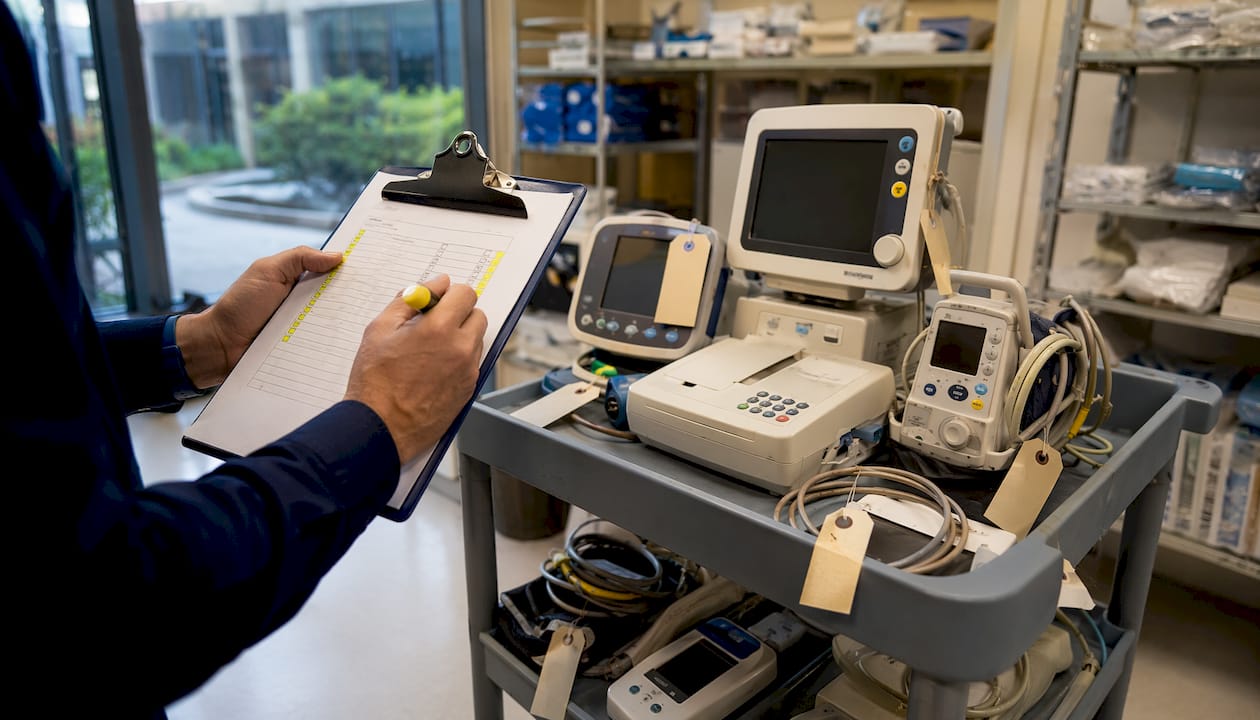
Every successful tracking program starts with a complete physical audit. You cannot manage what you have not counted. Walk every department, catalog every asset by category, condition, and location, and assign a unique identifier to each item. Facilities that skip this step discover duplicate records, ghost assets, and missing equipment after go-live, which forces costly re-audits.
2. Clean legacy data before migrating to a new system
Data hygiene before deployment is the single most overlooked step in healthcare tracking implementations. Legacy records often contain outdated serial numbers, retired equipment, and incorrect location codes. Verifying and correcting this data before migration prevents errors from compounding inside the new system. A clean starting point reduces re-audit costs and accelerates staff adoption.
3. Select tagging technology based on asset type and use case
Not every asset needs the same tag. Passive RFID achieves inventory accuracy of 99.5%–99.9% and suits bulk audits of stationary or slow-moving equipment. Barcode labels work well for low-value, high-volume items like supply bins and disposable trays. BLE tags provide real-time location data for critical mobile equipment such as infusion pumps and ventilators. Matching the tag type to the asset’s value and mobility profile keeps costs controlled without sacrificing accuracy.
Pro Tip: Reserve BLE and IoT sensors for your top-tier mobile assets. Passive RFID tags cost between $0.08 and $0.50 per tag, while BLE tags run $5–$25 plus battery replacement. Tiered investment protects your budget while maintaining precision where it counts.
4. Deploy a hybrid tracking model
Most healthcare systems use passive RFID for bulk inventory audits and BLE for real-time item location. This dual-layer approach minimizes blind spots across large campuses and balances cost with functionality. A hybrid model also gives facility managers the flexibility to upgrade individual asset categories over time without replacing the entire infrastructure. Start with passive RFID across all departments, then layer in BLE for your highest-priority mobile assets.
5. Integrate asset tracking with your CMMS and EHR systems
Clinician adoption fails when asset tracking adds manual steps to existing workflows. Direct integration with electronic health records (EHR) or nurse call stations removes friction and improves compliance rates. A computerized maintenance management system (CMMS) connected to your tracking platform automatically triggers preventive maintenance work orders based on usage data, location history, and OEM schedules. This connection turns tracking data into maintenance action without requiring staff to log into multiple systems.
6. Automate preventive maintenance scheduling
Reactive maintenance costs 3–5 times more than preventive maintenance. Automated scheduling based on OEM specifications, usage cycles, and regulatory requirements eliminates the guesswork from maintenance planning. Automated preventive maintenance programs reduce unplanned equipment downtime by 44%. That reduction directly translates to fewer equipment-related care delays and lower repair costs. Review the hospital preventive maintenance benefits that come with a structured automation program to understand the full financial case.
7. Build tamper-proof digital audit trails
Joint Commission compliance requires audit trails that capture user ID, timestamp, and verification for every asset action. Every inspection, transfer, repair, and disposal must be logged automatically. Manual logs fail during unannounced surveys because they are incomplete, illegible, or inconsistently maintained. A digital audit trail generated by your tracking system removes human error from the compliance record and gives surveyors the documentation they need immediately.
8. Implement role-based access control
Healthcare-specific systems must prioritize HIPAA-compliant role-based access control (RBAC) and network security to protect sensitive data. RBAC limits who can view, edit, or approve asset records based on job function. A biomedical technician sees maintenance histories and calibration records. A department manager sees utilization reports and location data. Administrators see everything. This structure prevents unauthorized changes to compliance records and reduces the risk of data breaches tied to asset management platforms. MPulse Software provides role-based access control features built specifically for compliance-driven environments.
9. Phase your deployment to minimize clinical disruption
Rolling out asset tracking across an entire hospital simultaneously creates confusion, resistance, and workflow gaps. A phased deployment starts with one high-priority department, such as the ICU or surgical suite, and uses that experience to refine processes before expanding. Phased rollouts also allow your IT and biomedical teams to resolve integration issues at a manageable scale. Each phase produces lessons that make the next one faster and more accurate.
10. Train staff and build a feedback loop
Seamless software integration and minimal workflow disruption are prerequisites for high clinical adoption. Training must go beyond a one-time orientation. Schedule quarterly refreshers, assign department-level champions, and create a simple channel for staff to report tracking errors or equipment location discrepancies. Feedback loops catch data quality problems early and keep staff engaged with the system long after go-live.
Pro Tip: Track adoption metrics by department, not just by facility. If one unit shows low scan compliance, the problem is usually a workflow mismatch, not staff resistance. Fixing the process is faster than retraining the team.
How to choose between RFID, barcode, BLE, and IoT for asset tracking
Choosing the right technology for medical asset tracking comes down to four factors: accuracy requirements, real-time capability, infrastructure cost, and asset value. The table below maps each technology to its strengths and best use cases.
| Technology | Accuracy | Real-time location | Cost per tag | Best use case |
|---|---|---|---|---|
| Barcode | Moderate | No | Under $0.10 | Low-value, high-volume supplies |
| Passive RFID | 99.5%–99.9% | No | $0.08–$0.50 | Bulk inventory audits, linen, instruments |
| BLE | High | Yes | $5–$25 | Critical mobile equipment, infusion pumps |
| IoT sensors | Very high | Yes | Varies | High-value assets requiring condition monitoring |
Asset tracking software with IoT sensors reduces unplanned downtime by 35% through automated detection and performance alerts. That makes IoT a strong fit for equipment where failure carries direct patient risk. For everything else, a tiered approach keeps costs in check. Pair passive RFID for inventory-level visibility with BLE for real-time location of your most critical assets. This hybrid technology setup balances clinical and engineering needs without requiring a full IoT infrastructure across every asset class.
What compliance requirements must your tracking system meet?
Healthcare asset tracking systems must satisfy several overlapping regulatory frameworks. Missing any one of them creates audit exposure and potential financial penalties.
- Joint Commission EC.02.04.01 and EC.02.04.03: These standards require documented inspection, testing, and maintenance for all medical equipment. Your tracking system must generate records that surveyors can review during unannounced visits.
- CMS Conditions of Participation: CMS ties reimbursement eligibility to documented equipment maintenance and safety programs. Facilities without verifiable records risk losing Medicare and Medicaid payments.
- FDA UDI requirements: Implantable devices must carry a Unique Device Identifier that links the device to its patient record. Your tracking system must capture and store UDI data at the point of use.
- HIPAA security requirements: Any system that stores or transmits asset data connected to patient records must meet HIPAA technical safeguards, including encryption, access controls, and audit logging.
A well-configured CMMS supports hospital accreditation compliance by automating the documentation that these standards require. The key is configuring your system to log every action automatically, not relying on staff to manually enter compliance records after the fact.
How to measure success and sustain efficiency over time
Asset tracking success hinges on lifecycle management, not just knowing where equipment sits. Measuring the right indicators tells you whether your program is delivering value or just generating data.
Key performance indicators to track:
- Equipment search time: Measure how long staff spend locating assets before and after implementation. Reductions here directly free up clinical time.
- Unplanned downtime rate: Track how often critical equipment fails unexpectedly. A downward trend confirms that preventive maintenance scheduling is working.
- Maintenance cost per asset: Monitor repair and labor costs by asset category. Rising costs in a specific category signal that equipment is approaching end of life.
- Compliance audit pass rate: Track the percentage of assets with complete, current documentation. This metric predicts your Joint Commission survey readiness.
- Asset utilization rate: Identify equipment that sits idle for extended periods. Low utilization often reveals over-purchasing or poor distribution across departments.
Review analytics dashboards monthly and share results with department heads. Stakeholder visibility keeps the program funded and prioritized. Schedule annual training refreshers tied to system updates to prevent adoption decay. The preventive maintenance ROI from a well-maintained tracking program compounds over time as lifecycle data informs smarter purchasing decisions.
Key Takeaways
Healthcare asset tracking programs deliver the strongest results when they combine clean data, tiered technology, automated maintenance, and role-based compliance controls from day one.
| Point | Details |
|---|---|
| Start with data hygiene | Clean legacy records before migration to prevent costly re-audits post-deployment. |
| Use a hybrid technology model | Combine passive RFID for inventory audits with BLE for real-time critical asset location. |
| Automate preventive maintenance | Automated scheduling reduces unplanned downtime by 44% and costs 3–5 times less than reactive repairs. |
| Build digital audit trails | Every asset action must log user ID, timestamp, and verification to satisfy Joint Commission standards. |
| Measure lifecycle metrics | Track search time, downtime rate, and utilization to confirm ROI and guide purchasing decisions. |
What I’ve learned about what actually makes tracking programs succeed
Most healthcare tracking implementations fail at the same point: the moment the system goes live and staff realize it adds a step to their workflow. Technology is rarely the problem. The real issue is that facility managers invest heavily in hardware and software, then underinvest in change management.
I’ve seen facilities deploy BLE infrastructure across an entire campus, only to find that nurses were still writing equipment locations on whiteboards six months later. The system worked perfectly. The adoption did not. The fix was not more training. It was redesigning the scan workflow so that it happened automatically when equipment entered or left a room, rather than requiring a deliberate staff action.
The other mistake I see consistently is treating asset tracking as a location problem when it is actually a lifecycle problem. Knowing where a ventilator is matters less than knowing when it was last serviced, whether its calibration is current, and when it is due for replacement. Facilities that connect tracking data to condition-based maintenance get far more value from their investment than those that use tracking purely for equipment search.
Real-time location combined with predictive maintenance is where the field is heading. Facilities that build that integration now will have a significant operational advantage as regulatory scrutiny on equipment documentation increases. Start small, get the data right, and expand from there.
— Mark
How MPulse Software supports healthcare asset management
MPulse Software gives healthcare facility managers the tools to connect asset tracking data directly to preventive maintenance workflows. The platform automates maintenance scheduling based on OEM specifications, usage cycles, and regulatory requirements, so your team acts on data rather than guesswork.
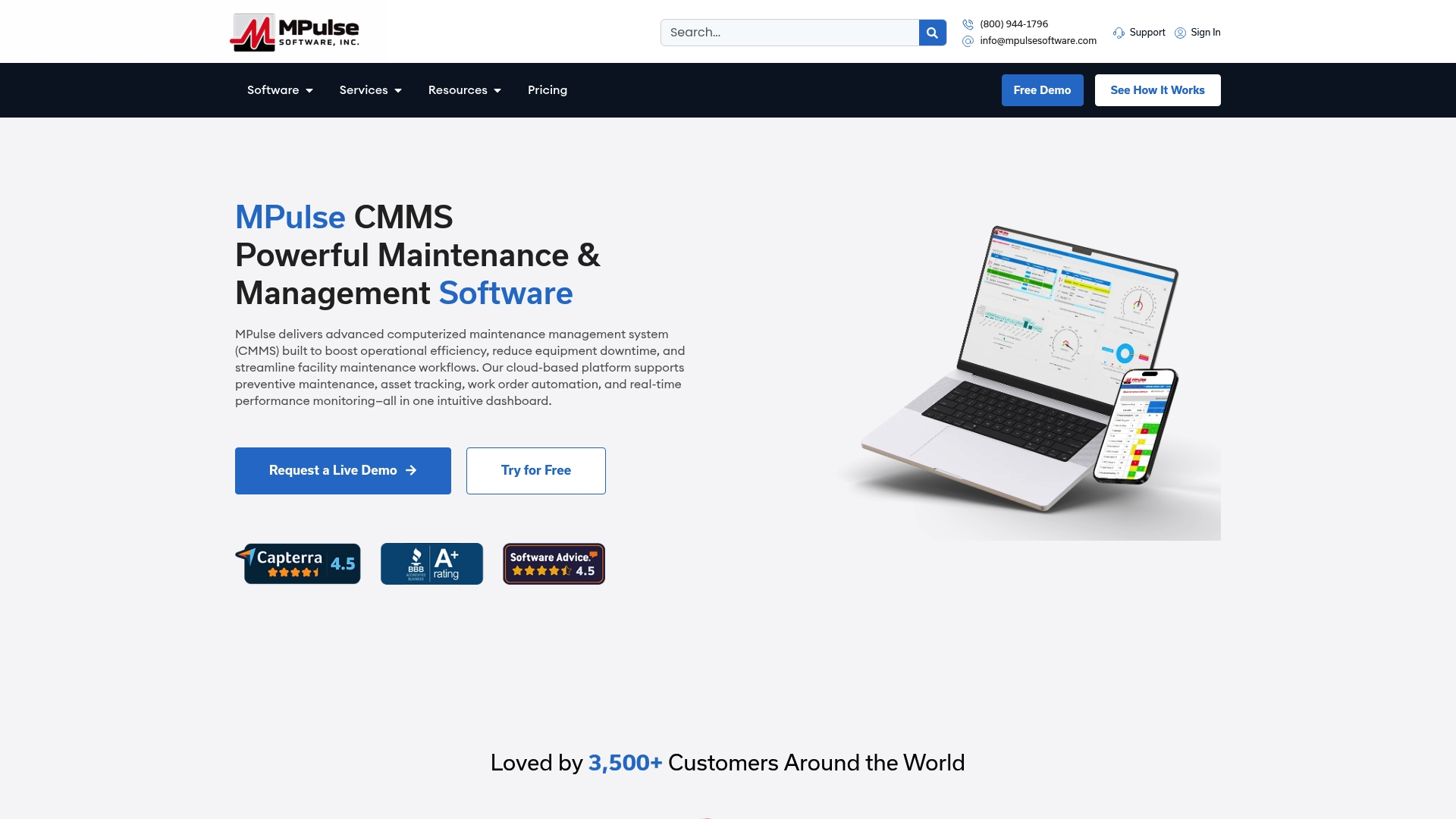
MPulse Software includes role-based access control built for HIPAA-compliant environments, along with integration capabilities that connect to existing EHR and facility management systems. Over 3,500 customers globally trust MPulse, with documented efficiency improvements of up to 40%. Explore MPulse CMMS to see how the platform supports your facility’s compliance requirements and maintenance goals.
FAQ
What are healthcare asset tracking best practices?
Healthcare asset tracking best practices are the protocols that govern how medical equipment is inventoried, tagged, maintained, and documented throughout its lifecycle. They cover technology selection, compliance documentation, staff training, and system integration.
How quickly can a facility expect ROI from asset tracking?
Hospitals achieve measurable ROI within 90 days of implementing a modern asset tracking system. Reduced equipment search times and lower unplanned downtime drive the fastest savings.
What is the best technology for tracking medical assets?
A hybrid model combining passive RFID for bulk inventory audits and BLE for real-time location of critical mobile equipment delivers the best balance of accuracy and cost. Reserve IoT sensors for high-value assets that require condition monitoring.
What compliance standards apply to healthcare asset tracking?
Joint Commission standards EC.02.04.01 and EC.02.04.03, CMS Conditions of Participation, and FDA UDI requirements all mandate documented equipment inspection, maintenance, and traceability records.
How does a CMMS support asset tracking compliance?
A CMMS automatically generates tamper-proof audit trails with user IDs and timestamps for every asset action, satisfying Joint Commission documentation requirements and reducing manual record-keeping errors.