

Maintenance integration connects your CMMS, ERP, IoT devices, and other operational systems into a single, coordinated data environment. When these systems share information automatically, work orders get created, assigned, and tracked without manual intervention, and your team spends less time entering data and more time fixing equipment. Platforms like ManWinWin Software, MaintainX, and MPulse CMMS are built specifically to enable this kind of cross-system data flow, synchronizing assets, inventory, schedules, and work orders across departments. The result is a measurable shift in how maintenance operations run: faster response times, fewer data errors, and better visibility across the facility floor.
Key operational impacts of maintenance integration include:
- Elimination of manual data re-entry between maintenance, procurement, and finance systems
- Automated work order creation triggered by sensor alerts or scheduled intervals
- Real-time inventory visibility so technicians always know what parts are available
- Cross-department coordination that keeps operations, maintenance, and finance aligned
- Faster escalation of critical repairs through automated routing and notifications
How maintenance integrations streamline operations through key technologies
The technical foundation of effective maintenance integration rests on a few core building blocks. Application programming interfaces (APIs) allow different software platforms to exchange data in real time without custom coding for every connection. Middleware platforms act as translators between systems that use different data formats, while cloud infrastructure provides the storage and processing power to handle data from dozens of connected sources simultaneously.
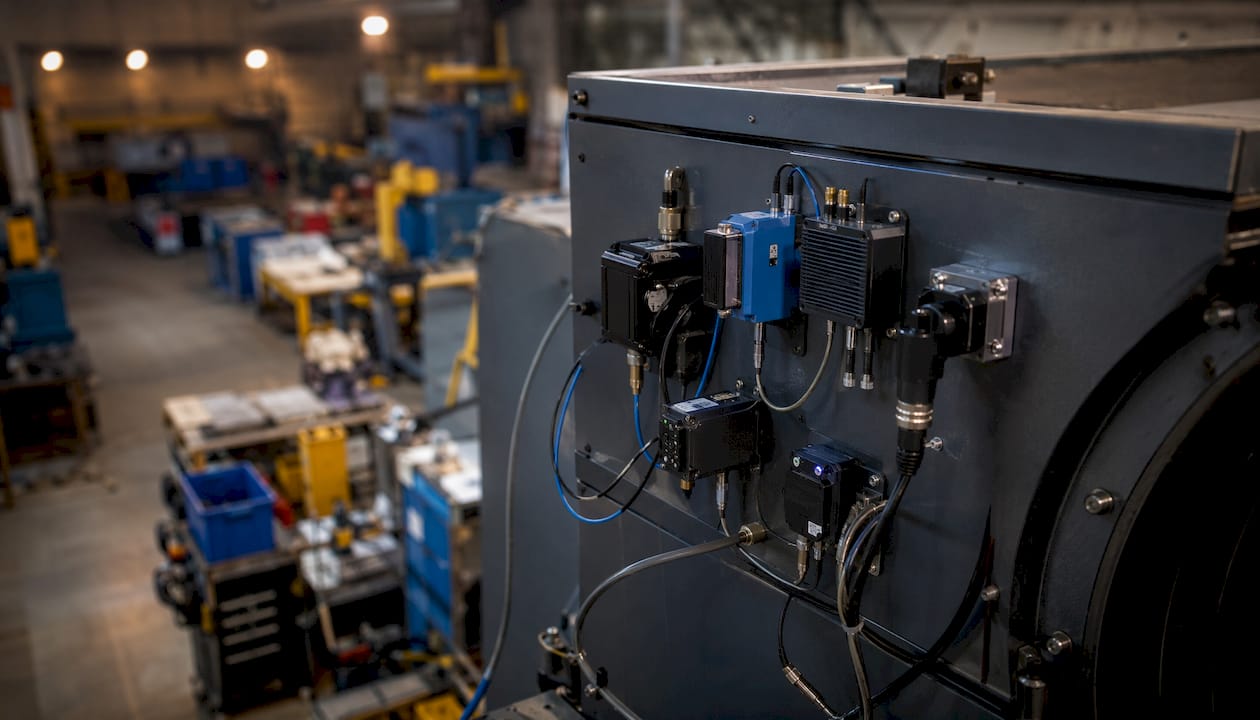
Industrial Internet of Things (IIoT) sensors are the hardware layer of this ecosystem. They monitor equipment conditions continuously and feed live data into your CMMS, where AI-driven predictive diagnostics can detect signs of wear before a failure occurs. Edge computing processes sensor data locally, reducing latency for time-sensitive alerts. Mobile access rounds out the picture by putting work orders, asset histories, and inventory data directly in a field technician’s hands.
Core features enabled by these technologies include:
- Automated work order creation: Systems generate and assign tasks based on sensor thresholds, production events, or scheduled triggers
- Real-time status tracking: Managers see open tasks, technician activity, and equipment downtime on a live dashboard
- Inventory synchronization: Parts availability updates automatically as technicians consume stock, with purchase requisitions triggered when levels drop
- Preventive maintenance scheduling: Recurring inspections and service intervals are set once and executed automatically
- ERP and procurement integration: Maintenance costs flow directly into financial systems, keeping budgets accurate without manual reconciliation
- HR and workforce management sync: Technician certifications, availability, and labor hours stay current across platforms
Pro Tip: When evaluating integration platforms, prioritize those that offer bidirectional API connections rather than one-way data exports. Bidirectional sync means changes in your ERP automatically update your CMMS, and vice versa, eliminating the reconciliation work that consumes hours at month-end.
What operational benefits do maintenance integrations actually deliver?
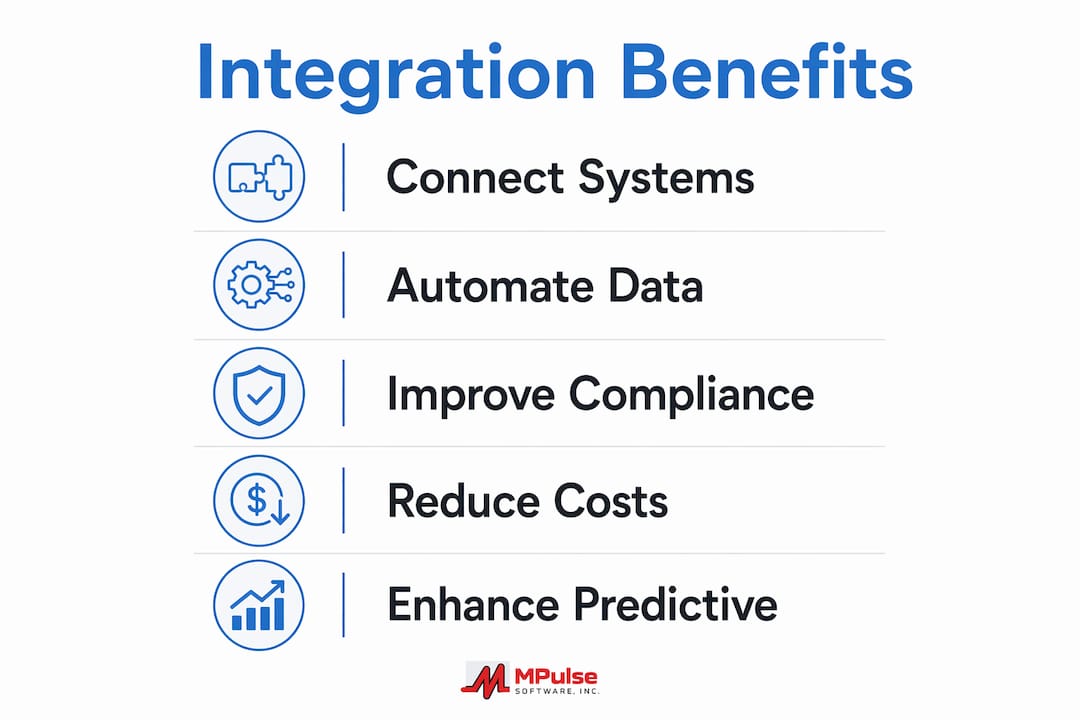
The most direct benefit is a reduction in unplanned downtime. Automated work order platforms route tasks instantly to the right technician based on skill, location, and workload, cutting the lag between a detected fault and a dispatched repair. That speed compounds over time: fewer emergency repairs mean lower parts costs, less overtime, and more predictable production schedules.
Productivity gains come from eliminating redundant data tasks. When your CMMS integrates with ERP, financial reporting and procurement align automatically, removing the spreadsheet reconciliation that typically consumes hours each week. Cross-department data flow also eliminates information silos, so operations, finance, and maintenance teams make decisions from the same dataset rather than conflicting reports.
Organizations adopting cloud-based CMMS platforms with IIoT and AI integration report up to 40% improvements in maintenance efficiency alongside measurable reductions in downtime costs.
Compliance and audit readiness improve as a direct consequence of integrated data capture. Every work order, parts transaction, and inspection record is logged automatically, creating a reliable audit trail without additional administrative effort. For facilities operating under regulatory requirements, that automatic documentation can be the difference between a clean audit and a costly finding.
Best practices for successful maintenance integration implementation

Integration projects fail more often because of process design gaps than technology shortcomings. The most reliable implementations start with frontline technician involvement. Workshops with maintenance staff help designers build custom interfaces that mirror familiar workflows, which dramatically increases adoption rates and reduces the retraining burden.
A phased rollout is almost always preferable to a full cutover. Start with one high-impact integration, such as connecting your CMMS to your ERP for work order cost tracking, prove the value, then expand. This approach limits disruption and gives your team time to build confidence with the new system before the next layer is added.
Key best practices for implementation:
- Map processes before configuring technology: Document current workflows in detail, including the informal workarounds technicians use, before selecting integration tools
- Involve frontline technicians early: Their input shapes interfaces that people will actually use rather than work around
- Plan for integration maintenance: Post-implementation care for the integration itself, including data flow audits and system updates, is as critical as maintaining physical assets
- Use established data standards: Common formats like ISO 55000 for asset management reduce compatibility friction between systems
- Train across departments: Finance, operations, and IT staff all interact with integrated data; training only the maintenance team leaves gaps
- Define KPIs before go-live: Establish baseline metrics for downtime, work order cycle time, and parts costs so you can measure impact objectively
Real-world applications of integrated maintenance systems
A medical device manufacturer using SAP for business management had technicians filling out paper “Maintenance Work Request” forms, with data transcribed manually into SAP afterward. After a series of workshops with maintenance staff, a custom front-end interface was built to mirror those paper forms exactly, then mapped directly to SAP’s maintenance module. The result included a decrease in corrective maintenance and an improvement in mean time between failures within six months, along with notable labor cost savings.
Dutch Railways took a different path, completing a comprehensive platform transformation that connected numerous API-based integrations between planning, maintenance execution, cleaning operations, KPI reporting, and enterprise systems. Train sensor data now flows directly into IBM Maximo as service requests, while planning applications pull Maximo data to assess rolling stock availability for the timetable.
“With IBM Maximo Application Suite, we have a stronger IT foundation for operational control. The data helps us understand rolling stock readiness and support daily rail operations.” — Dutch Railways
Typical use cases across industries include:
- Manufacturing: Sensor-triggered work orders created automatically when vibration or temperature thresholds are exceeded
- Facility management: Integrated scheduling that coordinates HVAC, electrical, and plumbing maintenance without calendar conflicts
- Logistics and distribution: CMMS applications in distribution centers that sync maintenance schedules with inbound and outbound shipment windows
- Healthcare: Compliance-driven maintenance records that feed directly into regulatory reporting systems
- Utilities: Condition-based maintenance triggered by SCADA system alarms, reducing field inspection frequency
Common challenges in maintenance integration and how to solve them
Data silos are the most persistent obstacle. Legacy systems often store asset data in proprietary formats that do not map cleanly to modern CMMS fields. The practical solution is a middleware layer that translates data formats without requiring either system to be replaced. Custom front-end interfaces, like the one built for the medical device manufacturer described above, can bridge the gap between an old backend and a modern workflow.
Cybersecurity risk grows as more equipment connects to networks. Hiroshi Nishiyuki of Mitsubishi Electric has noted that as IIoT-driven solutions become more widespread, more equipment connects to communications networks, making cybersecurity investment as necessary as the maintenance investment itself. Organizations often underestimate this exposure because cyber incidents feel unlikely until they happen.
Common challenges and their solutions:
- Incompatible legacy systems: Use middleware or API gateways to translate data formats rather than forcing a full system replacement
- Change resistance from technicians: Involve them in design workshops and build interfaces that replicate familiar paper-based forms
- Inadequate post-launch support: Treat the integration as a maintained asset with scheduled data flow audits and version updates
- Cybersecurity gaps: Implement network segmentation, role-based access controls, and regular vulnerability assessments for all connected devices
- Scope creep during implementation: Define integration boundaries clearly before the project starts and use a phased rollout to contain risk
- Data quality issues: Establish data governance policies that define ownership, validation rules, and cleansing schedules before go-live
Future trends shaping maintenance integration: AI, IIoT, and cloud
Predictive maintenance is moving from a premium capability to a baseline expectation. IIoT sensors now cost a fraction of what they did five years ago, making condition-based monitoring accessible to mid-market facilities, not just large enterprises. AI diagnostics analyze sensor streams continuously, identifying wear patterns that no human inspector could detect at scale. According to a survey by the Japan Institute of Plant Maintenance, facilities management topped 30% as the leading area where IIoT and AI technologies are expected to be utilized, with analysis, prediction, and simulation ranking third for how those technologies would be applied.
Cloud-based CMMS platforms are enabling a shift that goes beyond storage. Remote access means a maintenance manager can review work order status, approve purchase requisitions, and check asset health from any location. Scalability means adding a new facility or a new category of connected equipment does not require a new server deployment.
Key emerging trends to watch:
- AI-driven failure prediction: Machine learning models trained on historical asset data generate increasingly accurate remaining-useful-life estimates
- Edge computing for real-time response: Processing sensor data locally at the machine reduces latency for time-critical alerts
- Digital twins: Virtual replicas of physical assets allow maintenance teams to simulate failure scenarios and test maintenance strategies without touching live equipment
- Cloud-native CMMS platforms: Subscription-based deployment lowers the barrier to entry and keeps software current without on-premises IT overhead
- IIoT integration for maintenance teams: Real-time monitoring of asset condition feeds directly into automated scheduling and parts ordering
- Autonomous maintenance scheduling: AI systems that not only predict failures but also draft and dispatch work orders with minimal human approval steps
How MPulse Software uniquely positions your team for integration success
MPulse CMMS is built around the premise that integration should extend a platform’s value, not complicate it. The system connects with ERP platforms, IIoT sensors, mobile devices, and procurement systems through a flexible API architecture, giving maintenance managers a unified view of asset health, work order status, and parts inventory without toggling between applications. Over 3,500 customers globally have deployed MPulse, with documented efficiency improvements reaching up to 40% and measurable reductions in maintenance costs.
The platform’s intuitive calendar interface makes preventive maintenance scheduling visible and manageable, even for teams that are new to CMMS. Customizable service options mean MPulse can be configured to match the specific compliance requirements of regulated industries, from medical device manufacturing to food processing, without requiring custom development work. The ERP-CMMS integration capability synchronizes financial data automatically, so maintenance costs appear in budget reports without manual entry.
Key MPulse capabilities for integrated operations:
- IIoT and real-time monitoring: Sensor data feeds directly into the CMMS, triggering work orders and updating asset condition records automatically
- Inventory and procurement integration: The inventory shopping cart feature connects parts ordering to work order demand, reducing stockouts and excess inventory
- Compliance and audit support: Automated record-keeping supports audit readiness across regulatory frameworks without additional documentation effort
- Mobile field access: Technicians receive, update, and close work orders from smartphones or tablets, with offline capability for areas with limited connectivity
- Advanced customization: Workflows, forms, and dashboards can be tailored to match existing processes, reducing the retraining burden during deployment
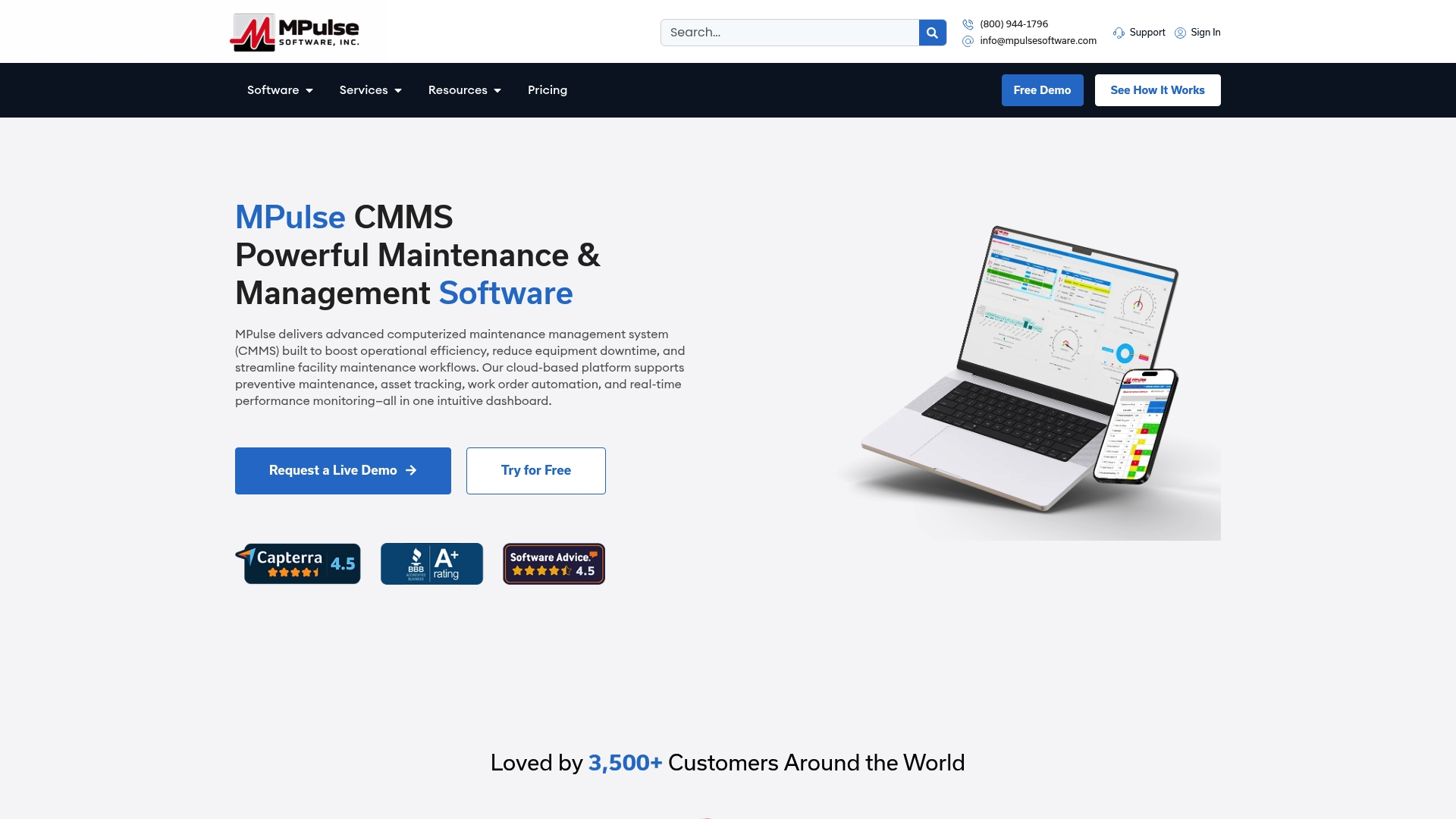
MPulse Software is the right partner when your team needs a CMMS that integrates deeply with your existing systems and scales as your facility grows. Explore the full range of capabilities at MPulse CMMS Software and see how the platform can reduce downtime, improve compliance, and give your maintenance operation the data foundation it needs.
Data security and privacy in maintenance integrations
Connecting maintenance systems to enterprise networks, cloud platforms, and IIoT devices creates a larger attack surface that requires deliberate security architecture. Every new integration point is a potential entry for unauthorized access, particularly when legacy equipment with limited security capabilities joins a modern network. Role-based access controls ensure that technicians, managers, and external vendors each see only the data their role requires, limiting the blast radius of any single compromised credential.
Data governance policies are the organizational complement to technical controls. These policies define who owns each data asset, how long records are retained, and what validation rules apply before data moves between systems. Without them, integrated systems can propagate errors and inconsistencies at scale, turning a data quality problem in one platform into a facility-wide reporting issue.
Practical security measures for integrated maintenance environments include:
- Network segmentation: Isolate IIoT devices and operational technology networks from corporate IT networks to contain potential breaches
- Encrypted data transmission: Require TLS encryption for all API calls and data transfers between integrated systems
- Regular vulnerability assessments: Schedule periodic reviews of all connected devices and integration endpoints, not just the CMMS itself
- Audit logging: Maintain tamper-evident logs of all data access and system changes to support both security investigations and compliance audits
- Vendor security reviews: Evaluate the security practices of every third-party integration partner before connecting their systems to your operational environment
Key Takeaways
Maintenance integrations deliver the greatest operational gains when they connect CMMS, ERP, and IIoT systems into a single data environment with automated workflows and clear data governance.
| Point | Details |
|---|---|
| Integration drives efficiency | Organizations using cloud-based CMMS with IIoT and AI report up to 40% improvements in maintenance efficiency. |
| Process design determines success | Integration failures stem more from workflow gaps than technology; frontline technician involvement is critical. |
| Post-launch care is required | The integration itself needs scheduled audits and updates, just like any physical asset. |
| Security must be built in | Network segmentation, role-based access, and encrypted data transfer protect connected maintenance environments. |
| Phased rollouts reduce risk | Starting with one high-impact integration, proving value, then expanding limits disruption and builds team confidence. |
FAQ
What is maintenance integration?
Maintenance integration connects systems like CMMS, ERP, and IIoT devices so they share data automatically, eliminating manual entry and enabling automated workflows across maintenance, procurement, and operations.
What does it mean to streamline operations?
Streamlining operations means removing unnecessary manual steps, data silos, and communication delays so work moves faster and with fewer errors. In maintenance, this typically means automated work order routing, real-time inventory visibility, and cross-department data sharing.
What are the four types of maintenance?
The four types are preventive (scheduled before failure), predictive (condition-based using sensor data and AI), corrective (repairs after failure), and reactive (unplanned emergency response). Integrated maintenance systems support all four but are especially effective at enabling preventive and predictive strategies.
How does streamlining your work reduce maintenance costs?
Automated scheduling and work order routing reduce emergency repair frequency, which lowers parts costs and overtime. ERP integration keeps maintenance spending aligned with budgets in real time, and accurate inventory data prevents both stockouts and excess purchasing.