
The Maintenance Management Task You Need to Add to Your “To Do” List

Last week I attended a retirement party for two employees of an MPulse customer. After offering my congratulations (and admitting a little envy), I stopped to talk to Judy, who oversees the maintenance staff. Our conversation left me with the maintenance management task that every maintenance manager must add to their to do list. Judy looked a little melancholy for someone surrounded by that much cake. When I asked her why, she said: “Steve, there’s 62 years of experience walking out the door today. It’s going to be hard to replace that kind of expertise.” Her comment struck a chord. There’s a lot of inherent knowledge in maintenance, and I bet your maintenance workers carry a lot of information in their heads. When they walk out the door, that experience goes with them. Everyone moves on at some point, and I don’t have to tell you that finding good maintenance employees is challenging. That’s why you need a succession plan. How to Create a Maintenance Succession Plan Now, it’s likely your organization doesn’t have a formal program for succession planning. Not that many do. But don’t let that hold you back. It’s in your best interest to create a plan now that will make your life easier during staff transitions. There’s tons of information about creating succession plans out there, but I want to focus on two of the most important things in the maintenance department—skills and experience. I asked Judy about her organization’s succession plan for maintenance employees. “We don’t have a formal process,” she said. “But I know it’s a problem. So I’ve focused on capturing information and documenting procedures in our CMMS software that can be easily passed down from person to person.” I think that’s a great start. Judy is creating a historical record that stays with the company long after the tasks are done and the employees have moved on. But there’s more to it. Experience matters, so it’s important newer employees get hands-on training too. I recommend a four-step process: Identify the skills—including specialized ones—needed to perform maintenance duties. Document any related procedures, resources, or training information in your CMMS software. Create a plan to get employees the experience and training needed to develop those skills. Put that plan into action. Why You Need a Maintenance Succession Plan I know maintenance managers are busy, and succession planning may sound like just another thing to do. But think about the payoff. Maintenance employees are responsible for… Preventing equipment failures Reducing maintenance costs Documenting regulatory compliance Maintaining a safe work environment Extending asset life cycles. In other words, not taking action is simply too expensive. We don’t talk about succession planning much in our field. But we should. Our aging workforce coupled with the increasing responsibilities of the maintenance team means the right person for the right job makes all the difference. Have questions on how to plan for employee transitions? Contact us.
Maintenance Contributes to Excellent Customer Service
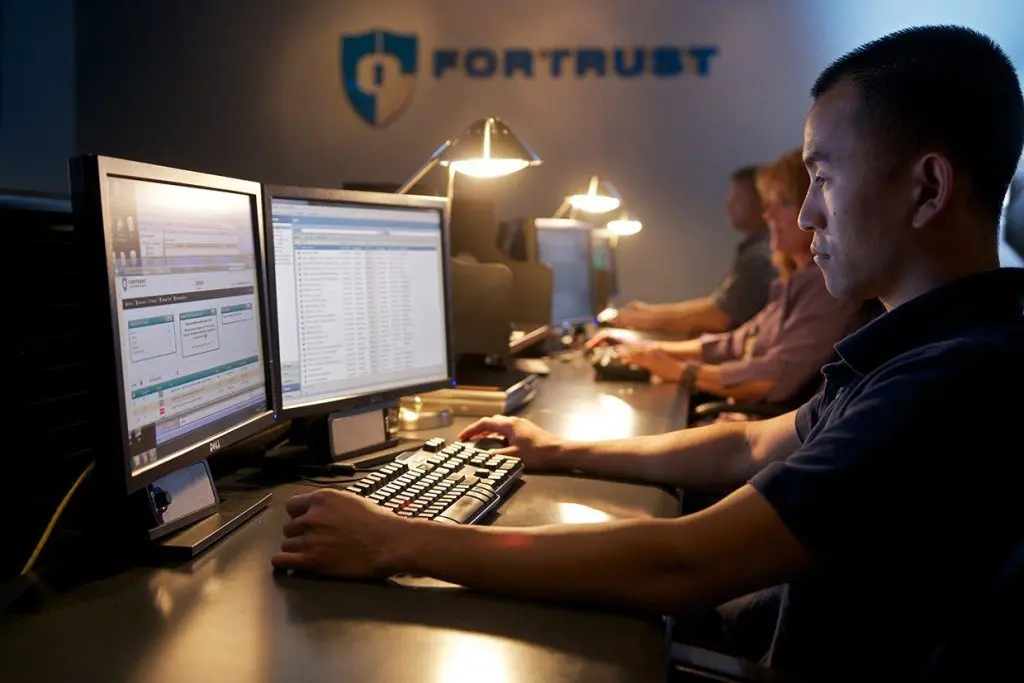
Long-time readers know I talk a lot about how modern maintenance has changed. Today I’m going to share a customer success story about how one company embraced those changes, and how maintenance contributes to excellent customer service. FORTRUST is a lot like any business—their success is built on customer service. As a colocation provider, the company provides reliable conditioned power, cooling, and security for companies looking to host their IT systems offsite as their primary or disaster recovery site. Back in 2010 the company found itself in a growth pattern. Now that’s a nice problem to have. To meet increasing demand, they began researching CMMS software to manage the expansion of installed equipment and the corresponding maintenance tasks. “The Excel spreadsheets just weren’t cutting it,” explained Joe Harris, FORTRUST’s critical systems lead. That’s a refrain I’ve heard many times from maintenance professionals. Also like many other businesses, FORTRUST briefly considered developing in-house software. But after a simple Internet search, they saw MPulse could do everything they needed—making implementation faster and more affordable. FORTRUST went from 0 to 60 with their MPulse CMMS software, which they use for… Work Order Management Maintenance Requests Parts Inventory Dashboards & Reporting Preventive Maintenance, and More One of their team’s proudest accomplishments? FORTRUST has reduced its inventory expenditures by 30% in just 5 years. “We have a limited amount of storage space,” Joe told me. “Before MPulse, we noticed we were keeping a lot of stuff on hand that we didn’t need, and then we had to throw it out because it had a limited shelf life. That costs money. With MPulse, we know which parts are more beneficial to order on an as-needed basis, which ones we should keep on hand, and which ones need longer lead times.” When I toured FORTRUST’s Denver, Colorado, facility recently, I was struck by their facilities team’s enthusiasm. They were proud of their work and eager to show us what they were doing. Plus, company executives were quick to point out how important the maintenance team’s contributions were. That’s an environment I wish more maintenance techs found themselves in. And the result of the company’s investment in both CMMS software and their employees? FORTRUST has more than 14 years of continuous critical systems uptime, which is a key component of FORTRUST’s customer service and marketing strategy. Yet even with their success, FORTRUST isn’t slowing down. Next they plan to move their maintenance strategy forward by strengthening their asset management plan. Download our customer success story for more information about how FORTRUST used MPulse Software, Inc to improve their operations—and how you can too. Contact us.
How to Get Management Support for Your Maintenance Projects

I’ve never met a maintenance worker who didn’t know how to build or repair something in a more streamlined way. With detailed knowledge about equipment and assets, they’ll tell you exactly how to make things run smoother or more efficiently on the production line or in a facility. That’s valuable knowledge. And too often it’s overlooked by the executive team and other department managers. Management support on maintenance projects is essential. Such was the case with Tom, a relatively new MPulse customer who felt his team’s good ideas were not getting the support they deserved. “I kept trying to explain to my boss why we needed to invest in some of these plans,” he told me. “But I wasn’t getting through to him.” Tom’s problem wasn’t the ideas. His problem was translating those ideas into the language of management—dollars. Learn to Speak the Language For maintenance workers, getting the job done means checking things off the list. The value of the work is a job completed. Executive managers, however, think about costs versus benefits. The value of the work is the return on investment (ROI) for the organization. So while Tom sees his maintenance strategy as tasks completed in a timely manner, his boss sees dollars. Think in Dollars I told Tom what I know to be true in any business or organization: “If you aren’t thinking of your work in terms of dollars, someone else is.” To convince his managers to support these projects, Tom needs to show them how they can save more money than they cost. He needs to prove the ROI of these investments. ROI is a simple mathematical equation: ROI = (gain from investment – cost of investment) / cost of investment So, how does Tom do that? He can use his MPulse CMMS data to calculate how these proposed projects will positively impact his company’s balance sheet. To get you started, Phil Beelendorf shares his ideas on calculating ROI in “How Effective is Your Maintenance Strategy” from Plant Services. The first step is a shift in your approach. “Teach yourself to always think like an accountant instead of a maintenance professional,” he writes. There’s more to this story, however. Tom’s real goal is autonomy—the ability to make decisions that he thinks will improve how his maintenance team—and his company—performs. I’ll share more of Tom’s story in another post. In the meantime, contact MPulse with any questions about proving maintenance ROI.
Prepare for Emergencies and Natural Disasters with CMMS Software
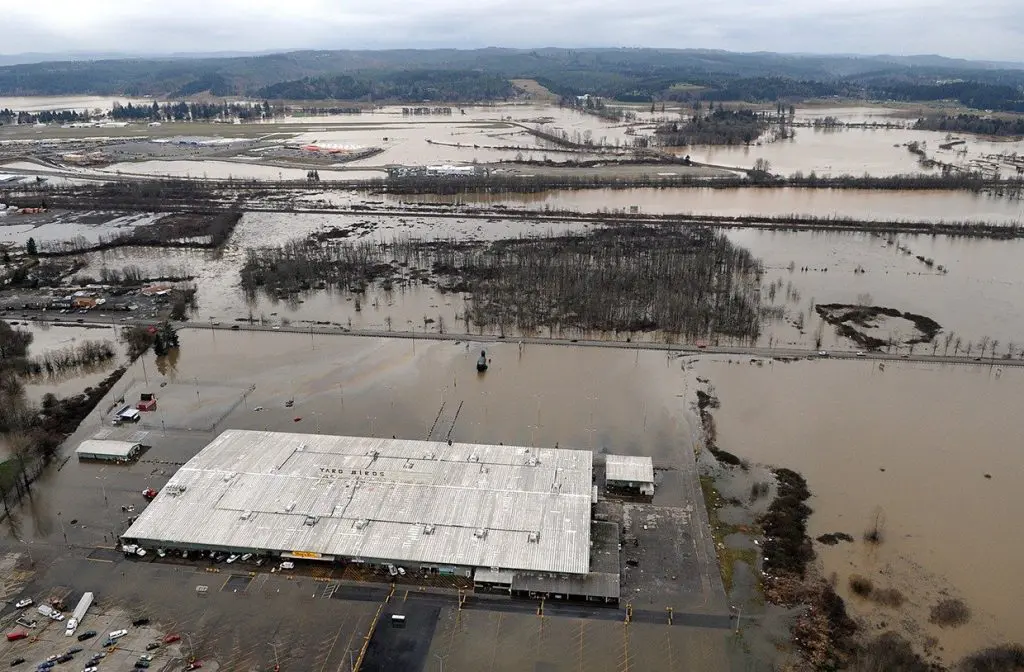
Maintenance is about reducing risk. Your maintenance team is responsible for decreasing the risk of equipment failure, employee injury, compliance audit issues, and so much more. When you’re a maintenance worker, you’re a first responder when things go wrong. Prepare for emergencies with CMMS. This point hit home for me after talking with Gary, an MPulse customer and maintenance director for a large manufacturing company with several locations across the United States. One of those facilities had experienced a natural disaster—a flood. His team had less than 24 hours to batten down the hatches and secure the site for record rainfall. “You never think it’s going to happen to you,” he told me. “We were lucky to have a little prep time, because usually you don’t. And I realized what we’ve been preparing for all along.” CMMS Software Can Help You Prepare It shouldn’t take a flood to remind us how important it is to prepare for emergencies and natural disasters. Luckily, maintenance teams have a crucial tool in CMMS software. CMMS software can help you… Create an emergency plan with checklists Define the roles and responsibilities of each staff person Ensure safety measures are in place Manage resources, supplies, and personnel Store documents and other information, including details for insurance purposes Identify where things are located, including emergency supplies Access information remotely. It’s impossible to completely remove risk from an organization, but the combination of CMMS software and an emergency plan is the best way to prepare for when things go wrong. Recovery is Important Too In Gary’s case, his team knew what to do before the storm hit, and they likely prevented more damage. Plus, their MPulse CMMS data was vital during the recovery period—helping the team get things up and running much faster. “We had our emergency inspection checklists in the software, so our team hit the ground running,” Gary said. “Plus, we had all the vendor details and part information right at our fingertips, which helped us get the damaged equipment fixed much faster.” Unfortunately, some of the company’s equipment was damaged beyond repair. Gary pulled data from his CMMS software to help with the company’s insurance claims. When the company replaced the damaged equipment, Gary’s team set up asset records right away in their MPulse Software, Inc. “We want to protect our investments,” Gary said. “Plus, now we understand how those small things make a big difference when things go wrong.” It shouldn’t take an emergency to realize the importance of proactive planning. Don’t wait for a disaster to strike. CMMS software can help you reduce your risk when speed is of the essence. Plus, you can give yourself an advantage during recovery with the safe storage of critical information. How has your organization used CMMS software for emergency preparation? Leave a comment or contact us. We can all learn from Gary—and each other.
Improve Your Workplace’s Health and Safety with CMMS Software

Maintenance teams can improve workplace safety with CMMS. It’s very likely your organization has to follow safety protocols from numerous organizations or regulatory agencies. Beyond those legal requirements, however, maintenance managers are responsible for creating a safe work environment for all employees—whether they work in the maintenance department or not. Maintenance work affects the entire organization—whether it’s on a production line or in a building. That’s a lot of responsibility. And maintenance technicians often work in environments that can be hazardous. Regular Maintenance Maven readers will remember our friend Troy, who was facing an OSHA investigation after a workplace accident. Vic, another MPulse customer, reminded me there’s a lot more to workplace safety than OSHA regulations. “OSHA documentation is important, Steve,” said Vic, a facilities manager for a large university. “But that’s just the tip of the iceberg. My team is responsible for their own safety on the job, but they also contribute to the safety of our building occupants and visitors. We’re constantly on alert.” How to Improve Workplace Safety with CMMS Safety in the workplace requires a lot of documentation, particularly for creating procedures and recording maintenance activities. And, I’ve said it before, but I’ll say it again: there’s nothing better at documenting those tasks than CMMS software. Vic agrees. “We’ve had some staff changes here, but the transition has gone more smoothly than I thought it would,” he said. “That’s because my team spent the time to thoroughly document our maintenance procedures. So when someone else needs to do the task next, they have custom checklists, resources like repair and preventative maintenance manuals, asset history, and safety procedures right there with the work order.” And best of all, much of that documentation is automated. Once it’s set up, your maintenance team is ready to go. “The biggest advantage I’ve found with our MPulse Software, Inc is the automated alerts,” Vic told me. “I know when our safety inspections are due. I can see who has had what safety training, and what certifications are going to expire. Plus, I don’t even have to remember to look for the information—the reminder pops up exactly when I need it.” How CMMS Helps Improve Workplace Safety Vic’s maintenance team uses MPulse CMMS software to… Update safety procedures Document safety training Publish safety data as a reminder to employees Standardize checklists for scheduled inspections Create a paper trail showing preventive measures Detail emergency procedures in case of a natural disaster or other incident. “We are definitely scheduling and tracking our maintenance and safety-related tasks and information, including those tasks required by law,” Vic said. “But it’s not just about protecting ourselves in an audit. It’s in our best interest to be proactive about our employees’ health and safety.” I couldn’t agree more. Contact us with your questions about maintenance’s role in workplace health and safety. Or get a free trial.
How CMMS Software Helps You Document Maintenance Activities
If you are a maintenance veteran who has watched our field change over the years, you likely remember a time when the maintenance department was largely invisible. Your phone number was on speed dial, but what your team did seemed somewhat mysterious to other departments. That’s no longer the case for many maintenance managers. Our modern maintenance environment brings new challenges, including the need to consistently document maintenance activities and be more transparent to our end users. As my friend and MPulse customer, Andy, said, “Today’s maintenance team works in a culture of accountability. Now our maintenance tasks are tracked, and every department is expected to demonstrate their value.” From accounting to compliance and from human resources to purchasing, your phone now rings with more than repair requests. Those calls are asking for detailed, accurate information about what’s impacting productivity, profitability, performance, and operations. Automate Maintenance Documentation Today’s maintenance manager must constantly gather and report on maintenance information for managers and other departments. That takes time. And time is usually in short supply around the maintenance department. The answer? Automate your maintenance documentation with CMMS software. [related-content] One of CMMS software’s biggest advantages is that you can document everything related to maintenance in one system. It starts with the work order, which automatically records labor time, parts and inventory costs, asset history, and other key information with each task your maintenance team completes. This CMMS data grows over time, offering a wealth of information at your fingertips. It doesn’t get easier than that. Create Maintenance Reports Once you’ve automated maintenance data collection, you can use that data in multiple ways. CMMS software reporting tools enable maintenance managers to quickly produce status reports and documents giving details, graphs, or summaries of maintenance work. Examples of the maintenance activities you can document and report on with CMMS software include… Labor costs, including overtime and/or outsourced work Inventory turnover and costs Inspection schedules Warranty documentation Purchasing and vendor information Compliance procedures Quality assurance tasks Regulatory audit support. “Our MPulse Software, Inc has changed the way I do my job,” Andy told me. “Instead of each information request making me feel like I’m responding to a fire drill, our CMMS software can create custom reports in minutes with a few keystrokes. No more pouring over Excel spreadsheets or searching through stacks of paperwork.” Just as CMMS software makes your maintenance team more efficient at their jobs, it helps maintenance managers report more effectively on what their team is doing. That’s increasingly helpful in today’s workplace where the maintenance team is often asked to do more with limited resources. How could you use CMMS software to document your team’s maintenance activities? Contact us.
Prevent Breakdowns from Impacting Your Production Line with CMMS Software

Those of us who have been around the maintenance profession for a decade or two have seen some interesting changes. Increased competition, new technology, changing expectations… it’s a brave new world for a modern maintenance operation. Breakdowns can impact your production line. Prevent breakdowns with CMMS. I recently visited a new MPulse customer, Wayne, who is a maintenance manager for a local manufacturing company. He’s worked his way up in his organization and now manages a team of 10 maintenance techs who keep the company’s 24/7 production line running smoothly. Wayne is on the younger end of middle age, and he’s seen his organization change a lot over the past decade or so. He told me, “Steve, maintenance used to be seen as an expense on balance sheet. But management recently realized that we influence our company’s profitability too.” What does that mean? Maintenance directly impacts a company’s ability to keep the production line running smoothly—and the income that comes with it. A manufacturer’s maintenance team affects production capacity and product quality, which are two of the most important aspects of a company’s profitability. The Role of Maintenance on the Production Line Maintenance can improve the productivity of a manufacturing company in three major ways: Minimizing downtime and emergency repairs Improving equipment life cycle and replacement forecasting Reducing manufacturing scrap and rework. The key to realizing these benefits? Investing in your maintenance crew and in tools like CMMS software to keep your equipment running smoothly. “Our maintenance team doesn’t just fix broken equipment,” Wayne explained. “We provide support and service that is the basis for our entire operation.” The Benefits of CMMS Software for Production Line Maintenance As Wayne’s managers realized the importance of maintenance, they started focusing on key areas where they could improve. The biggest one was investing in CMMS software. Preventing breakdowns with CMMS saves time and frustration later on. Today Wayne’s maintenance team uses MPulse CMMS software to generate maintenance and inspection schedules. With this information, technicians can spot issues before they occur. Regular services also ensure equipment is properly calibrated or lubricated. The benefits don’t stop there. Properly maintained assets perform more efficiently, use less energy, and fail less often—extending their usable life. CMMS software also helps reduce scrap and rework by reducing emergency production breakdowns and avoiding catastrophic material losses. “Now our managers understand maintenance is essential in our competitive business environment to control production losses, product defects, and equipment downtime,” Wayne explained. “And this attitude has trickled down to my team, who now are feeling a greater sense of pride in their contributions to the company.” Personally, I’m excited that Wayne’s company—and so many other manufacturers—are realizing how important their maintenance team is. This type of recognition is long overdue. How has your organization used CMMS software to manage a production line? Leave a comment or contact us.
CMMS Software and 21 CFR 11 Compliance, Part 1: What You Need to Know

Today I got a phone call from an MPulse customer, Eric, who is a maintenance manager at a biotech company. He’s planning a maintenance software upgrade, and he had a good question: “Steve, I’ve got a coworker telling me our CMMS solution needs to be 21 CFR 11 compliant. Is MPulse Software certified for 21 CFR 11?” That’s a great question, but the answer isn’t simply “Yes” or “No.” What is Title 21 CFR, Part 11? If you work in the pharmaceutical, medical device, biotech, or related industry, Title 21 CFR Part 11 is a major part of your operations. The name refers to the part of Title 21 of the Code of Federal Regulations that establishes the U.S. Food and Drug Administration (FDA) regulations on electronic records and electronic signatures—defining the criteria under which electronic records and electronic signatures are considered trustworthy, reliable, and equivalent to paper records. Naturally, 21 CFR 11 compliance is closely tied to software. And in the maintenance department, that software is—of course—CMMS software. Can CMMS Software Be 21 CFR 11 Certified? Eric’s question, however, relates to a common misconception about software and compliance. To be Title 21 CFR 11 compliant, Eric’s organization must show it has… Procedural controls Administrative controls Technical controls. Now a software vendor can provide the technical elements of a 21 CFR 11 compliant system, which MPulse Software factors—procedural and administrative controls—relate to the organization’s process, not the tool. So the answer to Eric’s question is MPulse Software provides the technical elements of a compliant system. However, we do not claim compliance as the bulk of compliance is related to the use of the tools, not the tools themselves. As such, there is no recognized certification process for software developers. Just like you cannot buy a 21 CFR 11 compliant socket wrench, you cannot buy 21 CFR 11 compliant software. It’s an important distinction that is sometimes not fully understood. However, CMMS software is the best tool for maintenance departments to achieve the technical controls for 21 CFR 11 compliance as well as other regulatory certifications like ISO or HIPAA or Sarbanes-Oxley. Learn more about the tools you need for CMMS and CFR 11 compliance. Or contact MPulse with questions. We have the answers you need.
Infographic: How to Calculate the Return on Your CMMS Investment

When our MPulse team talks with maintenance managers who are researching CMMS software, we get a lot of similar questions, such as… How can we use CMMS to reduce our company’s equipment downtime? How can CMMS help me control my costs of maintenance? How does CMMS save us money? How can we use CMMS to make our maintenance team more productive? How can CMMS software help us manage our parts and inventory? Although the questions are different, these maintenance managers are looking for the same thing—their return on investment (ROI) for purchasing CMMS software. CMMS Software is an Investment ROI measures the amount of return on an investment relative to the investment’s cost. And I believe CMMS software is an investment. Organizations want to see the return on their money. Also, like most successful investments, CMMS benefits compound over time. As your maintenance data becomes more comprehensive, your organization becomes more efficient and the return on investment climbs. Use Your Maintenance Data Effectively CMMS software helps your employees use maintenance data more effectively. Organizations can improve their maintenance processes and reduce costs through these five major areas: Labor costs through improved efficiencies Parts and inventory management Equipment downtime and emergency repairs Equipment life cycle and replacement forecasting Manufacturing scrap and rework It’s a great way to see the different components of CMMS ROI and how they can affect your maintenance operation. This quote from H. James Harrington on the infographic sums it up nicely: “Measurement is the first step that leads to control and eventually to improvement. If you can’t measure something, you can’t understand it. If you can’t understand it, you can’t control it. If you can’t control it, you can’t improve it.” That’s maintenance software in a nutshell. CMMS software helps you measure the productivity of your operations, which gives you a deeper understanding of your maintenance processes, and therefore the ability to improve them where necessary. Have questions? Want to talk about the ROI of MPulse Software, Inc? We’re here. Give us a call.
What Maintenance Teams Need to Know about the Internet of Things (IoT)

Guest blog from Better Buys The Internet of Things (IoT) is changing the way maintenance professionals collect asset information and exchange data with other systems. As things all around us are outfitted with sensors to communicate what’s happening within and around them, this valuable data has the potential to shape your maintenance team’s productivity and efficiency. Gartner reports that by 2020, approximately 26 billion of these connected devices will be in place. This rapid integration is partially driven by the affordability of the IoT. “By 2020, component costs will have come down to the point that connectivity will become a standard feature, even for processors costing less than $1. This opens up the possibility of connecting just about anything, from the very simple to the very complex, to offer remote control, monitoring, and sensing,” said Peter Middleton, research director at Gartner. What Maintenance Teams Should Know Computerized maintenance management system (CMMS) software supports data collection from IoT devices by analyzing real-time readings so maintenance teams can react faster. The combination of the IoT and CMMS helps maintenance technicians spot issues and prevent more serious breakdowns and repairs. Data from the IoT helps with… Improved scheduling and less unplanned overtime Accurate tracking of spare parts and inventory More accessible information on asset conditions Clearly defined benchmarks The IoT will become increasingly important to maintenance teams as younger employees, who are very comfortable with technology, enter the field. CMMS software can take the IoT a step farther by enabling the maintenance team to use mobile devices to check on the status of assets in real time, rather than running between a computer and the shop floor. What Maintenance Managers Should Know From a manager’s or supervisor’s perspective, the IoT offers benefits that can translate into operational improvements. Asset data collected by the IoT devices and analyzed by CMMS software can help managers cut costs and find the best way to manage workloads and prevent emergency breakdowns. These benefits include: A greater return on investment (ROI) for high-capital assets Fewer sudden and costly emergency expenses Minimal unscheduled downtime Opportunities to offer employees performance incentives A more holistic view for strategic planning The combination of the IoT and CMMS software can help bridge data communication, so the maintenance team can make a positive impact on their organization. The IoT is coming, whether you are ready or not. It’s time to get ready. Author Bio: Julia Scavicchio is a writer with Better Buys, a trusted source on enterprise software news and research. Follow her @JuliaScavicchio for more updates on how our workforce is changing.