What Is Process Failure Mode and Effects Analysis (PFMEA)?

Process Failure Mode and Effects Analysis (PFMEA) is a step‑by‑step way to find and fix problems in a process before they happen. It comes from a larger method called Failure Mode and Effects Analysis (FMEA). However, PFMEA looks only at risks that come from how the work is done: how people do tasks, how machines are used, and how materials move through a system. When organizations use PFMEA well, they can cut down on downtime, make better‑quality products, improve safety, and build a workplace that focuses on preventing problems instead of reacting to them. As industries face more pressure to be reliable, follow rules, and work efficiently, PFMEA has become an important tool for ongoing improvement and strong day‑to‑day operations. Modern operations depend on consistent, predictable processes. Yet even well-designed processes contain inherent risks. Variability in human performance, equipment wear, environmental conditions, and material inconsistencies can all introduce failure modes that compromise quality, safety, or uptime. PFMEA provides a structured way to anticipate these risks before they happen. By analyzing potential failure modes, their causes, and their effects, organizations can take corrective actions that deliver the greatest impact. What Is PFMEA? PFMEA stands for Process Failure Mode and Effects Analysis. It is a proactive risk-assessment tool used to identify how a process might fail; understand the consequences of those failures; determine the root causes; prioritize risks based on severity, likelihood, and detectability; and implement controls to prevent or detect failures. Why PFMEA Matters Organizations adopt PFMEA because it delivers measurable operational and financial benefits. Key benefits include reduced downtime, improved product quality, enhanced safety, lower operational costs, regulatory compliance, and a stronger continuous improvement culture. Core Components of PFMEA PFMEA breaks a process down into simple parts so teams can clearly see where problems might happen and how to prevent them. Each part of the analysis looks at a different angle of risk, from how a failure could occur to how serious it would be and what controls are already in place. Understanding these elements helps organizations spot weak points early. As a result, they can focus their improvement efforts where they matter most Failure Mode Failure mode describes how the process could fail or break down. A failure mode is any way the process might not perform as intended, such as producing defects, missing steps, creating delays, or causing unsafe conditions. It focuses on what could go wrong, but not why it happens. Effect of Failure Effect of failure explains what happens if the failure mode occurs. Effects can impact product quality, customer satisfaction, safety, production time, or cost. If the team understands the real‑world consequences, they can judge how serious the failure would be if it went unnoticed. Cause of Failure Cause of failure identifies why the failure might happen. Causes can include human error, equipment wear, poor instructions, missing materials, environmental conditions, or weak process design. Understanding the root cause helps teams target improvements that actually prevent the issue instead of just treating symptoms. Current Controls Current controls are the existing safeguards already in place to prevent the failure from happening or to detect it quickly if it does. Controls can include inspections, alarms, standard operating procedures, training, automation, or built‑in equipment checks. Listing current controls helps determine whether they are strong enough or need improvement. Risk Priority Number (RPN) The RPN is a numerical score used to rank and prioritize risks. You calculate RPN by multiplying three factors: A higher RPN means the risk needs more urgent attention. Teams use this score to decide where to focus improvement efforts first. The PFMEA Process PFMEA works best when it follows a clear, repeatable structure. Each step builds on the one before it. The process helps teams move from understanding the process to identifying risks, fixing weaknesses, and tracking improvements over time. The following steps outline the full PFMEA workflow and explain how organizations can use it to strengthen reliability, safety, and quality in any operation. Step 1: Define the Process Start by clearly describing the process you want to analyze. Outline each step, listing the equipment involved, and identifying the people or departments responsible. A well‑defined process map ensures everyone is analyzing the same workflow and reduces confusion later. Step 2: Assemble a Cross‑Functional Team Bring together people who understand the process from different angles. Team members might be operators, maintenance staff, engineers, supervisors, quality specialists, and anyone else with firsthand knowledge. A diverse team helps uncover risks that a single person or department might overlook. Step 3: Identify Failure Modes This step focuses on what could go wrong. For each step in the process, list all the ways it could fail. A failure mode could be a missed step, an incorrect setting, a material issue, or anything else that prevents the process from working as intended. Step 4: Analyze Effects and Causes Once failure modes are identified, determine the effects (what happens if the failure occurs) and the causes (why the failure might happen). This step helps the team understand both the impact and the root drivers of each risk, setting the stage for meaningful improvements. Step 5: Assign Severity, Occurrence, and Detection Ratings Each failure mode is scored using three factors: These ratings help quantify risk in a consistent, objective way. Step 6: Calculate the Risk Priority Number (RPN) and Prioritize Risks Multiply the three ratings (Severity × Occurrence × Detection) to get the Risk Priority Number (RPN). Higher RPNs indicate higher‑priority risks. This step helps teams focus their time and resources where they will have the greatest impact. Step 7: Develop and Implement Action Plans For the highest priority risks, create targeted actions to reduce severity, occurrence, or improve detection. Actions may include redesigning steps, adding controls, updating training, or improving equipment. Once plans are approved, put them into practice. Step 8: Recalculate RPN After Improvements After actions are implemented, reassess the failure modes using the same scoring system. The new RPN shows whether the improvements worked and whether you need additional changes.
Reliability‑Centered Maintenance: A Facility Manager’s Guide
Facility maintenance teams are under more pressure than ever. They need to cut downtime, make equipment last longer, and do it with fewer people and less money. Older maintenance methods don’t always work well in today’s busy, complex buildings. Reliability‑centered maintenance (RCM) gives teams a simple, organized way to decide the best maintenance plan for each piece of equipment. This guide shows how facility managers can use RCM in a realistic, step‑by‑step way. The New Reality of Facility Maintenance Facilities today face more challenges than ever. Older buildings, higher energy costs, and stricter safety rules all put pressure on maintenance teams to get more done with fewer resources. At the same time, organizations want equipment to run longer and expect fast responses when something breaks. Many teams still depend on reactive maintenance or follow fixed schedules that don’t match what the equipment actually needs. This approach can lead to extra work, surprise breakdowns, and wasted time and money. RCM offers a smarter approach by focusing on what each asset needs to stay reliable. What Is Reliability‑Centered Maintenance? Reliability‑centered maintenance uses a process to determine the most effective maintenance strategy for each asset. It focuses on understanding what the asset is supposed to do, how it can fail, what causes those failures, what the consequences are, and what maintenance actions can prevent or mitigate those failures. RCM differs from traditional preventive maintenance because it is not based on fixed intervals alone. Instead, it uses asset functions, failure modes, and risk to determine the right strategy, whether preventive, predictive, condition‑based, or run‑to‑failure. CMMS plays a critical role by storing asset histories, tracking work orders, documenting failure modes, and providing the data needed to make informed decisions. Why RCM Matters for Facility Maintenance Managers Implementing RCM brings several important benefits to a facility. One major advantage is reduced unplanned downtime, because teams can spot problems earlier and prevent surprise breakdowns. RCM also helps maintenance teams use their time and budget more wisely by focusing on the tasks that actually matter. As a result, workers spend less time on unnecessary jobs and more time on the work that keeps equipment running smoothly. RCM also improves how long equipment lasts and how reliably it performs. By understanding how each asset can fail, teams can choose the right maintenance steps to keep it safe and efficient. This approach supports better safety and compliance, since equipment is cared for in a way that reduces risks. Over time, RCM also strengthens capital planning by giving managers clearer information about when equipment will need repairs or replacement, helping them plan ahead with confidence. How to Prepare Your Facility for Reliability-Centered Maintenance Before starting an RCM program, facility managers should take a close look at how their maintenance work is done today. Start by checking the current maintenance plans, figuring out which assets are most important, and making sure the CMMS data is accurate and complete. It also helps to build a team that brings together people from maintenance, operations, and safety so everyone is working toward the same goals. Step‑by‑Step Guide to Implementing Reliability-Centered Maintenance Step 1: Identify and Prioritize Critical Assets Not every asset requires a full RCM analysis. Start with equipment that has the highest impact on safety, operations, or cost. CMMS data can help rank assets based on downtime history, repair costs, and operational importance. Step 2: Define Asset Functions and Performance Standards Document what each asset must do to be considered reliable. Gather information on performance expectations, operating conditions, and required outputs. Storing this information in CMMS ensures consistency across teams. Step 3: Analyze Failure Modes and Effects (FMEA) For each critical asset, identify how it can fail, what causes the failure, what happens when it fails, and how likely the failure is. This analysis helps determine which failures require preventive action and which can be tolerated. Again, CMMS provides a central place to store and update FMEA data. Step 4: Select the Right Maintenance Strategy Based on the FMEA, choose the most effective strategy: preventive maintenance for predictable wear, predictive maintenance for condition‑based triggers, run‑to‑failure when consequences are low, or redesign/replacement when failures are unacceptable. CMMS data helps validate these decisions by showing trends in downtime, cost, and performance. Step 5: Build and Schedule RCM‑Driven Tasks in CMMS Once strategies are selected, create detailed task plans including instructions, tools, parts, safety procedures, and frequency or condition triggers. Adding this information to CMMS automates scheduling, assignments, and notifications. Step 6: Train Technicians and Standardize Procedures RCM only works when technicians understand the purpose behind each task. Training ensures consistent execution and accurate documentation. Mobile CMMS tools help technicians follow procedures and record results in real time. Step 7: Monitor, Measure, and Optimize RCM is not a one‑time project. Facility managers should track KPIs such as MTBF, MTTR, PM compliance, downtime trends, and cost per asset. CMMS dashboards make it easy to monitor performance and adjust strategies as needed. The Role of CMMS in Sustaining Reliability-Centered Maintenance CMMS is a key tool for making RCM work over the long term. It keeps accurate records of each asset, including past repairs, inspections, and failures. It also helps teams track work orders, connect to condition‑monitoring tools, and follow standard workflows. With CMMS, maintenance teams can see what’s happening in the facility, spot patterns, and make better decisions based on real data. Without CMMS, it’s much harder to keep an RCM program running. Important information may be missing, outdated, or stored in different places, which makes it difficult to understand how assets are performing. When the data isn’t complete or reliable, teams can’t update their maintenance strategies or catch problems early. CMMS brings everything together in one system, helping RCM stay accurate, consistent, and effective over time. Common Pitfalls in Reliability Centered Maintenance and How to Avoid Them Reliability-centered maintenance can transform how a facility operates, but only when it’s applied in a practical, focused way. Many teams run into the same challenges during implementation. Knowing these pitfalls
A Complete Guide to Maintenance Types and When to Use Them
Choosing the right maintenance strategy plays a major role in saving money, keeping workers safe, and preventing downtime. When maintenance is delayed or overlooked, small warning signs can turn into equipment failures, safety hazards, or costly shutdowns. What starts as a loose bolt, a worn seal, or a missed inspection can quickly grow into a problem that affects an entire facility. In 2018, a large power plant on the East Coast had a major equipment failure that caused a long blackout in the surrounding area. Investigators later found that several parts inside the plant had not been inspected or replaced on time. A few low‑cost repairs could have prevented the entire shutdown. This example shows how poor maintenance can lead to serious consequences. A strong maintenance plan that includes preventive, corrective, and condition‑based strategies can stop many problems before they become dangerous or expensive. See also: What is Corrective Maintenance and When Should You Use It?. Maintenance is not only about preventing issues. It also includes fixing equipment after something breaks. The right mix depends on your industry, the type of equipment you use, and what happens if something fails. For example, replacing a broken microwave in a school cafeteria is simple and low‑risk. But a broken HVAC system in a hospital can put lives at risk. This guide explains the main types of maintenance, when to use them, and how to put them into practice. Key Takeaways Understanding Different Types of Maintenance Most maintenance falls into two main groups: Inside these groups are more specific approaches, such as corrective maintenance for known issues and unplanned corrective maintenance for sudden failures. Preventive maintenance itself splits into four approaches; see the four types of preventive maintenance. See also: What You Need to Know about Total Productive Maintenance. Let’s look at the main preventive strategies in more detail. Preventive Maintenance Strategies Preventive maintenance can be divided into three main types. 1. Time‑Based Maintenance Time‑based maintenance happens on a set schedule, no matter what condition the equipment is in. It is like getting your teeth cleaned every six months even if nothing hurts. This approach works well for equipment that: For example, in water treatment plants, filters must be replaced on a strict schedule to keep drinking water safe. In printing factories, rollers and belts are changed after a certain number of hours because they wear down at a steady rate. 2. Corrective (Condition‑Based) Maintenance Corrective maintenance happens when equipment shows signs of wear or damage. Instead of following a fixed schedule, workers monitor the equipment and act when something changes. This approach includes: For example, in a paper mill, machines that press and dry paper are checked for changes in vibration. If vibration increases, it may mean a bearing is wearing out. In a bakery, ovens are monitored for temperature changes that can signal a failing heating element. 3. Predictive Maintenance Predictive maintenance uses technology to predict when equipment will fail. Sensors collect data, and software analyzes it to spot early warning signs. Predictive maintenance often includes: For example, wind farms use sensors on turbines to track vibration, blade movement, and motor temperature. Small changes can warn technicians long before a breakdown. In large warehouses, conveyor systems use sensors to track motor power and belt tension so repairs can be planned before the system stops working. Reactive Maintenance Strategies Reactive maintenance happens after equipment breaks. It is sometimes called run to failure. This approach can be useful when the equipment is low cost, easy to replace, or not critical to safety. Reactive maintenance includes two main types: Reactive maintenance is not always a bad thing. For example, in a school, a broken pencil sharpener can simply be replaced when it stops working. In a grocery store, a small display light can be fixed after it burns out without causing major problems. But reactive maintenance becomes risky when the equipment is important for safety or production. A broken cooling pump in a chemical plant or a failed emergency alarm in a factory can cause serious harm. In these cases, waiting for failure is not an option. Comparing Preventive and Reactive Maintenance Both preventive and reactive maintenance have a place in a good maintenance plan. The key is knowing when to use each one. Preventive maintenance works best when: Reactive maintenance works best when: For example, a large food processing plant may use preventive maintenance for refrigeration units because failure could spoil thousands of pounds of food. At the same time, the same plant may use reactive maintenance for small conveyor rollers that are cheap and easy to swap out. How to Choose the Right Maintenance Mix There is no single plan that works for every facility. The right mix depends on your equipment, your industry, and the risks involved. Many organizations aim for about 80 percent preventive maintenance and 20 percent reactive maintenance. This ratio helps reduce downtime while still allowing flexibility for simple repairs. To choose the right mix, consider: For example, a warehouse might use predictive maintenance for forklifts because they are essential for daily operations. At the same time, the warehouse might use reactive maintenance for office printers because they are not critical to safety or production. Putting Your Maintenance Plan Into Action A good maintenance plan is only effective if it is carried out correctly. Success depends on strong communication, clear steps, and teamwork. To implement your plan: For example, a packaging plant might train workers to listen for unusual sounds in sealing machines. If workers report changes early, technicians can fix problems before the machines break down. Prevent Problems Before They Start Maintenance is more than fixing things. It is a strategy that protects people, saves money, and keeps operations running smoothly. By understanding the different types of maintenance and choosing the right mix for your facility, you can prevent many problems before they start. A strong maintenance plan helps you stay ahead of failures, reduce downtime, and create a safer workplace. Whether you manage a small
A Practical Guide to Commercial HVAC Maintenance
Commercial HVAC systems are among the most critical assets in any facility. They regulate indoor comfort, protect sensitive equipment, and account for a significant portion of a building’s energy use. When these systems are not properly maintained, the result is often higher operating costs, inconsistent temperatures, tenant complaints, and unplanned downtime. Effective commercial HVAC maintenance goes beyond periodic inspections. It relies on consistent processes, clear documentation, and visibility into system performance over time. This guide covers the basics of commercial HVAC maintenance, outlines key system components, offers a practical maintenance checklist, and explains how CMMS supports a more consistent and efficient program. For how a CMMS keeps records audit-ready across regulations, see the CMMS as the system of record for audits. Understanding Commercial HVAC Maintenance Commercial HVAC maintenance includes regular inspection, service, and repair of heating, ventilation, and air conditioning systems used in commercial buildings. These systems are larger and more complex than residential units and often run continuously across multiple spaces. Maintenance typically includes preventive, predictive, and corrective work. Preventive maintenance covers scheduled tasks like inspections and filter changes. Predictive maintenance uses system data to identify issues early. Corrective maintenance fixes problems after they occur. CMMS supports all three by organizing asset data, maintenance schedules, and work orders in one system, helping teams plan, track, and document HVAC work consistently. Essential Components of a Commercial HVAC System Commercial HVAC systems consist of multiple interconnected components, each of which requires regular attention to keep the system operating efficiently. Heating equipment may include boilers, furnaces, or heat pumps responsible for generating heat. Cooling systems often consist of chillers, cooling towers, rooftop units, and condensers. Air handling units distribute conditioned air throughout the building, while fans, motors, belts, and dampers regulate airflow. Additional components include thermostats, sensors, building automation systems, electrical connections, refrigerant lines, condensate drains, and air filtration systems. Failure in any one of these areas can affect overall system performance. CMMS software like MPulse allows each HVAC component to be tracked as an individual asset. Your team can attach maintenance schedules, manuals, warranties, and service histories directly to the asset record, giving technicians and managers quick access to critical information. Commercial HVAC Maintenance Checklist A consistent maintenance checklist is essential for ensuring that routine HVAC tasks are completed correctly and on time. While specific requirements vary by equipment and facility, a comprehensive commercial HVAC maintenance checklist typically includes the following activities: ☐ Inspect and replace air filters to maintain airflow and indoor air quality.☐ Check belts, pulleys, and couplings for wear, alignment, and proper tension.☐ Inspect electrical connections, control panels, and safety devices.☐ Clean evaporator and condenser coils to prevent efficiency losses.☐ Inspect and clean drain pans and condensate lines to prevent blockages.☐ Lubricate motors, bearings, and other moving parts as required.☐ Verify thermostat accuracy and control system operation.☐ Inspect refrigerant levels and check for leaks.☐ Test startup, shutdown, and emergency controls. To simplify the process, these checklist items can be added directly to preventive maintenance work orders in MPulse CMMS. Technicians complete tasks electronically, record readings, add notes, and attach photos, creating a clear maintenance history that supports compliance, troubleshooting, and long-term planning. Seasonal Maintenance Checklist Pre-Cooling Season Checklist ☐ Clean condenser coils☐ Verify refrigerant levels☐ Inspect compressors for wear, noise, or leaks☐ Confirm proper airflow across units☐ Test controls and sensors for accurate cooling response☐ Inspect electrical connections and components Pre-Heating Season Checklist ☐ Inspect boilers or furnaces☐ Check ignition systems for proper operation☐ Examine heat exchangers for cracks or damage☐ Test safety controls and shutoffs☐ Inspect and replace air filters as needed☐ Review dampers for proper operation and airflow CMMS Scheduling and Tracking ☐ Schedule seasonal maintenance tasks in CMMS☐ Generate work orders based on time, meter readings, or usage☐ Assign tasks to technicians and set priorities☐ Track work order completion across all facilities☐ Document findings, readings, and corrective actions Well-Maintained vs. Neglected HVAC Systems: What’s the Difference? The difference between a well-maintained HVAC system and a neglected one becomes increasingly clear over time. Well-maintained systems operate more efficiently, experience fewer breakdowns, and maintain consistent indoor conditions. Energy consumption remains more predictable, and major components last longer. Neglected systems often suffer from dirty coils, clogged filters, worn belts, and failing controls. Small issues go unnoticed until they result in system failures, emergency repairs, or premature equipment replacement. These systems typically consume more energy and generate higher maintenance costs. CMMS helps highlight these differences by providing visibility into maintenance history, downtime, and recurring issues. Asset reports and work order data allow facilities to identify problem equipment and adjust maintenance strategies before failures become costly. Implementing an Effective Maintenance Program An effective commercial HVAC maintenance program starts with accurate asset data. Maintenance teams should identify, document, and enter all HVAC equipment into the CMMS software. Teams should also standardize preventive maintenance tasks and schedule them based on manufacturer recommendations and operating conditions. Clear workflows and technician accountability are also critical. CMMS enables maintenance teams to assign work orders, set priorities, and track completion in real time. Mobile access allows technicians to update work orders in the field without returning to the office. Over time, maintenance managers can use the data collected in CMMS to evaluate performance, identify trends, and support budgeting and capital planning decisions. Streamline Your Commercial HVAC Maintenance with CMMS Managing commercial HVAC maintenance without a centralized system can lead to missed tasks and inconsistent records. CMMS provides a structured way to manage HVAC assets, preventive maintenance schedules, and maintenance data. Using MPulse helps reduce unplanned downtime, improve energy efficiency, and extend equipment life, supporting a more reliable maintenance program and occupant comfort. Get started today. Contact us. FAQs on Commercial HVAC Maintenance How often should commercial HVAC systems be serviced? Most commercial HVAC systems benefit from quarterly preventive maintenance, with additional inspections before peak heating and cooling seasons. Maintenance managers can use CMMS as a structured way to manage HVAC assets, preventive maintenance schedules, and maintenance
A Practical Guide to Simplifying Facility Maintenance with CMMS

Facility maintenance teams face a steady stream of demands every day. Priorities can change quickly, and the pressure to keep everything running smoothly never really stops. For many facility maintenance managers, staying organized is one of the hardest parts of the job. They oversee buildings, equipment, people, and budgets, often all at the same time. CMMS software simplifies facility maintenance in several important ways. These tools do more than track maintenance tasks. They help maintenance teams manage information, people, and assets across an entire organization. This practical guide to simplifying facility maintenance will get your team started. Simplifying Facility Maintenance with CMMS Systems Integration Facility maintenance teams share information with other departments, making clear and consistent data access essential. Purchasing relies on up-to-date maintenance records to manage budgets, approve work, and track parts and inventory costs. Human resources may need visibility into labor hours, certifications, and staffing requirements, while executives depend on accurate reporting to evaluate performance, prioritize capital investments, and make informed strategic decisions. Centralizing information and making it easily accessible helps maintenance teams avoid duplicate data entry and reduce errors. This transparency improves coordination across departments and allows maintenance managers to spend less time compiling reports and more time focusing on planning, reliability, and long-term improvements. CMMS software allows information to move easily between systems, with data flowing both in and out so the same information does not have to be entered multiple times. This capability saves hours of paperwork and reduces errors. With less time spent on forms and reports, more time can be devoted to planning and problem-solving. Scalability After a facility maintenance department implements CMMS software, the system must continue to evolve as facilities grow and operational demands expand. Adding new buildings, equipment, and infrastructure increases the number of assets to track, the volume of work orders to manage, and the amount of data required for planning and reporting. A scalable CMMS can accommodate this growth by supporting additional users, locations, and assets without sacrificing performance or usability. It allows maintenance teams to adjust workflows, preventive maintenance schedules, and reporting structures as complexity increases. When a CMMS is designed to scale, it helps departments maintain consistency, control, and visibility across all facilities, even as workloads grow and operations become more demanding. CMMS software should make it straightforward to add users, enable new features, and onboard and train new employees without disrupting daily operations. This adaptability allows the maintenance team to manage a growing workload more effectively and to maintain consistency across facilities. Rather than outgrowing technology, scalability enables teams to adjust and configure the system to match a continually changing environment, supporting long-term growth and stability. User Management User management also plays a key role in effective facility maintenance operations, especially as teams grow and responsibilities become more specialized. Features such as MPulse Role-Based Access Control allow organizations to define who can view, enter, and modify information. Maintenance technicians, supervisors, managers, and service requestors can only access the tools and data relevant to their roles. This approach keeps the system intuitive for everyday users, reduces clutter, and minimizes the risk of errors caused by unnecessary or confusing options. At the same time, role-based access strengthens data security by restricting sensitive information, such as labor details, costs, or administrative settings. For facility maintenance managers, this controlled access protects critical data while still enabling teams to work efficiently and independently. Security Security is another area where CMMS software makes a difference. Managing access across a large organization can be a significant challenge, especially with multiple locations. CMMS software helps teams stay organized and compliant by centralizing security-related data, reducing paperwork, and controlling access, allowing facility managers to maintain both efficiency and safety. Security demands have also increased substantially over the past decade, with new regulations, stricter controls, and additional oversight requiring more documentation and accountability. These changes have added significant administrative workload to maintenance operations. Without the right tools in place, managing this level of tracking would be extremely difficult. For example, lost or misplaced keys create safety risks and often lead to wasted time and unnecessary follow-up. By using tools like MPulse Key and Lock Management, maintenance teams can track keys and authorized users in one centralized system. They can see who has a key, when it was checked out, and when it is due to be returned. This visibility reduces time spent searching for keys or tracking down staff. It also supports more consistent security practices across an organization. Mobility Maintenance work rarely happens behind a desk. Technicians spend most of their time in the field, moving between buildings and responding to issues as they arise. A mobile-friendly CMMS like MPulse supports this reality by giving team members real-time access to the system wherever they are. Mobile CMMS enables technicians to report problems, receive assignments, update work orders, and record labor and parts directly from their devices. They don’t need to return to the office to check schedules or enter information at the end of a shift. This immediate access keeps work moving without unnecessary delays and helps reduce equipment downtime. As a result, supervisors gain better visibility into job status. Additionally, technicians stay informed about priorities and changes as they happen. Mobile access also improves communication across the team, ensuring that everyone is working with the most current information. The result is faster response times, more accurate data, and a more efficient maintenance operation overall. CMMS Supports Facility Maintenance Teams Together, these features show how CMMS software supports modern facility management. It helps teams stay organized, improve security, and make better use of their time. Facility maintenance management is about more than fixing equipment. It is about creating safe, reliable spaces where people can work, learn, and live. By reducing paperwork, improving visibility, and supporting smarter decisions, CMMS software helps facility managers do their jobs better. It’s easy to get started. Contact us.
Top CMMS Software in 2026
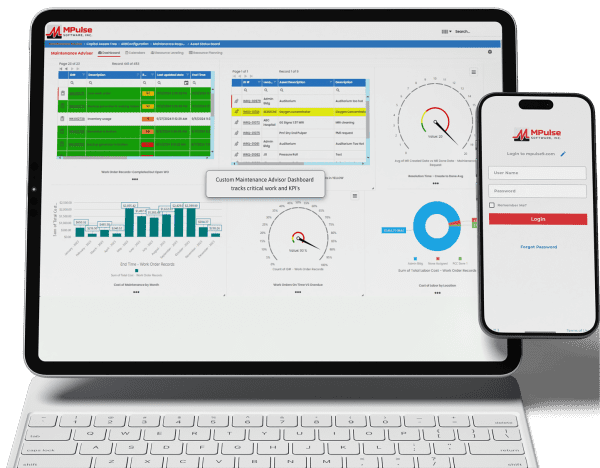
Maintenance teams face pressure to do more with fewer resources, but the top CMMS software platforms in 2026 are meeting the challenge. Today’s leading solutions go beyond basic work order tracking, providing preventive and predictive maintenance, real-time asset insights, mobile-friendly design, and data-driven reporting to support smarter, more proactive operations. Whether your team manages a single facility or a global asset portfolio, modern CMMS platforms improve reliability, reduce downtime, and gain clear insight into maintenance performance. As a result, finding the right software choice serves as the foundation for the year ahead. Whether you’re moving away from spreadsheets or replacing an existing system, this comparison highlights several of today’s leading CMMS solutions to help you find the right fit. 1. MPulse CMMS MPulse CMMS stands out as a flexible, enterprise-ready solution designed to support proactive maintenance strategies across a wide range of industries. Top features include comprehensive asset management through a centralized system that captures asset details, maintenance histories, warranties, and documentation. All this data links directly to work orders, parts, and schedules for full lifecycle visibility. Work order management is straightforward, with easy creation, scheduling, and tracking supported by automated alerts and maintenance calendars. Preventive and predictive maintenance capabilities allow teams to schedule work based on time, usage, or condition data, with optional integrations supporting predictive initiatives. Inventory and purchasing tools help track spare parts, monitor stock levels, and automate purchasing to avoid downtime caused by missing components. Reporting and dashboards provide clear insights into KPIs, costs, and performance metrics, while integrations with ERP, accounting, and other business systems support scalable, connected operations. Biggest Benefit of MPulse CMMS = Adaptability MPulse’s biggest benefit lies in its ability to adapt to organizations of all sizes while improving asset reliability and reducing downtime. The customizable design supports industries ranging from manufacturing and utilities to healthcare, education, and government facilities. MPACT runs in the cloud, so there is nothing to install and nothing for IT to patch, and it meets the compliance needs of regulated industries. Its per-user licensing covers the people who plan and perform maintenance, while requesters are unlimited and free, which keeps costs under control for teams that work in shifts or take requests from many departments. MPulse CMMS User Reviews Users frequently praise MPulse for balancing depth and usability. Many note that its strong reporting tools and flexibility make it a long-term solution rather than a system teams quickly outgrow. Reviewers also recommend MPulse’s affordable implementation services to speed adoption and ensure success. Users praised MPulse for: MPulse has allowed us to track hundreds of assets across multiple types and accurately schedule maintenance for those assets. Before MPulse, our preventive maintenance simply didn’t get done, and our spare parts inventory tracking was stuck in the stone age. We were never sure what parts we had or where to find them. Now we’re able to track inventory accurately and always have the necessary spare parts on hand. – Caleb C. on Capterra MPulse makes it easy to track assets and manage work orders and work order history. You can log machine hours and set hour-based work orders. – Vern B. on G2 For our campus, it made submitting requests easier for users, and they are able to receive email notifications based on the status of their work orders. Building users appreciate its ease of use when submitting requests to the Physical Plant. Maintenance staff can be held accountable for performance, and with preventive maintenance procedures being scheduled and completed, downtime for critical equipment has decreased. – Christopher B. on Capterra We’ve been using MPulse for the last four years and have no plans to stop. We appreciate how it helps us keep track of all our devices without relying on stacks of spreadsheets for updating, tracking, and monitoring. MPulse does the work for us. – Joel S. on Software Advice Strengths of MPulse CMMS Customers consistently give MPulse strong scores on Software Advice, with overall ratings around 4.5 out of 5 stars and an excellent user satisfaction rating of about 91%, meaning the vast majority of users would recommend it. Many users say MPulse substantially improves their maintenance operations by streamlining work order tracking, preventive maintenance, and asset management workflows. One verified reviewer described it as a “very comprehensive and complete CMMS” that they’re glad they chose after evaluating alternatives. Customers frequently emphasize responsive and helpful customer support, with numerous reviews pointing out how support staff assist quickly with questions or issues, helping keep operations moving. Another common positive theme is that once MPulse is properly configured, it can simplify tracking maintenance tasks, inventory, and historical data, freeing teams from paper logs or spreadsheets. Long-term customers like St. George Steel, IKEA US West, Reed College, and Northwell Health mention that MPulse “simplified keeping track of what we do” and that it’s easy to tailor the program to facility maintenance needs. Affordable Pricing MPACT is a cloud subscription priced per user. You pay for the people who plan and perform maintenance, and requesters are unlimited and free, which keeps costs predictable as more departments submit work requests. Current plans are listed on the MPACT pricing page, and a free demo and custom quote are available. 2. Maintenance Connection Maintenance Connection is a robust CMMS designed for organizations that need deep asset management, strong preventive maintenance capabilities, and enterprise-level scalability. The platform focuses on helping maintenance teams plan, track, and continuously improve their operations through data-driven decision-making. Key features include advanced work order management with configurable workflows, preventive and predictive maintenance scheduling based on time, meter readings, or condition data, and detailed asset tracking with full maintenance histories and documentation. Maintenance Connection also offers inventory and parts management, labor tracking, and comprehensive reporting tools that help teams analyze performance, costs, and compliance metrics. Mobile access enables technicians to receive assignments, update work orders, and access asset data in the field. User Reviews Organizations choose Maintenance Connection for its depth, configurability, and suitability for complex environments. The platform is suited for
Top Three Ways Facility Maintenance Managers Can Keep Costs Down

Facility maintenance professionals know that owners and tenants expect high-quality service, but they also expect competitive pricing. To stay profitable, facility maintenance managers must carefully control costs while keeping buildings safe, efficient, and comfortable. Strong facility maintenance practices make it easier to balance these goals. By improving energy efficiency, using the right maintenance management tools, and focusing on preventive maintenance, facility managers can reduce waste, avoid costly repairs, and improve daily operations. These steps help create a more reliable facility maintenance program that supports long-term success. Improving Energy Efficiency in Facility Maintenance Utility costs often make up a large portion of a building’s operating budget. Reducing energy and water use can lower monthly expenses and free up money for other needs. Energy-efficient buildings also attract tenants who value sustainability and lower environmental impact. Facility maintenance teams usually focus on two types of energy efficiency: passive and active. Passive energy efficiency involves making upgrades to equipment and building systems. Examples include installing energy-efficient appliances, LED lighting, improved insulation, and low-flow toilets and faucets. These upgrades may cost more at the start, but they often pay for themselves over time through lower utility bills and reduced maintenance needs. Active energy efficiency focuses on how facility maintenance work is done each day. This approach includes using less water and power during cleaning and repairs and choosing reusable products instead of disposable ones. Simple tasks such as replacing HVAC filters on schedule, keeping condensers clean, and fixing small leaks quickly can improve system performance and prevent energy loss. Landscaping choices also matter. Using plants that need less water can reduce irrigation costs and ongoing maintenance work. When energy efficiency becomes part of regular facility maintenance routines, buildings run more smoothly, and costs stay under control. Using CMMS Software to Support Facility Maintenance Managing facility maintenance tasks without the right tools can lead to missed work orders, poor communication, and wasted time. CMMS helps facility managers organize and track all maintenance activities in one place. CMMS software allows facility maintenance teams to create, schedule, and monitor work orders. It stores information about equipment, maintenance history, and inventory, making it easier to plan repairs and replacements. With better organization, maintenance teams can respond faster to problems and spend less time on paperwork. Many CMMS platforms also allow tenants or building users to submit maintenance requests online. This capability creates a clear and simple process for reporting issues. The system can automatically notify the maintenance team and update requestors as work progresses. Clear communication reduces frustration and builds trust between facility maintenance teams and tenants. CMMS software also provides reports that show trends in facility maintenance work. Managers can see which assets need the most attention, where costs are increasing, and how well preventive maintenance plans are working. These insights help managers make better decisions and improve overall efficiency. Creating a Preventive Maintenance Program One of the most effective ways to control facility maintenance costs is through preventive maintenance. Preventive maintenance focuses on taking care of equipment and building systems before problems occur. This approach helps avoid breakdowns, emergency repairs, and unexpected downtime. Preventive facility maintenance includes regular inspections, cleaning, adjustments, and minor repairs. Common tasks include servicing HVAC systems, checking electrical systems, cleaning gutters, inspecting roofs, and preparing buildings for seasonal weather changes. These tasks may seem small, but they play a big role in keeping facilities running safely and efficiently. CMMS software makes preventive maintenance easier to manage. Facility managers can schedule recurring tasks and plan maintenance work weeks or months in advance. This helps teams stay organized and reduces the chance that important tasks will be forgotten. Preventive maintenance also helps extend the life of equipment. Well-maintained systems last longer and perform better, which reduces the need for early replacements. Over time, this leads to significant savings and more predictable facility maintenance budgets. The Long-Term Value of Strong Facility Maintenance Effective facility maintenance is not just about fixing problems. It is about planning ahead, using resources wisely, and creating a safe and comfortable environment for building occupants. When energy efficiency, CMMS software, and preventive maintenance work together, facility managers gain better control over costs and operations. Strong facility maintenance practices make daily work easier for maintenance teams and reduce stress caused by unexpected repairs. They also improve tenant satisfaction by ensuring that issues are addressed quickly and systems work as expected. By investing time and effort into better facility maintenance planning today, managers can create more efficient operations and stronger financial performance in the future. With the right strategies in place, facility maintenance becomes not just a cost to manage, but a valuable part of a successful property operation. Have questions? Contact us. We’re here to help.
Scheduled Maintenance That Actually Prevents Problems

When equipment breaks down, work stops, money is lost, and people get frustrated. That’s why many companies schedule maintenance tasks to take care of equipment before it breaks. But planning and tracking that work can get complicated. CMMS and scheduled maintenance prevent problems by helping your team plan, document, and track maintenance work. It makes sure the right tasks happen at the right time, and it keeps everyone organized. What Is Scheduled Maintenance? Scheduled maintenance is the practice of doing regular check-ups on equipment so problems don’t have a chance to grow. Instead of waiting for something to break, maintenance teams check equipment and other assets early, replace worn parts, and make adjustments before things go wrong. You prevent the problem by staying ahead of it. Some common scheduled maintenance tasks include: These tasks may seem simple. But skipping them can lead to expensive breakdowns in the future. CMMS can remind you when something needs to be done. Often, problems happen because maintenance teams don’t have a good system to keep track of everything. They may forget tasks, lose paperwork, or miss an important warning sign. Sometimes maintenance teams are so busy fixing emergencies that they don’t have time to focus on routine work. That means more downtime, more repair costs, and more stress for everyone. How CMMS Helps Prevent Real Problems CMMS prevents many of the issues that make scheduled maintenance difficult. It keeps all maintenance information in one place and makes it easy for teams to stay organized. Here are some ways CMMS software and scheduled maintenance work together to prevent problems. 1. Automated Reminders CMMS sends alerts when it’s time to do a task. No one has to remember dates or search through paperwork. The system tells workers what needs to be done and when. 2. Easy-to-Follow Work Orders Work orders explain what task needs to happen, where it is, what tools are needed, and how long it should take. CMMS organizes all of this data so maintenance teams can follow clear instructions. 3. Real-Time Updates When a technician finishes a task, they can check it off in CMMS right away, even from a phone or tablet in the field. This capability keeps everyone up to date, including managers who want to see what’s been completed. 4. Data That Helps You Make Better Decisions CMMS tracks the history of each piece of equipment. Over time, it shows patterns like how often an asset breaks down or which parts wear out the fastest. This information helps teams choose the best time to replace equipment, order parts early, and prevent failures. 5. Less Paperwork, Less Stress Instead of storing piles of binders, clipboards, and sticky notes, CMMS keeps everything electronically. It’s easier to find information, and nothing gets lost. The Benefits of Scheduled Maintenance Done Right When scheduled maintenance is supported by a CMMS, everyone benefits. What Makes a CMMS Effective? Not all CMMS programs are the same, but the best ones share a few important features: Scheduled maintenance software doesn’t have to be complicated to work well. In fact, simple systems are often the most effective because people are more likely to use them every day. Getting Started with CMMS and Scheduled Maintenance If your team is new to scheduled maintenance or wants to improve its current system, starting with CMMS is a smart step. Begin by entering your equipment list, setting up basic preventive tasks, and scheduling reminders. Over time, you can add more details, track performance, and fine-tune your maintenance plans. You don’t have to fix everything at once. Even small changes, like doing regular inspections or tracking tasks electronically, can prevent big problems later. Scheduled Maintenance Prevents Problems Scheduled maintenance works best when it’s organized, consistent, and supported by good tools. CMMS makes this possible by turning simple reminders and tasks into a complete system for keeping equipment healthy. When used well, it helps companies avoid breakdowns, reduce costs, and stay productive. In the end, scheduled maintenance isn’t just about fixing machines. It’s about preventing problems before they happen. CMMS is one of the best ways to make that happen. Get started today. Contact us.
7 Must-Have CMMS Features for Facility Maintenance

Facility maintenance managers have a lot on their plates with keeping buildings safe, systems running smoothly, and budgets under control. The tools used for maintenance have changed over the years. However, so has the technology behind them. That’s why more and more facility maintenance professionals are turning to cloud-based CMMS to simplify their daily tasks and gain better control over their operations. Cloud-Based CMMS for Facility Maintenance Cloud-based CMMS gives maintenance teams the ability to manage every aspect of their operations in one centralized platform. With a cloud CMMS, teams can create, assign, and track work orders, monitor asset performance, and access real-time maintenance data from any location. That means your team can stay up to date whether they’re in the office, on the production floor, or out in the field. This connectivity makes it easier to stay organized, respond quickly to issues, and make data-driven decisions that improve efficiency. Unlike older desktop systems that require manual updates and limit access to a single device, cloud CMMS software is faster, more flexible, and far more reliable. Users can log in from any internet-connected device, ensuring everyone always has the most current information. Modern facility maintenance software streamlines daily maintenance tasks, reduces downtime, and helps extend the lifespan of valuable assets. The result is a more productive team, lower operating costs, and a maintenance operation that runs smoothly and efficiently. Best of all, all your maintenance data is backed by the cloud. CMMS Features for Facility Maintenance If you’re thinking about upgrading, look for these seven must-have CMMS features for facility maintenance. 1. Mobile Work Order Management Paper work orders and clipboards are a thing of the past. With mobile maintenance tools, technicians can receive, update, and close work orders directly from their smartphones or tablets. A good cloud CMMS should allow your team to: Mobile work order management helps keep everyone on the same page, no matter where they are in the facility. It also cuts down on errors caused by lost paperwork or outdated information. 2. Asset Tracking & Barcode Scanning Keeping track of every piece of equipment across multiple buildings can be challenging. That’s where asset tracking comes in. Modern CMMS platforms include tools that let you record and monitor every asset, from HVAC systems to lighting controls and elevators. Barcode or QR code scanning makes this even easier. By scanning a code with a mobile device, technicians can instantly pull up the asset’s full history, including past repairs, manuals, and warranty details. This instant access to maintenance data saves time and reduces mistakes. With accurate asset tracking, facility managers can make better decisions about when to repair or replace equipment, helping extend asset life and reduce costs. 3. Preventive Maintenance Scheduling One of the biggest advantages of a CMMS is scheduling preventive maintenance to stop problems before they happen. A strong preventive maintenance feature automatically schedules inspections, filter changes, lubrication, and other routine tasks based on time, usage, or meter readings. Preventive maintenance ensures nothing slips through the cracks and helps avoid costly breakdowns. It also keeps facilities in compliance with safety and quality standards. With cloud CMMS, all this scheduling happens automatically, and reminders are sent to technicians through mobile alerts. That means less guesswork and fewer unexpected failures. 4. IoT and Software Integration Today’s facilities are becoming smarter thanks to the Internet of Things (IoT) and software integration tools. When your CMMS can connect to these systems, it unlocks powerful capabilities. For example, sensors can send real-time data to CMMS, such temperature, humidity, or vibration readings. The software can then generate alerts or even create work orders automatically when equipment is operating outside of normal conditions. This integration allows facility teams to move from reactive to predictive maintenance, reducing downtime and extending the life of equipment. It also helps optimize energy use and supports sustainability goals. 5. Reporting and Dashboards Data is only valuable when you can see and understand it. Modern facility maintenance software includes reporting tools and dashboards that turn maintenance data into actionable insights. With customizable dashboards, you can monitor key performance indicators (KPIs) such as: These reports help facility managers identify trends, measure team performance, and justify budgets with solid data. In a cloud CMMS, dashboards update in real time, so you always know what’s happening in your buildings. 6. Offline Access and Data Sync Facilities don’t always have perfect Wi-Fi or cell service, particularly in remote sites. That’s why offline access is a critical CMMS feature. The best cloud CMMS solutions allow technicians to keep working even when they’re offline. Your team can update work orders, record notes, and capture photos while disconnected. Once the device reconnects to the internet, all data syncs automatically. Offline functionality ensures maintenance work never stops, no matter where your team is or what the network conditions are like. 7. Scalability and Security Finally, your CMMS should be built to grow with your organization. Whether you manage one building or a portfolio of properties, scalability ensures your system can handle more users, assets, and data without slowing down. At the same time, security must be top priority. Look for a provider that offers encrypted data storage, secure user logins, and regular system backups. Cloud vendors typically provide stronger security than most on-site servers, along with automatic software updates and uptime guarantees. By choosing a cloud CMMS that’s both scalable and secure, you protect your investment and ensure your system stays reliable for years to come. Smart CMMS Features for Facility Maintenance Managers Upgrading to a modern cloud CMMS is one of the smartest moves a facility maintenance manager can make. The right CMMS features can transform how your maintenance team operates. With the right system in place, you’ll reduce downtime, extend asset life, and make data-driven decisions that keep your facilities running efficiently. Ready to explore a cloud CMMS for your facility management needs? Start by listing the features that matter most to your team and look for a platform that helps you grow,
Top 5 Industries That Need CMMS Software

If your organization produces goods or provides a service, or if it operates out of a building, managing maintenance should be one of your top priorities. CMMS software provides tools that help many different types of industries keep everything working properly. Whether it’s machines, equipment, vehicles, buildings, or multiple facilities, CMMS software helps companies organize, plan, and keep track of all their maintenance work. CMMS can save companies time, cut down on costs, and prevent unexpected breakdowns that can cause problems. These five industries rank at the top for CMMS software benefits. Industry #1: Manufacturing In manufacturing, every minute of downtime can translate into thousands of dollars lost. To keep production on schedule and operations efficient, machines must be maintained in peak condition. Strategic maintenance planning not only prevents unexpected breakdowns but also extends the lifespan of equipment, reducing costly repairs and replacements. Quick responses to emerging issues help avoid delays that could disrupt delivery timelines, while well-trained staff ensure safety and consistency on the factory floor. CMMS helps manufacturers with the following. With strong maintenance practices in place, manufacturers can protect their bottom line while ensuring smooth, reliable production. Industry #2: Construction In construction, heavy equipment is the backbone of progress, moving between job sites and powering each phase of a project. But without a solid maintenance strategy, tracking repairs manually can become chaotic and expensive. Scheduled upkeep and regular inspections help prevent equipment failures, ensure safety compliance, and keep timelines intact. Detailed service records support smarter budgeting and repair planning, while well-maintained machinery improves worker safety and reduces costly delays. CMMS also helps with the following. By organizing maintenance across all vehicles and machines, construction teams can reduce downtime, control costs, and keep every job site running smoothly. Industry #3: Healthcare Hospitals and healthcare facilities depend on a wide range of complex equipment to deliver safe, timely, and effective care. When systems fail, whether medical devices or building infrastructure, the consequences can include treatment delays, safety risks, and compliance issues. Regular maintenance ensures reliability, supports regulatory inspections, and helps prevent infections. Fast work order assignment and mobile access to maintenance data allow staff to respond quickly and stay informed across departments and locations. CMMS also helps healthcare organizations with the following. By proactively managing maintenance, healthcare organizations create safer environments and maintain the continuity and quality of patient care. Industry #4: Education Educational institutions from K-12 schools to sprawling university campuses are responsible for maintaining a wide range of facilities, including classrooms, labs, dormitories, and athletic centers. Without a reliable system in place, keeping everything running smoothly can be a major challenge. Regularly scheduled maintenance for HVAC, lighting, and other infrastructure helps prevent unexpected breakdowns. Fast issue reporting enables facility teams to resolve problems before they escalate, while centralized management tools streamline operations across multiple buildings. Maintenance reports also support smarter budgeting and long-term planning. CMMS also helps educational institutions with the following. By staying organized with maintenance, schools and universities can reduce downtime, control costs, and focus more fully on delivering quality education and student support. Industry #5: Government and Public Works Government agencies oversee a wide range of public assets from roads and parks to utilities and buildings, which makes maintenance a complex and critical responsibility. Relying on paper records can slow down operations and create confusion, especially when coordinating across departments. Digital tools in CMMS software streamline the process by enabling clear documentation of repairs, faster response to emergencies, and better visibility into ongoing maintenance. These systems also support transparency, improve budgeting decisions, and help agencies maintain safe, functional public spaces. By adopting modern maintenance systems, public agencies can reduce costs, prevent equipment failures, and deliver more reliable services to the communities they serve. Every Industry Needs CMMS Software Across every industry, good maintenance management helps teams stay organized, work efficiently, and be proactive. It replaces paper logs and spreadsheets with a digital system that tracks assets, schedules tasks, and sends alerts in real time. Whether managing construction equipment, maintaining school buildings, or ensuring hospital safety, good maintenance routines are essential. They help reduce costs, prevent delays, and keep operations running smoothly. Effective maintenance management software isn’t just a tool; it’s a smart solution that makes managing maintenance easier and better for every industry. Have questions? We have answers. Contact us.