The CMMS Budget Approval Kit for Maintenance Managers

CMMS budget approval requires making the case in a way that connects with leadership priorities. Maintenance teams understand the value of CMMS long before anyone else does. They live with the daily frustrations of work orders on paper, scattered spreadsheets, missed preventive maintenance, and hard-to-find asset history. They know that better tools would save time and prevent breakdowns. From their point of view, the benefits feel obvious. See also: Successfully Pitch CMMS to Your Team and 7 Ways CMMS Can Save You Money. Executives think about risk, cost control, productivity, and long-term performance. They are less focused on day-to-day maintenance pain and more focused on outcomes that affect the entire organization. If the CMMS conversation stays centered on features instead of results, it is easy for the request to lose momentum. Many CMMS initiatives stall here. Budgets are tight, and leadership wants clear justification for every investment. To move forward, maintenance leaders need more than a strong belief in the software. They need a clear story that aligns maintenance needs with business goals and shows measurable value, so a CMMS request can shift from a maintenance want to an operational need. See also: Calculate Your CMMS Return on Investment. The Case for a CMMS: Why Now CMMS is no longer optional. Today, maintenance software serves as a core tool for keeping operations running smoothly. It helps control costs, reduce risk, and support the people who do the work. Companies that wait too long to adopt a CMMS often fall behind faster than they expect. See also: What Cost Savings Do Small Companies See With CMMS?. At the same time, maintenance work is more complex than it used to be. Assets are more advanced, teams are smaller, and regulations are stricter. Spreadsheets, paper logs, and disconnected systems cannot keep up. A modern CMMS brings everything into one place, making maintenance easier to plan, track, and improve. What Happens When Organizations Delay When companies delay CMMS adoption, problems slowly build up. These issues often feel manageable at first, but they grow over time. Common issues include the following. These challenges do not usually appear all at once. They grow gradually until leaders realize the system is no longer working. What Changes With a CMMS CMMS gives teams visibility and control. Work orders, asset history, and schedules are all easy to access. As a result, maintenance teams move from reactive work to planned maintenance. Most organizations see results within a few months. Even small improvements add up quickly across many assets and tasks. Common Executive-Level Benefits Leaders care about results they can measure. According to FacilitiesNet, CMMS delivers clear and trackable gains. How to Build a CMMS Business Case That Gets Approved Securing approval for a CMMS is rarely about convincing leadership that maintenance matters. Most leaders already know it does. The real work is showing how a CMMS directly improves performance, reduces risk, and delivers financial value. The steps below provide a structured way to do exactly that. Step 1: Diagnose Your Current State Before you talk about new software, you need a clear picture of where things stand today. This creates a baseline and helps leadership understand the scope of the problem. Step 2: Quantify the Financial Impact Once the current state is clear, translate those issues into financial terms. As a result, the conversation shifts from maintenance problems to business impact. Step 3: Build the Narrative Data alone is not enough. You also need a clear story that positions the CMMS as a strategic tool, not just a piece of software. Step 4: Present a Clear Recommendation Leadership does not want endless options. They want a well‑considered recommendation. Step 5: Prepare for Objections Objections are normal. Being prepared builds confidence. A CMMS budget approval succeeds when it is structured, grounded in data, and aligned with leadership priorities. By working through these steps, maintenance leaders can move the conversation from tools to outcomes and from resistance to approval. Why Now Is the Right Time Technology has improved and access costs have dropped. Modern CMMS platforms are easier to use and faster to deploy than older systems. Mobile access allows technicians to work efficiently in the field. Data from the CMMS also helps leaders make smarter decisions. Waiting often costs more than acting. Every month without a CMMS adds risk, waste, and frustration. Adopting one now builds a stronger foundation for reliability and growth. CMMS is not just a maintenance tool. It is a business system that supports people, assets, and long-term success. Get Your CMMS Budget Approval Maintenance managers should not have to struggle just to get the basic tools required to do their jobs well. When the right systems are in place, maintenance teams can focus on what matters most: keeping assets running, preventing failures, and supporting the organization’s goals. CMMS budget approval does not have to be an uphill battle. With the right tools and the right story, it becomes a straightforward business decision. Get started today. Contact us.
How CMMS Becomes Your Compliance Command Center

Compliance matters to everyone. But tracking it is rarely anyone’s favorite task. When documents live in different folders or procedures vary from one technician to the next, even the best teams fall out of alignment. See also: CMMS and 21 CFR 11 Compliance: What to Know. CMMS changes that dynamic. When maintenance management software becomes the central hub for every record, you get the audit trail your organization depends on. Everything flows through one system, so compliance becomes easier to manage and prove. And that makes things less stressful for everyone. Whether it is FDA 21 CFR Part 11, OSHA 1910, EPA Title 40, or Joint Commission Environment of Care standards, maintenance and facility operations sit at the center of regulatory risk and opportunity. This blog breaks down how CMMS becomes the compliance command center your organization needs, and why this shift matters for safety, quality, and operational confidence. See also: How to Create a Fire Safety Maintenance Plan and OSHA Standards for Food Manufacturing. Centralized Documentation Eliminates Scattered Records When everything lives in one place, compliance stops feeling like a scavenger hunt. CMMS gives teams a structured, searchable home for every document and record they need to stay audit‑ready. Instead of searching through emails and binders, organizations can centralize the full ecosystem of compliance materials, including the following. No more guessing which procedure is the latest one. No more digging through email threads to find a missing certificate. When regulators ask for proof, it is already organized, time-stamped, and ready to go. Best of all, your team saves hours in administrative work and dramatically reduce the risk of outdated or missing documentation. Standardized Procedures That Enforce Consistent Execution Compliance depends on repeatability. If ten technicians perform the same task ten different ways, the organization is exposed to risk, even if everyone has good intentions. CMMS solves this problem by embedding standard operating procedures, checklists, and required steps directly into each work order. Instead of relying on memory or inconsistent paper forms, technicians are guided through the exact sequence required for the task at hand. Every step is clear, documented, and repeatable. CMMS becomes the mechanism that enforces policy, not just a place where policies are stored. That shift is what turns compliance from a hope into a habit. Real Time Reporting That Surfaces Risks Before They Become Violations Because every action in a CMMS is logged as it happens, managers gain real‑time visibility into the health of their compliance program. Work orders, inspections, approvals, and corrective actions are all time‑stamped and user‑attributed, creating a live operational picture instead of a backward‑looking paper trail. Dashboards and automated alerts surface risks early, giving teams the chance to intervene before a small oversight turns into a violation, shutdown, or audit finding. With this level of transparency, a CMMS helps organizations quickly spot the following. Instead of discovering issues during an audit, teams can demonstrate continuous monitoring and proactive management. That is a powerful shift in both performance and peace of mind. Audit-Ready Evidence That Stands Up to Scrutiny Audits are stressful when documentation is scattered, inconsistent, or incomplete. Teams waste hours hunting for records, recreating missing information, or trying to explain gaps that should never have existed in the first place. CMMS removes that pressure by automatically generating a defensible audit trail for every action taken in the system. Instead of scrambling to prove what happened, organizations can demonstrate compliance with clean, chronological evidence that stands up to scrutiny. Every work order, inspection, approval, and change is: During an audit, organizations can produce complete records in minutes. This level of transparency builds trust with regulators, customers, and internal leadership. It also shortens audit cycles and reduces the likelihood of findings or corrective actions. The Bigger Shift: From Reactive Compliance to Operational Assurance When all compliance activity flows through a CMMS, organizations move beyond checking the box. Compliance stops being a series of disconnected tasks and becomes a continuous, integrated practice. Instead of scrambling to gather evidence or relying on memory, teams gain a living system that documents, verifies, and improves performance every day. See also: CMMS & Compliance: Merging Software & Practice. CMMS becomes the place where policies are enforced, risks are surfaced, and accountability is built into the workflow. This shift creates: CMMS becomes the operational backbone that supports safety, quality, environmental stewardship, and regulatory readiness every day, not just during inspections. See also: Keep on Top of Fire Safety Inspections with CMMS Software. CMMS Becomes Your Compliance Command Center With a modern CMMS acting as the compliance command center, organizations can simplify documentation, standardize procedures, monitor risks in real time, and produce audit ready evidence without the usual stress. The result is a more confident, more consistent, and more resilient operation. And for teams who have lived through the chaos of manual compliance, that shift feels like a breath of fresh air. Get started today. Contact us. What does it mean for CMMS to act as a compliance command center? CMMS becomes a compliance command center when it centralizes documentation, standardizes procedures, and automatically tracks every action tied to regulatory requirements. It serves as the single source of truth for policies, records, and audit trails, which reduces risk and simplifies compliance management. How does CMMS help with regulatory documentation? CMMS stores SOPs, permits, inspection logs, certifications, and asset histories in one controlled system. This prevents outdated documents from circulating and makes it easy to retrieve accurate, time stamped records during audits. Can CMMS enforce standard operating procedures? Yes. CMMS embeds SOPs, checklists, and required steps directly into work orders. This feature ensures technicians follow the same approved process every time, which supports safety, quality, and regulatory consistency. How does CMMS reduce compliance risk? CMMS provides real time visibility into overdue tasks, failed inspections, expiring certifications, and assets trending toward noncompliance. Alerts and dashboards help teams address issues early instead of discovering them during an audit. What makes CMMS data audit ready? CMMS automatically time stamps every work order, inspection,
The Best Software for Electrical Businesses That Manage Recurring Asset Maintenance

If you run an electrical business, you already know how quickly recurring maintenance stacks up. Panels, breakers, switchgear, and lighting systems all come with their own inspection intervals, testing requirements, and documentation trail. Multiply that across multiple sites or customers, and suddenly you’re juggling spreadsheets, emails, photos, and handwritten notes just to keep everything straight. That’s where the right software makes a real difference. A strong software platform doesn’t just store information. It also brings order to the chaos. The Advantages of CMMS for Electrical Businesses CMMS, also called maintenance management software, offers big advantages: automated scheduling, standardized checklists, real‑time updates, and easy reporting tools. CMMS turns recurring maintenance from a scramble into a smooth process that supports your business instead of overwhelming it. Maintenance software keeps your asset data organized, helps you stay aligned with NFPA 70B requirements, and gives your team a predictable workflow for every recurring service visit. Instead of scrambling to remember what was done last time or hunting for missing paperwork, you get a system that keeps everything consistent and traceable. With the right tools in place, recurring maintenance stops feeling like a moving target and starts feeling like a smooth, reliable part of your business. As a result, your business continues to build on a foundation that supports compliance, strengthens customer relationships, and reduces stress for everyone involved. What Electrical Teams Actually Need from Maintenance Software Recurring electrical maintenance only works when everything is consistent and documented. The right software doesn’t just store information. It creates a predictable rhythm for your entire maintenance program. A strong CMMS platform helps you in different ways. Track every asset with clear history and details A good system gives you a complete picture of each asset: installation dates, past inspections, test readings, repairs, and known issues. When techs can see the full story, they make better decisions in the field. That helps them avoid repeating work or missing critical steps. Set up recurring maintenance schedules that run automatically Instead of manually rebuilding the same jobs every month or quarter, the software generates them for you. Automated scheduling keeps your NFPA 70B intervals on track, reduces admin time, and ensures nothing slips through the cracks when workloads spike. Keep NFPA 70B documentation tidy and easy to find Electrical maintenance comes with a heavy documentation load. A good platform organizes test results, inspection forms, photos, and reports so you can quickly prove compliance during audits or customer reviews. No more digging through folders or chasing down missing paperwork. Give techs simple checklists and testing steps in the field Clear, repeatable workflows help techs stay consistent across sites and teams. Whether they’re performing IR scans, torque checks, breaker testing, or visual inspections, the software guides them step‑by‑step, so the work is done the same way every time. Produce reports your customers can understand Clean, professional reports turn raw data into something meaningful. Customers can see what you inspected, what you found, and what needs attention, without getting lost in technical jargon. Good reports build trust and makes renewal conversations easier. Build steady recurring revenue without extra admin work When your maintenance program runs smoothly, you spend less time scheduling, chasing paperwork, or re‑explaining findings. That efficiency translates into predictable revenue, stronger customer relationships, and more time to focus on growth instead of busywork. For a side-by-side view of the market, see a comparison of the leading CMMS platforms. Helpful Software Features for Electrical Asset Management A strong maintenance platform should make it easy to manage every asset across every customer site. Look for features like: Why CMMS Software Makes Recurring Electrical Maintenance Easier CMMS gives you the structure and visibility you need to keep recurring electrical maintenance running smoothly. Instead of relying on memory or manual scheduling, everything lives in one organized system that keeps your team aligned and your customers confident. Some of the biggest advantages of CMMS software include: Find the Best Software for Electrical Businesses Good software feels like a quiet partner in the background: organizing your asset data, generating recurring jobs automatically, guiding techs through inspections, and producing reports without extra effort. When the system fits the way your team actually works, everything becomes smoother. In the end, the best software isn’t just the one with the longest feature list. It’s the one that simplifies your day, supports your workflows, and helps you deliver consistent, reliable maintenance without the constant scramble. It’s easy to get started. Contact us. What is the best software for electrical businesses that handle recurring asset maintenance? The best software is the one that removes your biggest bottlenecks and keeps your team moving without extra stress. Every electrical business has different pressure points. Some struggle with documentation, others with scheduling, others with keeping asset histories straight across multiple sites. The right platform should take those headaches off your plate, not add new ones. What features should electrical maintenance software include? Look for features like asset tracking, recurring scheduling, mobile checklists, barcode scanning, documentation storage, test result capture, and customer‑friendly reporting. These tools help electrical teams stay organized and consistent across every job. How does software help with NFPA 70B compliance? Maintenance software supports NFPA 70B by automating inspection intervals, storing documentation in one place, and keeping complete asset histories. These features make it easier to prove compliance during audits and ensure nothing gets missed. Why should electrical contractors use CMMS for recurring maintenance? CMMS provides structure and automation. It reduces admin work, standardizes workflows, improves compliance, and gives you real‑time visibility into what’s due or overdue. It also helps you scale recurring service into predictable revenue. Can electrical maintenance software help technicians in the field? Yes. Most platforms, like MPulse, include mobile apps with checklists, testing steps, barcode scanning, photo capture, and offline access. Techs can complete inspections, update asset records, and submit reports directly from the job site. What types of electrical assets can I track in maintenance software? You can track panels, breakers, switchgear, transformers, lighting systems, generators, UPS units,
Work Order Management Software for Small Business

A small business runs smoother when work orders stop living on sticky notes or in someone’s head. Work order management software for small business gives you a single place to create, assign, track, and complete tasks without the complexity or cost of enterprise systems. This guide helps you understand what work order management software is, why it matters, and how to choose the right platform for your small business. Why Small Businesses Need Work Order Management Software Small teams move quickly, which is great until tasks start slipping through the cracks. Work order software, also called CMMS software, gives you one shared hub where every work order, request, and update lives. Instead of chasing people down or trying to remember who said what, you can see the full picture in seconds. Work order software helps small businesses: For many small businesses, the biggest benefit is clarity. Work order software makes it easy to see what is happening, what is overdue, and what needs attention next. That kind of visibility helps teams stay aligned without adding extra meetings or complicated processes. The Problems Work Order Software Solves for Small Teams If your current system involves notebooks and memory, you already know the pain points. Tasks get missed. Two people might do the same job without realizing it. Customers wait longer than they should. And when someone asks for an update, you have to dig through messages or walk across the building to find the answer. Work order software solves these problems by pulling everything into one shared space. Instead of scattered information, you get a single source of truth. That means: Work order management software also helps small businesses build better habits. When your team uses the same system every day, you get reliable data that helps you plan maintenance and make smarter decisions about equipment and staffing. Features in Work Order Software That Matter for Small Business Small teams do not need a giant feature list. They need tools that make life easier without adding complexity. Work order software like MPulse Maintenance Software is designed with that balance in mind. It gives you the structure you need without overwhelming your team. Key features that support small businesses include: MPulse is known for being easy to adopt, even for teams that are not excited about new technology. The interface is clean, the workflows are intuitive, and the learning curve is gentle. When software feels approachable, your team actually uses it, which is the whole point. Why MPulse Stands Out Compared to Other Tools There are plenty of work order tools out there, but MPulse has a few advantages that make it especially appealing for small businesses. Small businesses choose MPulse because it feels like the right balance of power and simplicity. You get the features you need without the heavy feel of enterprise systems. How to Choose the Right MPulse Plan for Your Team Choosing the right MPulse plan starts with understanding how your team works today and what you want to improve. A few helpful questions include: Most small businesses benefit from starting with the essentials. MPulse makes it easy to add features as your needs evolve. The goal is to get your team using the system consistently so you can build good habits and get reliable data. Work Order Management Software for Small Business If you are searching for work order management software for small business, MPulse is a strong choice. It keeps things simple, reduces downtime, and gives your team the clarity they need to stay organized. Modern CMMS platforms like MPulse are affordable, easy to learn, and built to help small businesses operate with confidence. When your work orders live in one place and your team has a clear process to follow, everything runs smoother. Customers get faster service, employees feel more organized, and you get more time to focus on growing the business instead of chasing down tasks. Get started today. Contact us. What is work order software for small business? Work order software for small business is a digital tool that helps teams create, assign, track, and complete tasks in one place. It replaces paper, spreadsheets, and scattered communication so small teams can stay organized and reduce downtime. How does work order software help small businesses? Work order software helps small businesses by centralizing requests, improving communication, reducing missed tasks, and giving managers real‑time visibility into what is happening across the team. Why do small businesses need work order software? Small businesses need work order software to prevent tasks from slipping through the cracks, avoid duplicate work, speed up response times, and keep maintenance and service operations running smoothly. What features should small businesses look for in work order software? Small businesses should look for mobile access, simple work order creation, asset tracking, inventory tracking, preventive maintenance scheduling, reporting tools, and pricing that fits a small business budget. Is work order software easy for small teams to use? Yes. Most modern work order platforms are designed to be simple and intuitive so small teams can get started quickly without long training sessions. Can work order software help reduce downtime? Yes. Work order software reduces downtime by organizing tasks, scheduling preventive maintenance, and making it easier to track issues before they become bigger problems. Does work order software work on mobile devices? Most work order software includes mobile friendly tools so technicians and staff can update jobs, upload photos, and close out work orders from anywhere. Can work order software track equipment and asset history? Yes. Work order software stores asset details, past work orders, manuals, and maintenance history in one place so teams always know what happened last time. How much does work order software cost for small businesses? Pricing varies by vendor, but many platforms offer affordable plans designed specifically for small teams, often with monthly or per‑user pricing. Can work order software replace paper and spreadsheets? Yes. Work order software centralizes tasks, communication, and asset data so small businesses can move away
Cloud vs. On‑Premise CMMS: A Decision Framework for Compliance‑Heavy Industries

If you work in a regulated or security‑sensitive environment, choosing between a cloud CMMS and an on‑premise CMMS isn’t just an IT decision. It affects how you protect your data, meet compliance requirements, manage risk, and budget for the long haul. This guide breaks down the real‑world tradeoffs in a straightforward way. We’ll look at data sovereignty, security, compliance frameworks, and the true total cost of ownership. The goal is simple: help you make a confident, defensible decision that fits your operational reality. Why This Decision Matters More Than Ever Maintenance teams today rely on data for every part of their work. Asset histories, work orders, technician notes, IoT readings, and audit trails all feed the decisions that keep operations running. That information is sensitive, and in many industries, it is also heavily regulated. The stakes are high, which means one question becomes central to any CMMS decision: where should that data live, and who should control it. Cloud CMMS platforms offer speed, flexibility, and lower upfront costs. They reduce the burden on internal IT teams and make it easier to scale as your organization grows. On-premise systems offer a different set of advantages. They provide full control, complete isolation, and predictable security boundaries that can be essential in tightly regulated or restricted environments. Neither model is better in every situation. The right choice depends on your compliance landscape, your internal IT capacity, and your organization’s tolerance for risk. When you understand those factors clearly, you can choose the deployment model that protects your data and supports your long term operational goals. Data Sovereignty: Where Your Data Lives (and Why It Matters) Data sovereignty is one of the most important factors influencing CMMS deployment decisions. It refers to the laws and regulations that govern where your data is stored, how it is handled, and who has the legal right to access it. For maintenance teams that manage sensitive operational information, these rules can shape the entire technology strategy. When you choose your CMMS software, you are also choosing home for your data. For some organizations, the flexibility of cloud hosting works perfectly. For others, the rules are strict enough that only a fully controlled environment will do. Cloud CMMS: What to Expect On-Premise CMMS: What You Control If your organization must guarantee that data never leaves a specific physical location or jurisdiction, on-premise deployment is usually the safer and more compliant choice. Cloud platforms offer strong security, but they cannot always meet the strictest sovereignty rules. Understanding your regulatory landscape makes the decision much clearer. Security: Control vs. Shared Responsibility Security is often the point where cloud and on-premise debates become the most intense. Both deployment models can be secure, but they distribute responsibility in very different ways. Understanding that difference is essential for choosing the model that fits your organization’s risk profile. Cloud CMMS Security Cloud vendors operate under a shared responsibility model. They manage the infrastructure, the physical environment, the patching, and the core platform security. You manage user access, device hygiene, and internal policies that govern how your team interacts with the system. Upsides Tradeoffs On-Premise CMMS Security With on-premise deployment, the responsibility shifts almost entirely to your organization. You control the environment, the network, the patching schedule, and the security posture. Upsides Tradeoffs Cloud deployment gives you a stronger baseline security posture because vendors invest heavily in infrastructure and continuous updates. On-premise deployment gives you tighter control and isolation, which can be essential in regulated or restricted environments. The right choice depends on how much control you need and how much responsibility your team is prepared to take on. IT Infrastructure Costs: CapEx vs. OpEx Financial differences between cloud and on‑premise CMMS deployments become most apparent when you look at whether the costs fall under capital expenditures or operational expenditures. The two models follow very different cost structures, and understanding those differences helps teams plan realistically for both short term and long term budgets. Cloud deployment follows an operating expense (OpEx) model: Choosing the option for cloud CMMS often wins on predictability and simplicity. You pay for what you use, you avoid large capital investments, and you eliminate the hidden costs that come with maintaining physical infrastructure. On-premise deployment blends capital expenses with ongoing operating costs (CapEx + OpEx): Choosing on-premise CMMS can make sense if you already have the infrastructure and staff in place. However, when you account for hardware refresh cycles, licensing, and labor, it is rarely the cheaper option over time. Regulatory Compliance: The Deciding Factor for Many For compliance heavy industries, regulations often determine the deployment model before cost or convenience even enter the conversation. Some frameworks allow cloud hosting with the right controls. Others require full isolation and direct ownership of the environment. Cloud CMMS can support: Cloud vendors invest heavily in certifications and third party audits, which can help organizations meet a wide range of regulatory requirements. On-premise is often required for: In these cases, regulations prohibit third party hosting or require strict physical and jurisdictional control. When that is true, the decision is simple. You need on-premise. Total Cost of Ownership: The Five‑Year View Here’s a simplified comparison: Category Cloud On‑Premise Licensing Subscription Perpetual + support Hardware None Required IT Labor Low High Upgrades Automatic Project-based Security Vendor-managed Customer-managed Downtime Risk Low Medium–High Compliance Costs Lower (if vendor certified) Higher (internal audits) For most organizations, cloud ends up being 30–60% cheaper over a five‑year period. Cloud vs. On‑Premise CMMS: A Practical Decision Framework Here’s a simple way to evaluate your options and choose the CMMS model that truly fits your organization: Visual Checklist: Cloud vs. On-Premise CMMS 1. Compliance Requirements 2. Data Sovereignty 3. IT Capacity 4. Cost Structure 5. Operational Realities Your Likely Fit Industry‑Specific Recommendations Different industries operate under distinct requirements and regulations. Here’s a general overview of what each one needs. Industry Best Fit Why Healthcare Cloud or On‑Premise HIPAA‑compliant cloud is common; some prefer on‑prem for PHI control Defense & Aerospace On‑Premise ITAR, NOFORN,
How to Prioritize Maintenance Tasks So You Can Get Stuff Done

I planned my whole schedule today—a list of tasks and plenty of time to complete them all. Guess how many I finished? Yep. Zero. It wasn’t because I didn’t do anything. It was because my phone started ringing. Maintenance managers know what I’m talking about. Stuff happens. Emergencies come up. And we’ve all re-prioritized tasks based on who’s yelling the loudest. But as more maintenance departments move from a reactive to a proactive maintenance strategy (thanks to CMMS software), there’s less yelling because preventive maintenance means fewer emergencies and breakdowns. However, prioritizing your maintenance tasks becomes even more important. You want to get the important stuff done first, of course. However, you don’t want other things to slip through the cracks. So how do you prioritize your maintenance tasks? The Four Levels of Maintenance Tasks Priorities I start by categorizing maintenance tasks into one of four categories: Emergency tasks are urgent health/safety problems or operational disruptions. Some examples include loss of power or water supplies, HVAC failure, natural disasters, fire, key asset breakdowns, and major security problems. Obviously, those immediately go to the top of the list, no matter how long that list is. Next, you have high-priority tasks that will directly affect operations in the near future. These might include leaking roofs, high-use equipment that is not performing well, repairs to key assets, and safety inspections. Then comes the medium priority tasks, which typically include preventive maintenance schedules. These tasks will affect operations eventually and need to be performed to maintain optimum production. Examples include replacing filters, changing oil, checking belts, scheduling vendor services, etc. Last but not least, maintenance teams always have low-priority requests or tasks that need to be done as fill-in work but are not vital to day-to-day operations. These tasks might include non-critical repairs, furniture installation or replacement, decorative painting, etc. Priority Level Definition Typical Examples When It Should Be Done Priority 1: Emergency / Critical Tasks that pose immediate safety risks, cause production stoppage, or threaten asset failure. Safety hazards, equipment breakdowns, leaks, electrical faults. Immediately on same shift, often before anything else. Priority 2: High Priority Tasks that significantly impact operations or asset health but aren’t emergencies. Overdue PMs, issues that could become failures, compliance-related tasks. Within 24–72 hours, depending on risk and resources. Priority 3: Medium Priority Tasks that improve performance or reliability but have low operational impact. Minor repairs, adjustments, non-urgent PMs, cosmetic issues. Scheduled during normal workload or next available window. Priority 4: Low Priority / Nice-to-Have Tasks that don’t affect safety or operations and can be delayed without consequence. Painting, labeling, minor housekeeping, low-impact upgrades. As time allows, often grouped with other tasks. Calculate the Value of Maintenance Obviously, emergencies and breakdowns take precedence. But what about the rest? It’s not as simple as going down the list in order from high to low. Maintenance operations are far more complicated than that. Maintenance managers can start by understanding the value of each maintenance task. When I prioritize tasks, I’m looking at four things… Value to my organization Time to complete Proximity and/or location Potential loss if not completed. I use these four things as a proportional tool to figure out what needs to happen when. Obviously, value to the organization is a big part of the equation. You want to prioritize tasks on key assets that directly affect your operations. Next, estimate how much time each task will take. CMMS software provides historical information about time and costs, which will give you the information you need to make data-driven decisions. But if you’re new to the CMMS world, make an educated guess. Then, consider the proximity and/or location where the tasks take place. This factor is particularly important for organizations with large facilities, multiple locations, or off-site assets. Finally, consider the potential impact if not done. For example, what happens if you don’t change a component on time and the failure disrupts maintenance operations. You want to keep those lower-priority tasks from becoming high-priority or emergency situations. So how do you decide what to tackle first? I use a prioritization matrix. This simple scoring tool also helps maintenance teams rank work orders using consistent criteria. Instead of relying on gut instinct, the matrix provides a numerical score that shows which tasks should rise to the top. How the Matrix Works I evaluate each task across several factors. For each factor, you assign a: Score (typically 1–5) Weight (how important that factor is relative to the others). You multiply the score by the weight to get a weighted score. Next, add all weighted scores together to get the task’s total priority score. Higher scores indicate higher priority. Common Factors in a Maintenance Prioritization Matrix You also want to consider the following factors when prioritizing maintenance tasks: Asset Criticality: How essential the asset is to safety or operations Risk of Delay: What happens if the task is postponed Time to Complete: Short tasks may be bumped up as quick wins Proximity / Efficiency: Whether the technician is already near the asset Safety or Compliance Impact: Whether the task reduces risk or meets regulatory requirements. Example of a Prioritization Matrix This example shows how a prioritization matrix works. Factor Score (1–5) Weight Weighted Score Asset criticality 5 0.4 2.0 Time to complete 3 0.2 0.6 Proximity 4 0.1 0.4 Risk of delay 5 0.3 1.5 Total — — 4.5 A total score of 4.5 indicates a high-priority task. It’s not an emergency, but it should be scheduled soon to prevent operational or safety issues. This approach reduces arguments about what teams should do first, helps planners justify decisions to leadership, keeps technicians focused on the highest‑value work, and prevents low‑impact tasks from clogging the schedule. It also works effectively inside a CMMS, especially when automated. How Do I Prioritize Maintenance Tasks? Let’s look at some real-world scenarios. Combining Tasks. A key asset needs a major repair. Your tech is working on the same components that have a PM scheduled for next week. The
CMMS Implementation Success Blueprint: Avoid These 7 Costly Mistakes

Rolling out new CMMS software offers one of the fastest ways to modernize maintenance, boost reliability, and finally get clean data you can trust. But here’s the part most vendors won’t say out loud: CMMS implementations fail all the time. Not because the software is bad, but because the rollout wasn’t set up for success. This practical, real‑world guide helps you roll out maintenance software without the headaches. It walks you through the seven mistakes that derail CMMS projects most often, why they happen, and how to avoid them. See also: CMMS Implementation: Best Practices for Success. For the checklist version, see the 10-step CMMS implementation guide. Mistake #1: Treating CMMS as “Just Software” Instead of a Change in How People Work What Usually Goes Wrong Teams buy the tool, install it, and assume everyone will magically start using it. But CMMS does more than add new buttons to click. It reshapes how work is requested, assigned, documented, and measured. That means it disrupts habits, routines, and long‑held expectations about how things have always been done. See also: Get More Out of Your CMMS Software. This mistake is where most implementations stumble. The challenge is not the software itself. It is the people side of the transition. Technicians may worry the system will slow them down or be used to scrutinize their work. Supervisors may feel overwhelmed by new workflows and data requirements. Leadership may underestimate the time and support needed to shift behaviors. Without intentional change management that includes training, communication, role clarity, and ongoing reinforcement, CMMS becomes just another tool that never reaches its potential. Technology can only deliver value when the people using it understand why it matters and feel supported in changing the way they work. Why It Matters A Better Approach Real‑World Example A food processing plant rolled out CMMS without involving technicians in the design of workflows or data entry processes. Adoption stalled at 22 percent because the system didn’t match how work was actually performed on the floor. After bringing technicians into the redesign process by mapping real workflows, simplifying forms, and adjusting task steps, adoption jumped to 91 percent in just three months. The difference wasn’t the software. It was ownership, clarity, and collaboration. Mistake #2: Importing Messy Data and Hoping It’ll Fix Itself What Usually Goes Wrong Organizations often rush the setup and import old spreadsheets directly into the software without taking time to clean or standardize the data. It feels efficient in the moment. But this shortcut creates long‑term headaches. Years of inconsistent naming, outdated assets, mismatched fields, and one‑off spreadsheet quirks get carried straight into the new system. The result is software that starts off cluttered and confusing. Duplicate assets appear under slightly different names. Critical fields are missing or misaligned. Preventive maintenance tasks do not match real equipment or actual maintenance practices. Instead of launching with a clean, reliable foundation, the organization ends up with a system that mirrors the chaos of the old spreadsheets. From day one, the software is harder to use, harder to trust, and harder to fix. What should have been a fresh start becomes a continuation of old problems, only now they are embedded in a system that was supposed to solve them. Why It Matters A Better Approach Real‑World Example A university imported 14,000 assets into their new CMMS without a data review. After go‑live, they discovered 3,200 of those assets were duplicates created over years of inconsistent spreadsheets. A full cleanup reduced the list to 9,800 verified assets. With accurate data and clearer PM assignments, their preventive maintenance compliance increased by 27 percent. Mistake #3: Designing Workflows That Look Great on Paper but Don’t Work in Real Life What Usually Goes Wrong Teams often set out with the best intentions: build an airtight workflow that captures every detail and leaves nothing to chance. In a meeting room, this version looks great and makes leadership feel confident everything is under control. But once that same workflow hits the shop floor, reality pushes back hard. To technicians, the workflow feels like a maze. Every additional field becomes another interruption. Every approval step becomes another delay. What looked like thoughtful structure in a conference room turns into extra taps, extra scrolling, and extra time they don’t have. Instead of helping them do their jobs, the workflow slows them down at the exact moment they need to move quickly. And the outcome is entirely predictable: technicians avoid the system whenever they can. They skip fields just to get through the form. Or they just enter placeholder text. They find shortcuts or revert to paper because it’s faster and doesn’t fight them. The workflow designed to create consistency ends up creating a widening gap between what the CMMS says is happening and what’s actually happening on the floor. Why It Matters A Better Approach Real‑World Example A manufacturing plant launched a CMMS with 18 required fields on every work order. Technicians pushed back immediately, and completion rates plummeted. After reviewing the workflow with a small pilot group, they reduced the required fields to six. Within weeks, work order completion rates increased by 40 percent, and the system finally reflected real maintenance activity. Mistake #4: Skimping on Training Because “The Software Is Intuitive” What Usually Goes Wrong Teams often assume that everyone will simply figure it out once CMMS goes live. But for technicians who have spent years working from paper job tickets, whiteboards, radio calls, or spreadsheets, it’s not a minor tweak. It’s a fundamental change in how they request work, document tasks, track parts, and communicate with supervisors. What feels intuitive to the project team can feel foreign, disruptive, or even intimidating to the people doing the work. Without structured, role‑specific training, users naturally fall back on what they know. They rely on memory instead of the system. If they’re unsure what belongs in a field, they skip it. They enter incomplete data or make honest mistakes that ripple through reports and KPIs. And
The Four Types of Preventive Maintenance

Preventive maintenance serves as the backbone of reliable operations. But reducing breakdowns isn’t a single strategy. It’s a spectrum of approaches suited to different asset types, risk levels, and operational realities. However, the goal is the same: prevent failures before they happen. See also: Preventive Maintenance ROI: Why It’s Worth the Investment. The four major types of preventive maintenance software are time‑based, usage‑based, condition‑based, and predictive. Understanding how they differ helps teams build smarter, more efficient maintenance programs. Preventive work is one kind of planned maintenance; the terms are related but not identical. This blog explains the four types of preventive maintenance and how a modern CMMS supports each one. Preventive Maintenance Type #1: Time‑Based Maintenance Time‑based maintenance is the most traditional and widely recognized form of preventive maintenance. In this approach, maintenance tasks are performed at fixed, predetermined intervals (i.e., monthly, quarterly, or annually) regardless of how often the asset has been used or whether it shows signs of wear. The goal is simple: prevent failures by maintaining equipment on a routine schedule. This approach works well for assets that wear down in predictable ways or must be serviced at set intervals by regulation. Because it doesn’t depend on real‑time performance data, it’s simple to use and often forms the basis of a preventive maintenance program. See also: Discover the Key to Preventive Maintenance: Root Cause Analysis. When It Works Best How CMMS Strengthens Time‑Based Maintenance CMMS makes time‑based maintenance more consistent by automating the planning and administrative work that usually slows teams down. Instead of relying on spreadsheets, paper logs, or memory, it keeps every task scheduled, tracked, and documented. With CMMS, teams can: By centralizing scheduling and documentation, time‑based maintenance becomes more reliable and far less manual. CMMS cuts administrative work and helps organizations carry out time-based maintenance with greater accuracy, consistency, and accountability. Preventive Maintenance Type #2: Usage‑Based Maintenance Usage‑based maintenance shifts the focus from the calendar to the actual workload. Instead of servicing equipment after a specific time, usage-based maintenance triggers tasks when an asset reaches a threshold such as operating hours, cycle counts, mileage, or production output. This approach aligns maintenance with real wear and tear, making it more precise and cost‑effective. Usage-based maintenance becomes especially for equipment with fluctuating usage. Some assets run continuously, while others may operate only during peak demand. Treating them the same leads to unnecessary maintenance on lightly used equipment and delayed service on heavily used machinery. Usage‑based maintenance solves this problem by tying service directly to how hard an asset is working. When It Works Best How CMMS Strengthens Usage‑Based Maintenance CMMS elevates usage-based maintenance from a manual process to a streamlined, automated strategy. By connecting usage data directly to maintenance triggers, CMMS ensures that service happens at the right moment. Tasks are scheduled not too early, but also not too late. With CMMS, teams can: With CMMS, usage‑based maintenance becomes dynamic, data‑driven, and far more reliable than reactive or calendar‑based approaches. It empowers teams to service assets exactly when needed. As a result, it maximizes uptime while minimizing unnecessary work. Preventive Maintenance Type #3: Condition‑Based Maintenance (CBM) Condition‑based maintenance uses a more responsive, data‑driven approach than traditional preventive maintenance. Instead of servicing equipment on a fixed schedule, CBM relies on real‑time or regularly collected indicators of asset health. Work happens only when the data shows declining performance or a likely failure, helping teams act at the right moment to avoid both unnecessary tasks and costly breakdowns. CBM works for critical assets where small performance changes can signal bigger problems. By tracking factors like vibration, temperature, pressure, noise, lubrication quality, or electrical load, teams can spot early warning signs well before a failure happens. This approach makes CBM an effective way to boost reliability, extend asset life, and reduce unplanned downtime. When It Works Best How CMMS Strengthens Condition‑Based Maintenance CMMS transforms CBM from a manual, data‑heavy process into an automated workflow. By serving as the central hub for all condition data, CMMS ensures that insights don’t get lost in spreadsheets, emails, or paper logs. As a result, the right actions happen at the right time. With CMMS, teams can: When paired with CMMS, condition‑based maintenance becomes truly actionable. Instead of reacting to failures or relying on guesswork, teams can make informed, timely decisions based on real asset performance. That results in better reliability and use of maintenance resources. Preventive Maintenance Type #4: Predictive Maintenance (PdM) Predictive maintenance represents the most advanced and forward‑looking approach within the preventive maintenance spectrum. Instead of relying on fixed schedules or usage thresholds, PdM uses real‑time monitoring, advanced analytics, and machine learning to anticipate failures before they happen. By analyzing patterns in sensor data (such as vibration, temperature, electrical load, lubrication quality, or acoustic signatures) PdM identifies subtle changes that signal issues long before they result in breakdowns. This approach allows organizations to intervene at the exact right moment, maximizing asset life while minimizing unplanned downtime. When implemented effectively, predictive maintenance can transform maintenance from a cost center into a strategic advantage, improving reliability, safety, and operational efficiency. When It Works Best How CMMS Strengthens Predictive Maintenance Predictive analytics can show when a failure is likely, but CMMS turns that insight into action. Without a system to organize data, trigger work, and track results, predictive maintenance is just information with no follow‑through. CMMS makes PdM actionable by linking predictions to the right workflows, people, and processes. CMMS helps teams: Predictive maintenance is only as strong as the system that turns predictions into action. CMMS serves as that system. By bridging the gap between analytics and execution, CMMS ensures that predictive insights translate into timely interventions, safer operations, and more reliable assets. CMMS Makes Every Strategy Stronger Most organizations don’t rely on a single type of preventive maintenance, and they shouldn’t. Each approach plays a different role. Time‑based maintenance keeps routine tasks on track for simpler equipment. Usage‑based strategies ensure assets with fluctuating workloads receive attention when they truly need it. Condition‑based
Reliability‑Centered Maintenance: A Facility Manager’s Guide

Facility maintenance teams are under more pressure than ever. They need to cut downtime, make equipment last longer, and do it with fewer people and less money. Older maintenance methods don’t always work well in today’s busy, complex buildings. Reliability‑centered maintenance (RCM) gives teams a simple, organized way to decide the best maintenance plan for each piece of equipment. This guide shows how facility managers can use RCM in a realistic, step‑by‑step way. The New Reality of Facility Maintenance Facilities today face more challenges than ever. Older buildings, higher energy costs, and stricter safety rules all put pressure on maintenance teams to get more done with fewer resources. At the same time, organizations want equipment to run longer and expect fast responses when something breaks. Many teams still depend on reactive maintenance or follow fixed schedules that don’t match what the equipment actually needs. This approach can lead to extra work, surprise breakdowns, and wasted time and money. RCM offers a smarter approach by focusing on what each asset needs to stay reliable. What Is Reliability‑Centered Maintenance? Reliability‑centered maintenance uses a process to determine the most effective maintenance strategy for each asset. It focuses on understanding what the asset is supposed to do, how it can fail, what causes those failures, what the consequences are, and what maintenance actions can prevent or mitigate those failures. RCM differs from traditional preventive maintenance because it is not based on fixed intervals alone. Instead, it uses asset functions, failure modes, and risk to determine the right strategy, whether preventive, predictive, condition‑based, or run‑to‑failure. CMMS plays a critical role by storing asset histories, tracking work orders, documenting failure modes, and providing the data needed to make informed decisions. Why RCM Matters for Facility Maintenance Managers Implementing RCM brings several important benefits to a facility. One major advantage is reduced unplanned downtime, because teams can spot problems earlier and prevent surprise breakdowns. RCM also helps maintenance teams use their time and budget more wisely by focusing on the tasks that actually matter. As a result, workers spend less time on unnecessary jobs and more time on the work that keeps equipment running smoothly. RCM also improves how long equipment lasts and how reliably it performs. By understanding how each asset can fail, teams can choose the right maintenance steps to keep it safe and efficient. This approach supports better safety and compliance, since equipment is cared for in a way that reduces risks. Over time, RCM also strengthens capital planning by giving managers clearer information about when equipment will need repairs or replacement, helping them plan ahead with confidence. How to Prepare Your Facility for Reliability-Centered Maintenance Before starting an RCM program, facility managers should take a close look at how their maintenance work is done today. Start by checking the current maintenance plans, figuring out which assets are most important, and making sure the CMMS data is accurate and complete. It also helps to build a team that brings together people from maintenance, operations, and safety so everyone is working toward the same goals. Step‑by‑Step Guide to Implementing Reliability-Centered Maintenance Step 1: Identify and Prioritize Critical Assets Not every asset requires a full RCM analysis. Start with equipment that has the highest impact on safety, operations, or cost. CMMS data can help rank assets based on downtime history, repair costs, and operational importance. Step 2: Define Asset Functions and Performance Standards Document what each asset must do to be considered reliable. Gather information on performance expectations, operating conditions, and required outputs. Storing this information in CMMS ensures consistency across teams. Step 3: Analyze Failure Modes and Effects (FMEA) For each critical asset, identify how it can fail, what causes the failure, what happens when it fails, and how likely the failure is. This analysis helps determine which failures require preventive action and which can be tolerated. Again, CMMS provides a central place to store and update FMEA data. Step 4: Select the Right Maintenance Strategy Based on the FMEA, choose the most effective strategy: preventive maintenance for predictable wear, predictive maintenance for condition‑based triggers, run‑to‑failure when consequences are low, or redesign/replacement when failures are unacceptable. CMMS data helps validate these decisions by showing trends in downtime, cost, and performance. Step 5: Build and Schedule RCM‑Driven Tasks in CMMS Once strategies are selected, create detailed task plans including instructions, tools, parts, safety procedures, and frequency or condition triggers. Adding this information to CMMS automates scheduling, assignments, and notifications. Step 6: Train Technicians and Standardize Procedures RCM only works when technicians understand the purpose behind each task. Training ensures consistent execution and accurate documentation. Mobile CMMS tools help technicians follow procedures and record results in real time. Step 7: Monitor, Measure, and Optimize RCM is not a one‑time project. Facility managers should track KPIs such as MTBF, MTTR, PM compliance, downtime trends, and cost per asset. CMMS dashboards make it easy to monitor performance and adjust strategies as needed. The Role of CMMS in Sustaining Reliability-Centered Maintenance CMMS is a key tool for making RCM work over the long term. It keeps accurate records of each asset, including past repairs, inspections, and failures. It also helps teams track work orders, connect to condition‑monitoring tools, and follow standard workflows. With CMMS, maintenance teams can see what’s happening in the facility, spot patterns, and make better decisions based on real data. Without CMMS, it’s much harder to keep an RCM program running. Important information may be missing, outdated, or stored in different places, which makes it difficult to understand how assets are performing. When the data isn’t complete or reliable, teams can’t update their maintenance strategies or catch problems early. CMMS brings everything together in one system, helping RCM stay accurate, consistent, and effective over time. Common Pitfalls in Reliability Centered Maintenance and How to Avoid Them Reliability-centered maintenance can transform how a facility operates, but only when it’s applied in a practical, focused way. Many teams run into the same challenges during implementation. Knowing these pitfalls
Top CMMS Software in 2026
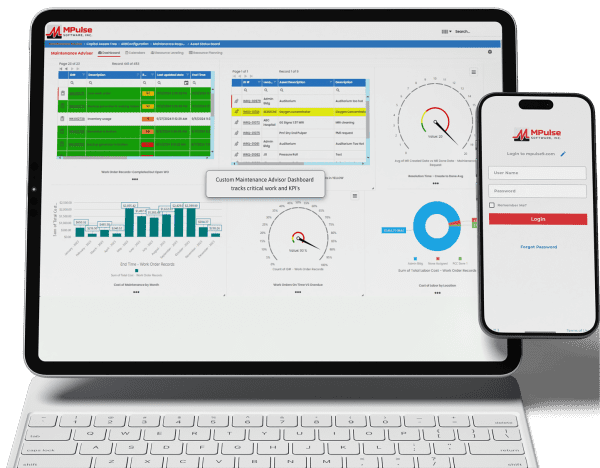
Maintenance teams face pressure to do more with fewer resources, but the top CMMS software platforms in 2026 are meeting the challenge. Today’s leading solutions go beyond basic work order tracking, providing preventive and predictive maintenance, real-time asset insights, mobile-friendly design, and data-driven reporting to support smarter, more proactive operations. Whether your team manages a single facility or a global asset portfolio, modern CMMS platforms improve reliability, reduce downtime, and gain clear insight into maintenance performance. As a result, finding the right software choice serves as the foundation for the year ahead. Whether you’re moving away from spreadsheets or replacing an existing system, this comparison highlights several of today’s leading CMMS solutions to help you find the right fit. 1. MPulse CMMS MPulse CMMS stands out as a flexible, enterprise-ready solution designed to support proactive maintenance strategies across a wide range of industries. Top features include comprehensive asset management through a centralized system that captures asset details, maintenance histories, warranties, and documentation. All this data links directly to work orders, parts, and schedules for full lifecycle visibility. Work order management is straightforward, with easy creation, scheduling, and tracking supported by automated alerts and maintenance calendars. Preventive and predictive maintenance capabilities allow teams to schedule work based on time, usage, or condition data, with optional integrations supporting predictive initiatives. Inventory and purchasing tools help track spare parts, monitor stock levels, and automate purchasing to avoid downtime caused by missing components. Reporting and dashboards provide clear insights into KPIs, costs, and performance metrics, while integrations with ERP, accounting, and other business systems support scalable, connected operations. Biggest Benefit of MPulse CMMS = Adaptability MPulse’s biggest benefit lies in its ability to adapt to organizations of all sizes while improving asset reliability and reducing downtime. The customizable design supports industries ranging from manufacturing and utilities to healthcare, education, and government facilities. MPACT runs in the cloud, so there is nothing to install and nothing for IT to patch, and it meets the compliance needs of regulated industries. Its per-user licensing covers the people who plan and perform maintenance, while requesters are unlimited and free, which keeps costs under control for teams that work in shifts or take requests from many departments. MPulse CMMS User Reviews Users frequently praise MPulse for balancing depth and usability. Many note that its strong reporting tools and flexibility make it a long-term solution rather than a system teams quickly outgrow. Reviewers also recommend MPulse’s affordable implementation services to speed adoption and ensure success. Users praised MPulse for: MPulse has allowed us to track hundreds of assets across multiple types and accurately schedule maintenance for those assets. Before MPulse, our preventive maintenance simply didn’t get done, and our spare parts inventory tracking was stuck in the stone age. We were never sure what parts we had or where to find them. Now we’re able to track inventory accurately and always have the necessary spare parts on hand. – Caleb C. on Capterra MPulse makes it easy to track assets and manage work orders and work order history. You can log machine hours and set hour-based work orders. – Vern B. on G2 For our campus, it made submitting requests easier for users, and they are able to receive email notifications based on the status of their work orders. Building users appreciate its ease of use when submitting requests to the Physical Plant. Maintenance staff can be held accountable for performance, and with preventive maintenance procedures being scheduled and completed, downtime for critical equipment has decreased. – Christopher B. on Capterra We’ve been using MPulse for the last four years and have no plans to stop. We appreciate how it helps us keep track of all our devices without relying on stacks of spreadsheets for updating, tracking, and monitoring. MPulse does the work for us. – Joel S. on Software Advice Strengths of MPulse CMMS Customers consistently give MPulse strong scores on Software Advice, with overall ratings around 4.5 out of 5 stars and an excellent user satisfaction rating of about 91%, meaning the vast majority of users would recommend it. Many users say MPulse substantially improves their maintenance operations by streamlining work order tracking, preventive maintenance, and asset management workflows. One verified reviewer described it as a “very comprehensive and complete CMMS” that they’re glad they chose after evaluating alternatives. Customers frequently emphasize responsive and helpful customer support, with numerous reviews pointing out how support staff assist quickly with questions or issues, helping keep operations moving. Another common positive theme is that once MPulse is properly configured, it can simplify tracking maintenance tasks, inventory, and historical data, freeing teams from paper logs or spreadsheets. Long-term customers like St. George Steel, IKEA US West, Reed College, and Northwell Health mention that MPulse “simplified keeping track of what we do” and that it’s easy to tailor the program to facility maintenance needs. Affordable Pricing MPACT is a cloud subscription priced per user. You pay for the people who plan and perform maintenance, and requesters are unlimited and free, which keeps costs predictable as more departments submit work requests. Current plans are listed on the MPACT pricing page, and a free demo and custom quote are available. 2. Maintenance Connection Maintenance Connection is a robust CMMS designed for organizations that need deep asset management, strong preventive maintenance capabilities, and enterprise-level scalability. The platform focuses on helping maintenance teams plan, track, and continuously improve their operations through data-driven decision-making. Key features include advanced work order management with configurable workflows, preventive and predictive maintenance scheduling based on time, meter readings, or condition data, and detailed asset tracking with full maintenance histories and documentation. Maintenance Connection also offers inventory and parts management, labor tracking, and comprehensive reporting tools that help teams analyze performance, costs, and compliance metrics. Mobile access enables technicians to receive assignments, update work orders, and access asset data in the field. User Reviews Organizations choose Maintenance Connection for its depth, configurability, and suitability for complex environments. The platform is suited for