TL;DR:
- Facilities management in education directly influences student achievement by maintaining quality infrastructure and learning environments. Prioritizing proactive maintenance and equitable resource allocation can significantly improve academic outcomes and reduce disruptions.
Facilities management in education is the structured practice of maintaining, operating, and improving school buildings and infrastructure to create environments where students can learn, stay healthy, and perform at their best. Understanding how facilities management supports student outcomes is no longer optional for education administrators. Research confirms a strong positive correlation between infrastructure quality and student achievement, with a correlation coefficient of r = 0.712 at p < 0.001. That number tells a clear story: the physical condition of a school building is not a background variable. It is an active driver of academic results.
How does physical infrastructure quality affect student learning?
The quality of physical infrastructure directly shapes how well students learn and how consistently they show up. Superior educational facilities drive better academic and extracurricular performance across measurable indicators including attendance, test scores, and participation rates. The r = 0.712 correlation is not a marginal finding. It places infrastructure quality among the strongest institutional predictors of student success.
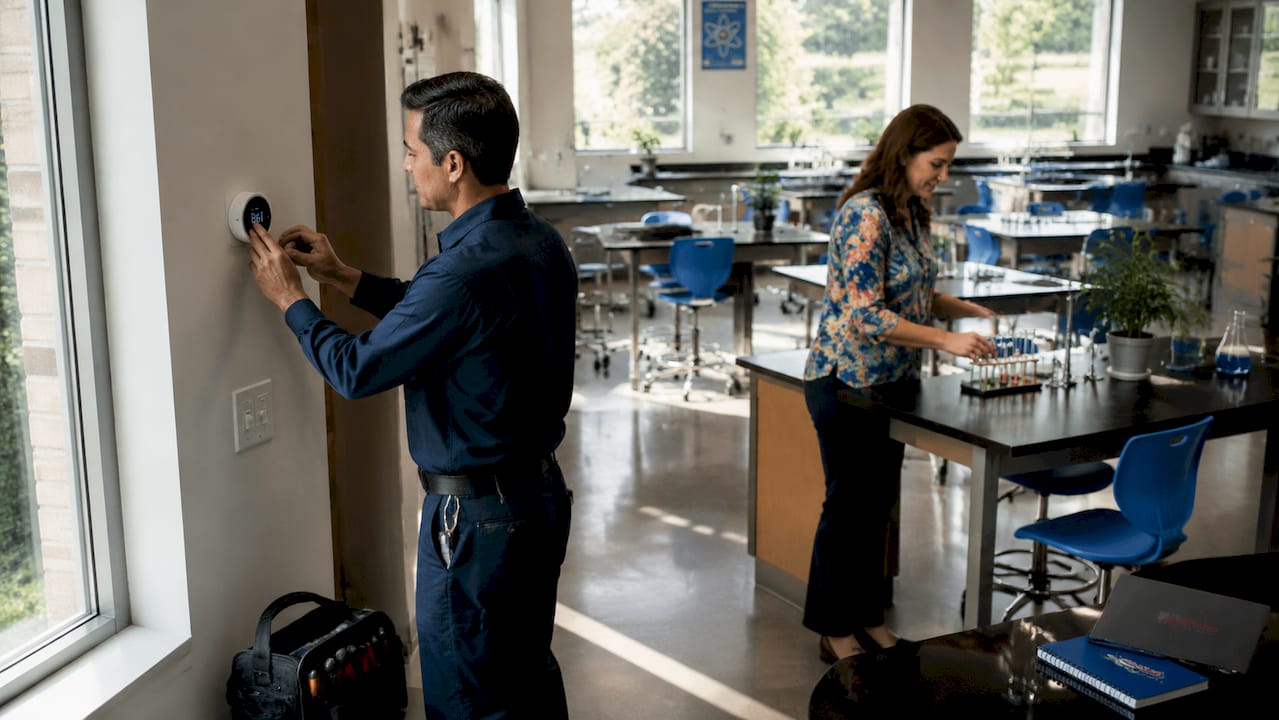
The World Bank’s RIGHT+ Framework identifies the school building as “the third teacher.” The concept means the physical environment teaches alongside instructors, either reinforcing or undermining the lesson happening at the front of the room. A cracked ceiling, broken furniture, or a room with no natural light sends students a signal about whether their learning matters.
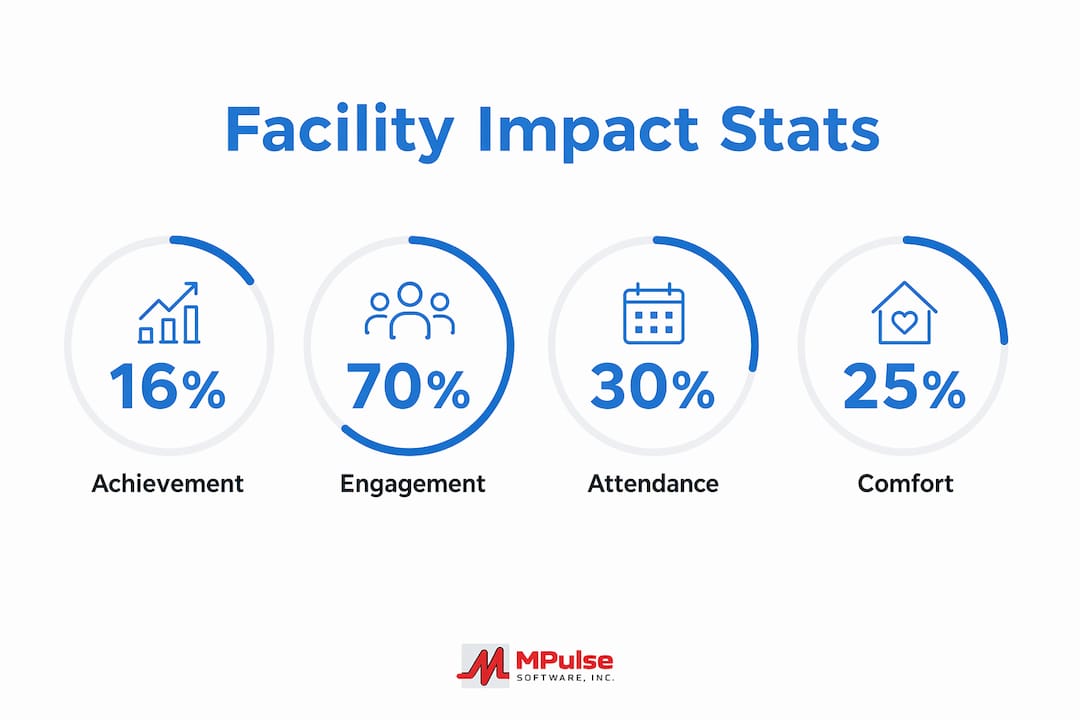
Physical environment factors account for 16% of total variation in student achievement. That 16% is not trivial. In a school of 1,000 students, it represents the difference between hundreds of students meeting grade-level benchmarks or falling short.
The table below shows how specific infrastructure factors connect to measurable student outcomes.
| Infrastructure factor | Impact on student outcomes |
|---|---|
| Classroom capacity and layout | Affects concentration, group work quality, and teacher-student interaction |
| Furniture condition and flexibility | Influences posture, comfort, and ability to engage in varied learning formats |
| Natural lighting access | Linked to reduced eye strain and improved alertness during instruction |
| Acoustics and noise control | Poor acoustics reduce comprehension, especially for younger students |
| Outdoor and green space access | Reduces student stress and supports cognitive recovery between lessons |
Pro Tip: When conducting a facility audit, prioritize classroom acoustics and lighting before cosmetic repairs. Research consistently shows these two factors carry the highest per-dollar impact on learning quality.
What role does indoor air quality play in academic performance?
Indoor environmental quality is one of the most underestimated variables in school performance planning. Poor air quality, inconsistent temperature, and inadequate lighting all reduce cognitive function before a student opens a textbook. Air quality and temperature together account for roughly half of the 16% achievement variance attributed to physical learning environments.
Schools that invest in real-time monitoring see measurable returns. One documented example involves a sensor network of over 4,400 indoor sensors and 118 rooftop units monitoring HVAC performance and air quality in real time. The result was reduced “foggy thinking” among students and measurable increases in test scores. That outcome is not coincidental. Carbon dioxide buildup in poorly ventilated classrooms is a documented cause of reduced concentration and slower cognitive processing.
Key indoor environmental quality interventions that facilities teams can act on include:
- HVAC preventive maintenance: Schedule filter replacements and system inspections on fixed intervals, not just when complaints arise.
- CO2 and particulate monitoring: Deploy low-cost sensors in high-occupancy classrooms to flag air quality drops before they affect student performance.
- Green cleaning protocols: Replace solvent-based cleaning products with low-VOC alternatives to reduce chemical pollutants in enclosed spaces.
- Temperature zoning: Use building management systems to maintain consistent temperatures across classrooms, since a room that is too warm or too cold cuts attention spans measurably.
- Asthma and allergy risk reduction: Address mold, dust, and pest activity proactively. Asthma is a leading cause of missed school days, and facilities conditions directly influence its prevalence in school populations.
Modern IT infrastructure also plays a role. Schools with updated network infrastructure and digital environmental controls give facility teams the data they need to act before a problem becomes a health issue. Proximity to green space, combined with good indoor air management, creates the full environmental picture that supports student wellbeing.
What maintenance strategies best support learning environments?
Proactive maintenance significantly improves student comfort and motivation compared to reactive repairs. Reactive maintenance means fixing things after they break. Proactive maintenance means preventing the break in the first place. The difference in student experience is substantial. A classroom with a functioning HVAC system, intact furniture, and reliable lighting creates a baseline of comfort that lets students focus on learning rather than their surroundings.
Technology is changing what proactive maintenance looks like in schools. GIS-based monitoring and IoT sensors allow facility teams to track equipment condition in real time, predict failure points, and schedule interventions before disruptions occur. A computerized maintenance management system, or CMMS, centralizes work orders, tracks asset history, and automates preventive maintenance schedules. Schools using CMMS platforms report fewer emergency repairs and more consistent facility conditions across the academic year.
Budget constraints are real, and most school districts operate with maintenance funding that falls short of actual need. The answer is not to do less maintenance. It is to do smarter maintenance by prioritizing assets with the highest impact on student experience.
The following practices form the foundation of an effective maintenance program for educational facilities:
- Conduct a baseline facility condition assessment. Document the current state of every major asset, from HVAC units to restroom fixtures, before building a maintenance schedule.
- Implement preventive maintenance schedules. Use a CMMS to automate recurring tasks like filter changes, fire safety checks, and equipment calibrations.
- Prioritize high-occupancy spaces. Classrooms, cafeterias, and gymnasiums affect the most students daily. Address these first when resources are limited.
- Train custodial and maintenance staff on digital tools. Staff who understand how to log and track work orders produce better data, which leads to better decisions.
- Track maintenance completion rates. A maintenance schedule that exists on paper but is not completed provides no benefit. Monitor compliance and adjust workloads accordingly.
- Review and update the asset register annually. Equipment ages, classrooms change purpose, and new buildings come online. An outdated asset list leads to missed maintenance and unexpected failures.
Pro Tip: Link your CMMS data to your annual budget cycle. Maintenance cost trends by asset category give finance teams the evidence they need to approve proactive spending before a failure forces a more expensive emergency repair.
How does equitable resource allocation shape long-term facility quality?
Equitable resource allocation is the practice of directing facility investments toward the schools and spaces where students have the greatest need. Prioritization improves learning quality by targeting resources where they produce the highest return for students, rather than distributing funds evenly regardless of condition or need. A school with a 20-year-old HVAC system serving a high-need population requires a different investment level than a recently renovated building in a well-funded district.
Funding diversification is a practical necessity. Traditional maintenance budgets are consistently insufficient for proactive facility management. Public-private partnerships, alumni endowments, federal grant programs, and dedicated capital maintenance funds each address different parts of the funding gap. No single source covers everything, and administrators who rely on one funding stream leave their facilities vulnerable to budget cycles.
The RIGHT+ Framework from the World Bank provides a structured approach to equitable facility planning. It integrates stakeholder engagement, data-driven decision making, and capacity building into a single planning model. The framework pushes administrators to treat facility decisions as educational decisions, not just operational ones.
| Funding and management model | Key advantage | Primary limitation |
|---|---|---|
| Public-private partnerships | Access to private capital and expertise | Requires long-term contract management |
| Alumni endowments | Sustainable, recurring revenue stream | Dependent on alumni engagement and giving culture |
| Federal and state grants | Large capital infusions for specific projects | Competitive and tied to compliance requirements |
| Dedicated maintenance reserves | Predictable, flexible spending | Requires disciplined annual budget allocation |
| Community stakeholder programs | Builds local support and accountability | Slower to generate funding at scale |
Data-driven planning separates effective facility programs from reactive ones. Administrators who track facility condition scores, maintenance completion rates, and environmental quality metrics can make the case for investment with evidence rather than anecdote. That shift from reactive to strategic is where facility management becomes a genuine policy tool.
Key Takeaways
Well-managed school facilities are a direct and measurable contributor to student achievement, attendance, and wellbeing, not a background operational function.
| Point | Details |
|---|---|
| Infrastructure quality drives outcomes | A correlation of r = 0.712 links facility quality directly to student academic and extracurricular performance. |
| Environment accounts for 16% of achievement | Air quality, temperature, and lighting together explain a significant share of variation in student test scores. |
| Proactive maintenance outperforms reactive repairs | Preventive maintenance schedules reduce disruptions and create consistent learning conditions across the school year. |
| Equitable allocation targets highest-need schools | Directing resources based on student need and facility condition produces greater educational returns than equal distribution. |
| Funding diversification is non-negotiable | Relying on a single budget source leaves facilities vulnerable; public-private partnerships and grants fill critical gaps. |
The case for treating facilities as an educational investment
Most administrators I have worked with understand, intellectually, that their buildings affect student performance. What they underestimate is the speed at which a deteriorating facility erodes outcomes. A broken HVAC system in september does not just make students uncomfortable. It disrupts the first weeks of the academic year, sets a negative tone, and in some cases triggers absenteeism that compounds through the semester.
The shift I advocate for is treating every facility decision as a curriculum decision. When you choose to delay a roof repair, you are choosing to accept the distraction that a leaking ceiling creates in a third-grade classroom. When you invest in real-time air quality monitoring, you are choosing to protect the cognitive capacity of every student in that building. Those are educational choices, not just operational ones.
The administrators who get this right share one habit: they bring facility data into the same conversations where they discuss instructional strategy. They do not separate the building from the learning. The World Bank’s RIGHT+ Framework formalizes this approach, and the schools that adopt it consistently report better outcomes than those that treat facilities as a separate budget line.
The technology now exists to make this integration practical. CMMS platforms, IoT sensor networks, and GIS-based monitoring tools give facility teams the data they need to act predictively rather than reactively. The barrier is rarely the technology. It is the institutional habit of treating maintenance as a cost to minimize rather than an investment to manage.
— Mark
MPulse Software for education facility teams
Education administrators who want to move from reactive repairs to planned, data-driven maintenance have a practical starting point in MPulse Software. MPulse CMMS is trusted by over 3,500 customers globally and delivers up to 40% efficiency improvements through preventive maintenance automation and real-time performance monitoring.
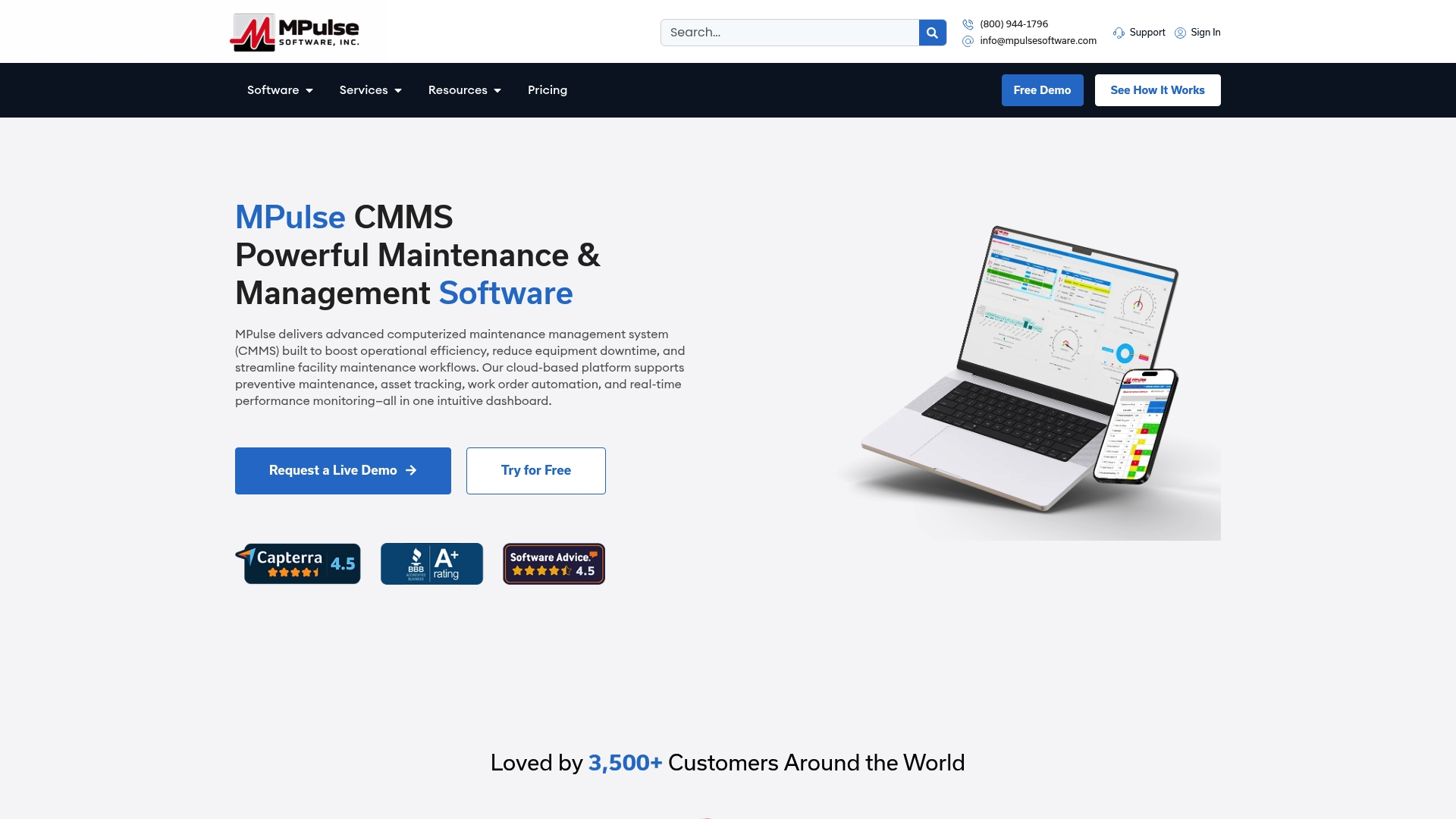
MPulse Software gives school facility teams an intuitive calendar interface for scheduling recurring maintenance tasks, a centralized work order system, and integration capabilities that connect with existing building management workflows. For administrators responsible for compliance and audit readiness, MPulse tracks asset history and maintenance completion rates in one place. Schools that adopt MPulse CMMS gain the operational visibility needed to protect facility quality, control costs, and keep learning environments performing at their best.
FAQ
How does facilities management directly affect student achievement?
Facilities management affects student achievement by controlling the physical conditions where learning happens. Research shows a correlation of r = 0.712 between infrastructure quality and student academic performance, making facility condition one of the strongest institutional predictors of outcomes.
What percentage of student achievement is explained by the physical environment?
The physical learning environment explains roughly 16% of total variation in student achievement. Air quality, temperature, and lighting account for approximately half of that impact, according to the World Bank’s RIGHT+ Framework.
What is the most cost-effective maintenance strategy for schools?
Preventive maintenance consistently outperforms reactive repairs in both cost and outcome. Scheduling routine inspections and using a CMMS to automate recurring tasks reduces emergency repair costs and keeps learning environments stable throughout the academic year.
How can schools fund facility improvements with limited budgets?
Schools can diversify funding through public-private partnerships, alumni endowments, federal grant programs, and dedicated capital maintenance reserves. Traditional operating budgets alone are rarely sufficient for proactive facility management, so combining multiple sources is the standard approach for well-maintained districts.
Why does indoor air quality matter for student performance?
Poor indoor air quality raises CO2 levels and introduces pollutants that reduce concentration and cognitive processing speed. Schools using real-time sensor networks with over 4,400 indoor sensors have documented reductions in “foggy thinking” and measurable increases in test scores after improving HVAC performance.