
TL;DR:
- Maintenance alerts detect early signs of equipment failure using sensor data, helping prevent costly breakdowns. Proper calibration, clear ownership, and automated workflows are essential to maximize their effectiveness and avoid alert fatigue. These systems improve uptime and reduce maintenance costs, especially in facilities with high asset utilization.
Maintenance alerts are automated notifications triggered when sensor data or predictive models detect early signs of equipment failure, giving maintenance teams time to act before a breakdown occurs. The industry term for this practice is condition-based maintenance, and it sits at the heart of modern breakdown prevention strategies. Unplanned equipment downtime costs discrete manufacturers an average of $260,000 per hour. That number makes the case for maintenance alert systems faster than any argument could. Understanding how maintenance alerts prevent breakdowns, and how to implement them correctly, is the difference between a reactive maintenance culture and one that controls its own uptime.
How maintenance alerts prevent breakdowns before they start
Maintenance alerts work because equipment rarely fails without warning. Sensors embedded in motors, pumps, compressors, and HVAC units continuously measure vibration, temperature, and electrical current. When those readings drift outside normal ranges, the alert system flags the anomaly before it becomes a failure.

Most equipment failures are detectable 3–14 days in advance by monitoring vibration, temperature drift, and electrical anomalies. That detection window is the core value of any alert system. It gives your team time to schedule a repair during off-peak hours instead of scrambling during a production run.
The data inputs that drive reliable alerts include:
- Vibration signatures: Bearing wear and imbalance show up as abnormal vibration frequencies long before mechanical failure.
- Temperature drift: Motors and gearboxes running hotter than baseline signal lubrication breakdown or overloading.
- Electrical anomalies: Current spikes or voltage irregularities in motors often precede winding failures.
- Pressure readings: Pumps and hydraulic systems show pressure drops when seals or impellers degrade.
Machine learning models improve detection accuracy by learning each asset’s normal operating pattern from historical data. The more data history a model has, the tighter its failure predictions become. Integrating AI-driven quality inspection systems can also provide earlier warnings by correlating equipment degradation with product quality anomalies, improving overall detection lead time.
Pro Tip: Start collecting sensor data at least 90 days before activating predictive alerts. Models trained on thin data produce too many false positives, which erodes technician trust before the program gains traction.
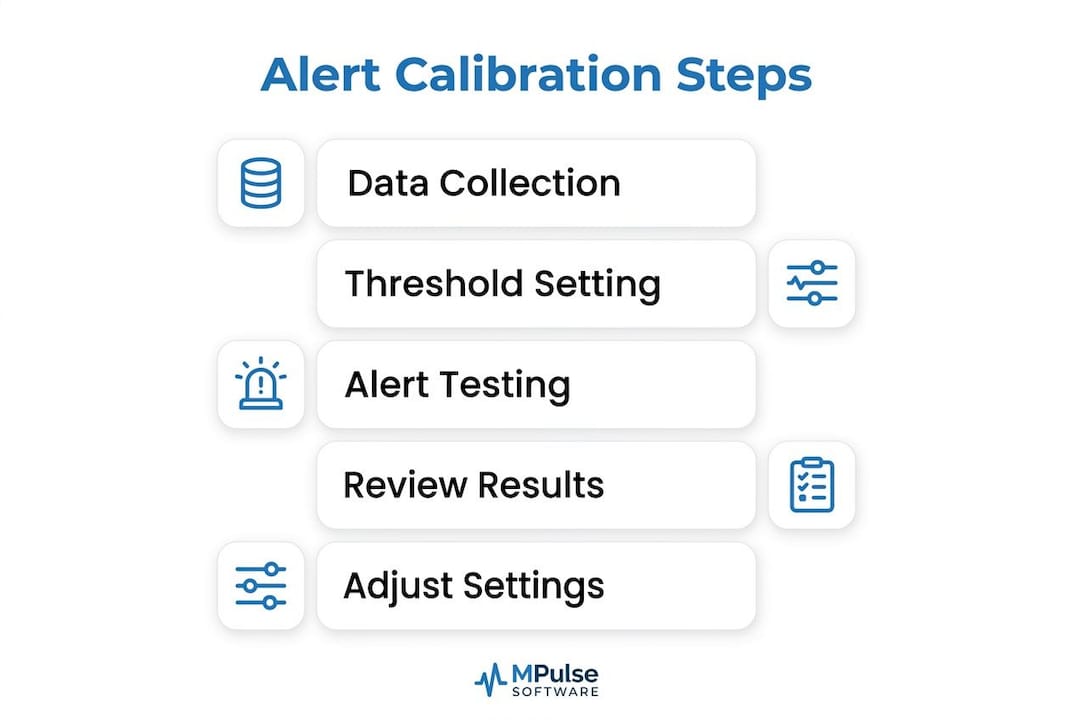
How do you calibrate alerts to avoid false positives?
Alert calibration is the process of setting thresholds that trigger notifications at the right sensitivity. Set them too tight, and your team drowns in false alarms. Set them too loose, and real failures slip through undetected.
Alert fatigue caused by excessive false positives is the most common reason predictive maintenance programs fail. When technicians receive too many alerts that lead nowhere, they stop treating alerts as urgent. The system becomes background noise, and the next real failure goes unaddressed.
The calibration process that works in practice follows this sequence:
- Start conservative. Set initial thresholds wide enough to catch only clear anomalies. Accept a few missed warnings early while you build confidence in the data.
- Run live testing. Compare alert triggers against actual inspection findings for 60–90 days. Tighten thresholds where the data supports it.
- Apply suppression rules. Alert suppression rules that inhibit alerts during scheduled maintenance, testing, or degraded operations prevent false positives and increase technician trust.
- Use a tiered structure. An effective predictive alert architecture uses a three-tier alert system: Early Warning (inspect within 7 days), Elevated Risk (inspect within 48 hours), and Critical (immediate intervention). Each tier routes to a different notification channel and response team.
Pro Tip: Review your alert-to-action ratio monthly. If fewer than 70% of alerts result in a confirmed finding during inspection, your thresholds are too sensitive and need adjustment.
Tiered alerts also solve the notification channel problem. Early Warning alerts can go to a maintenance planner’s dashboard. Critical alerts should trigger an immediate text or phone call to the on-call technician. Matching urgency to channel prevents both under-reaction and alarm fatigue.
Turning alerts into maintenance workflows that actually get done
An alert that sits in a dashboard without a defined owner is not a breakdown prevention tool. It is a data point that no one acts on. Alerts without predefined ownership, clear action steps, and time windows quickly become ineffective and ignored.
Every alert in your system needs four things defined before it goes live:
- What it means. A plain-language description of the failure mode the alert represents, written for the technician who receives it, not the engineer who built the model.
- Who owns the response. A named role, not a department. “Rotating equipment technician” is actionable. “Maintenance team” is not.
- What action to take. A specific inspection or repair task, linked to a standard procedure or checklist.
- When it must be done. A response window tied to the alert tier. Early Warning gives 7 days. Critical gives hours.
Integrating predictive alerts with a CMMS automates work order creation, increasing the probability that predictions lead to prompt maintenance action. When an alert fires, the CMMS generates a work order, assigns it to the right technician, and pulls the relevant parts from inventory. The technician receives a complete task package, not just a warning.
Parts inventory integration is a detail that many teams overlook. If an Elevated Risk alert fires on a pump bearing but the replacement bearing is not in stock, the 48-hour response window becomes meaningless. Linking your alert system to your parts catalog flags stock shortages at the moment the alert is created, giving procurement time to act.
Facilities managers who want to see how this works in a real workflow context can review commercial pool safety workflow practices, which demonstrate how tiered alert responses translate into structured maintenance tasks across complex facility environments.
Review your alert response process quarterly. Track which alerts led to confirmed findings, which expired without action, and which were suppressed. Facilities that review alert outcomes and balance planned versus unplanned maintenance see improved reliability and fewer breakdowns. That review cycle is where programs improve over time.
What impact do maintenance alerts have on uptime and costs?
The operational case for maintenance alert systems is well established. Maintenance programs that move from reactive to scheduled preventive work reduce maintenance costs by 12% to 18% on average. Predictive alert programs, which go further than time-based preventive maintenance, produce even larger gains by targeting interventions at assets that actually need attention.
The business value shows up in three areas:
| Impact area | What changes |
|---|---|
| Unplanned downtime | Fewer emergency shutdowns as failures are caught in the Early Warning stage |
| Labor efficiency | Technicians work planned tasks instead of reactive repairs, reducing overtime |
| Parts and inventory | Targeted repairs use fewer parts than reactive replacements of fully failed components |
| Maintenance cost ratio | Planned-to-unplanned maintenance ratio improves, lowering total cost per asset |
“The goal of a condition-based maintenance program is not to eliminate all failures. It is to eliminate surprises. When your team knows three days in advance that a bearing is degrading, they control the outcome. When they find out at the moment of failure, the equipment controls them.”
Manufacturing and utilities facilities see the clearest gains because their assets run continuously and their downtime costs are highest. A single avoided failure on a production line or a water treatment pump can recover the full annual cost of an alert system. For facility managers in commercial real estate or healthcare, the value appears in reduced emergency service calls, extended equipment life, and audit-ready maintenance records.
Continuous improvement through alert data analysis compounds these gains. Each alert outcome, whether it confirmed a failure, found nothing, or was suppressed, adds to the model’s training data. Programs that run for two or more years consistently outperform newer implementations because their models are more accurate and their thresholds are better calibrated.
Key Takeaways
Maintenance alert systems prevent breakdowns by detecting failure signatures days in advance, but they only deliver value when alerts are calibrated correctly, owned clearly, and connected to automated workflows.
| Point | Details |
|---|---|
| Early detection window | Most failures are detectable 3–14 days in advance through vibration, temperature, and electrical monitoring. |
| Alert calibration is critical | Excessive false positives cause alert fatigue, the leading reason predictive maintenance programs fail. |
| Tiered alert structure | Use three tiers (Early Warning, Elevated Risk, Critical) with defined response times and notification channels. |
| Alerts need defined ownership | Every alert must have a named role, a specific action, and a response time window to be effective. |
| CMMS integration closes the loop | Connecting alerts to a CMMS automates work order creation and links repairs to parts inventory. |
Why most alert programs fail in the first year
The teams I have seen struggle with maintenance alert programs almost always share one pattern: they go live with too many alerts at once. They configure sensors across every asset, set aggressive thresholds, and then wonder why technicians stop responding within 60 days. Alert fatigue is not a technology problem. It is a change management problem that starts with decisions made before the first alert fires.
The programs that work start with three to five critical assets, not thirty. They define alert ownership before go-live, not after the first missed response. And they hold a monthly review meeting where maintenance planners, technicians, and supervisors look at the alert log together. That meeting is where calibration actually happens, not in a software configuration screen.
The other mistake I see regularly is treating CMMS integration as optional. An alert that generates a work order automatically is acted on. An alert that requires a technician to manually create a work order gets deferred. The friction of manual entry is enough to break the chain between detection and action, especially during busy periods. If you are evaluating whether your team is ready for a predictive program, the signs your company is ready for predictive maintenance are worth reviewing before you commit resources.
Cross-team collaboration also matters more than most teams expect. Maintenance planners need to know when production schedules create high-risk operating conditions. Operations teams need to understand why a planned shutdown for a bearing replacement is less disruptive than an unplanned one. When both sides share the same alert data, the conversation shifts from “why are you taking the line down?” to “when is the best time to do this?”
— Mark
MPulse Software and alert-driven maintenance management
MPulse Software gives facility managers and maintenance teams the tools to connect predictive alerts directly to maintenance workflows, without manual steps in between.
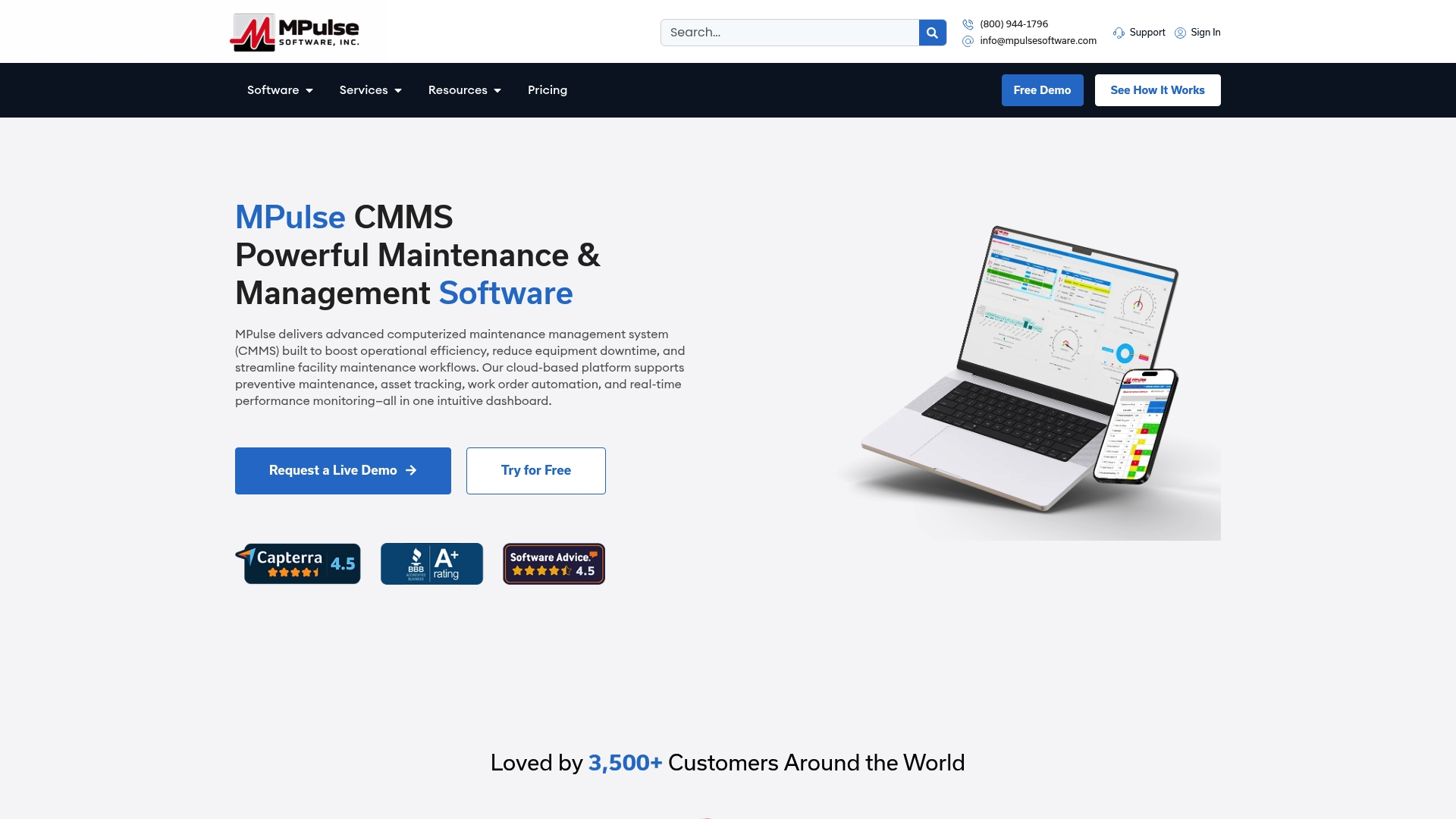
MPulse CMMS converts alerts into automated work orders the moment a threshold is crossed, assigns them to the right technician, and links them to parts inventory in real time. The platform’s real-time monitoring capabilities support condition-based alert configurations across asset types, with customizable thresholds and tiered notification routing built in. Trusted by over 3,500 customers globally, MPulse Software has delivered up to 40% efficiency improvements for maintenance teams that previously relied on reactive repair cycles. If your facility is ready to move from reactive to predictive, MPulse provides the structure to make that transition without disruption.
FAQ
What are maintenance alerts in a CMMS?
Maintenance alerts are automated notifications generated when sensor readings or performance data cross a defined threshold, signaling a potential equipment failure. In a CMMS, they trigger work orders and assign response tasks to the appropriate technician.
How far in advance can alerts detect equipment failure?
Most equipment failures are detectable 3–14 days in advance through continuous monitoring of vibration, temperature, and electrical anomalies. That lead time gives maintenance teams enough time to plan and schedule repairs before a breakdown occurs.
What causes alert fatigue in maintenance programs?
Alert fatigue occurs when too many false positive alerts train technicians to ignore warnings. Calibrating thresholds carefully and applying suppression rules during scheduled maintenance periods are the primary ways to prevent it.
How does a tiered alert system work?
A three-tier alert system classifies alerts by urgency: Early Warning requires inspection within 7 days, Elevated Risk within 48 hours, and Critical requires immediate intervention. Each tier routes to a different notification channel and response role.
Do maintenance alerts reduce maintenance costs?
Maintenance programs that shift from reactive to planned preventive work reduce maintenance costs by 12% to 18% on average. Predictive alert programs that target only assets showing signs of degradation produce further savings by reducing unnecessary preventive tasks.