TL;DR:
- Asset lifecycle tracking manages physical assets from acquisition to disposal using software and unique identifiers. Continuous data governance, system integration, and regular verification ensure accurate, real-time asset information and compliance with ISO standards.
Asset lifecycle tracking is the systematic process of monitoring and managing physical assets from acquisition through disposal to maximize performance, reduce downtime, and maintain compliance. Facility managers and asset managers who apply this asset lifecycle tracking guide gain a clear operational advantage: they replace reactive decisions with documented, data-driven ones. The recognized industry term for this discipline is lifecycle asset management, or ALM, and it encompasses engineering, operations, and finance in a single connected process. ISO 55001:2024 now sets the global benchmark for ALM governance, requiring documented rationale for every major asset decision to support auditability over time.
What does an asset lifecycle tracking guide cover?
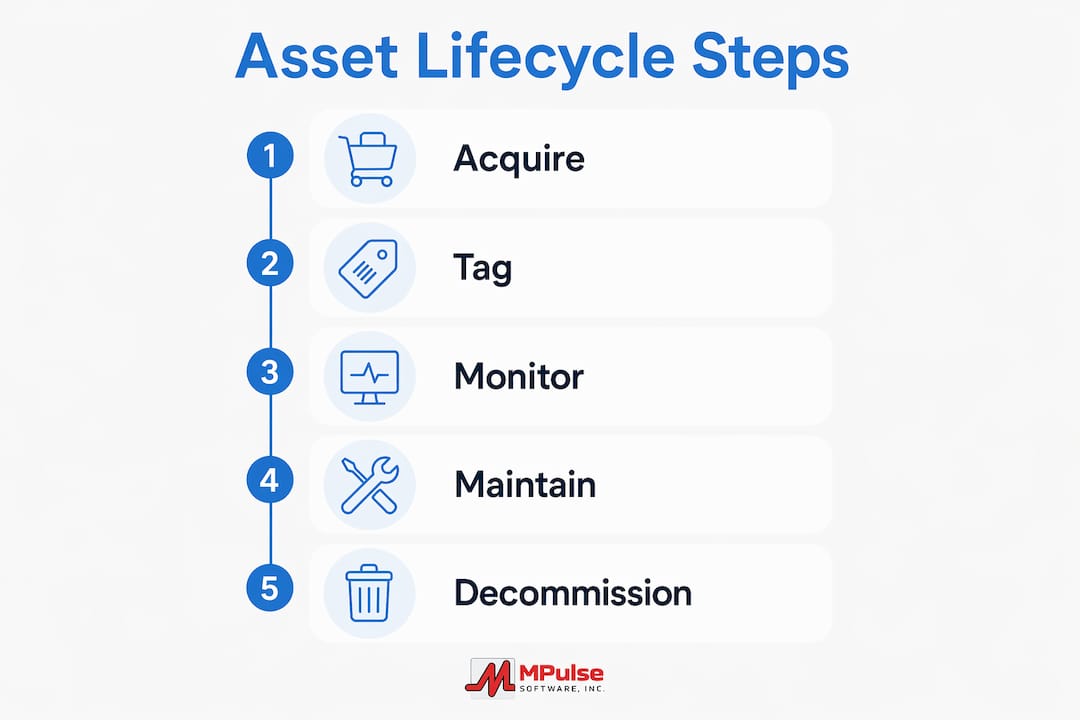
Asset lifecycle tracking uses unique asset tags combined with software to provide real-time location, status, and condition data for every asset in your portfolio. This enables better compliance, reduces loss, and supports decisions that would otherwise rely on guesswork or outdated spreadsheets. The standard industry term, lifecycle asset management, covers five distinct phases: acquisition, deployment, operation, maintenance, and disposal. Each phase generates data that feeds the next, so a gap in any one phase degrades the entire record.
A digital thread integrating engineering, operation, and finance enables transparent, end-to-end asset lifecycle management to maximize value and reduce downtime. That integration bridges departmental silos and supports informed decision making across the organization. Without it, finance carries one asset value, operations carries another, and neither reflects reality.
What tools and standards do you need to track assets effectively?
Effective asset tracking requires a comprehensive inventory, standardized data entry, and prioritized work orders based on asset criticality. These are the foundational practices that transform asset management from a cost center into a strategic advantage. Before selecting any technology, build a complete asset register that captures asset ID, location, condition, purchase date, warranty status, and assigned custodian.
Three identification technologies dominate the field, each suited to different environments:
| Technology | Best use case | Key advantage |
|---|---|---|
| Barcode | Low-cost, indoor assets | Simple scanning, low hardware cost |
| RFID | High-volume or fast-moving assets | Batch scanning without line of sight |
| GPS | Mobile or outdoor equipment | Real-time location tracking in the field |
Software capabilities matter as much as the tag technology. Entry-level field apps handle basic check-in and check-out. Enterprise platforms connect asset records to ERP, CMMS, and EAM systems for real-time financial and operational alignment. ISO 55001:2024 compliance requires that your chosen platform supports documented decision rationale, audit trails, and segregation of duties between finance and operations teams.
Pro Tip: Standardize naming conventions before you enter a single asset record. Retroactive cleanup of inconsistent data costs far more time than getting it right at asset creation.
How do you implement a lifecycle tracking system step by step?
A structured implementation prevents the most common failure: collecting data without a governance plan to keep it accurate. Follow these steps in sequence.
-
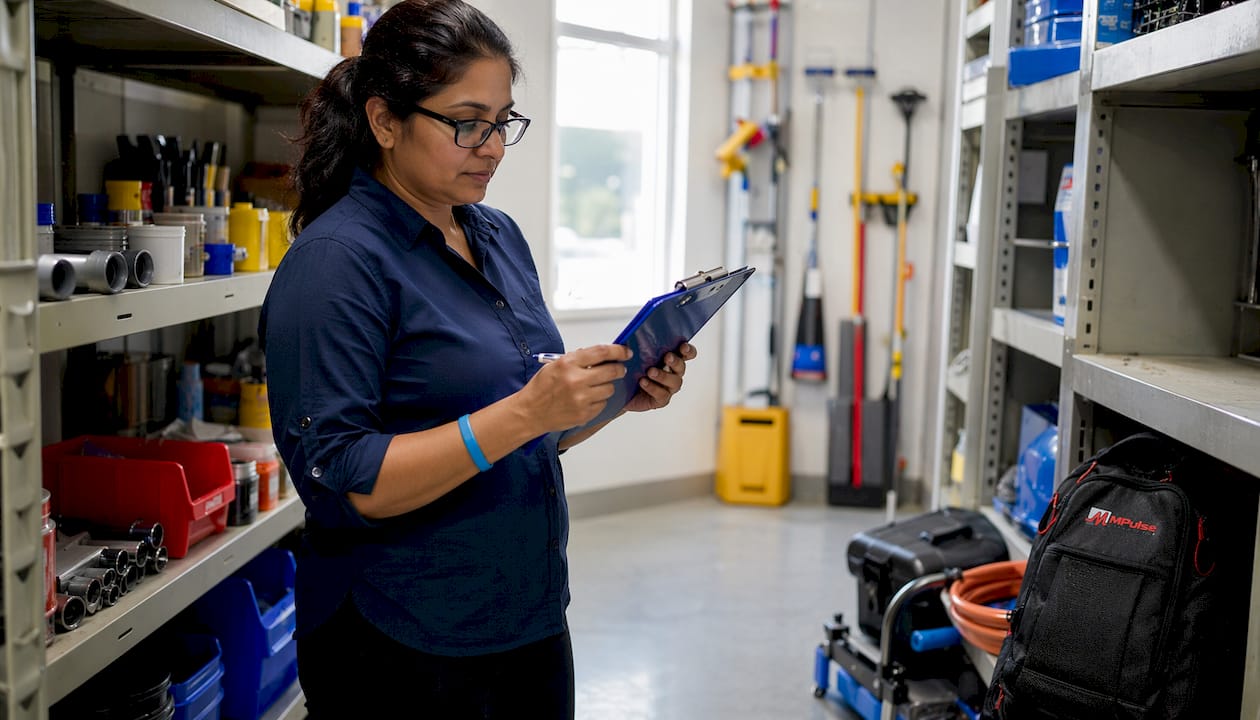
Conduct a physical asset audit. Walk every facility and catalog assets by location, condition, and existing identification. Photograph each asset and record its serial number, manufacturer, and model. This baseline is your source of truth.
-
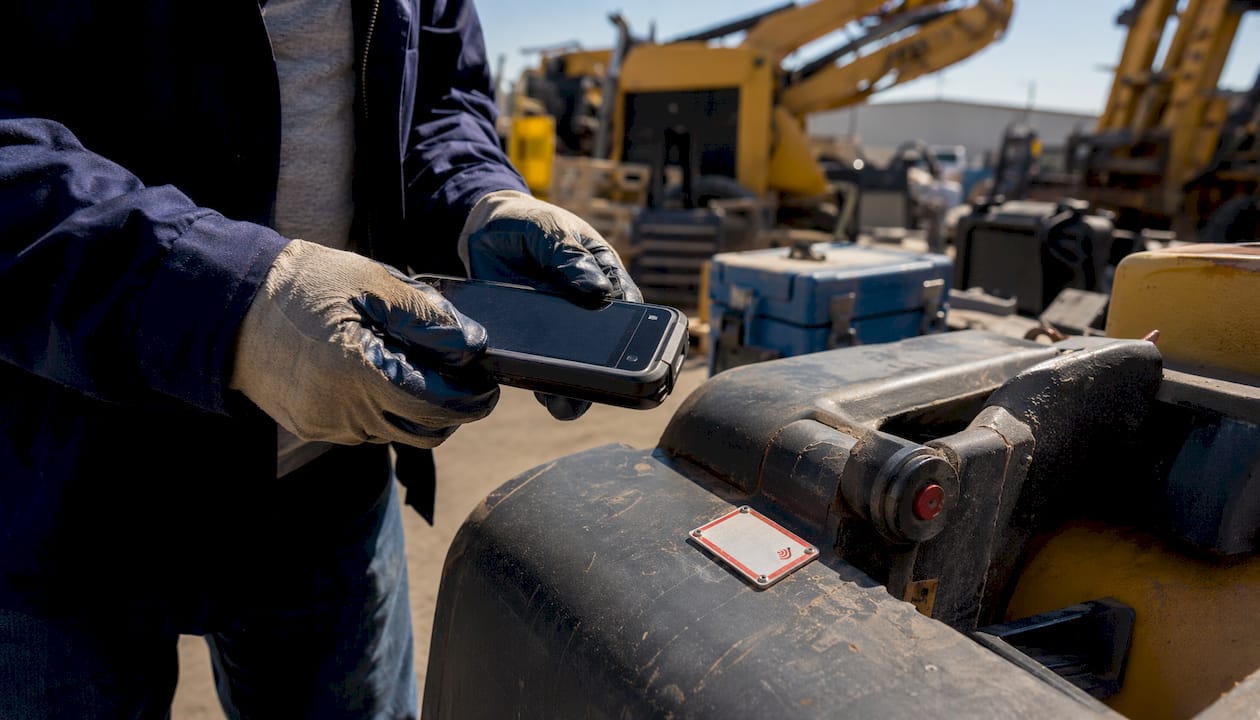
Assign unique identifiers and apply tags. Select barcode, RFID, or GPS tags based on asset mobility and environment. Apply tags consistently and record the tag ID against the asset register immediately.
-
Select and configure your software platform. Match platform capabilities to your organization’s size, compliance requirements, and integration needs. A facility with 500 assets and no ERP integration has different needs than a multi-site operation running SAP.
-
Integrate with ERP, CMMS, or EAM systems. Integrating asset tracking with ERP and maintenance management systems reduces manual data entry, errors, and inconsistencies. Real-time synchronization keeps financial records and operational data aligned without duplicate effort.
-
Train staff and assign governance roles. Every person who touches an asset record needs to understand naming conventions, data entry standards, and escalation paths. Assign clear ownership for approvals, transfers, and disposals.
-
Establish review cycles. Schedule quarterly data quality reviews and annual physical verification checks. Build exception reports that flag assets not scanned within a defined period.
Pro Tip: Integrate your tracking system with your CMMS before go-live, not after. Post-launch integration projects frequently stall, leaving two disconnected data sets that both degrade in accuracy.
How do you use data to optimize asset performance?
The most significant shift in modern lifecycle asset management is the move away from annual physical counts toward continuous, exception-led verification. Mobile-first tools capture photos, timestamps, and geolocation during field verification, which improves data integrity and audit readiness without requiring a full inventory shutdown. This approach aligns verification resources with actual risk rather than calendar dates.
Data-driven predictive maintenance using real-time asset performance metrics allows earlier identification of underperformance, enabling resource allocation before a failure occurs. The key is tracking the right KPIs consistently. Facilities that define and track KPIs improve maintenance efficiency and demonstrate value to leadership.
Track these performance indicators across your asset portfolio:
- MTBF (Mean Time Between Failures): Measures reliability. A declining MTBF signals that an asset is approaching end of useful life.
- MTTR (Mean Time to Repair): Measures maintenance responsiveness. High MTTR points to parts availability or technician skill gaps.
- Asset utilization rate: Identifies underused assets that tie up capital without generating value.
- Planned vs. unplanned maintenance ratio: A ratio below 80% planned indicates reactive maintenance is dominating your schedule.
- Audit compliance rate: Tracks how many assets were verified on schedule versus missed.
Automation enhances tracking, but human oversight remains critical to verify data integrity and interpret complex asset conditions. Automated alerts catch anomalies, but a technician must confirm whether an anomaly reflects a real condition change or a data entry error. Build that verification step into your governance process.
Real-time asset monitoring integrated with your CMMS gives facility managers a live view of asset health, reducing the lag between a condition change and a maintenance response.
What are best practices for maintenance, upgrades, and decommissioning?
Preventive and condition-based maintenance extend useful asset life and reduce downtime when based on accurate lifecycle tracking data. The tracking record tells you when an asset last received service, what parts were replaced, and whether its performance metrics are trending toward failure. Without that record, maintenance decisions default to guesswork.
Managing the later stages of an asset’s life requires documented decision points:
- Life extension decisions: Document the technical and financial rationale when you choose to extend an asset’s service life beyond its original design period. ISO 55001:2024 requires this rationale to remain auditable long after the original decision-makers have left the organization.
- Upgrade planning: Record the scope, cost, and expected performance improvement for every upgrade. Link the upgrade record to the original asset ID so the full history stays connected.
- Decommissioning: Follow environmental regulations for disposal, including hazardous material handling and data destruction for IT assets. Record the disposal date, method, and receiving party in the asset register before closing the record.
- Audit trail continuity: Maintain digital records from commissioning through disposal. A complete record supports insurance claims, warranty disputes, and regulatory audits.
Successful asset lifecycle management depends on continuous governance of data standards, including naming conventions and regular audits, rather than one-time data entry. Data quality degrades naturally over time as assets move, get modified, or change custodians. A quarterly governance review catches drift before it becomes a compliance problem.
Industry experts recommend separating duties for approvals, asset impairments, and disposal decisions to maintain auditable and defensible asset records. Segregation of duties between finance and operations prevents a single person from both approving a disposal and removing the asset from the financial register. This control reduces errors and strengthens governance under updated ISO standards.
Condition-based maintenance software gives maintenance teams the data they need to schedule interventions based on actual asset condition rather than fixed calendar intervals, which reduces unnecessary maintenance costs.
Key Takeaways
Effective lifecycle asset management requires continuous data governance, the right identification technology, and integration between operational and financial systems from day one.
| Point | Details |
|---|---|
| Build a complete asset register first | Catalog every asset by location, condition, and ID before selecting any technology. |
| Match tag technology to environment | Use barcode for indoor assets, RFID for high-volume, and GPS for mobile equipment. |
| Integrate systems before go-live | Connect tracking software to ERP and CMMS at launch to prevent data silos. |
| Shift to continuous verification | Replace annual counts with exception-led mobile verification for better accuracy. |
| Document every lifecycle decision | ISO 55001:2024 requires auditable rationale for extensions, upgrades, and disposals. |
What I’ve learned from watching asset programs succeed and fail
The programs that fail share one trait: they treat asset data as a setup task rather than an ongoing discipline. A team spends months building a clean asset register, launches the system, and then watches the data degrade within a year because no one owns the governance process after go-live. The technology was fine. The process collapsed.
The programs that succeed treat data governance the same way they treat preventive maintenance. They schedule it, assign ownership, and measure it. They run monthly exception reports catching assets that haven’t been scanned, records that are missing fields, or disposal approvals that bypassed the review process. That discipline is unglamorous, but it is the actual work.
The second pattern I’ve observed is an overreliance on automation. Automated alerts and real-time dashboards are genuinely useful, but they create a false sense of control when the underlying data is dirty. A dashboard showing 98% asset availability means nothing if 15% of your assets have incorrect location records. Human verification, done on a risk-based schedule, is what keeps automated outputs trustworthy.
The cultural challenge is real. Technicians who have tracked assets on paper for 20 years resist new scanning requirements, not because they are obstinate, but because no one explained how the data they capture connects to decisions that affect their work. When facility managers close that loop, showing technicians how their scan data drives parts ordering or maintenance scheduling, adoption accelerates. The technology is rarely the barrier. The explanation is.
— Mark
How MPulse Software supports asset lifecycle management
MPulse Software gives facility managers and asset managers a CMMS platform built to support every stage of the asset lifecycle, from preventive maintenance scheduling to real-time condition monitoring. Over 3,500 customers globally rely on MPulse, with documented efficiency improvements of up to 40%.
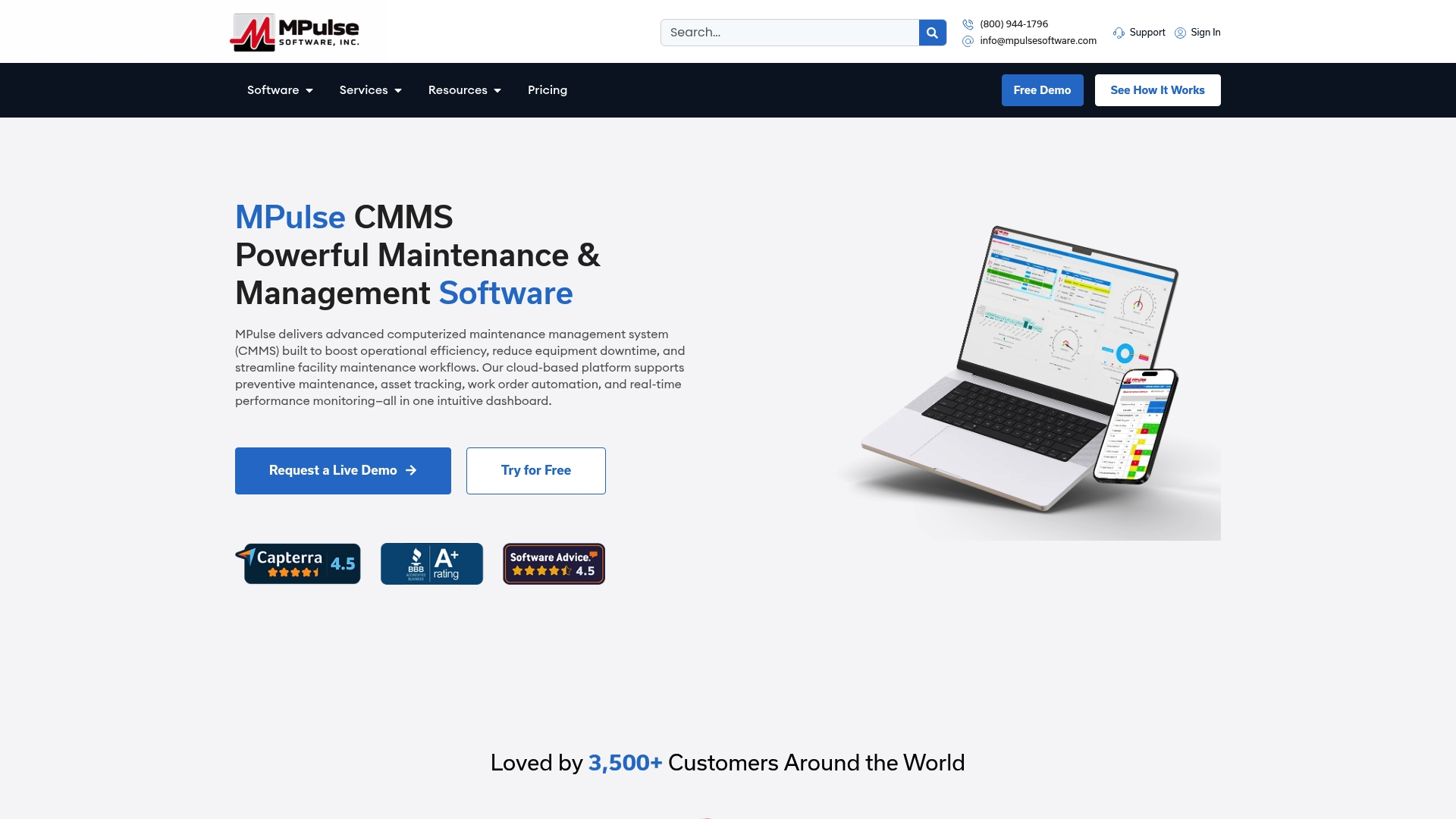
MPulse connects asset records, maintenance histories, and work orders in a single system, eliminating the data silos that degrade lifecycle decisions. Its integration capabilities link directly to ERP and EAM platforms, keeping financial and operational records aligned without manual reconciliation. For facility teams managing compliance requirements, MPulse provides the audit trails and governance controls that ISO 55001:2024 demands. Explore the MPulse CMMS platform to see how it fits your asset management program.
FAQ
What is asset lifecycle tracking?
Asset lifecycle tracking is the process of monitoring physical assets from acquisition through disposal using unique identifiers, software, and standardized data governance. It provides real-time location, status, and condition data to support operational and financial decisions.
How does ISO 55001:2024 affect asset management practices?
ISO 55001:2024 requires documented rationale for asset decisions, including life extensions, upgrades, and disposals, to maintain auditability and consistency over time. Organizations must demonstrate continuous data governance rather than periodic compliance checks.
What KPIs should facility managers track for asset performance?
The most critical KPIs are MTBF, MTTR, asset utilization rate, and the planned versus unplanned maintenance ratio. Tracking these consistently identifies underperforming assets and guides maintenance prioritization before failures occur.
When should you use RFID instead of barcodes for asset tracking?
RFID is the better choice for high-volume or fast-moving assets because it allows batch scanning without requiring line-of-sight contact. Barcodes remain cost-effective for stationary indoor assets where individual scanning is practical.
How do you maintain data accuracy in a large asset portfolio?
Continuous, exception-led verification using mobile tools replaces traditional annual audits and aligns verification resources with actual risk. Pairing this with segregation of duties and quarterly governance reviews prevents data quality from degrading between formal audits.