TL;DR:
- Real-time asset monitoring tracks asset status and location continuously to improve maintenance and operations. It reduces unplanned downtime and asset-related costs by connecting sensor data to automated workflows. Proper integration and workflow design are essential for realizing the system’s full value.
Real-time asset monitoring is the continuous tracking of physical asset status, location, and performance, delivering live data that drives proactive maintenance and smarter operational decisions. For facility managers and operational leaders, this capability is the foundation of modern asset management technology. The role of real-time asset monitoring extends beyond simple location tracking. It reduces unplanned downtime, cuts emergency repair costs, and improves equipment utilization by feeding live data directly into maintenance workflows. Platforms like MPulse Software connect this live data stream to automated work orders, turning raw sensor readings into scheduled action.
How does real-time asset monitoring work in facility operations?
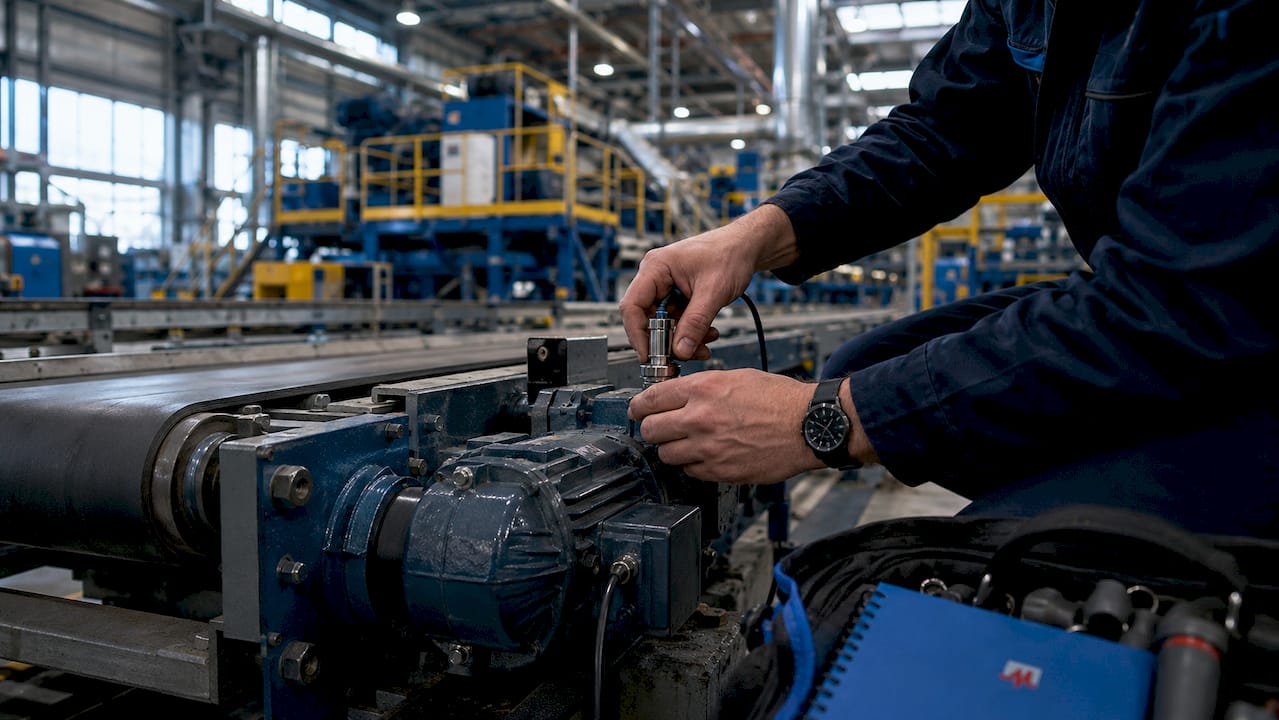
Real-time asset monitoring uses sensors, tagging technology, and data pipelines to track every significant change in an asset’s condition or location. Continuous monitoring automatically records asset location, status, and usage changes using RFID, barcode scanning, and IoT sensors, then updates a centralized database in real time. That centralized record becomes the single source of truth for every maintenance and capital decision your team makes.
The core technology stack typically includes:
- RFID tags and barcode scanners for location and inventory tracking
- IoT sensors measuring temperature, vibration, pressure, and run hours
- GPS devices for mobile or fleet assets requiring geographic tracking
- Data gateways that push sensor readings to a cloud or on-premise CMMS
Data latency, meaning how quickly sensor data reaches your system, varies by use case. A conveyor belt motor running at critical load may need sub-minute alerts. A lighting fixture inventory audit works fine with daily updates. Defining latency requirements upfront is the single most important step before purchasing infrastructure, because getting this wrong drives unnecessary cost.
Real-time monitoring paired with data history enables both immediate reaction to problems and predictive maintenance through trend analysis. Live data catches the fault. Historical data reveals the pattern behind it. Together, they shift your team from firefighting to forecasting.
Pro Tip: Most facilities do not need ultra-low latency infrastructure. If your highest-priority use case tolerates 5-minute data updates, a standard IoT gateway and cloud CMMS will deliver full value at a fraction of the cost of a real-time streaming architecture.
What are the measurable benefits of real-time asset monitoring?
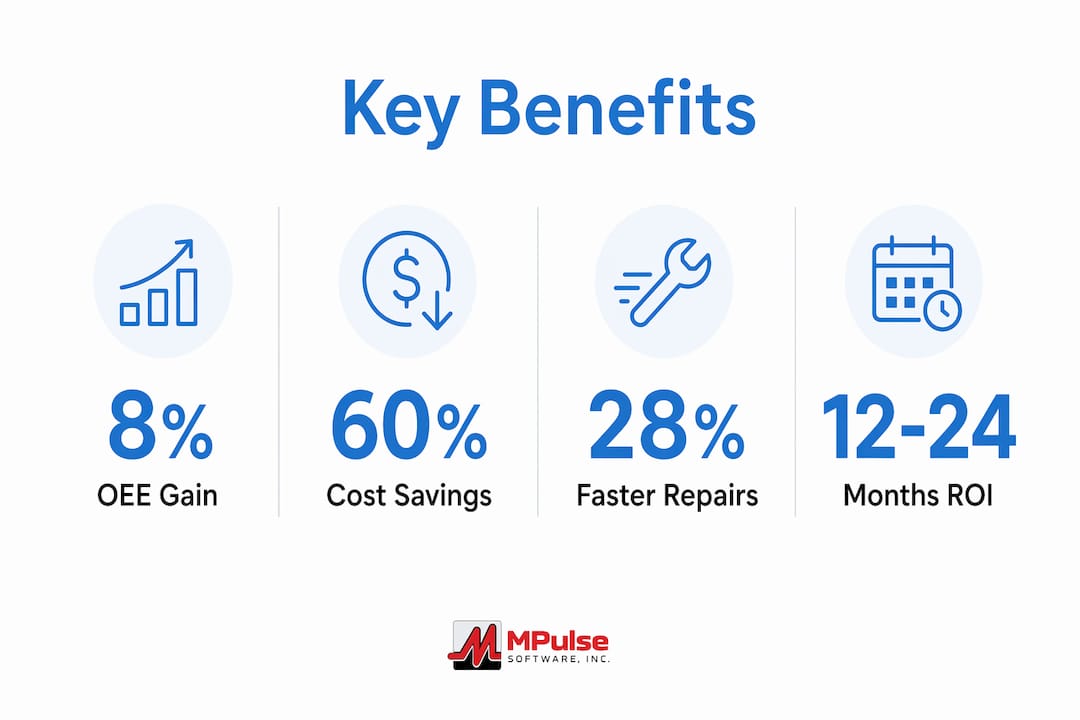
The financial case for continuous asset visibility is well documented. Facilities frequently realize a 3–8% improvement in OEE after full deployment of a well-designed monitoring system. OEE, or Overall Equipment Effectiveness, measures the percentage of planned production time that is truly productive. A 3–8% gain on a large facility’s equipment base translates directly to output and revenue.
Cost reduction runs deeper than OEE alone. Organizations with high asset visibility see 40–60% asset-related cost savings by eliminating ghost assets and optimizing equipment use. Ghost assets are items that appear on the books but are lost, broken, or retired without record. Removing them reduces insurance premiums, depreciation charges, and unnecessary replacement purchases.
Repair speed also improves measurably. High asset visibility correlates with 28% lower Mean Time to Repair compared to non-monitored environments. MTTR measures how long it takes to restore a failed asset to service. Cutting it by more than a quarter means less production loss per incident and lower labor costs per repair.
| Metric | Typical improvement |
|---|---|
| Overall Equipment Effectiveness (OEE) | 3–8% gain after full deployment |
| Asset-related cost savings | 40–60% reduction via ghost asset elimination |
| Mean Time to Repair (MTTR) | 28% lower versus non-monitored environments |
| ROI timeline | 12–24 months for well-designed systems |
Implementing well-dimensioned monitoring systems delivers ROI within 12–24 months by reducing scrap, downtime, and maintenance expenses. That timeline is achievable when the system integrates directly with your CMMS and triggers automated preventive maintenance work orders rather than simply displaying data on a screen.
Common pitfalls in real-time asset monitoring implementation
Most failed monitoring deployments share the same root cause. Treating real-time monitoring solely as an IT or data project produces dashboards that look impressive but generate no maintenance results. Success requires workflow integration that triggers automated work orders the moment a threshold is crossed.
Before selecting any hardware or software, facility managers should address these critical questions:
- What specific problem are you solving? Vague goals like “better visibility” produce vague results. Define whether you are targeting downtime reduction, ghost asset elimination, theft prevention, or compliance documentation.
- Who acts on the data? Monitoring data has no value unless a technician, supervisor, or automated system responds to it. Map the decision path before deployment.
- What latency does each use case actually require? Real-time capable infrastructure can cost 3–5 times more than batch-capable systems. Match the architecture to the need.
- Does your CMMS support automated work order creation? If alerts require manual interpretation before any action occurs, you have added a step rather than removed one.
- Have you planned for staff training? Technology adoption fails without process change. Technicians need to trust and act on monitoring alerts, not override them.
GPS-based tracking for mobile assets follows the same principle. The data only creates value when it connects to dispatch, scheduling, or maintenance workflows rather than sitting in a standalone portal.
Pro Tip: Embed monitoring alerts directly into your maintenance schedule rather than routing them to a separate dashboard. When a vibration sensor triggers an alert in MPulse Software, it should automatically create a work order with the asset ID, location, and fault description already populated. That single step eliminates the gap between detection and action.
Practical applications of asset visibility in facility management
Real-time visibility removes reliance on human memory by establishing a digital asset footprint that supports data-driven capital decisions. Facility managers who previously relied on technician recall or paper logs to know where equipment stood now have a live record updated continuously. That shift changes how capital budgets get built and justified.
The most common and high-value applications include:
- Equipment health tracking: IoT sensors on HVAC units, compressors, and pumps detect abnormal vibration or temperature before failure occurs. Maintenance teams respond to a condition, not a breakdown.
- Usage pattern analysis: Run-hour data reveals which assets are overworked and which sit idle. Managers can redistribute load, defer purchases, or retire underused equipment based on actual data rather than estimates.
- Theft and loss prevention: RFID and GPS tagging flags unauthorized asset movement in real time. Facilities with high-value portable equipment, such as medical devices or power tools, recover assets faster and reduce replacement costs.
- Compliance documentation: Continuous monitoring creates an automatic audit trail of asset condition, inspection dates, and maintenance history. This record supports regulatory requirements without manual data entry.
- Capital allocation decisions: When every asset has a live status and maintenance history, budget requests for replacement or upgrade carry objective evidence rather than anecdotal justification.
Organizations adopting real-time asset tracking see improved operational resilience and a clear shift from reactive to proactive management. MPulse Software supports these applications through its asset management features and condition-based maintenance tools, which connect sensor thresholds directly to work order generation. The result is a maintenance program that responds to what assets actually need, not what a fixed schedule assumes they need.
Key Takeaways
Real-time asset monitoring delivers measurable cost savings and efficiency gains only when sensor data connects directly to maintenance workflows and automated work orders.
| Point | Details |
|---|---|
| Define latency requirements first | Match infrastructure cost to actual use case needs before purchasing any hardware. |
| Integration drives ROI | Monitoring systems that trigger automated work orders deliver 12–24 month ROI; dashboards alone do not. |
| Ghost asset elimination cuts costs | High asset visibility reduces asset-related costs by 40–60% by removing lost or retired equipment from records. |
| MTTR drops with visibility | Facilities with continuous monitoring repair assets 28% faster than those without it. |
| OEE gains are measurable | Full deployment typically produces a 3–8% OEE improvement, translating directly to output and revenue. |
What I’ve learned about getting real value from asset monitoring
The most common mistake I see operational leaders make is treating monitoring as a technology project rather than a maintenance improvement project. They invest in sensors, build a dashboard, and then wait for results. The results don’t come, because nobody changed how work gets scheduled or how technicians respond to alerts.
The transition from reactive to proactive asset management is real, but it requires deliberate process design. The data alone does not create the shift. What creates the shift is connecting that data to a decision, and connecting that decision to an action. When a vibration reading crosses a threshold and a work order appears in a technician’s queue within minutes, that is the system working. When the same reading sits on a screen until someone notices it two days later, that is a monitoring system failing to deliver value.
I’ve also seen facilities over-specify their infrastructure based on worst-case scenarios. One manufacturing plant I worked with spent significantly more on a real-time streaming architecture for their tool crib inventory. Five-minute batch updates would have served the same purpose at a fraction of the cost. Defining your actual latency requirement before you buy is not a technical detail. It is a budget decision.
The clearest signal that a monitoring program is working is not the volume of data collected. It is the reduction in emergency work orders over time. That metric tells you whether the system is actually enabling proactive maintenance or just generating noise. Focus your measurement there, and you will know within 90 days whether your deployment is on track.
— Mark
MPulse Software and real-time monitoring for facility teams
Facility managers who want to move from reactive repairs to condition-based maintenance need more than sensor data. They need a system that connects live asset readings to scheduled work.
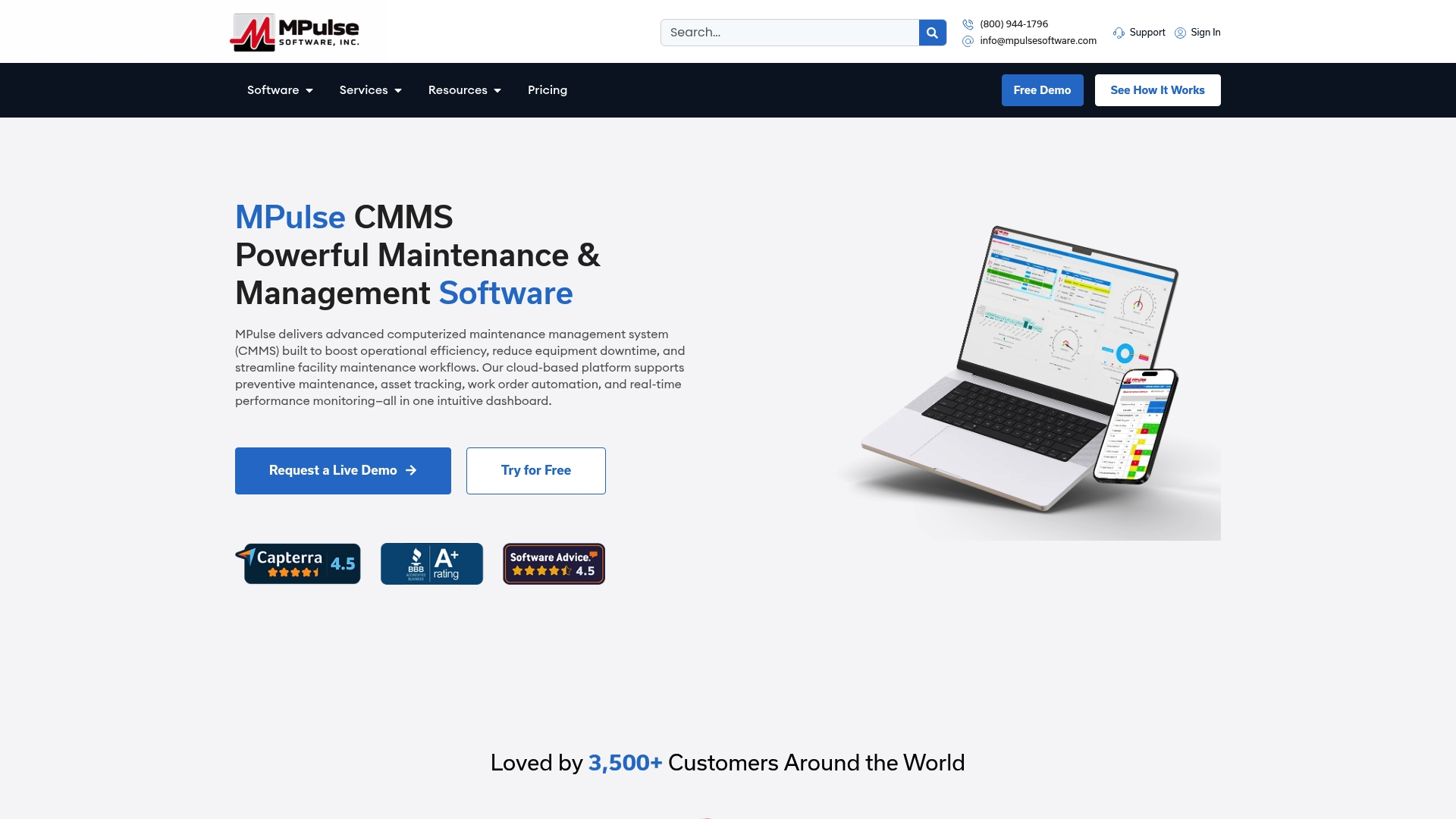
MPulse Software combines IIoT and real-time monitoring with a full CMMS to automate that connection. When an asset crosses a defined threshold, MPulse generates a work order automatically, complete with asset history, assigned technician, and priority level. The platform serves over 3,500 customers globally and has documented efficiency improvements of up to 40%. Teams in industries with compliance requirements rely on MPulse for its audit-ready maintenance records and calendar-based scheduling. Explore MPulse’s facility maintenance software to see how continuous monitoring and preventive maintenance work together in a single platform.
FAQ
What is the role of real-time asset monitoring?
Real-time asset monitoring continuously tracks asset location, condition, and performance, delivering live data that enables proactive maintenance and faster operational decisions. Its primary role is to reduce unplanned downtime and cut maintenance costs by connecting sensor data to automated workflows.
How does real-time monitoring reduce maintenance costs?
Continuous monitoring eliminates ghost assets, reduces emergency repairs, and lowers Mean Time to Repair by 28% compared to non-monitored environments. These gains combine to deliver ROI within 12–24 months for well-implemented systems.
What sensors are used in real-time asset monitoring?
The most common sensor types include RFID tags, IoT sensors measuring vibration and temperature, GPS devices for mobile assets, and barcode scanners for inventory tracking. Each type serves a different use case depending on asset type and required data latency.
How does real-time monitoring integrate with a CMMS?
Effective integration routes sensor alerts directly into the CMMS to generate automated work orders when an asset crosses a defined threshold. Without this integration, monitoring data sits in a dashboard and requires manual action before any maintenance occurs.
What is OEE and how does monitoring improve it?
OEE, or Overall Equipment Effectiveness, measures the percentage of planned production time that is truly productive. Facilities that deploy real-time monitoring typically see a 3–8% OEE improvement after full deployment.