
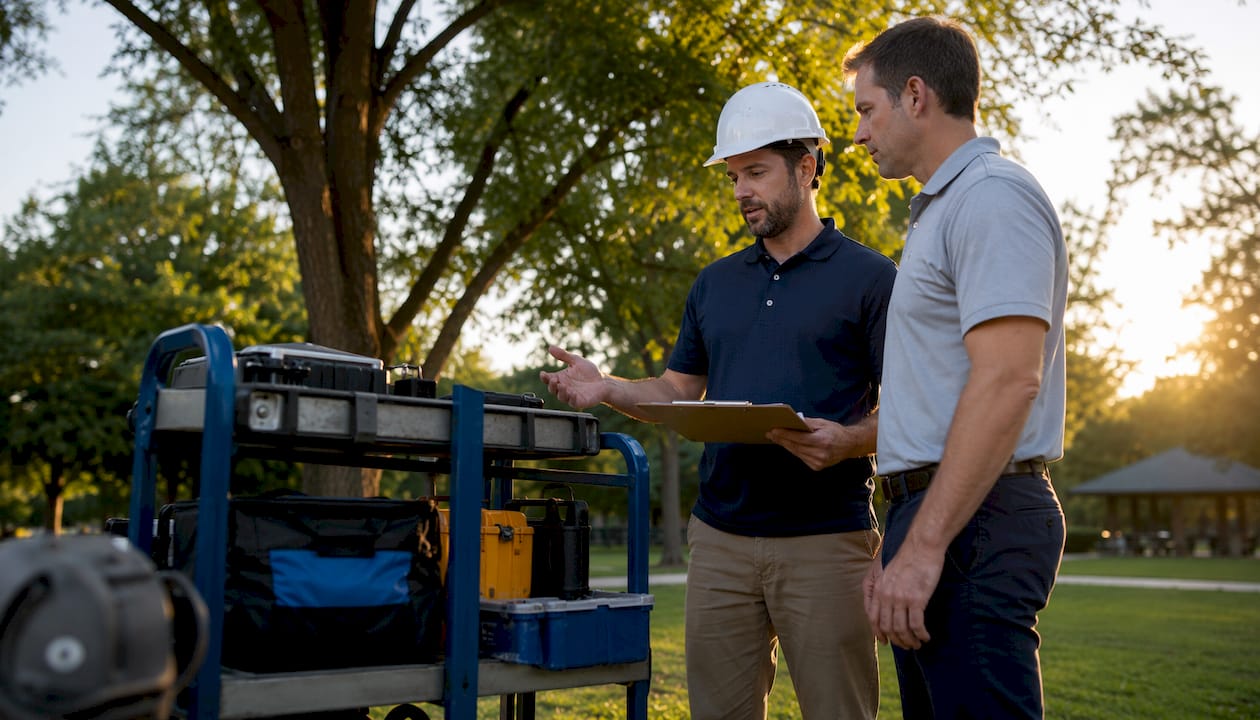
The most effective client asset management tips contractors can act on right now come down to six core disciplines: tag every high-value asset with a standardized ID or QR code, enforce check-in/check-out accountability, run audits on a tiered schedule, connect asset data to project accounting, train crews on reporting procedures, and use maintenance history to drive replacement decisions. Get those six right, and jobs run tighter, costs drop, and equipment lasts longer.
Here is a quick-reference list of the foundational practices covered in depth throughout this guide:
- Assign a unique asset ID or QR code to every tool, vehicle, and piece of equipment worth tracking
- Establish written check-in/check-out rules and assign a named accountability owner
- Run daily field checks for safety, monthly verification for high-value equipment, and quarterly comprehensive audits
- Feed asset condition and maintenance data directly into project accounting software
- Train every crew member on damage reporting, proper storage, and unauthorized-swap policies
- Use repair cost history against the 30% resale value threshold to trigger replacement decisions
What is construction asset management and why does it matter for contractors?
Construction asset management is the disciplined tracking of tools, equipment, vehicles, and high-value materials from purchase through replacement, covering assignment, location, condition, maintenance history, and disposal. For contractors, the discipline applies directly to client-facing work: every asset deployed on a job site affects schedule, cost, and the client’s confidence in your operation.
The core components follow a clear lifecycle:
- Acquisition: Purchasing or renting equipment based on verified project needs and budget
- Deployment: Assigning assets to specific sites and crews, typically using barcode or QR code tagging
- Usage tracking: Monitoring hours, mileage, or condition to assess wear and performance
- Maintenance: Scheduled inspections and repairs to extend lifespan and prevent breakdowns
- Retirement: Removing or replacing assets based on usage thresholds, depreciation, or cost analysis
Effective asset oversight directly affects cash flow. Linking asset data tightly to project accounting and shifting payment schedules to milestone-based structures helps contractors maintain steady cash inflows to cover asset-related expenses. When equipment goes missing or breaks down unexpectedly, the financial hit lands immediately on the project budget, not at the end of the job.
Industry guidance recommends a tiered oversight rhythm: daily field checks for safety, monthly verification for high-value equipment, and quarterly audits to catch inefficiencies and identify replacement candidates. That rhythm is not arbitrary. Firms that conduct quarterly asset reviews catch inefficiencies sooner and avoid the compounding costs of deferred maintenance.
How does strong asset management benefit your construction business?
The operational and financial gains from disciplined asset management are concrete, not theoretical. Contractors who track utilization, enforce maintenance schedules, and audit consistently see measurable improvements across several areas.
- Fewer project delays: Knowing where every asset is and whether it is field-ready prevents the last-minute scramble that pushes schedules back
- Lower rental costs: Accurate utilization data reveals which owned equipment sits idle, so you can redeploy it instead of renting a duplicate
- Higher equipment uptime: Preventive maintenance tied to usage data reduces unplanned breakdowns; teams integrating tracking data with maintenance planning have improved predictive maintenance accuracy by a significant margin
- Better cash flow predictability: Asset management is strategic, not just operational — it directly improves cash flow by reducing unplanned downtime and optimizing equipment utilization across projects
- Reduced theft and loss: Visible asset IDs, check-in/check-out logs, and lockable site boxes all reduce the rate at which tools walk off a job site
For project managers specifically, the benefit extends to client relationships. When you can report accurately on asset condition and deployment, you build the kind of transparency that clients remember when awarding the next contract.
1. Build a centralized master asset list with consistent fields
Every contractor asset management strategy starts with a single, authoritative list. A shared spreadsheet can work initially, but the fields must be standardized so no crew member logs “big grinder” in one row and “angle grinder, 4.5in” in another. Inconsistent naming is the direct cause of ghost assets: items that appear in your records but cannot be located, verified, or reconciled during an audit.

At minimum, each record should include: asset ID, description, brand and model, serial number, purchase date, purchase price, current condition, assigned location or crew, and maintenance notes. Those fields give you everything needed for lifecycle decisions, warranty claims, and financial reporting. Build the list once, keep it in one place, and make it the single source of truth for your entire operation.
2. Tag assets with durable QR codes before anything else
QR code systems provide contractors the best blend of cost, speed, and reliability compared to manual spreadsheets or complex GPS and RFID setups. A crew member with a smartphone can scan a tag, pull up the asset record, and log a check-out in seconds. That speed matters on a busy job site where friction in the process means the process gets skipped.
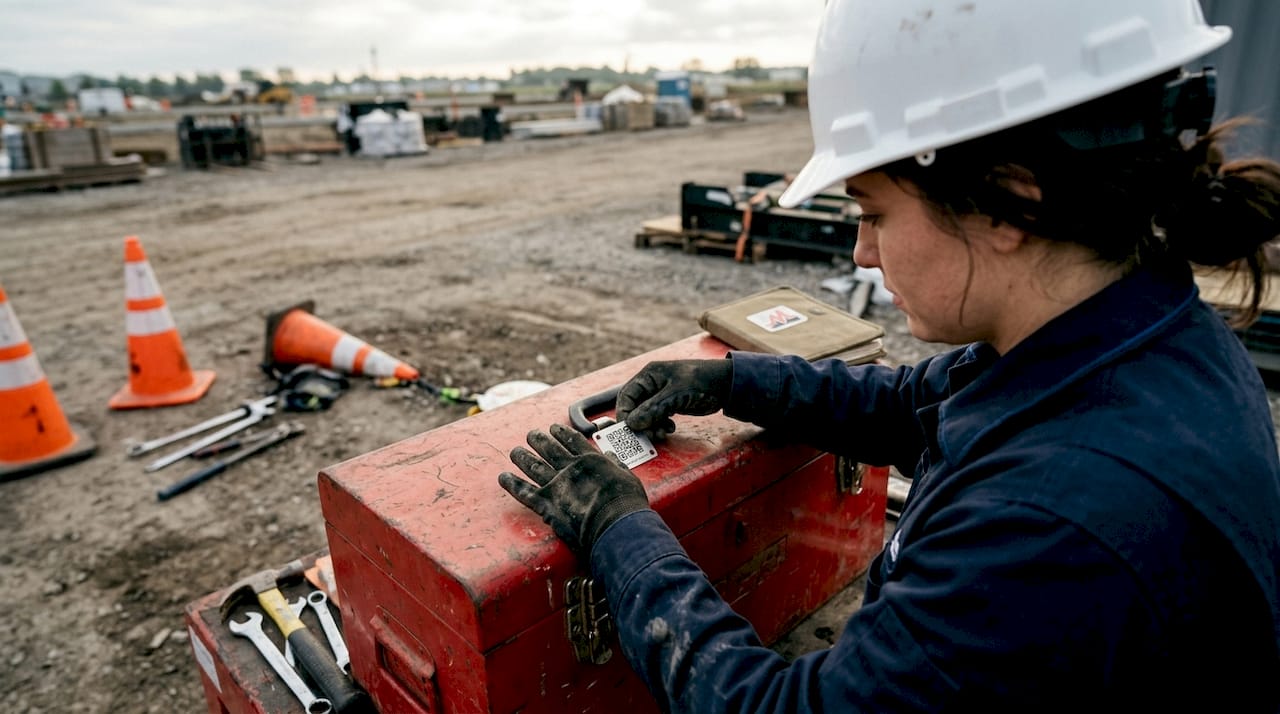
For harsh field conditions, metal QR tags on high-value mobile equipment maintain scan reliability where paper or standard vinyl labels fail. Start with your most expensive and most frequently moved items, get the team comfortable with the scan-and-log workflow, then expand to the broader inventory. Pair the tags with visible company color markings so crews can spot your gear quickly even before they scan.
Pro Tip: Apply metal QR tags to your top 10 highest-value assets first. Once check-in/check-out becomes habit on those items, scaling to the full inventory takes a fraction of the effort.
3. Establish clear check-in/check-out accountability rules
A tagging system without accountability rules is just a label collection. Every crew member needs to know exactly what is expected: inspect assigned tools before and after use, report damage immediately rather than waiting for the next job, return tools to the assigned location at the end of each shift, and never swap equipment between trucks or crews without logging the transfer.
Assign one person, typically the foreman or a designated asset coordinator, to own weekly review of the check-in/check-out log. Crews follow systems that are easy, consistent, and enforced. Put the scan or sign-out step where the work already happens, at the trailer, truck, or yard gate, so compliance requires no extra trip.
4. Run audits on a tiered schedule
Quarterly audits at minimum, with monthly verification for high-value equipment, provide the best balance between accuracy and operational feasibility. A simple audit done on schedule consistently outperforms a thorough audit that never gets completed.
Structure each audit in passes. The first pass covers high-value gear and anything that moves between crews. The second picks up vehicle contents, chargers, batteries, and specialty kits. The third cleans up duplicates, missing serial numbers, and condition notes. Daily field checks should cover fuel levels, battery charge, guards, cords, visible damage, and tire condition. Quarterly reviews go deeper: full condition assessment, service history update, and identification of replacement candidates. For contractors managing multiple sites, maintenance scheduling strategies that tie audit dates to project milestones keep the rhythm consistent without adding administrative burden.
5. Integrate asset data with project accounting
Asset data that lives in a silo never reaches its full value. When maintenance costs, utilization rates, and replacement timelines feed directly into your project accounting system, you get accurate job costing, better budget forecasts, and a clearer picture of true equipment costs per project. Milestone-based payment schedules work particularly well alongside this integration, aligning cash inflows with the asset expenditures each project phase demands.
Track four financial metrics at the asset level: monthly tool loss and damage cost, equipment utilization rate, on-time preventive maintenance completion, and unplanned breakdown count. Those four numbers tell you whether your asset management process is working in practice, not just on paper.
6. Apply the 30% rule for replacement decisions
Emotion and habit drive most equipment replacement decisions in contracting. A clear financial rule removes both. Industry guidance recommends replacing equipment once annual maintenance costs exceed 30% of its current resale value. A piece of equipment with a $50,000 resale value crosses that threshold at $15,000 in annual maintenance spend.
Apply this rule consistently and you avoid two common mistakes: holding onto aging equipment that drains your maintenance budget, and replacing assets prematurely before they have delivered full value. Log repair spend including parts, outside labor, and downtime costs against each asset record so the calculation is always current.
7. Train crews on asset policies and damage reporting
Training is where most contractor asset management programs break down. Policies posted on a whiteboard do not translate into field behavior unless crews understand the reasoning behind them and see the rules enforced consistently. A one-time orientation is not enough. Build asset accountability into onboarding for new hires and revisit the policies during quarterly crew meetings.
Cover four behaviors explicitly: how to check equipment out and back in, what to do when damage occurs, where to store shared tools at the end of a shift, and how to flag an asset that needs service before it fails on a job. Personnel qualification tracking alongside asset training records gives project managers a clear view of which crew members are certified to operate specific equipment, reducing misuse and the damage that follows.
8. Use preventive maintenance alerts tied to usage data
Reactive maintenance, fixing equipment after it breaks, costs more and disrupts schedules more than any other asset management failure. Preventive maintenance tied to actual usage data changes that equation. Set service reminders based on hours of operation, mileage, or project cycles rather than calendar dates alone, because a piece of equipment used daily reaches its service interval far faster than one used weekly.
A CMMS with real-time monitoring can trigger alerts automatically when an asset approaches its service threshold, assign the work order to the right technician, and log the completed maintenance against the asset record. That closed loop is what keeps the maintenance plan from existing only on paper.
9. Address ghost assets and naming convention failures
Ghost assets, items that appear in your records but cannot be physically located or verified, accumulate when naming conventions are inconsistent. Without a standardized SKU or asset ID system, logs fill with duplicates and near-duplicates that make audits unreliable and financial reporting inaccurate. The ghost asset problem compounds over time: each inconsistency makes the next audit harder and the financial picture less trustworthy.
The fix is a naming convention enforced from day one. Define the format, train every person who touches the asset list, and audit the naming as part of your quarterly review. Catching a duplicate entry costs minutes. Untangling two years of inconsistent records costs days.
10. Select software that fits your crew’s actual workflow
Software selection for contractor asset management comes down to three criteria: ease of use in the field, mobile capability, and integration with your project accounting system. The most feature-rich platform available is useless if your crew finds it too slow or confusing to use on a job site. Prioritize a mobile-friendly interface that requires no more than a few taps to log a check-out, record damage, or confirm a maintenance task.
For tracking technology, QR codes offer the best cost-to-control ratio for most growing contractors. RFID adds automation but increases cost and infrastructure complexity. GPS tracking suits fleets and heavy equipment where location visibility justifies the expense. A phased approach works best: start with QR codes on high-value assets, integrate with your accounting system, then layer in GPS or RFID where the data justifies it. Understanding the asset management pipeline from acquisition through disposal helps you choose software that supports the full lifecycle rather than just the tracking phase.
Expert insights and key metrics that drive asset management performance
The First-Time Fix Rate (FTFR) is the single most telling metric for service-based contractors. It measures the percentage of jobs completed on the first visit without a follow-up, and a high FTFR is a direct result of having the right tools available and in working condition every time. Tracking FTFR alongside unplanned breakdown counts reveals whether your preventive maintenance program is functioning or just scheduled.
The tiered audit rhythm recommended by industry experts—daily field checks, monthly verification for high-value equipment, and quarterly comprehensive reviews—reflects a practical balance between thoroughness and operational feasibility. Daily checks catch safety hazards before they cause incidents. Monthly verification for high-value equipment catches wear before it becomes failure. Quarterly comprehensive reviews identify replacement candidates and close the loop on financial reporting.
Linking asset management tightly to project accounting, as financial experts recommend, transforms asset data from an operational record into a financial planning tool. When utilization rates, maintenance costs, and replacement timelines are visible in the same system as project budgets and cash flow forecasts, contractors make faster and more accurate decisions about equipment purchasing, rental, and disposal.
How MPulse Software supports contractor asset management
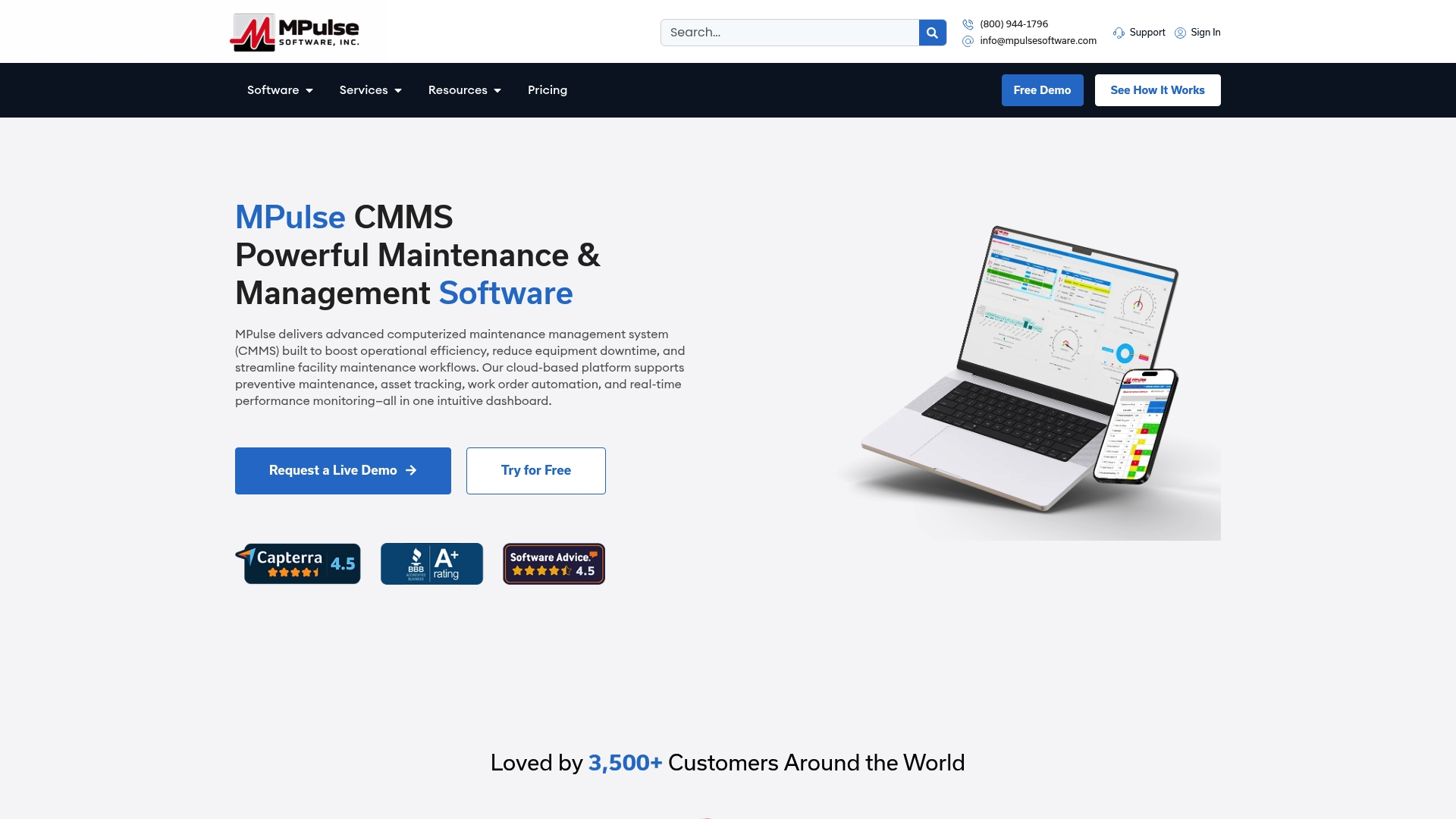
MPulse Software gives contractors and project managers a CMMS built for the demands of field operations and compliance-driven environments. The platform’s asset management features centralize equipment records, automate preventive maintenance alerts, and integrate with project accounting workflows, so the data your crew captures in the field feeds directly into the financial and operational decisions that matter. Over 3,500 customers trust MPulse Software, with documented efficiency improvements of up to 40%.
Whether you are managing a small crew’s tool inventory or a multi-site fleet of heavy equipment, MPulse Software scales to fit the operation. Explore MPulse CMMS to see how it supports every stage of the asset lifecycle, from tagging and check-in/check-out through preventive maintenance scheduling and lifecycle reporting.
Key Takeaways
Disciplined asset tracking, tiered audit schedules, and integration with project accounting are the three pillars that separate contractors who control costs from those who react to them.
| Point | Details |
|---|---|
| Start with high-value assets | Tag and track your most expensive, most mobile equipment first before expanding to full inventory. |
| Use the 30% replacement rule | Replace equipment when annual maintenance costs exceed 30% of its current resale value. |
| Audit on a tiered schedule | Run daily field checks, monthly verification for high-value equipment, and quarterly comprehensive reviews. |
| Connect asset data to accounting | Feed maintenance costs and utilization rates into project accounting for accurate job costing and cash flow forecasting. |
| Enforce naming conventions | Standardized asset IDs and SKU systems prevent ghost assets and keep audits reliable. |
FAQ
What does an asset manager do in construction?
A construction asset manager tracks tools, equipment, vehicles, and materials through their full working life, covering assignment, condition, maintenance, and replacement decisions. The goal is to know what you own, where it is, and what it costs to keep, so projects run on schedule and within budget.
What are the three pillars of asset management?
The three pillars are knowing what you own, knowing where it is, and knowing what it costs to maintain. Contractors who get all three right see tighter purchasing, longer equipment life, and fewer unplanned project delays.
What are the 5 P’s of asset management?
Definitions vary across frameworks, but a widely used version in construction covers Plan, Procure, Protect, Perform, and Purge: planning asset needs, acquiring the right equipment, protecting it through maintenance and accountability, tracking performance and utilization, and retiring assets when repair costs exceed the 30% resale value threshold.
How often should contractors audit their assets?
Quarterly audits are the recommended baseline for most contractors, with monthly verification for high-value equipment. Consistency matters more than perfection: a simple audit completed on schedule delivers more value than a thorough one that keeps getting postponed.
How do QR codes compare to RFID and GPS for contractor asset tracking?
QR codes provide the best cost-to-control ratio for most growing contractors, requiring only a smartphone to scan and log. RFID automates scanning but adds infrastructure cost. GPS suits heavy equipment and vehicle fleets where real-time location data justifies the expense. Most contractors start with QR codes and layer in other technologies as the operation scales.