TL;DR:
- Effective work order tracking enhances maintenance visibility, reduces response times, and enables proactive asset management in school districts. Implementing digital platforms streamlines requests, improves accountability, and supports long-term budgeting, but success depends on comprehensive staff adoption and policy enforcement. Proper deployment of these systems ultimately recovers teaching time, cuts costs, and promotes operational clarity across facilities.
School districts operate hundreds of facilities, thousands of assets, and maintenance teams stretched thin across multiple buildings every day. Without a clear system to manage requests, the role of work order tracking in school districts becomes evident only after things break down: a leaking roof sits unreported for weeks, a broken HVAC unit disrupts an entire wing, and maintenance staff spend hours chasing down verbal requests. The cost is not just financial. 77% of school leaders report that existing digital tools fail to give them the visibility needed to manage operations proactively, resulting in thousands of lost teaching hours annually.
Table of Contents
- Key takeaways
- The role of work order tracking in school districts
- Benefits of work order systems for school districts
- Common challenges when adopting work order tracking
- Proactive maintenance and long-term asset management
- How to implement work order tracking successfully
- My take: the underestimated value of operational clarity
- See how Mpulsesoftware supports school district facilities teams
- FAQ
Key takeaways
| Point | Details |
|---|---|
| Visibility reduces reactive work | Centralized tracking surfaces every open request, preventing issues from falling through the cracks. |
| Cost savings are measurable | Districts have cut response times by 60% and software costs by 65% after switching to digital platforms. |
| Cultural adoption matters as much as technology | Staff training and clear accountability policies determine whether a new system delivers results. |
| Preventive maintenance drives long-term savings | Automated work order triggers reduce equipment failures and extend asset lifecycles across campuses. |
| Data supports budget decisions | Real-time dashboards give administrators concrete evidence to justify maintenance spending to school boards. |
The role of work order tracking in school districts
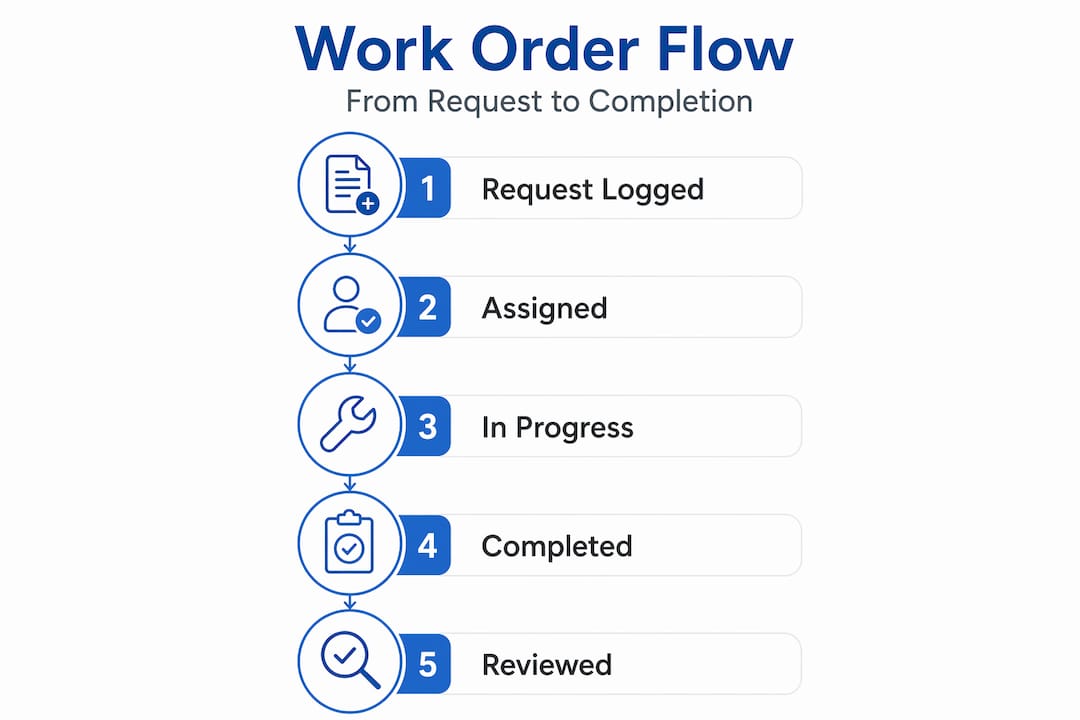
A work order is a documented request to perform a specific maintenance task, from replacing a classroom projector bulb to inspecting a boiler room. Work order tracking means monitoring every request from the moment it is submitted through assignment, completion, and sign-off. In a school district context, that scope extends across dozens of buildings, multiple maintenance crews, and overlapping schedules tied to academic calendars.
Digital work order management in education replaces fragmented paper logs and email chains with a single platform where every request is logged, categorized, and assigned automatically. Priority tagging routes urgent repairs to the right technician without requiring a supervisor to manually sort through a queue. Preventive maintenance schedules generate recurring work orders for inspections and service intervals, so critical equipment does not get ignored between reactive calls.
Here is what a digital system handles that paper workflows simply cannot:
- Automatic assignment based on technician skill sets and availability
- Real-time status updates visible to requesters, supervisors, and contractors
- Asset histories that document every repair, part used, and labor hour
- Compliance checklists attached directly to work orders for regulatory inspections
- Mobile access so technicians can update work status from anywhere on campus
By contrast, paper-based or email-based systems create what one study called an operational “email black hole” where requests disappear, accountability blurs, and no one can produce a reliable report at budget time.
Benefits of work order systems for school districts
The benefits of work order systems go well beyond keeping a tidier to-do list. When every request flows through a structured digital process, the operational improvements compound quickly.
- Faster response times. Centralized routing eliminates the lag between request and assignment. Districts that have made this shift report response time reductions of 60% compared to their previous workflows.
- Reduced staff hours on administration. Some districts coordinate over 800 work orders weekly and recover more than 500 staff hours per year by eliminating manual follow-ups.
- Transparent cost management. Real-time dashboards show labor costs, material usage, and contractor expenses tied to specific assets or buildings, making it far easier to prepare accurate budget requests.
- Improved accountability. When every task has a digital record with timestamps and technician assignments, supervisors can identify bottlenecks and address performance issues with actual data rather than memory.
- Stronger regulatory compliance. Maintenance records attached to work orders serve as audit-ready documentation for fire safety inspections, HVAC certifications, and other compliance requirements.
“Districts that centralize and automate maintenance see improved budget transparency and can justify spending decisions to school boards with concrete data.” — New Jersey School Boards Association
Pro Tip: Set up cost-center tagging from day one. Assigning work orders to specific buildings or departments at the point of submission lets you generate meaningful budget reports without manually sorting data later.
The importance of tracking work orders also surfaces in staff morale. Maintenance teams that work from clear digital queues spend less time deciphering handwritten notes or waiting on verbal direction and more time completing actual work.
Common challenges when adopting work order tracking
Switching to a digital system is not purely a technology decision. The cultural shift required is often the harder part, and districts that underestimate it tend to end up with an expensive platform that nobody uses correctly.
Here are the most common obstacles facility managers encounter:
- Paper habits persist. Maintenance staff who have printed work orders for years often revert to familiar routines when a new system launches. Without deliberate coaching, the digital system runs in parallel with paper rather than replacing it.
- Tool fragmentation. Many districts already use separate systems for event scheduling, student information, and budgeting. If the work order platform does not connect with those tools, accountability gaps and data silos reappear in a new form.
- Limited mobile accessibility. A system that works well on a desktop but poorly on a smartphone will fail the moment a technician needs to update a work order in a basement mechanical room with no laptop nearby.
- Incomplete adoption. Partial use is worse than no system at all in some ways. If some staff log requests digitally while others still call or email, supervisors face split attention and inconsistent data.
- Inadequate training. Providing devices and login credentials is not the same as building competency. Coaching and staged implementation consistently produce better long-term adoption and system return on investment.
Pro Tip: Designate a system champion in each school building during rollout. Peer-to-peer encouragement from someone who uses the platform daily is more effective than top-down mandates alone.
The critical safeguard against partial adoption is a firm policy: no work is performed without an electronically generated work order. That single rule, enforced consistently, closes the informal channels that undermine the entire system.
Proactive maintenance and long-term asset management
Reactive maintenance treats every equipment failure as a surprise. Work order tracking, done well, removes most of that surprise by turning maintenance into a scheduled, data-informed process rather than a series of emergencies.
When preventive maintenance work orders are automated, technicians receive scheduled tasks before equipment fails. A boiler that gets an annual inspection work order every October is far less likely to fail in January. HVAC filters replaced on a documented cycle last longer than those changed whenever someone notices a problem.
The table below illustrates how proactive tracking applies across common school district asset categories:
| Asset type | Reactive approach | Tracked approach |
|---|---|---|
| HVAC systems | Repair after failure; disrupts classrooms | Scheduled filter changes and inspections; failures drop significantly |
| Plumbing fixtures | Fix leaks on complaint; water damage accumulates | Regular inspections catch wear before leaks develop |
| Electrical systems | Emergency repair after outage | Scheduled testing and documentation; compliance maintained |
| Grounds equipment | Run until breakdown; costly mid-season repairs | Seasonal maintenance orders keep equipment ready |
| Roof and envelope | React to leaks; structural damage escalates | Annual inspections document condition and prioritize capital repairs |
Beyond individual assets, school district maintenance tracking at a system level informs capital planning. When every repair is logged with costs and asset IDs, facility managers can produce lifecycle cost reports showing precisely when a piece of equipment is approaching the end of its useful life. That data turns budget conversations with school boards from guesswork into evidence.
Integration with event scheduling adds another layer of value. A work order platform connected to school calendars prevents maintenance crews from scheduling major repairs on days when a building is in use for a championship game or community event.
How to implement work order tracking successfully
Knowing the benefits is one thing. Executing an implementation that actually sticks is another. The following steps reflect what works in practice across K-12 environments.
- Assess your current workflow first. Before selecting any platform, map how work requests currently move from submission to completion. Identify where requests get lost, who makes priority decisions, and which assets generate the most reactive calls.
- Choose a platform built for your scale. A CMMS built for school districts handles multi-building asset hierarchies, compliance documentation, and event calendar integration in ways that generic work order tools do not.
- Stage the rollout by user group. Start with maintenance supervisors, then technicians, then school-level requesters. Each group has different needs, and training works better when it is tailored to how each person interacts with the system.
- Set and enforce the no-paper rule. Announce and consistently apply the policy that every task requires a digital work order. This is not punitive. It is the mechanism that makes all the data-driven benefits possible.
- Define your KPIs before go-live. Track metrics like average response time, work order backlog size, preventive versus reactive maintenance ratio, and cost per work order by building. Reviewing these monthly gives you the evidence needed to refine workflows and demonstrate value.
Pro Tip: Run a 30-day audit after launch. Pull a report of all work orders completed and look for tasks that were performed without a corresponding digital record. Address those gaps immediately before informal habits solidify.
Continuous improvement services from your software provider can also help districts refine their processes after the initial deployment, especially when staff turnover introduces new users who missed the original training.
My take: the underestimated value of operational clarity
I have worked with facility managers long enough to recognize a pattern. The districts that struggle most with maintenance are not the ones with the oldest buildings or the smallest budgets. They are the ones where nobody has a clear picture of what is happening across the portfolio on any given day.
When I talk with administrators stuck in a logistics grind, the frustration is consistent. They know something is wrong. Budgets are unpredictable, staff are overloaded, and every week brings a new emergency that should have been preventable. What they rarely realize is that the missing piece is not more staff or more funding. It is operational visibility.
The real transformation I have seen in districts that commit to work order software is not in the software itself. It is in what happens when maintenance staff finally have clear queues, supervisors have real data, and administrators can connect maintenance costs to specific assets and decisions. People stop guessing and start managing.
What consistently surprises administrators is how much teaching time is recovered when facilities run reliably. Broken equipment and deferred repairs pull teachers and principals into facility conversations that should never reach their desk. Fix the tracking, and you fix more than the maintenance backlog.
My honest advice: do not underestimate the policy work. The technology is the easy part. The hard part is holding everyone accountable to using it. Districts that treat the digital work order as optional will never see the full return on their investment.
— Mark
See how Mpulsesoftware supports school district facilities teams
School district facility managers face maintenance challenges that generic software tools are not built to handle. Mpulsesoftware’s maintenance management platform gives K-12 teams a centralized system for tracking every work order from submission to completion, automating preventive maintenance schedules, and generating the cost reports that make budget conversations with school boards straightforward.
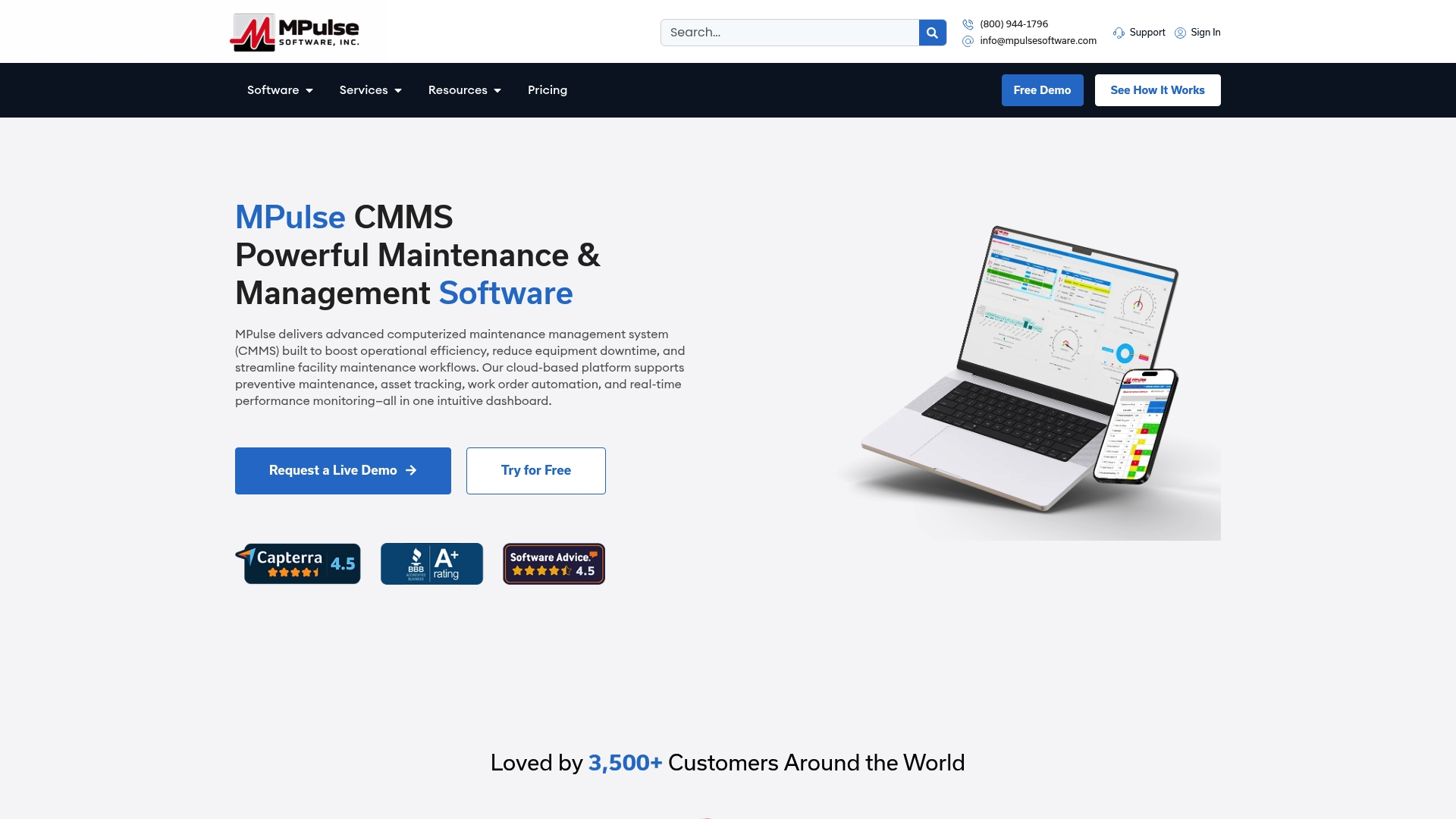
With over 3,500 customers globally and documented efficiency improvements of up to 40%, Mpulsesoftware brings proven capability to districts of every size. The platform includes an intuitive calendar interface, mobile access for field technicians, and preventive maintenance automation that reduces equipment failures before they disrupt learning. Implementation support and continuous improvement services are available to help your team get to full adoption faster. Start with a free demo or take a product tour to see how the platform fits your district’s operations.
FAQ
What is work order tracking in a school district?
Work order tracking is the process of logging, assigning, and monitoring every maintenance request from submission through completion using a digital platform. It replaces paper logs and email chains with a centralized, auditable record of all facility work.
How does work order tracking reduce costs for school districts?
By automating preventive maintenance and eliminating manual follow-up, districts recover hundreds of staff hours annually and can reduce software and operational overhead significantly. One district cut software costs by 65% after centralizing to a single digital platform.
Why do work order systems fail in some school districts?
Failure most often comes from incomplete adoption, where some staff continue using informal channels like email or verbal requests instead of the digital system. Enforcing a firm policy that no work proceeds without a digital work order is the most effective safeguard.
How long does it take to implement a work order system in a school district?
Timeline depends on district size and the complexity of existing workflows, but a staged rollout starting with maintenance supervisors typically produces working results within a few weeks. Full adoption across all buildings generally takes one to two academic terms with consistent training.
What metrics should school districts track with a work order system?
Focus on average response time, the ratio of preventive to reactive work orders, cost per work order by building, and total backlog size. These four metrics surface operational patterns and give administrators the data to justify maintenance budgets to school boards.