
TL;DR:
- Planned maintenance stoppages are scheduled efforts to perform maintenance with minimal operational disruption, reducing costly unplanned downtime. Proper planning, scope locking, and real-time monitoring ensure efficiency, safety, and accurate measurement of performance improvements. Using data-driven triggers and integrated software enhances proactive maintenance and overall facility reliability.
A planned maintenance stoppage is a scheduled, intentional interruption to production or equipment operation designed to perform maintenance, upgrades, or inspections with coordinated resources and minimal operational disruption. In the industry, this concept is also called planned downtime or a scheduled shutdown. Understanding what is planned maintenance stoppage separates facilities that control their operations from those that react to them. Unplanned downtime costs 5–20 times more per hour than a planned maintenance window. That single fact makes the case for every scheduling decision covered in this guide.
What is a planned maintenance stoppage and what does it involve?

A planned maintenance stoppage is a deliberate operational pause that gives maintenance teams the time and access needed to perform work that cannot happen safely or effectively during normal production. The industry standard terms for this concept include planned downtime, scheduled shutdown, and maintenance turnaround. All describe the same core practice: stopping equipment or production on purpose, at a chosen time, to protect long-term reliability.
Common activities that require a planned stoppage include:
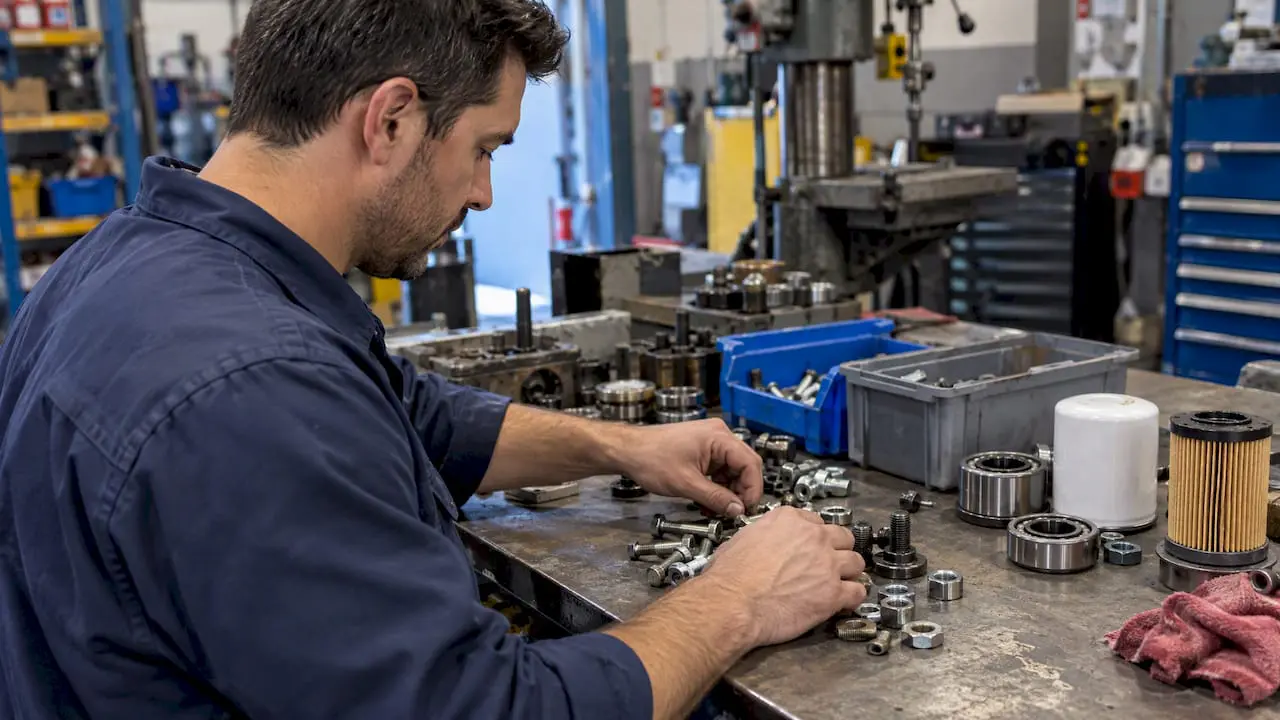
- Preventive maintenance tasks: Lubrication, filter replacements, belt inspections, and bearing checks that must occur with equipment at rest
- Component replacements: Swapping worn parts before they fail, including motors, seals, and valves
- Calibration and quality checks: Verifying instrument accuracy and resetting process parameters to specification
- Cleaning and sanitation: Mandatory in food processing, pharmaceuticals, and other regulated industries where contamination risk requires full shutdowns
- Changeovers and setups: Reconfiguring production lines for new products or batch runs
- Facility-wide shutdowns: Full plant halts for major inspections, code compliance work, or capital upgrades
The scale of a planned stoppage varies considerably. A brief changeover may last 30 minutes. A full industrial turnaround can run 7–15 days, depending on plant complexity and production demands. Both qualify as planned stoppages as long as they are scheduled in advance and coordinated with resources.
Pro Tip: Categorize every stoppage by type and duration in your CMMS before it occurs. This creates a historical record that makes future scheduling faster and more accurate.
Planned vs. unplanned maintenance: why the distinction matters
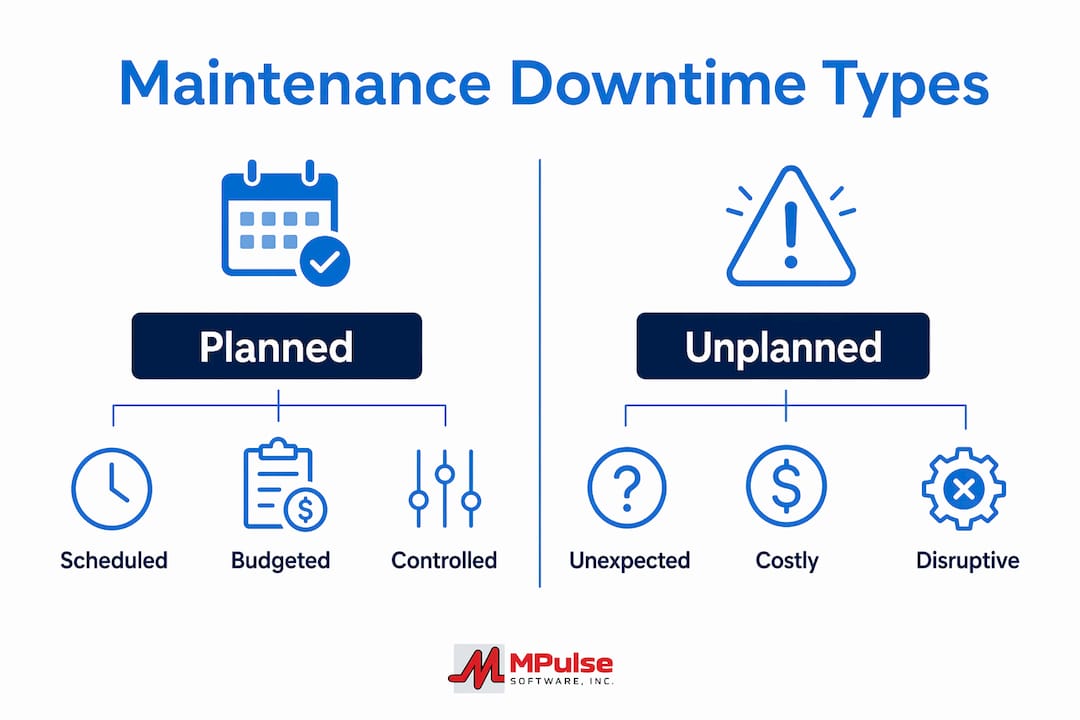
Planned downtime is a deliberate management choice. Unplanned downtime signals system instability, not a planning failure. Treating these two categories as interchangeable is one of the most common and costly mistakes in maintenance management.
The table below shows the core differences:
| Factor | Planned maintenance stoppage | Unplanned downtime |
|---|---|---|
| Trigger | Scheduled inspection or PM interval | Unexpected failure or breakdown |
| Cost | Budgeted and controlled | Unbudgeted and disruptive |
| Resource readiness | Parts and labor pre-staged | Emergency sourcing required |
| Production impact | Accounted for in capacity planning | Treated as lost capacity |
| Safety risk | Managed through pre-event protocols | Elevated due to urgency |
Planned downtime is normally accounted for in capacity planning and is not considered lost capacity unless it overruns its scheduled duration. Unplanned downtime, by contrast, is always lost capacity. The cost gap between the two is significant. Unplanned failures can cost 5–20 times more per hour than a scheduled window. That multiplier reflects emergency labor rates, expedited parts shipping, lost production, and potential safety incidents.
Facilities that mix these categories in their reporting mask real performance problems. A changeover logged as planned downtime when it ran twice as long as expected hides an efficiency gap. Facilities often under-measure planned maintenance downtime, masking inefficient changeovers as planned time, which conceals actual capacity loss. Accurate classification is the foundation of any meaningful maintenance improvement program.
How to schedule a maintenance stoppage effectively
Effective scheduling starts months before the wrench turns. Successful maintenance stoppages depend on pre-event planning with a locked work scope, built from inspection data and risk assessments completed well in advance. Late scope changes during execution are the primary driver of budget overruns and safety incidents.
Follow these steps to build a reliable stoppage plan:
- Define the work scope early. Conduct pre-shutdown inspections and risk assessments to identify every task required. Lock the scope at least four to six weeks before the event for routine stoppages and three to six months out for major turnarounds.
- Coordinate resources. Confirm parts availability, specialty contractor schedules, and internal labor assignments before the stoppage date. Waiting until the last week to order critical components is a common and avoidable failure.
- Align with production cycles. Schedule stoppages during low-demand periods, planned holidays, or seasonal transitions. Coordinate with operations, logistics, and engineering to protect revenue-critical production windows.
- Set realistic durations with contingency time. Build a buffer of 10–15% into the schedule for unforeseen conditions. A stoppage that runs over its window becomes unplanned downtime in its impact, even if it started as scheduled.
- Assign clear ownership. Every task on the work list needs a named responsible person and a completion deadline. Ambiguous ownership is where schedules collapse.
- Document and communicate the plan. Share the full schedule with all departments affected. Operations, safety, and logistics teams all need visibility before the stoppage begins.
Pro Tip: Use your planned maintenance software to generate work orders automatically from your PM schedule. This eliminates manual handoffs and keeps every task visible in one system.
How to execute and monitor a maintenance stoppage for success
Execution is where planning pays off or falls apart. A well-executed maintenance stoppage requires safety-checked, timed tasks coordinated like a complex project to return the facility to service as quickly and safely as possible.
Best practices for the execution phase include:
- Conduct a pre-start safety briefing. Every technician on site needs to understand the lockout/tagout requirements, task sequence, and emergency procedures before work begins. Review lockout/tagout protocols with all personnel involved.
- Sequence tasks to the critical path. Identify which tasks block others and prioritize them. Completing non-critical work before the critical path is clear wastes time and delays restart.
- Track progress in real time. Use a CMMS or digital work order system to monitor task completion against the schedule. Supervisors need live visibility, not end-of-shift reports, to catch delays early.
- Manage scope creep actively. When technicians discover additional work during the stoppage, evaluate each addition against its impact on the schedule. Not every finding requires immediate action. Some can be deferred to the next planned window.
- Verify work quality before restart. Every completed task requires a sign-off confirming the work meets specification. Restarting with an incomplete or improperly executed repair creates a new failure risk.
- Document everything. Record actual task durations, parts consumed, findings, and any deferred work. This data directly improves the accuracy of the next stoppage plan.
Communication during execution is as important as the technical work. Operations leadership needs regular status updates so they can adjust production commitments if the stoppage runs long.
What strategies and technologies optimize planned stoppages going forward?
The most significant shift in maintenance management over the past decade is the move from calendar-based scheduling to data-driven triggers. Changing planned maintenance from calendar-based events to runtime-driven triggers reduces unnecessary stoppages and focuses resources on equipment that actually needs attention.
The planned-to-unplanned downtime ratio is the clearest measure of maintenance maturity. Best-in-class maintenance organizations perform 80% or more of their work as planned. Facilities below 50% planned work are in reactive mode, spending more on emergency repairs than on prevention. Pushing the planned ratio above 85% shifts a facility from firefighting to proactive optimization, which produces measurable gains in capacity and cost control.
Technologies that support this shift include:
| Technology | Function | Operational benefit |
|---|---|---|
| CMMS platforms | Schedule, assign, and track all maintenance work | Centralizes data and eliminates manual tracking |
| IIoT sensors and real-time monitoring | Track equipment condition continuously | Triggers maintenance based on actual wear, not calendar dates |
| Predictive analytics | Identify failure patterns before they occur | Reduces both unplanned failures and unnecessary stoppages |
| Digital work order systems | Standardize task documentation and sign-off | Improves execution consistency and audit readiness |
MPulse Software’s real-time monitoring and IIoT integration connects equipment condition data directly to the maintenance schedule. This means stoppages are triggered by what the equipment is actually experiencing, not by a date on a calendar.
Pro Tip: Review your planned-to-unplanned downtime ratio quarterly. If it drops below 75%, investigate which equipment categories are driving reactive work and adjust your PM intervals accordingly.
Key takeaways
Planned maintenance stoppages are a controllable, budgeted operational tool. Facilities that schedule, execute, and measure them correctly spend less on maintenance and lose less production than those that react to failures.
| Point | Details |
|---|---|
| Definition is precise | A planned stoppage is a scheduled, intentional interruption, not any downtime that happens to have a name. |
| Cost gap is significant | Unplanned downtime costs 5–20 times more per hour than a scheduled maintenance window. |
| Scope lock is non-negotiable | Locking the work scope weeks in advance prevents the budget overruns and safety risks that come from late changes. |
| Ratio drives maturity | Facilities with 85%+ planned work ratios operate proactively; those below 50% are in constant reactive mode. |
| Data replaces the calendar | Runtime-driven and condition-based triggers reduce unnecessary stoppages and improve resource allocation. |
Why most facilities get planned stoppages wrong
I have reviewed maintenance programs at facilities across manufacturing, healthcare, and utilities, and the pattern is consistent. Teams that struggle with planned stoppages are not failing at execution. They are failing at definition.
The most common problem I see is that facilities call something a planned stoppage simply because they knew it was coming. That is not the standard. A true planned stoppage has a locked work scope, pre-staged resources, a realistic schedule with contingency, and documented sign-off criteria. Without those elements, you have a scheduled interruption with unplanned execution, which produces unplanned costs.
The second problem is measurement. Facilities that do not track their planned-to-unplanned ratio cannot improve it. They feel busy, but they cannot tell whether that busyness is productive. The ratio of planned to unplanned downtime is the single most useful number in maintenance management. If you are not tracking it, start this week.
The third issue is treating stoppages as interruptions rather than opportunities. A well-planned shutdown is the best access you will get to your most critical equipment. Teams that use that window to inspect, measure, and document come out of the stoppage with better data than they went in with. That data makes the next stoppage shorter, cheaper, and safer. The facilities I have seen make the most progress are the ones that treat every planned stoppage as a learning event, not just a maintenance event.
— Mark
How MPulse Software supports optimized maintenance stoppages
Planned stoppages only deliver their full value when every task, part, and technician is tracked in one place. MPulse Software gives facility managers and maintenance teams the tools to schedule, execute, and measure planned maintenance stoppages with precision.
MPulse CMMS automates work order generation from your PM schedule, tracks real-time task progress during stoppages, and logs every finding for post-event analysis. Over 3,500 customers globally use MPulse to reduce unplanned downtime and push their planned maintenance ratios above industry benchmarks. Teams report up to 40% efficiency improvements after implementation. Explore MPulse’s CMMS platform to see how it supports your next planned stoppage, or start with a free demo today.
FAQ
What is the definition of a planned maintenance stoppage?
A planned maintenance stoppage is a scheduled, intentional interruption to production or equipment operation to perform maintenance, inspections, or upgrades with pre-staged resources and minimal disruption. It is also called planned downtime or a scheduled shutdown.
How does planned downtime differ from unplanned downtime?
Planned downtime is a deliberate management choice with a defined scope, budget, and schedule. Unplanned downtime results from unexpected failures and consistently costs 5–20 times more per hour than a scheduled maintenance window.
What is a realistic duration for a maintenance stoppage?
Duration depends on the scope of work. Brief changeovers may last under an hour, while full industrial shutdowns typically run 7–15 days. The key is setting a realistic schedule with contingency time built in before the stoppage begins.
Why is the planned-to-unplanned downtime ratio important?
This ratio measures maintenance maturity. Best-in-class facilities achieve 80% or more planned work. Facilities below 50% are operating reactively, which drives higher costs, more safety risk, and lower production capacity.
What is the biggest risk during a planned maintenance stoppage?
Scope changes made during execution are the primary cause of budget overruns and safety incidents. Locking the work scope in advance and managing scope creep actively during the stoppage are the most effective controls against this risk.