
Asset Criticality: Fix What Matters First
Every maintenance team has more requests than hands. MPACT CMMS by MPulse Software ranks work by what a failure actually costs your operation, so the compressor that stops the line outranks the door that squeaks, every time, automatically.
What Is Asset Criticality?
Asset criticality is a ranking of how much an asset’s failure hurts your operation: production stopped, safety risk, compliance exposure, or cost. In MPACT, criticality is set on the asset record and carried into every work order against that asset, so prioritization stops being a judgment call made differently by every dispatcher.
Criticality Is Not Priority (You Need Both)
Criticality belongs to the asset: how important this equipment is, decided once, reviewed occasionally. Priority belongs to the work order: how urgent this particular job is, decided at intake. A low-stakes task on a critical asset and an urgent task on a minor asset are different problems. MPACT tracks both, and RIME scoring is how they meet.
How MPACT Ranks the Work
Criticality on every asset record
Assign criticality across your asset registry: production equipment, life safety systems, buildings, vehicles. Criticality lives with the asset and applies everywhere the asset appears.
RIME scoring on work orders
RIME scoring combines the asset's criticality with the work order's priority to rank open work. The result is a work list ordered by operational consequence, not by who shouted loudest or what came in last.
The data that keeps rankings honest
Downtime history, failure codes, MTTF, and MTTR accumulate on the asset record, so criticality assignments can be reviewed against what the assets actually do, not what everyone remembers
Ranked views the whole team sees
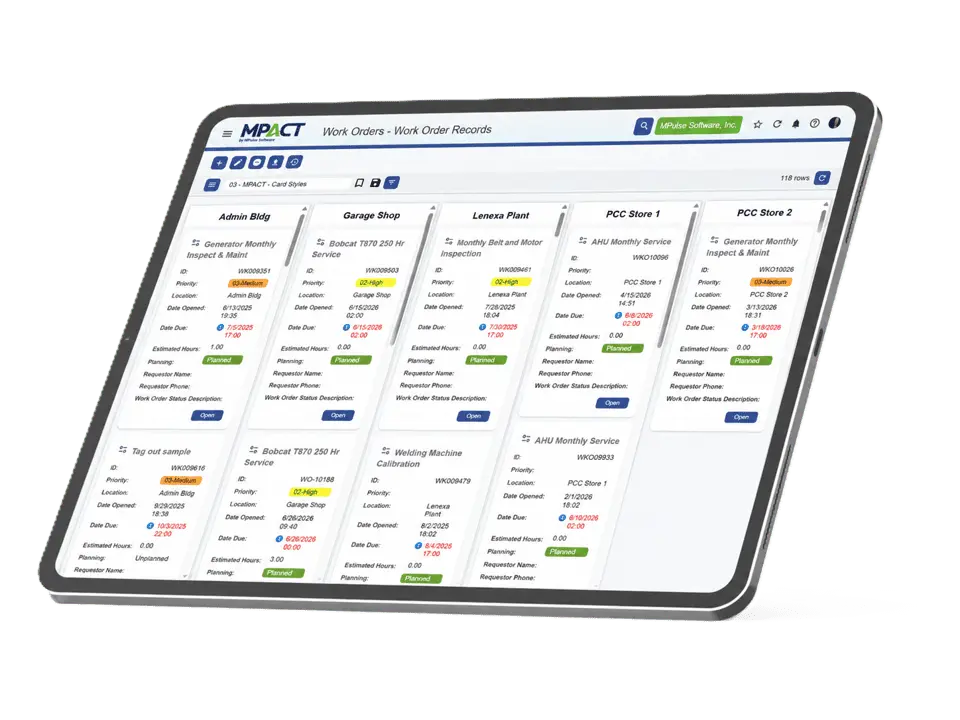
Color-coded grids and filterable views show ranked work to everyone with access. Dispatchers assign against the same ranking managers report on, and nothing critical waits quietly at the bottom of a list
What Changes When the Ranking Is Automatic
Before: triage happens in someone’s head, differently every shift. After: a request lands, inherits the asset’s criticality, gets a priority at intake, and takes its place in a ranked queue. The veteran dispatcher’s judgment is still there. It is just written down, applied consistently, and visible to the whole team. When leadership asks why the packaging line got fixed before the office HVAC, the answer is on the screen.
Frequently Asked Questions
RIME is a maintenance prioritization method that ranks work orders by combining asset criticality with work order priority, so limited labor goes to the work with the highest operational consequence first.
Criticality describes the asset and rarely changes. Priority describes the individual job and is set at intake. RIME scoring combines the two to rank open work.
Your team does, usually maintenance leadership with operations. Most teams rank by production impact, safety, compliance exposure, and repair cost, then review annually against downtime history in MPACT.
Yes. Scheduled work inherits the asset’s criticality like any other work order, which helps protect PM compliance on critical equipment when the week gets tight
See Your Assets, Ranked
Bring a list of your ten most important assets to a demo. We will set criticality with you and show you the ranked work list MPACT builds from it. MPulse Software has built maintenance software since 1995, and nine out of ten customers renew every year.