Food and Beverage CMMS That Passes the Audit and Makes the Run
In food and beverage, maintenance answers to two judges: the production schedule and the auditor. MPACT CMMS by MPulse Software keeps lines running with preventive maintenance that fires on time, and keeps records complete enough that audit prep is a lookup instead of a scramble. For an evaluation guide, see choosing a CMMS for food and beverage manufacturers.
The first clock is production: changeovers, seasonal peaks, and lines where an hour of downtime is measured in spoiled product. The second is compliance: sanitation schedules, inspection records, and the documentation an FDA or third-party auditor expects to see without excuses. Most maintenance systems serve one clock. Food and beverage needs both.
What Maintenance Looks Like on the Plant Floor
Sanitation and inspection PMs that cannot slip
Time and calendar-based schedules generate the recurring sanitation and inspection work automatically, with escalations when something passes its threshold. The task that protects the audit never depends on someone remembering it.
Downtime tracked where it hurts
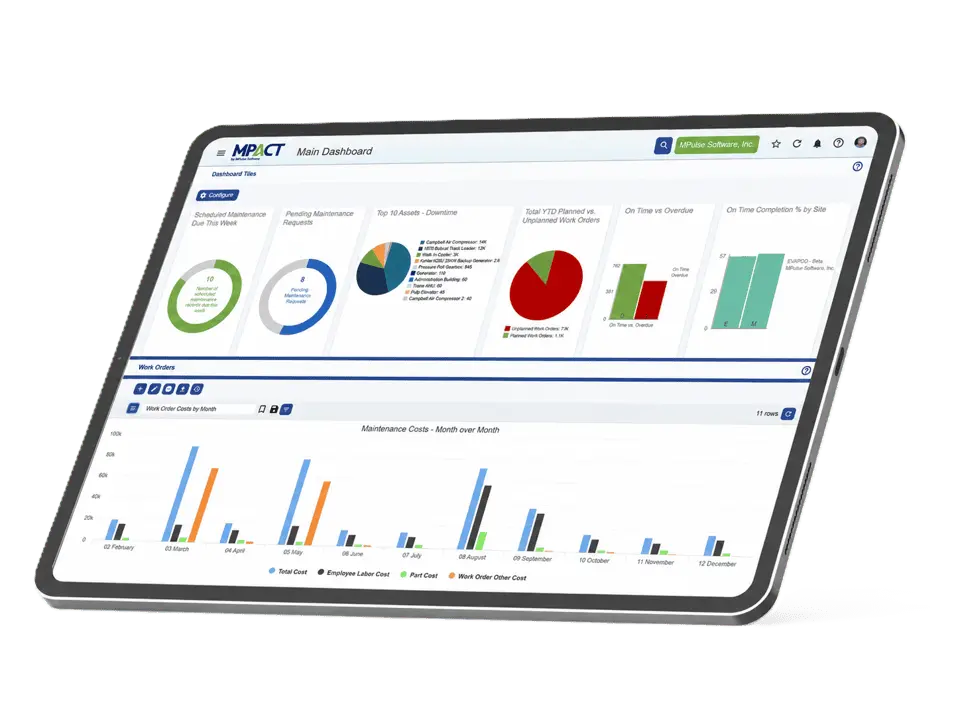
Log downtime per asset and see which equipment costs the most production. Failure and repair codes turn recurring problems into patterns you can end.
Records an auditor can follow
Checklists with required fields make closeout documentation a condition of finishing. Completed work orders keep their tasks, readings, and attachments, so the sanitation record from March is exactly where it should be in September.
Parts for the line that cannot wait
Real-time inventory with part-to-asset tracking keeps critical spares stocked and attributed, and suggested stock orders where enabled catch replenishment before the shortage stops a run.
MPulse Software has supported maintenance in regulated industries for more than 20 years. MPACT carries the essentials forward: complete work histories, documents attached to assets and jobs, permissions that control who touches what, and reporting that exports to PDF, XLS, or CSV when the auditor or the plant manager asks.
Frequently Asked Questions
How does MPACT help with food safety audits?
By making the records automatic: scheduled sanitation work generates and tracks itself, required fields enforce documentation at closeout, and complete histories with attachments live on every asset. Audit preparation becomes retrieval, not reconstruction.
Can MPACT schedule sanitation separately from mechanical PMs?
Yes. Work order types and groups keep sanitation, inspection, and mechanical maintenance organized separately, each with its own schedules, checklists, and reporting.
Does MPACT work across multiple plants?
Yes. Multi-site management with location-based permissions runs each plant’s maintenance locally while leadership sees across the network, including parts balancing between locations.
Make the Auditor's
Visit Boring
Bring your sanitation schedule and your last audit’s pain points to a demo built on your own operation.