
Benefits of Unlimited CMMS User Licenses

Traditionally, software is sold as a per-seat license. You’ve probably been buying software this way since your first computer. Of course, per-seat licensing requires you to buy another software license when you hire a new employee, shift a current employee’s responsibilities, or increase your staff. But that’s not efficient for large companies with a lot of employees who play different, and often changing, roles. What’s a ULA? An unlimited license agreement (ULA) is an arrangement in which a software user pays a single up-front fee to get as many licenses as they want for a specified set of software products over a fixed time frame. It’s a popular option for businesses who know their team is expanding during that time period. Benefits of Unlimited Software License Agreements ULA agreements work best for companies that expect growth through normal business operations. It makes it easier to be a multi-location business and not worry about user caps. For companies expecting to grow during a specific period of time, a ULA offers… significant cost savings more convenience easier management and administration MPulse Infinity Tier MPulse created our Infinity Tier—unlimited CMMS software licenses, so you never have to worry about software licenses again. The MPulse Infinity Tier is available with all our software editions, whether you decide to purchase or go with SaaS, and whether you choose locally installed or hosted. You also can combine MPulse Infinity Tier with our Role-Based Access Control feature to help your organization control access to specific CMMS information based on a user’s role and responsibilities. Unlimited License Agreements vs. Concurrent Licensing For smaller companies, MPulse’s concurrent user licensing is a different approach with the potential to save you money. The number of concurrent user licenses you need is based on the number of users accessing the software at the same time. Let’s say your team has 30 people. You have 18 people on the day shift—10 technicians, three parts room employees, two admin assistants, one foreman, you, and your boss. On the night shift, you have another 10 technicians, one parts room employee, and one foreman. Because not all users will be accessing the system at the same time, you can reduce the number of software licenses you need by more than a third. So you’re not paying extra for users who use the software at different times or only need access occasionally. Want to know if MPulse Infinity Tier or concurrent licensing is the best choice for your organization? Contact us. We’re here to help.
Six Advantages of Role-Based Access Control

All organizations have sensitive information. Therefore, the information your employees see should depend on their role in the organization. This is where Role Based Action Control comes in. What is Role Based Action Control? Role-Based Access Control (RBAC) is a data filtering utility that puts record-level access control in your hands. With RBAC, you can easily adjust settings in your MPulse implementation so the right people—and only the right people—have the right access to the right records. Six Benefits of Role-Based Access Control Systems Role-Based Access Control puts record-level control in your hands. As a result, your personnel will only see the records relevant to their unique workloads. With RBAC, you can experience these six advantages… Reduce errors in data entry Prevent unauthorized users from viewing or editing data Gain tighter control over data access Eliminate the “data clutter” of unnecessary information Comply with legal or ethical requirements Keep your teams running smoothly Role-Based Access Control: Why You Need It Removing information “clutter” can significantly streamline data access for your teams. That means your employees can access the details they need faster—helping them work more effectively. Role Based Access Control Example MPulse customer FORTRUST uses MPulse RBAC so its data center maintenance personnel see only the records relevant to their unique workloads. As facility maintenance professionals, their employees have very specific job duties. With Role-Based Access Control, however, their plumbers only see plumbing work orders. Their electricians only see electrical work orders. Another customer with multiple facilities set up their RBAC based on location. So the maintenance team at their Phoenix facility only sees work orders for that site, while the Denver team only sees the work orders for their location. Why Role-Based Access Control Is Good For Business With MPulse RBAC you can be sure your employees get access to what they need—and only what they need. RBAC best practices also help you easily adjust settings to… Filter data according to departments, work order types, locations, or other fields. Assign roles so people see only their operating unit’s information. Choose which data are global, and which are unique to a group. Define an unlimited number of custom filters. Automatically link data to a user’s area of expertise. Increase productivity because employees can access what they need—and only what they need. As a result, RBAC gives your organization centralized control and enhanced security. And that’s very good for business. Learn more about how Role-Based Access Control can help your organization. Contact us. [related-content]
Integrating Microsoft SQL Server Into MPulse

Sometimes your maintenance team needs data from other departments, which use different software. And, other departments often need your maintenance data in their systems too. One common data source is Microsoft SQL Server, a relational database management system developed by Microsoft. Microsoft SQL Server supports a wide variety of transaction processing, business intelligence and analytics applications in corporate IT environments. Software integration between Microsoft SQL Server and MPulse makes it easier to gather and share data between the different systems. Luckily, using the Microsoft SQL Server with MPulse is easy, with a little help from MPulse DataLink. Connecting Microsoft SQL Server Integration Services and MPulse As a database server, Microsoft SQL Server’s primary function is storing and retrieving data as requested by other software applications. Sometimes those applications run on the same computer, or other times they connect across a network and/or the Internet. Microsoft markets at least a dozen different editions of Microsoft SQL Server aimed at different audiences, and for workloads ranging from small single-machine applications to large Internet-facing applications with many concurrent users. Software integration with your edition of Microsoft SQL Server and your MPulse CMMS software enables you or your IT team to quickly and easily move data in and out, depending on your needs. MPulse connects to a SQL server analysis services database via MPulse’s DataLink Integration Adapter feature. That makes this integration easy, enabling users to do things like… Import data to the CMMS software from files, databases, or other applications Export data from the CMMS software to other applications, files, or databases Schedule imports and exports based on times or file changes Save “mapping profiles” to your data sources and targets Benefits of Integrating with Microsoft SQL Server Tight integration between CMMS software and your other business-critical applications and data stores like Microsoft SQL Server will do more than reduce hassle. You’ll also enjoy these benefits… Fewer errors due to manual data entry Reduced data input redundancy Faster response times to maintenance problems Near real-time monitoring of critical data The ability to grow with your company’s changing technologies Above all, MPulse DataLink Integration tools provide an easy way to connect your MPulse CMMS bi-directionally with Microsoft SQL Server, as well as accounting systems, meters and gauges, or other critical data sources. As a result, data sharing between MPulse CMMS and Microsoft SQL Server goes a long way in keeping your maintenance department running smoothly. Note that data integration is different from one-time import/exports, which commonly occur when the CMMS software is first integrated. Have questions? We’re here to help. Contact us for more information about integrating Microsoft SQL Server and MPulse CMMS software.
7 Time Management Maxims for Maintenance Managers
I wish I had a dollar for everyone I’ve talked to about implementing a CMMS program who said they didn’t have time to implement it. I’ve heard it so often, in fact, I sometimes wonder if I should be in the “Round Tuit” business instead. If you’re too busy to make critical improvements to your maintenance operations, you will pay the price. There’s no escaping it. Every once in a while, you have to take stock, invest time and money in improvements, and move forward. Invest a little time today to consider whether your maintenance tools and processes are ready for an upgrade. It matters how you manage a maintenance team by utilizing your time. Struggling as a maintenance manager to get a handle on everything you have to get done lately? Consider these 7 Time Management Maxims from the Maintenance Maven. 7 Time Management Maxims for Maintenance Managers We all have the same amount of time to work with each week. Ever wonder how that guy always seems to find the opportunity to hit the golf course or go fishing with his kids? He doesn’t have more time than you, he’s just using it differently. If you don’t have the time for important tasks, it’s probably your own fault. Guard your 24 hours like the crown jewels. Don’t let anyone else have control of your calendar. Lend it or spend it with your boss and family of course, but don’t give up control. Your time is one of your most important assets. Plan it out, allocate it, measure it, and, above all else, protect it. Time maintenance skills are vital in managing your maintenance staff. Money won’t buy you time. I’ve seen countless people buy a CMMS software in the vague hope that it will magically buy them more time—then fail to implement it and blame the system. The money you spend on time-saving technologies will be completely wasted if you don’t make the necessary up-front time investment to implement them. You can’t borrow time from the future. Procrastination is the surest path to work overload. It’s like borrowing money to get out of debt. It just doesn’t work. Learn the basic time-management maintenance skills. You CAN recoup time from the past. Have you ever told yourself after finishing a job, “I could do that in half the time next time”? Those bygone hours are lost, forever. The good news, though, is you can get them back by passing what you’ve learned forward. Take the extra few minutes necessary to clearly document your “lessons learned” in your CMMS. The next time you or someone else repeats the job, they’ll do it more quickly and efficiently. Time makes a great “yardstick.” Because units of time are understood and valued (with some variance) across cultures and up and down the organizational ladder they generally help build consensus around the value of activities and projects. Time forecasts and expenditures are key inputs to measures of productivity, quality, dependability, and efficiency. Beware the subjective nature of time. Never rely on your “gut” to measure time when it comes to maintenance operations. “It feels like it’s been a while since we lubed those bearings,” is a sure road to equipment failure.
Root Cause Analysis Prevents Problems Before They Occur

A reactive maintenance strategy simply means when something breaks, you fix it. Many maintenance departments still use reactive maintenance today. However, maintenance managers know the difference between fixing something and understanding why it broke. Organizations use root cause analysis as a tool to solve, and eventually prevent, underlying issues rather than putting out fires when something breaks. Maintenance personnel use these same principles in their work too, although sometimes more instinctively. Let’s talk about how root cause analysis can streamline your business and help improve your maintenance strategy. Root Cause Analysis Explained Root cause analysis refers to the process of discovering the root causes of problems in order to identify appropriate solutions. This concept likely sounds very familiar to maintenance professionals because of the nature of maintenance work. For example, experienced maintenance techs can repair an asset and also understand the reason it broke in the first place. That firsthand knowledge gained from experience is the basis of root cause analysis in plant maintenance. It’s just a more formal process. How to Perform a Root Cause Analysis Root cause analysis in plant maintenance can show where a failure occurred and why. That requires… Identifying the root cause of the failure Understanding how to fix the problem Applying this knowledge to prevent future failures This type of primary source analysis fits naturally in the maintenance department. Let’s take a simple, yet common issue—changing the fluid or oil in a piece of equipment. You can apply root cause analysis in this situation with this five-step process. Identify the problem. An asset failed. During a principal trigger inspection, you determine the viscosity of a lubricating oil or fluid has degraded. This degradation caused a part to overheat and fail, the equipment became unusable, and production stopped. Collect data. Next, you collect data on the failure. In our simple example, you note that the fluid was not replaced in a timely manner. Using CMMS software, you know exactly what occurred and when—or what didn’t occur and should have. Confirm the cause of the failure. After collecting the data, you confirm the cause of the failure. In this case, you recognize the symptoms of overheating due to a lack of lubrication, and then verify the cause. Identify the solution. It’s possible there’s more than one solution, or a solution requires multiple steps. Additionally, you may have to prioritize solutions. In this case, you decide establishing or adjusting the PM schedule to replace the fluid is the most logical first step. Monitor and verify the solution. Again, you need good data here. CMMS software can help you track maintenance tasks and the results. In this case, you schedule inspections to make sure your solution worked and pull historical reports on the maintenance work at specific time periods. What Are the “5 Whys” of Root Cause Analysis? Root cause analysis requires understanding the “why” of a failure. But, as maintenance professionals know, failures can have multiple causes—and one failure can be the cause of another. Continuing with our simple example, we can dig deeper using the 5 “whys” to get to the heart of the matter. Why #1: Why did the equipment fail? Answer: A part overheated. Why #2: Why did the part overheat? Answer: The fluid or oil deteriorated to the point that the lack of lubrication caused the part to overheat. Why #3: Why did the fluid or oil deteriorate? Answer: It wasn’t changed at the recommended time. Why #4: Why wasn’t it changed? Answer: The PM was missed or not scheduled. Why #5: Why was the PM missed or not scheduled? Answer: The schedule wasn’t set up properly in the CMMS software. Asking “why” eventually leads to the solution—in this case setting up a schedule or improving the notification process. Note that while we went through five “whys,” you could go through more. For example, Why #6: Why wasn’t the schedule set up properly in the CMMS software? Answer: The team wasn’t properly trained and made a mistake. Note that each “why” has a partial solution. Getting to the root of the failure, however, prevents it from happening again. Using Root Cause Analysis to Improve Maintenance Root cause analysis helps the maintenance team move from reactive to proactive maintenance. As a result, you can make better use of your team’s time and resources. CMMS software helps with accurate information on what’s impacting productivity, profitability, and corporate. And with that increased capability comes increased opportunity to improve organizational performance at all levels, including the maintenance department. CMMS software is the best tool you have for gathering, analyzing, and reporting data about your equipment and your team. And by using that data, you can make decisions based on hard evidence, instead of perceptions or assumptions. Best of all, the cumulative nature of CMMS data means you can ask different questions in the future—ones you might not even think about today. Find out how MPulse CMMS software can help your maintenance team use root cause analysis. Leave a comment or contact us.
Expand Your CMMS To Multiple Locations

Expand your CMMS to multiple locations easily and avoid unique challenges. You want to ensure your maintenance processes, reporting needs, and data are the same at each site. As a result, you need careful planning for a successful implementation across all locations. Start by following our tips for successfully implementing a multi-site CMMS system. 10 Steps to a Successful Multi-Site CMMS Implementation Putting CMMS software in place across multiple locations can seem daunting. Follow these 10 steps to get through planning, data migration, training, and “go-live” day on each site. 1. Define your successful implementation You need to know where you’re going to get there. Take the time to visualize the end result, so you have a goal in mind before you start. Who will use the software and why? What data do you need to collect? What reports do you need? Who will be in charge of what at each location? 2. Define user groups and workflows Develop a detailed list of each user group (i.e., managers, technicians, administrators, support personnel, IT, etc.) and how they’ll use the system. Also, identify different user groups at different locations, if necessary. 3. Determine what data needs to be imported You might have old data that you want to include in a new system. Identify that data now. Note that some people prefer to start fresh. Your legacy data and old work orders remain where they are for historical reference, and you simply add assets, parts, and preventive maintenance schedules to the new system. 4. Review and/or import data collection Clean data pays off in accurate reporting later. Start by taking the extra step of reviewing the data before you import it. Sometimes you can do this task yourself or enlist the help of a power user or an internal IT specialist. But if that’s not the case, hire some help. 5. Design reports and a database layout With CMMS software, every work order builds up a treasure trove of maintenance data in your CMMS database. Your long-term goal should be to turn your maintenance data reports into actionable insight. Know what you need to know. That will help you design the data you collect and the way you report on it. 6. Develop a training plan and curriculum Probably one of the most important—and overlooked—steps is training. However, teaching your staff members to use your new CMMS software pays off with every work order. Data accuracy and speed will improve, and your job will be easier because of it. Look to your CMMS vendor for help, if you need it. 7. Choose the flagship location to serve as the primary site model for implementation Pick one location that will serve as the flagship site. You’ll go through the implementation process here first. Identify problems, and get them worked out now, before you go live with your new CMMS software. 8. Test primary site model and make revisions as necessary Verify if all field names are correct; the correct data is in the correct fields; assets lists are complete; parts and inventory lists are complete; scheduled tasks have transferred correctly; and key historical data is available. If you need to make changes, this is the time to do it. 9. Go live You made it! As your team starts using the software for their work, take the time to make sure everything worked the way you wanted. The work you put in here will pay off when it’s time to duplicate the process at another location. 10. Repeat for each additional location Take your implementation plan from your primary site and repeat for each site. The Essential Guide to a Multi-Site CMMS If you want to standardize your workflow processes and reporting across locations, MPulse Multisite Connector will get you there. You can save time and money at every site (and for the organization as a whole) by using MPulse to… Track work orders, breakdowns, asset health, and other key metrics Streamline stocking, ordering, and other inventory processes Gather and report data Need help? We’re here for you. The MPulse Multi-site Implementation Program (MSIP) is a CMMS implementation program designed to take you from software purchase through successful implementation across two or more site locations, without missing any critical steps along the way. If you want to standardize your workflow processes and reporting across locations, this MPulse implementation program will get you there. MPulse MSIP gets you through planning, data migration, training, and “go-live” day on each site. As a result, your processes, reporting needs, data types, and data imports are the same at each location. Then we provide tailored recommendations and follow-up so you can measure your progress against goals. Designed to accelerate your software implementation and reduce your ramp-up time, MPulse MSIP minimizes disruptions and helps you achieve a faster return on investment. [related-content] Learn more about how an enterprise CMMS can help you manage multiple locations. Contact us.
What We’ve Learned about the Industrial Internet of Things

What is the Industrial Internet of Things? The Industrial Internet of Things (IIoT) will change the way maintenance professionals collect asset information and exchange data with other systems. The IIoT describes systems that gather information directly from multiple devices. For example, these devices can include computers, vehicles, smartphones, appliances, building automation systems, production equipment, and almost anything else with a sensor. This valuable data will shape your maintenance team’s productivity and efficiency. It also means more real-time data to provide better insights into your assets, how they’re working, and what they’re really costing you. Growth of IIoT Mordor Intelligence anticipates growing opportunities in the Internet of Things. The global IoT market is expected to reach a value of USD 1,386.06 billion by 2026 from USD 761.4 billion in 2020 at a CAGR of 10.53%, during the period 2021-2026. Factors spurring that growth include… development of wireless networking technologies emergence of advanced data analytics reduction in the cost of connected devices an increase in cloud platform adoption While those are impressive numbers, adoption of the IIoT has been slower than many predicted five years ago. IIoT opportunities and impacts change as the physical and digital worlds of the organization merge. Here’s everything you need to know about the IIoT and the challenges for your organization. Common Challenges with IIoT Experience The skillsets needed for the IIoT will require retooling for your maintenance team. The implementation of the IIoT means more data (a great deal more) in real time, and maintenance personnel will need training to take advantage of the value these data streams deliver. “Big data” analytics provide a means of turning the ever-increasing stream of asset data into actionable information. Once your team gathered data on the floor at the machine. However, the IIoT means that data will appear on a computer screen. One of the essentials of the Industrial Internet of Things is the ability to use that data efficiently to make improvements to maintenance. Technology The software, sensors, and controls running today’s facilities and equipment are outdated and difficult to upgrade. Companies cannot readily incorporate new features and improvements. Limited integration between internal systems (managerial apps, plant data sources) and external partners creates data silos. Plus, limited embedded computing or intelligence control exists at the device, product, or plant level. However, network connectivity is rapidly improving across factories and other facilities, and a wider range of providers is offering higher-capacity, lower-cost cloud-based storage. Smaller, more reliable, and more intelligent sensors for virtually all types of assets and measures are becoming more readily available at affordable prices. Additionally, modern CMMS software supports data collection from IoT devices by analyzing real-time readings so maintenance teams can react faster. Security The number one challenge to IIoT implementation is concern about security. If your operations are exposed to the world via the Internet, how can they be protected? Of course, the anxiety is understandable. Aging operating systems and vulnerable operational technologies pose security risks because they cannot be easily retired or replaced. As technology evolves, however so does security. There are already best practices and a wide array of evolving technologies companies can employ to minimize risk. But it’s important to remember that organizations don’t necessarily need to expose metrics or controls to the Internet to move forward. While this doesn’t eliminate the threat altogether, it does lessen it considerably. While there is always some natural resistance to change, the manager’s job will be to help their team get past this resistance and stay ahead of the curve as technology continues to advance. We expect the IIoT will become increasingly important as younger employees, who are very comfortable with technology, enter the field. The IIoT is here, whether you are prepared or not. It’s time to get ready. Contact us for more information.
The Future of Maintenance Management: Mobile Technology
Mobile technology is the future of maintenance management. This software usage is growing rapidly across industries and organizations, and those of us in the maintenance, repair, and operations (MRO) profession are no exception to the mobile technology future. It’ll come as no surprise to anyone who’s spent time in a public setting that most Americans now own a smartphone. In fact, according to the Pew Research Center, 91% of American adults have a cell phone of some sort, and 56% of them have smartphones. Benefits of Mobile Technology for Maintenance Management The growing market for smartphones may seem “old hat,” though, compared to the latest and greatest device—the tablet. Pew reports it’s one of the fastest growing new technologies today, with 35% of Americans older than 16 owning at least one. That’s almost twice as many as 2012. Multiple Functions with One Device While smartphones and tablets started as consumer products, they’re quickly transforming the business world. The flexibility of these devices has changed the way we work. Both run on the concept of “the app”—a mobile-enabled software program that allows one device to provide multiple functions. With apps, a smartphone is able to replace a host of other technologies: Cell phone Desktop or laptop computer (for many functions) GPS device Camera Gaming console Pager Video camera, And much more. Tablets can do many of the same things as smartphones. And with their larger screen size, improved portability, and dead-simple ease of use, many people are beginning to use them exclusively instead of laptops. Intuitive Hardware and Software Mobile device designers have focused heavily on improving ease of use, so it’s likely your employees will need minimal training. Many will have already used smartphones and tablets in their personal lives, and increasingly standardized application interfaces mean that lessons learned navigating one app are easily transferable to new ones. You gain these benefits of mobile technology only if you choose devices that support the leading mobile operating systems. According to StatCounter, the two leaders, as of September 2024, were Google’s Android OS (72% market share) and Apple’s iOS (28%). Other manufacturers are far behind with less than 1% market share each. Improved Bandwidth, Better Access The explosive growth of mobile technology is being matched by growing bandwidth and better access to it. You can now connect to the Internet, and virtually any business application, from almost anywhere, via Wi-Fi or cellular connection. Improved security features also mean you can safely control access to your data, even when you aren’t in the office. More Usable Mobility Mobile technology is a natural fit for maintainers. With smartphones and tablets, you can capture information on the spot—instead of jotting it down on paper to be input later. With hardened cases by companies like Incipio and Otterbox/LifeProof, you can use devices in dirty, hazardous industrial environments. More choices of screen sizes, too, mean there are models that work well for larger hands—and older eyes. Using mobile technology software in business allows you to access critical information easily without calling back to the office or getting “plugged in.” Imagine your staff being able to do these activities from anywhere: Open, access, and complete work orders Send or upload photographs of failed components View available parts inventory Access historical data on assets Get up-to-the minute alerts and reports Update inventory using barcode scanning and online ordering systems Access maintenance and repair manuals Record locations automatically with a GPS-enabled device. What Can Mobile Technology Do for You? The potential and benefits of mobile technology software are huge for maintenance professionals. Imagine one application that works wherever you need it to, whether it’s on a desktop computer, a laptop, a smartphone, or a tablet. The future of mobile maintenance management starts with CMMS. The combination of mobile devices with CMMS makes for a powerful tool to help you get the job done where the maintenance actually happens. Learn how to use MPulse CMMS Software virtually on any device! Contact us!
CMMS Software and 21 CFR 11 Compliance, Part 2: The Tools You Need

My last post detailed CMMS software’s role in Title 21 CFR Part 11 compliance certification. In this blog, I’ll discuss why CMMS software is a great tool for companies looking to achieve 21 CFR 11 compliance certification, as well as other regulatory certifications like ISO, HIPAA, Sarbanes-Oxley, etc. If you recall, our friend Eric, a maintenance manager at a biotech company, was researching a maintenance software upgrade when his coworker brought up 21 CFR 11 compliance—a U.S. Food and Drug Administration (FDA) standard detailing how the agency will accept electronic records and electronic signatures as the equivalent to corresponding paper records. We learned about the three Title 21 CFR Part 11 compliance requirements (procedural, administrative, and technical controls) as well as the capability of CMMS software as a powerful tool for the technical controls of a compliant system. But what are those technical controls, and how does MPulse CMMS software support them? How Does CMMS Software Help with Title 21 CFR 11 Compliance? CMMS software excels at tracking the details of your increasingly complex maintenance operation. Because for regulatory agencies, if it’s not documented, it didn’t happen. MPulse Software, Inc helps promote and maintain CMMS compliance with the features your maintenance team needs, including… User-defined permissions, access, and login control that can integrate with your active directory Electronic signature support with limited access to a specific signature field to enter approval Preventive maintenance scheduling and documentation Corrective maintenance tracking and documentation Robust compliance reporting capabilities Automated data collection and archived work history Documentation of processes and procedures Hosting capability for third-party software that creates audit trails. It’s All About the Data CMMS software provides a reliable central repository for your maintenance and safety data. That’s why CMMS software is the right solution to help companies in the pharmaceutical, medical device, biotech, or related industries cope with complex requirements like 21 CFR 11. With MPulse Software, Inc, you’ll have a traceable history of completed maintenance tasks and documented policies to prove to the FDA that you’re acting in accordance with 21 CFR 11 requirements. And the best thing is, once you get your MPulse CMMS software set up correctly, the documentation takes care of itself, so you can focus on other important things—like maintenance. Learn more about how MPulse’s CMMS Media Management Feature can assist you with all your documents and files. We’re all in this together. What’s your experience with 21 CFR 11 compliance in the maintenance field? Leave a comment or contact me.
How to Roll Up Data From Your Multi-Location Business
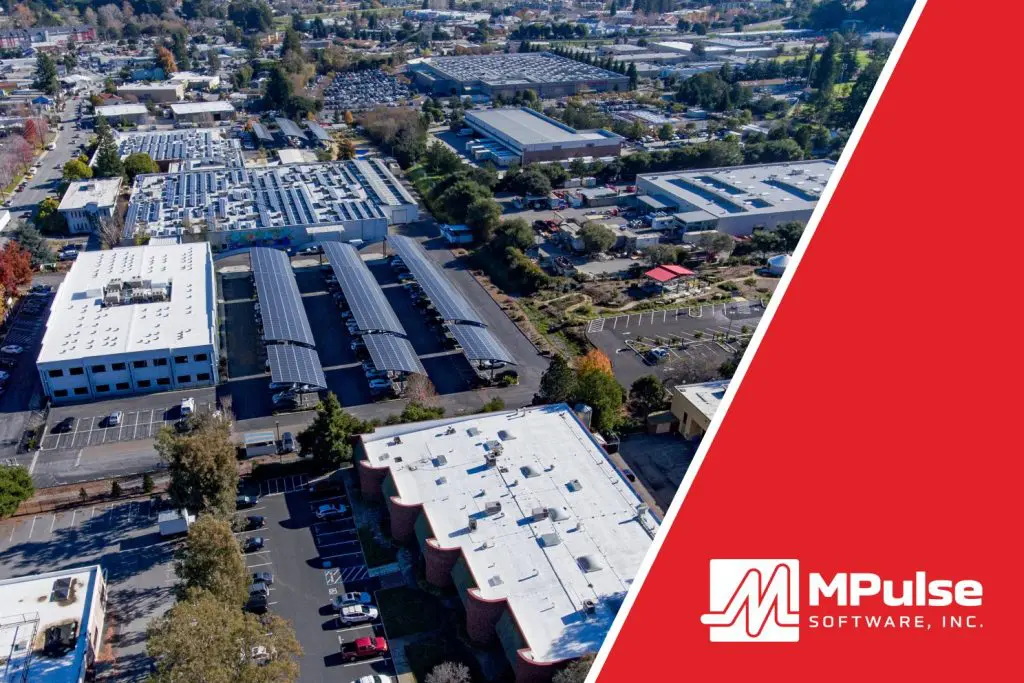
Managing maintenance across multiple locations holds unique challenges. Any organization with more than one location needs multi-site management strategies that actually work. CMMS software can help you standardize your workflow processes and reporting across locations. For example, these locations may include different storerooms, warehouses, offices, buildings, territories, regions, areas, etc. Here’s our how-to guide on how businesses with multiple locations/businesses can roll up their data to get a bird’s eye view of the business. How to Manage Multiple Business Locations The best way for multi-location brands to manage local business data is to connect all the locations across your distributed enterprise with the right software. As a result, you can have truly global settings, global reporting, and enterprise-wide inventory search and transfer. MPulse Multisite Connector provides a universal framework to connect all the locations across your distributed enterprise. Thus, you’ll know what’s going on at every site across the company with just a few clicks. With each work order or purchase request, MPulse collects the data you need for making cost-effective decisions. Data collection and reports are customizable, so you collect the information you need. Most importantly, when an emergency arises, Multisite Connector makes it easy to access this critical data when you need it most. How to Effectively Run a Multi-Location Management Strategy Multisite Connector ensures your maintenance processes, reporting needs, and data are the same at each location. Three major features are vital to any organization managing maintenance data in multiple sites. These features are… Enterprise Asset Status Board: Provides a single-screen graphical view that shows the health of assets across your enterprise. Enterprise Inventory Transfer Manager: Enables you to find inventory in storerooms across your enterprise, so your maintenance team can request, retrieve, and fulfill in a smooth transfer process. Enterprise Reporting: Create roll-up reporting across MPulse instances and across your entire enterprise, helping your organization make decisions based on hard data. Improve Location Management with MPulse’s Multisite Connector Tool Multisite Connector can provide a guide to managing data for multi-location brands. Therefore, you can save time and money at every site (and for the organization as a whole) by using MPulse Multisite Connector to… Track work orders, breakdowns, asset health, and other key metrics Streamline stocking, ordering, and other inventory processes Gather and report data You might think that only large organizations can afford a tool as powerful as Multisite Connector. However, MPulse has customers of all sizes who are reaping the benefits of standardizing maintenance across sites or locations. Learn about MPulse’s full range of available software features and how to reap the rewards of CMMS software across your entire enterprise. Contact us today to find out how MPulse can help with digital brand management strategies for multi-locations.