
We’ve all been in situations where technology exceeds our needs. Do you need a refrigerator that tells you when it’s low on milk? It’s a cool feature, but it’s providing a solution to something that may not be a real problem. And the cost of that cool feature may be more than it’s worth to you.
In a similar vein, organizations need to determine when technology will pay off—and when it’s simply not what they really need. That’s often the case with predictive maintenance.
Don’t get us wrong. Predictive maintenance sounds cool. Want to know when your industrial machinery starts to break down and fix it before it actually fails? Sign us up.
But if you’re not a Fortune 500 company, the payoff of such precise monitoring doesn’t pencil out when you consider how much infrastructure you need for predictive maintenance. See also: Signs Your Company Is Ready for Predictive Maintenance.
Cost of Predictive Maintenance
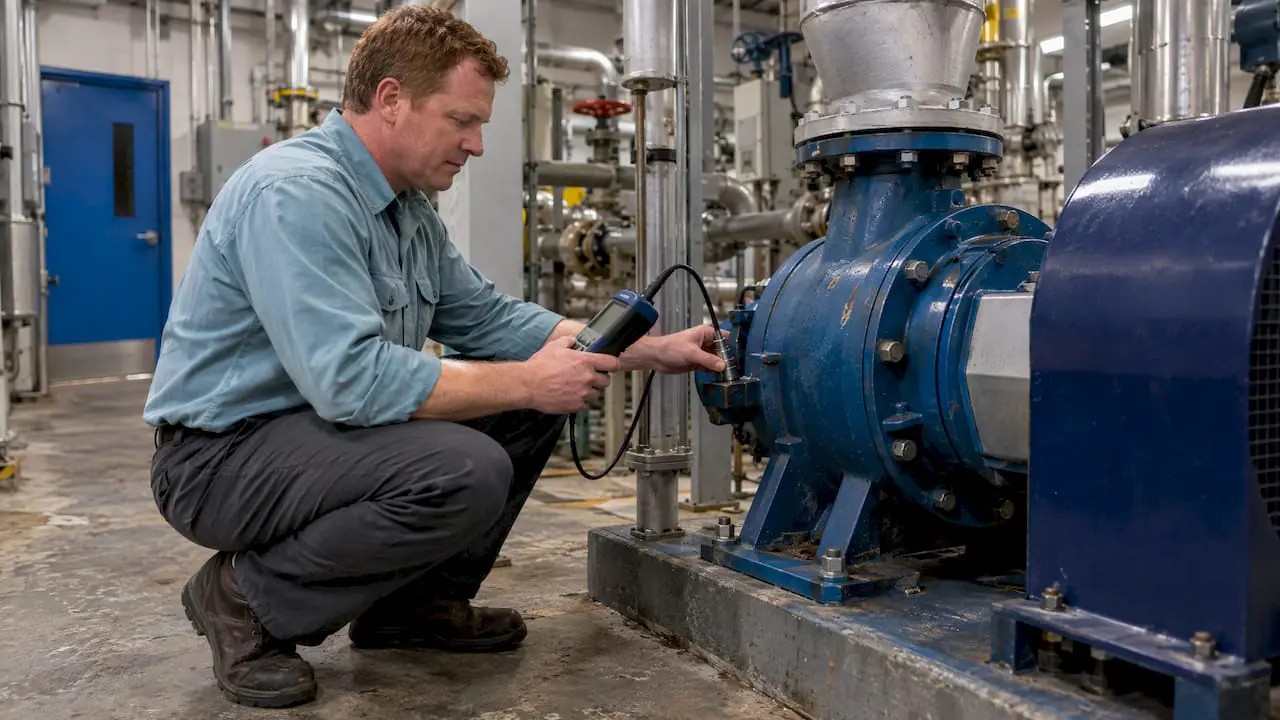
One of the biggest problems with predictive maintenance—and the top obstacle to implementing it—is the cost. Predictive maintenance requires a combination of gauges, meters, or other measurement techniques like infrared thermography, vibration analysis, or lubrication analysis. Plus, you need to store the data in CMMS software. And, it requires some technical knowledge to use it correctly, so factor in consultants and training costs.
Like any business investment, you need to calculate the return on investment (ROI) to determine if the cost will pay off in the long run.
Note that predictive maintenance is gaining more attention as organizations want sensors on key assets and use the power of the Internet of Things (IoT) to collect the data to feed into their CMMS software. CMMS combined with IoT is an excellent way to help maintenance teams to foresee asset failure and proactively perform maintenance. But you don’t need predictive maintenance to benefit from IoT data.
Related: What Maintenance Teams Need to Know about the Internet of Things (IoT)
Time Required to Set Up Predictive Maintenance
Money isn’t the only thing that might not pencil out in favor of predictive maintenance. If there’s one thing that’s in short supply around the maintenance department, it’s time.
Implementing predictive maintenance requires time to research solutions, convince management, overcome concerns and obstacles, buy equipment, set it up, test it, train employees, and much more.
Again, if you don’t have that time, predictive maintenance isn’t for you.
Start with Preventive Maintenance
It turns out “predictive” means different things to different people. A lot of customers say “predictive maintenance,” when they really mean preventive or condition-based maintenance.
Preventive maintenance (PM) software is usually the right choice for small and medium-sized companies. It’s routine, scheduled maintenance performed to lessen the possibility of equipment or asset failure.
Preventive maintenance software will generate a schedule of PM tasks, making it simpler to follow the manufacturer’s guidelines. These schedules and inspections help spot issues before they occur.
Don’t Fall for Buzzwords
It’s important not to get caught up with industry buzzwords. Instead, focus on the tried and true ways to manage maintenance.
You can make the biggest difference with maintenance scheduling software and preventive maintenance strategies that can help…
- Reduce emergency downtime
- Monitor parts inventory
- Track warranty claims
- Decrease product quality issues
- Improve operations planning
- Promote safety
- Lengthen asset life cycles
- Reduce maintenance costs
Predictive maintenance isn’t for everyone. And software for preventive maintenance or facility maintenance is the best place to start.
Have questions? Talk to people who understand the challenges of maintenance. Contact us.