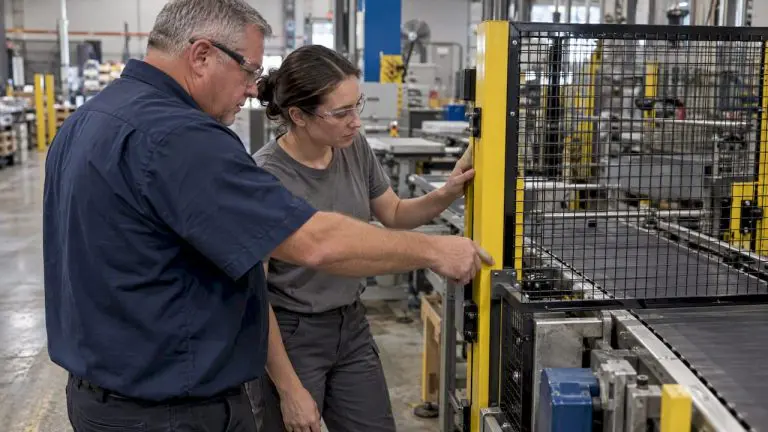

The most reliable way to prevent unqualified assignments is a single maintenance-aware qualification register that links credentials to work orders and enforces renewal rules automatically. This approach keeps us aligned with OSHA and NFPA expectations, and a CMMS platform like MPulse CMMS can run it. Done right, it delivers audit readiness, lower assignment risk, and renewal handling that does not depend on someone remembering a spreadsheet.
TL;DR:
- Require work order checks against task specific credentials, because role level certifications alone do not establish qualification for every hazard or piece of equipment.
- Set staged warnings before expiration, route renewals through a supervisor queue, and schedule alerts around each credential’s cycle, including NFPA’s three year recertification requirement.
- At renewal, upload and verify new evidence against the certifying body’s records; OSHA treats an expired certificate as no certificate for its holder.
- Use scheduled HR and learning system updates for slow changing records, but check current credential status in real time when dispatching safety critical work.
- Name an owner for each credential type, log evidence approvals, and retain prior qualification states so audits can establish who was qualified when work occurred.
Table of Contents
- Core capabilities a technician qualification tracking system must provide
- How to design renewal and expiry workflows that prevent lapses
- Connecting HR, LMS, CMMS, and field evidence into one data flow
- Step-by-step implementation plan for operations teams
- Ownership, roles, and governance for qualification records
- Why a maintenance-aware qualification layer prevents real operational and compliance failures
- How MPulse CMMS supports the qualification-tracking approach we recommend
- FAQ
- Sources
Core capabilities a technician qualification tracking system must provide
A dependable system starts with one register, not scattered spreadsheets and a filing cabinet. Every technician record should hold structured fields: credential type, certifying body, unique ID, issue date, expiration date, and a link to supporting evidence. When that data lives in one place, supervisors stop guessing which version is current.
Evidence management matters as much as the data fields. Scanned certificates, verification status, and version history need to travel with the record so an auditor can trace a credential back to its source document without chasing down a technician for a photocopy.
A working system also needs defined status states, not just “valid” or “expired.” Configurable thresholds for “expiring soon” let supervisors see risk building before it becomes a compliance gap.
Core capabilities to look for include:
- A single record per technician that consolidates every credential, certification, and training entry in one place.
- Document attachment and verification status so evidence is never separated from the qualification it supports.
- Configurable expiration thresholds that flag credentials approaching their renewal window.
- Automated renewal reminders sent to the technician, supervisor, or both, with an approval step before the record closes.
- Assignment-level checks that compare a work order’s requirements against the technician’s current qualification status before dispatch.
- Audit and compliance reporting that exports a defensible record of who was qualified, when, and on what evidence.
The operational control piece deserves particular attention. A system that only stores data is a filing cabinet with a login. A system that checks qualification status the moment a work order is assigned, and either blocks or flags the assignment, is what actually prevents an unqualified technician from showing up at a high-risk task. That check is what turns dispatch planning into a compliance control rather than a scheduling convenience.
Audit reporting ties it together. When regulators or internal auditors ask who performed a task and whether they were qualified at the time, the system should answer in minutes, not days. That capability is also what CMMS software brings to OSHA compliance work more broadly: the paper trail exists because the system built it as a byproduct of normal operation.
Pro Tip: Set your “expiring soon” threshold wide enough to cover your renewal lead time, including any required training class or exam scheduling, not just the certificate processing itself.
How to design renewal and expiry workflows that prevent lapses
The gap between dispatch and qualification opens when a credential expires between the day a job is scheduled and the day a technician shows up to do it. Closing that gap takes a workflow, not a reminder email sent once.
- Set staged alert windows. A common pattern uses staged warnings before expiration, escalating from a notice to the technician, to a notice to the supervisor, to a block on new assignments.
- Route expiring credentials into a renewal queue. Rather than letting expirations sit in individual inboxes, a queue gives supervisors a single list to work through and assign follow-up tasks.
- Re-verify evidence at renewal, not just at issuance. A renewed certificate should be re-uploaded and re-checked against the certifying body’s records, since OSHA treats an expired certificate as no certificate at all for the technician holding it, under the standard interpretation on recertifying technicians.
- Separate task-level requirements from role-level credentials. A technician’s job title might require a base certification, but a specific work order might call for an additional qualification, such as confined-space entry or a manufacturer-specific equipment credential.
- Document exceptions and temporary permits. When a supervisor approves a short-term workaround, that approval needs its own record, including who approved it, why, and when the exception expires.
Monitoring effectiveness matters as much as building the workflow. Track how many renewals complete before expiration versus after, and watch the average time between an alert firing and the renewal closing out. Those two numbers tell you whether your alert windows are wide enough and whether your queue is actually getting worked.
Pro Tip: Build your renewal queue around the certifying body’s own retention and reapplication rules, since some credentials, like the NFPA’s Certified Electrical Safety Worker designation, require recertification on a fixed three-year cycle, according to the CESW Program Overview.
Connecting HR, LMS, CMMS, and field evidence into one data flow
Qualification data rarely lives in one system by default. HR platforms typically hold hire dates and job classifications. Learning management systems track completed training modules. Vendor or certifying-body registries hold the actual credential status. Safety systems may hold incident history relevant to a technician’s current standing. None of those systems alone gives a supervisor the full picture at the moment of dispatch.
Integration patterns handle this differently, and the choice depends on how time-sensitive the check needs to be:
- Scheduled sync of records pulls data from HR and LMS systems on a regular interval, which works well for information that changes slowly, like job classification or completed onboarding training.
- Real-time API checks at dispatch query current qualification status the moment a work order is assigned, which matters for credentials with hard expiration dates and safety consequences.
Evidence capture benefits from multiple entry points: scanned certificates uploaded by administrators, QR or badge scans that let technicians present proof of credential in the field, and mobile uploads for crews working away from a desk. Each entry point needs a clear verification responsibility, meaning someone on the team confirms the document matches the credential claimed before the record is marked valid.
Data mapping is where a lot of integration projects stall. One system might label a field “certification expiry,” another “valid through,” and a third might not separate issue date from expiry date at all. Normalizing those fields into a consistent naming convention before connecting systems avoids a register full of mismatched or missing data.
Some organizations find that core HR and LMS platforms do not natively consolidate certificates, medical clearances, and renewal cycles well enough for maintenance use, and add a dedicated Employee Qualification Management layer to fill that gap. Whatever the architecture, the payoff is the same: a supervisor dashboard that shows current qualification status by technician, by site, and by task type, ready to export for an audit without manual reconciliation.
Step-by-step implementation plan for operations teams
Rolling out qualification tracking works best as a phased project rather than a single cutover, since it touches HR data, training records, and live dispatch rules at the same time.
- Scope the requirement. Inventory every role, every task type, and the specific credentials each one requires, then pull together whatever records currently exist, however fragmented.
- Choose the tracking layer. Decide whether a qualification module built into your CMMS fits your maintenance workflows, or whether a dedicated qualification management layer makes more sense for a complex, multi-site organization.
- Clean up and migrate data. Normalize credential names, attach evidence documents to each record, and set expiry rules that match each certifying body’s actual cycle.
- Configure alerts and dispatch rules. Build staged renewal reminders, set up the renewal queue, and decide which credential gaps trigger a hard block versus a supervisor warning.
- Pilot, measure, and scale. Run the new workflow at one site or one crew first, track results, then expand once the process holds up under real dispatch volume.
Useful KPIs to track from day one include time-to-compliance, meaning how long it takes a technician to move from an expired or missing credential back to current status, and the percentage of technicians qualified for high-risk task categories at any given moment. Relying on fragmented spreadsheets to answer those questions tends to hide the gaps until an audit or incident surfaces them.
A single maintenance-aware register that checks qualifications at the point of dispatch closes the gap between scheduling a job and confirming the technician assigned to it is actually current.
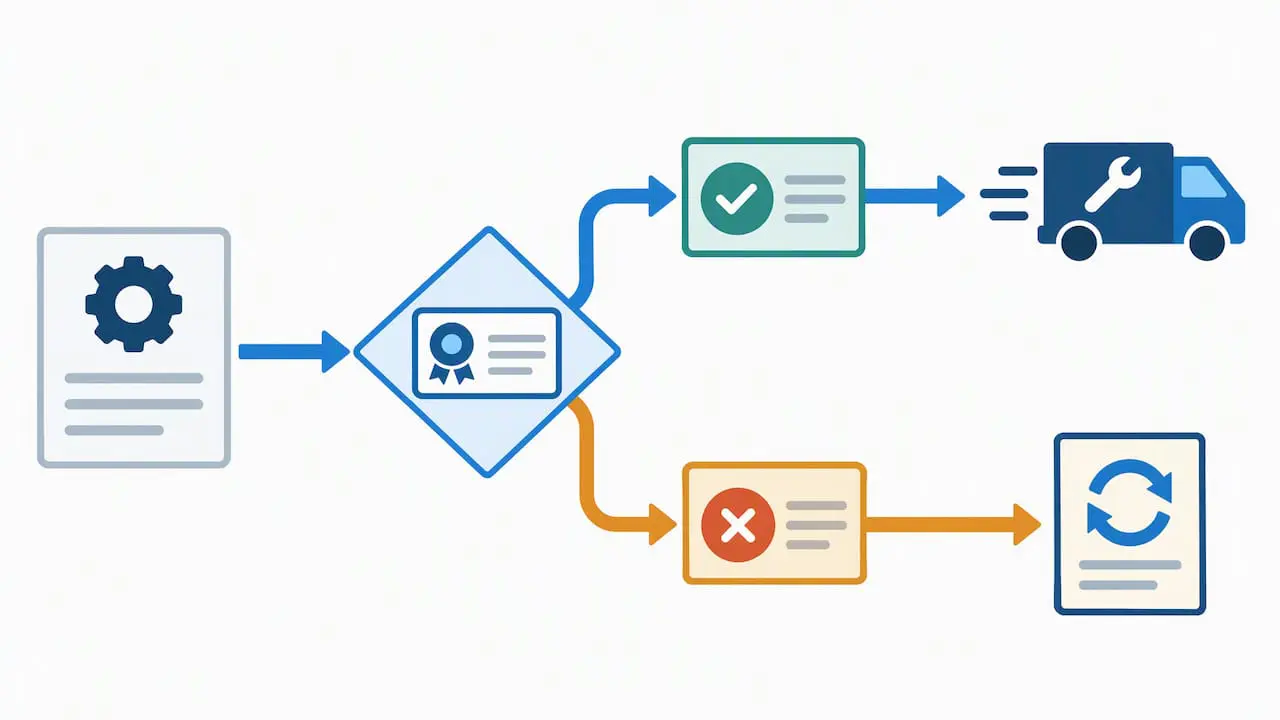
Before locking in a tracking layer, run through a short checklist: Does it attach evidence to every record? Does it enforce task-level rules, not just role-level ones? Does it integrate with your existing HR and LMS systems? Does it produce an audit export without manual rebuilding? If the answer to any of those is no, the gap will show up later, usually during an audit.
Ownership, roles, and governance for qualification records
Clear ownership prevents the most common failure mode in qualification tracking: two departments each assuming the other is keeping the record current. HR typically owns the employment and training-completion side of the record, while operations owns the task-to-credential mapping and the dispatch-blocking rules. A documented handoff, where HR confirms a hire’s base credentials and operations confirms task-specific qualifications, keeps both halves accurate.
Verifier roles need to be explicit as well. Someone has to be the trusted approver who confirms a scanned certificate matches a valid credential, and that approval needs to be logged, not assumed.
Governance essentials include:
- A named record owner for each credential type, so there is no ambiguity about who updates it.
- A defined verifier role with authority to approve or reject submitted evidence.
- A portable record format for contractors and transient workers, so a verified credential travels with them between job sites rather than resetting at every onboarding.
- Retention and version-history rules that keep prior qualification states available for audit, not just the current status.
- Field verification options, such as QR codes or badge scans, that let a supervisor confirm a technician’s status on-site without a phone call to the office.
Why a maintenance-aware qualification layer prevents real operational and compliance failures
The real cost of weak qualification tracking is not the audit finding. It is the assignment that goes wrong because nobody checked status before dispatch. OSHA’s own guidance treats qualification as task-dependent, meaning a generic certification does not automatically cover every job a technician might be assigned, and an employer is expected to define training requirements based on the specific duties and hazards involved, under the 1926.1429 qualification standard. A register that only tracks role-level credentials misses that distinction entirely.
Closing the dispatch-to-qualification gap can be a valuable change for operations teams. It costs little to configure once the data is clean, and it removes the most common point of failure: a supervisor assigning a job without a current, automatic check.
The gap between scheduling a job and confirming who is actually qualified to do it is where most compliance failures start, not in the audit itself.
Useful metrics for a supervisor’s dashboard include an expiry forecast showing upcoming credential lapses and the percentage of technicians currently qualified for high-risk task categories. Both numbers should feed directly into staffing and training decisions, not just compliance reporting. Tying renewal planning to a maintenance calendar, the same calendar that drives preventive maintenance scheduling, keeps credential renewals from becoming a separate administrative project.
— Mark
How MPulse CMMS supports the qualification-tracking approach we recommend
We built MPulse CMMS to support maintenance workflows and help teams manage assets, work orders, and planning. Our calendar interface supports maintenance planning alongside preventive maintenance scheduling.
For teams managing multi-system data, our DataLink Integration Adapter supports integrations, and our Technician License plan is available as part of our CMMS offering.
What we offer to help you get there:
- CMMS Implementation Services to configure qualification fields, alert thresholds, and dispatch rules around your actual task list.
- MPulse CMMS Training so supervisors and record owners know how to verify evidence and manage the renewal queue from day one.
- Expert Consulting Services for organizations with complex, multi-site credential requirements.
Start with the evaluation checklist from this guide, then compare our plans and pricing to find the edition that fits your site count and compliance load, or pilot the qualification module with a single crew before rolling it out wider.
FAQ
What qualifies you as a technician?
Qualification is task-dependent rather than tied to a single generic credential: employers must confirm a technician meets the specific training, certification, and hazard-awareness requirements for the exact tasks assigned, per OSHA’s qualification standard. A technician qualified for one task type is not automatically qualified for another that carries different hazards or equipment.
What is the best app for tracking certifications?
A useful option is a platform that centralizes certification records, automates renewal alerts, and checks qualification status at the point of work order assignment rather than storing data passively. CMMS platforms with built-in qualification tracking, such as our Technician License edition, handle this alongside maintenance scheduling so credential status and dispatch stay connected.
What is the highest paid technician?
Pay varies widely by trade, certification level, industry, and region, so there is no single answer that applies across technician roles. Specialized, highly regulated credentials, such as certain electrical safety certifications, tend to command higher pay than entry-level or generalist roles.
What is technician proficiency?
Technician proficiency refers to demonstrated skill and competency in performing specific tasks, which goes beyond holding a valid certification. Many organizations assess proficiency through skills evaluations, supervised performance reviews, and on-the-job assessments in addition to tracking formal credentials.
How often should qualification records be reviewed?
Review frequency should match each credential’s own renewal cycle rather than a single fixed schedule, since some certifications expire on a set multi-year cycle while others depend on task or process changes. Staged alerts before expiration give supervisors lead time to act regardless of the underlying cycle.
Sources
- Recertifying technicians who do audiometric testing and pulmonary function testing. | Occupational Safety and Health Administration
- Certified Electrical Safety Worker Program Overview