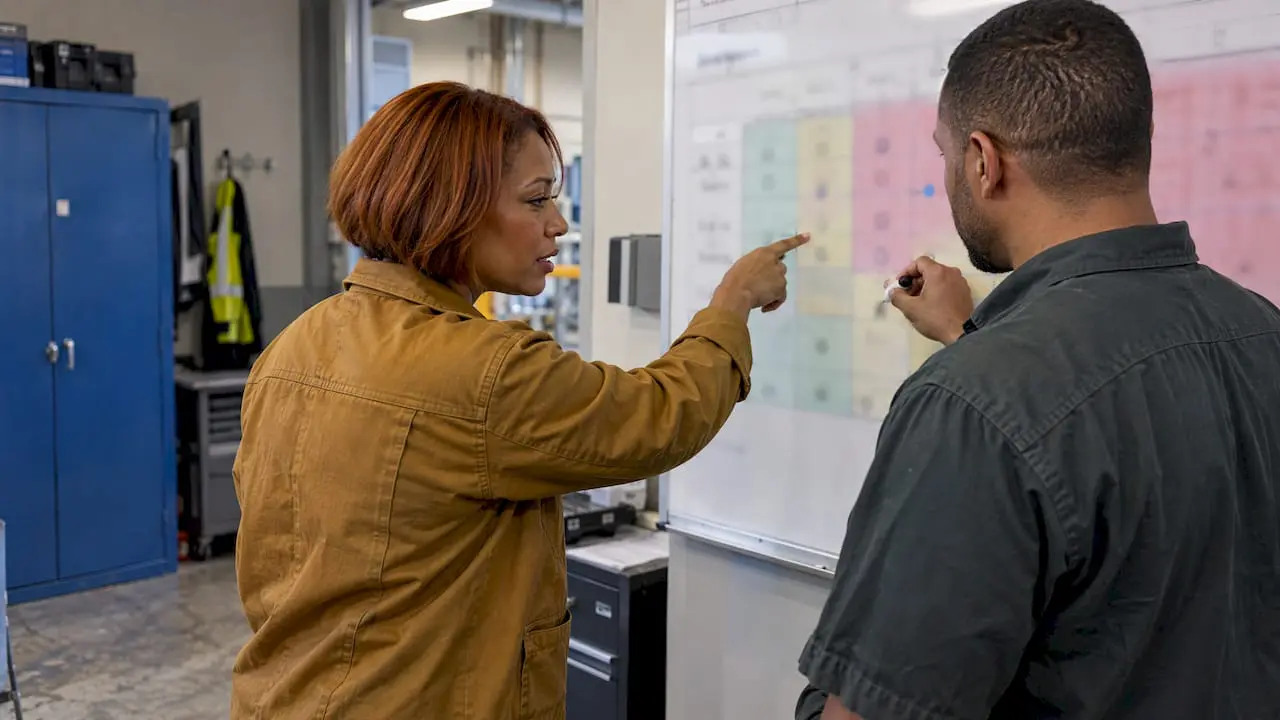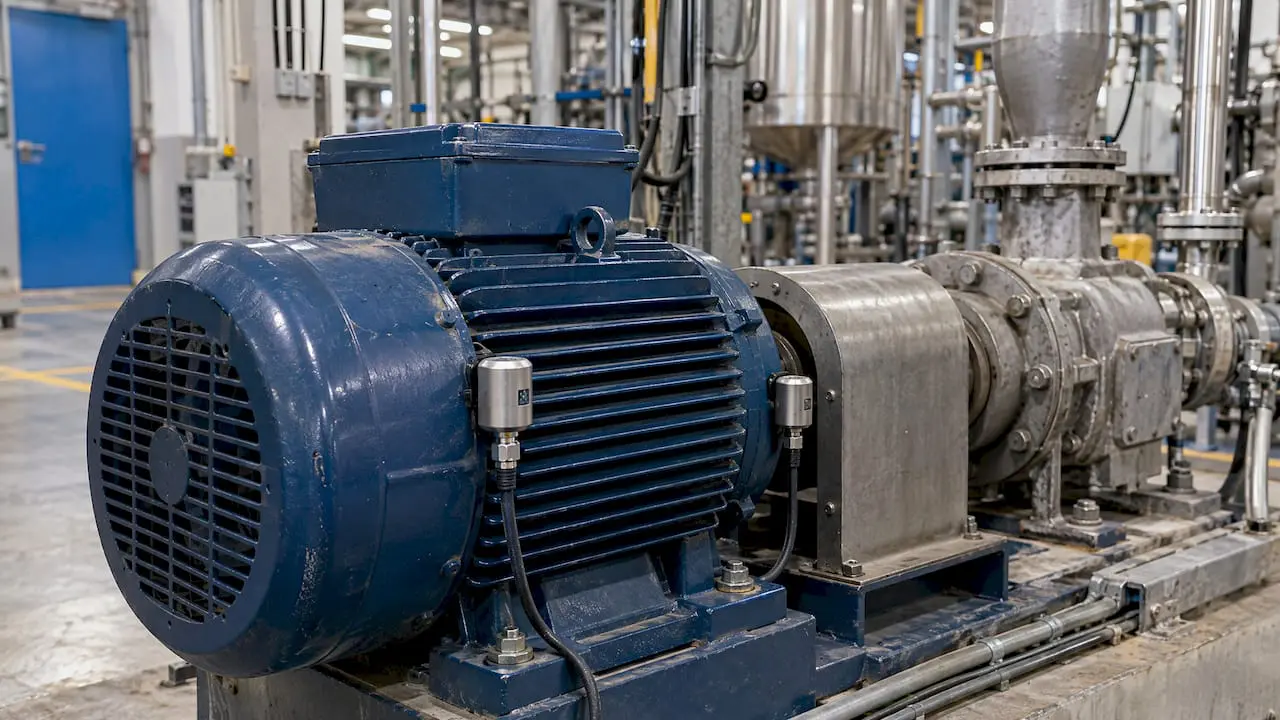
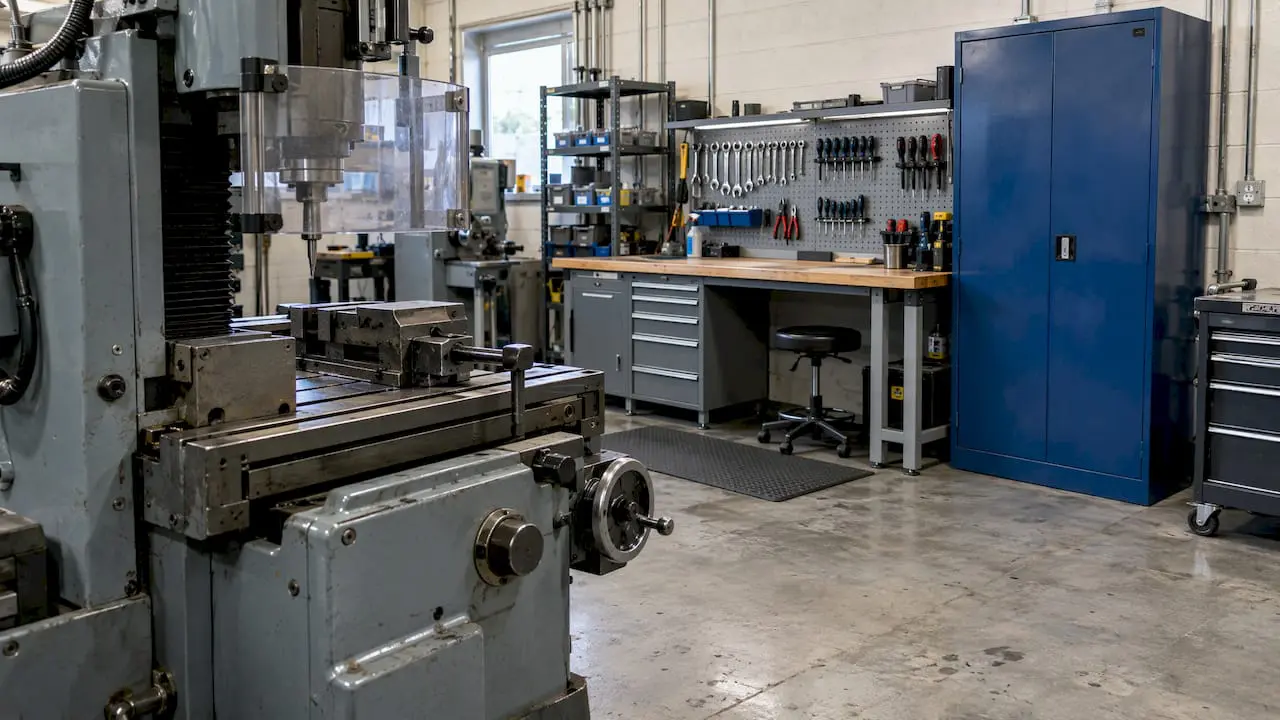
5S in maintenance is a five-step method for keeping tools, spare parts, equipment and work areas sorted, labeled, clean and consistently maintained, so technicians spend their time repairing assets instead of searching for things or working around clutter. The five steps are Sort, Set in Order, Shine, Standardize and Sustain. The US EPA describes 5S as a system for reducing waste and optimizing productivity through an orderly workplace and visual cues, and notes that it is typically the first lean method an organization adopts.
This guide shows what each pillar looks like in a maintenance shop, plant floor or facility, how 5S connects to preventive maintenance and Total Productive Maintenance (TPM), and how to keep the gains once the first cleanup is over.
TL;DR
- 5S gives maintenance teams an organized shop, visible equipment conditions and a shared standard, which makes problems easier to spot and repairs faster to start.
- It is the foundation of TPM and works alongside preventive maintenance, not in place of it.
- Start small: pick one zone, record a baseline, run a short event, then lock in the new standard with checklists and audits.
- Sustain is the hardest pillar. Recurring audits, clear ownership and a system that schedules the work keep 5S from fading.
- A CMMS turns 5S routines into scheduled, documented work orders so the standard survives staff changes.
Table of Contents
- What 5S means in a maintenance environment
- How 5S relates to preventive maintenance and TPM
- Applying the five pillars to tools, equipment and work areas
- What 5S does for downtime, cost and safety
- Examples from real maintenance operations
- Examples beyond the factory floor
- How to implement 5S in a maintenance department
- Sustaining 5S: ownership, audits and scheduling
- Measuring whether 5S is working
- Our perspective on 5S and maintenance software
- Put your 5S routines on a schedule
- FAQ
- Sources
What 5S means in a maintenance environment
The five pillars come from Japanese terms: Seiri (Sort), Seiton (Set in Order), Seiso (Shine), Seiketsu (Standardize) and Shitsuke (Sustain). In a production area, 5S often focuses on operator workstations. In maintenance, it covers more ground:
- the maintenance shop, crib and tool room
- spare parts storage and MRO inventory
- equipment and the area around it
- manuals, drawings, lockout/tagout (LOTO) sheets and troubleshooting guides
- service carts, vehicles and mobile tool kits
The purpose is practical. A technician who knows where every tool and part lives, and who can see at a glance that a machine is clean and normal, starts every job faster and catches problems earlier. Some organizations add a sixth pillar, Safety, which the EPA’s Lean and Environment Toolkit says helps increase productivity, reduce defects, make accidents less likely and reduce costs. The National Tooling & Machining Association also promotes a 6S approach for machine shops.
How 5S relates to preventive maintenance and TPM
These three terms are often mixed up, so it helps to separate them.
| Approach | What it is | Who does the work |
|---|---|---|
| 5S | Workplace organization and visual management | Everyone in the area |
| Preventive maintenance (PM) | Scheduled inspections, lubrication and part replacement based on time or usage | Maintenance department |
| Total Productive Maintenance (TPM) | Plant-wide program that includes operator-performed routine care | Operators and maintenance together |
The EPA’s Lean & Energy Toolkit describes autonomous maintenance in TPM as daily inspections, lubrication, parts replacement, simple repairs, abnormality detection and precision checks. It also recommends adding energy-reduction practices to the “shine” checklists used in 5S.
The link is logical. Operators cannot inspect what they cannot see. If a machine is buried under debris, leaks and wear go unnoticed until something fails. That is why 5S is treated as the base layer of TPM, and why PM schedules work better in a shop where parts, tools and procedures are easy to find.
In a Lean Enterprise Institute article, Dave Westphal described keeping his staff focused on basic stability concepts: the five S, visual controls, preventive maintenance and rigorous problem solving on mechanical downtime. His TPM workshop started with basic operator tasks such as daily machine cleaning, fixing coolant and hydraulic oil leaks, keeping proper tool change intervals and collecting better repair data.
The same article quotes Smalley of Art of Lean saying a full TPM program is not required to get much of the benefit. Sometimes it is enough to focus the right part of the organization on the six major equipment losses. For many facility teams, 5S plus a disciplined PM program is the practical starting point.
Applying the five pillars to tools, equipment and work areas
Sort (Seiri)
Remove what does not belong. In a maintenance shop, that means obsolete parts, duplicate or broken tools, expired consumables, out-of-date manuals and equipment that no longer exists on site. A common method is a red-tag area: tag anything of uncertain value, set it aside, and decide within an agreed window whether to keep, relocate, sell or discard it.
Sorting also exposes inventory problems. If you find three boxes of a belt that no machine uses and no stock of the one that fails every spring, you have found something worth fixing in your parts management.
Set in Order (Seiton)
Give every item one place, and make the place obvious. Practical examples:
- shadow boards or foam inserts for hand tools, so a missing tool is visible immediately
- labeled bins and shelves for spare parts, arranged by how often they are used
- color-coded lubricants and matching grease guns to prevent cross-contamination
- manuals and troubleshooting guides stored at the point of use, or available on a mobile device
- floor markings for carts, pallets and walkways
The test is simple: could a new technician find a part in under a minute without asking anyone?
Shine (Seiso)
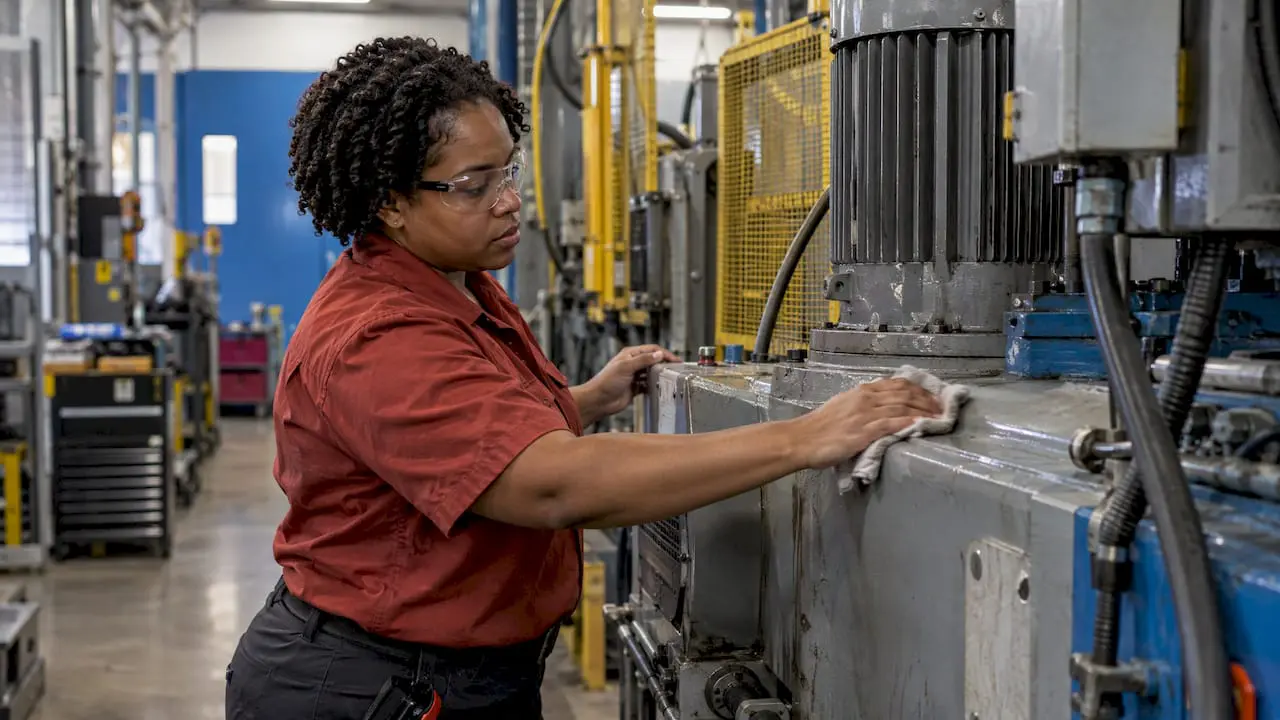
Shine is not housekeeping for appearance. The University of Tennessee’s 5S guide says the goal is to return the area and equipment to a like-new condition and then keep it there, so abnormal conditions stand out, such as an oil drip on a clean floor.
The EPA says a clean environment helps workers notice leaks, vibrations, breakages and misalignments, and that organizations often set Shine targets, assignments, methods and tools before starting this pillar. The NTMA adds that regular cleaning schedules should address root causes, such as oil leaks or material chips, so that the proactive approach extends equipment life and reduces safety hazards.
In practice, cleaning becomes inspection. Each time a technician or operator wipes down a machine, they check for loose guards, frayed cables, worn belts and fluid leaks, and report what they find.
Standardize (Seiketsu)
Standardize turns the first three steps into the default way of working. The EPA lists these tools: job cycle charts, visual cues such as signs, placards and display scoreboards, scheduled five-minute 5S periods and checklists. It also notes that the second part of Standardize is prevention: stopping unneeded items from piling up, keeping procedures from breaking down and keeping equipment from getting dirty.
For maintenance, standards usually include:
- a cleaning and inspection checklist for each critical asset
- min/max levels and reorder points for spare parts
- a tool check-in and check-out routine
- photo standards showing what “done” looks like for each area
- a defined time each shift for a short 5S reset
Sustain (Shitsuke)
The EPA calls Sustain often the most difficult S, because changing entrenched behaviors is hard. Its suggested tools include signs and posters, newsletters, pocket manuals, team and management check-ins, performance reviews and department tours. The NTMA stresses that management has to build 5S into shop culture and train new hires in these methods from their first day.
The next sections cover how to make Sustain realistic.
What 5S does for downtime, cost and safety
The benefits connect to the way maintenance work is actually lost.
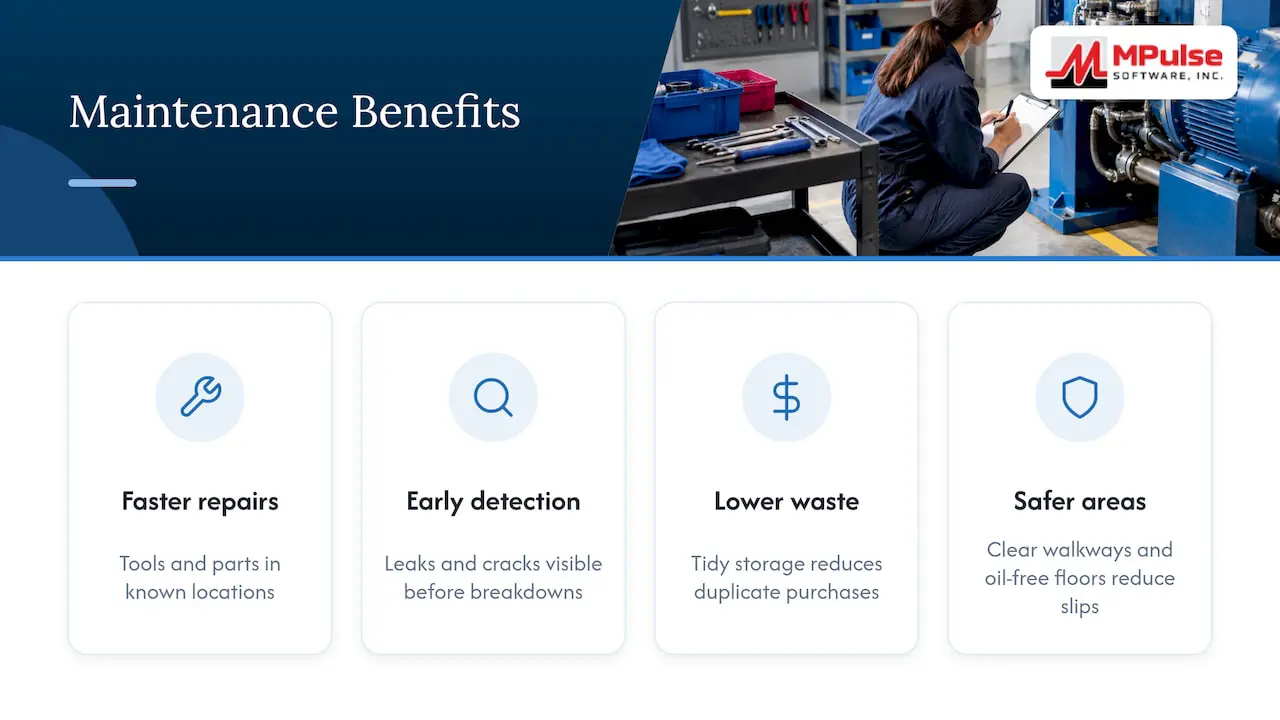
Faster repairs. Time spent hunting for a wrench, a gasket or the right revision of a procedure is time the asset stays down. When tools and parts are in known locations and documents are at hand, a technician reaches the repair sooner. This is the mechanism behind shorter mean time to repair (MTTR).
Earlier detection. A clean, standardized machine shows its problems. Leaks, cracks and shavings from unexpected wear are visible before they turn into breakdowns, which supports fewer failures over time.
Lower waste and cost. Tidy storage reduces duplicate purchases, lost tools and expired consumables. The NTMA notes that a proactive Shine approach extends equipment life.
Safer work areas. Clear walkways, labeled chemicals and oil-free floors reduce slips, trips and contact with hazards. The EPA says that explicitly adding environmental, health and safety items to 6S inspections and audits lets companies eliminate more waste and risk from each work area.
Examples from real maintenance operations
Results vary by site, but published cases show what is possible.
- Pump repair at a US manufacturer. In a NIST Manufacturing Extension Partnership story, Kennametal’s Fallon operation added a 5S program in its pump repair department, a mandatory lockout/tagout sheet and an operational checklist before removing pumps. NIST reports a $6,000 investment in workforce development, savings in pump parts and labor, less waste material and lost time, three employee ideas implemented and better traceability of maintenance.
- Metal-mechanical company. A 2024 LACCEI paper reports a 69% reduction in downtime caused by disorder after the company implemented 5S and Job Safety Analysis, with an annual cost reduction of $2,177.86 and a benefit/cost ratio of 1.49.
- Auto-parts machining line. A TPM case study reports OEE rising from 64% to 76%, with 5S establishing the order and cleanliness TPM depends on and operator training in autonomous maintenance reducing unplanned downtime.
These are results from specific sites, not guarantees. They do show a consistent pattern: organization, standard checks and discipline show up in downtime and cost figures.
Examples beyond the factory floor
5S is not limited to manufacturing. Facility teams use the same logic:
- Hospitals and clinics: labeled supply rooms for HVAC filters and electrical parts, with standard checks on critical systems that regulators expect to see documented.
- Schools and campuses: a central shop where tools and parts for multiple buildings are organized by trade, plus standard checklists for recurring building rounds. Our guide to types of campus facility maintenance shows how those routines fit together.
- Contractors: service trucks set up with the same layout every time, so any technician can find any part.
How to implement 5S in a maintenance department
- Pick a small target zone. The University of Tennessee guide suggests choosing small areas and weighing factors such as team culture, production needs, safety incidents, changeover time and equipment uptime. A single crib, a critical line or one mechanical room is a good start.
- Form a small team. The same guide says four to six participants are enough, and notes that 5S is traditionally carried out in a three to five-day kaizen event. Include the technicians who use the space every day.
- Capture a baseline. Take before photos, map the flow of people, materials and information, and document steps, travel distance, delay due to searching or waiting, throughput and lead time. Run an initial 5S audit so you can compare later.
- Run Sort, Set in Order and Shine. Work through the area, tagging, relocating, labeling and cleaning. Record the leaks and defects you uncover and turn them into work orders.
- Write the standards. Create checklists, photo standards, min/max levels and ownership for each zone.
- Schedule the routines. Put the recurring cleaning, inspection and audit tasks on a calendar with a named owner. This step decides whether you reach Sustain.
- Expand. Repeat in the next zone using what the first team learned.
Sustaining 5S: ownership, audits and scheduling
Most 5S programs fail not at the cleanup but six months later. Three practices help.
Assign zone owners. Each area, cart or storeroom needs a named person responsible for its standard. Shared responsibility often means no responsibility.
Audit on a schedule. A short monthly or weekly audit with a simple scoring sheet shows drift before it becomes a mess. Rotate auditors so different eyes see each zone, and post the results where the team can see them.
Keep the records. Recurring inspections and checks need proof they happened. A digital logbook for recurring checks can help smaller operations schedule routine checks, assign access to staff, set reminders and store supporting documents. For maintenance departments managing many assets, the same discipline is better handled inside a maintenance management system, where checks, work orders and asset history live together.
Scheduling is also where preventive maintenance and 5S meet. Our guide to maintenance scheduling optimization covers how to balance recurring tasks and workload, and our overview of scheduled maintenance tasks explains which tasks to put on the calendar.
Measuring whether 5S is working
Use the baseline from the first step and compare at regular intervals. Useful measures include:
- time spent searching for tools, parts and documents
- travel distance and steps per typical job
- downtime or delay caused by searching or waiting
- mean time to repair and mean time between failures for assets in the zone
- number of leaks, abnormalities and defects found and closed through shine inspections
- safety incidents and near misses
- audit scores over time
Do not rely on audit scores alone. A tidy shop that still takes twenty minutes to start each repair has not met the goal. The measures that matter are the ones that show up in uptime, repair time and cost. Tracking them is far easier when work orders, parts usage and asset history are captured in one system rather than on paper.
Our perspective on 5S and maintenance software
We see the same pattern in the maintenance teams we work with. 5S gets a strong start with a kickoff event, fresh labels and a clean shop. Then the daily pressure of breakdowns pulls attention away, and the standards slip because nothing in the workflow asks for them.
That is where a computerized maintenance management system earns its place. Shine checks, tool and parts audits and zone inspections are recurring tasks, and recurring tasks belong on a calendar with an owner, instructions and a completion record. Our intuitive calendar interface is designed to make that scheduling visible, and preventive maintenance automation generates the work so it does not depend on someone remembering.
Inventory management for parts and supplies, barcode scanning and asset tracking support Set in Order, because every part has a known location and a reorder point. Mobile access puts procedures and checklists in the technician’s hands. For organizations with compliance requirements, customizable workflows and recordkeeping help show that inspections were completed. More than 3,500 customers use MPulse worldwide, and 5S-style discipline is a natural fit with what the software is built to do.
Mark
Put your 5S routines on a schedule
If your team has the first three S under control and needs help with Standardize and Sustain, MPulse CMMS can carry the recurring work. You can schedule cleaning and inspection checklists as preventive maintenance tasks, track spare parts by location, manage work orders from the leaks and defects your inspections find, and report on results.
The Professional plan is listed at $29 per user per month and the Advanced plan at $79 per user per month, with details on our pricing page. If you want help getting set up, our implementation, training and consulting services are designed to get your team working in the system. You can also explore the platform from the MPulse home page.
FAQ
What is 5S in manufacturing, with an example?
5S is a workplace organization method built on Sort, Set in Order, Shine, Standardize and Sustain. A typical example is a machining cell where unused fixtures are removed, tools sit on shadow boards, machines are wiped down and checked each shift, and a checklist and audit keep the standard in place. The NIST story about pump repair at Kennametal’s Fallon operation is a documented maintenance example.
How does 5S relate to Total Productive Maintenance?
TPM builds on 5S. The EPA’s toolkit describes TPM’s autonomous maintenance as operators handling daily inspections, lubrication and simple repairs, which only works in a workplace organized enough to see problems. Preventive maintenance is scheduled by the maintenance department, while TPM spreads routine care across the plant.
How does self-discipline contribute to 5S?
Sustain depends on it. The EPA says entrenched behaviors are hard to change, so organizations support discipline with checklists, regular check-ins, management tours and clear ownership. Making the routine easy, visible and scheduled reduces the amount of willpower each person needs.
How long does it take to start 5S in a maintenance area?
The University of Tennessee guide says 5S is traditionally implemented in a three to five-day kaizen event with a team of four to six people, focused on a small zone. The continuing routines then take a few minutes per shift, plus periodic audits.
Sources
- Lean Thinking and Methods: 5S, US EPA
- Lean & Energy Toolkit, Chapter 5, US EPA
- Lean & Environment Toolkit, Chapter 5, US EPA
- 6S: NTMA’s Enhanced Approach to the 5S Methodology
- Organizing the Workplace to Maximize Productivity, University of Tennessee CIS
- Invest Time to Reduce Down Time, NIST
- Design of 5S and ATS to reduce costs in a metal-mechanical company, LACCEI 2024
- Total productive maintenance (TPM) as a tool for improving productivity, case study
- When Dave Westphal talks about how to respond to a machine downtime problem, Lean Enterprise Institute