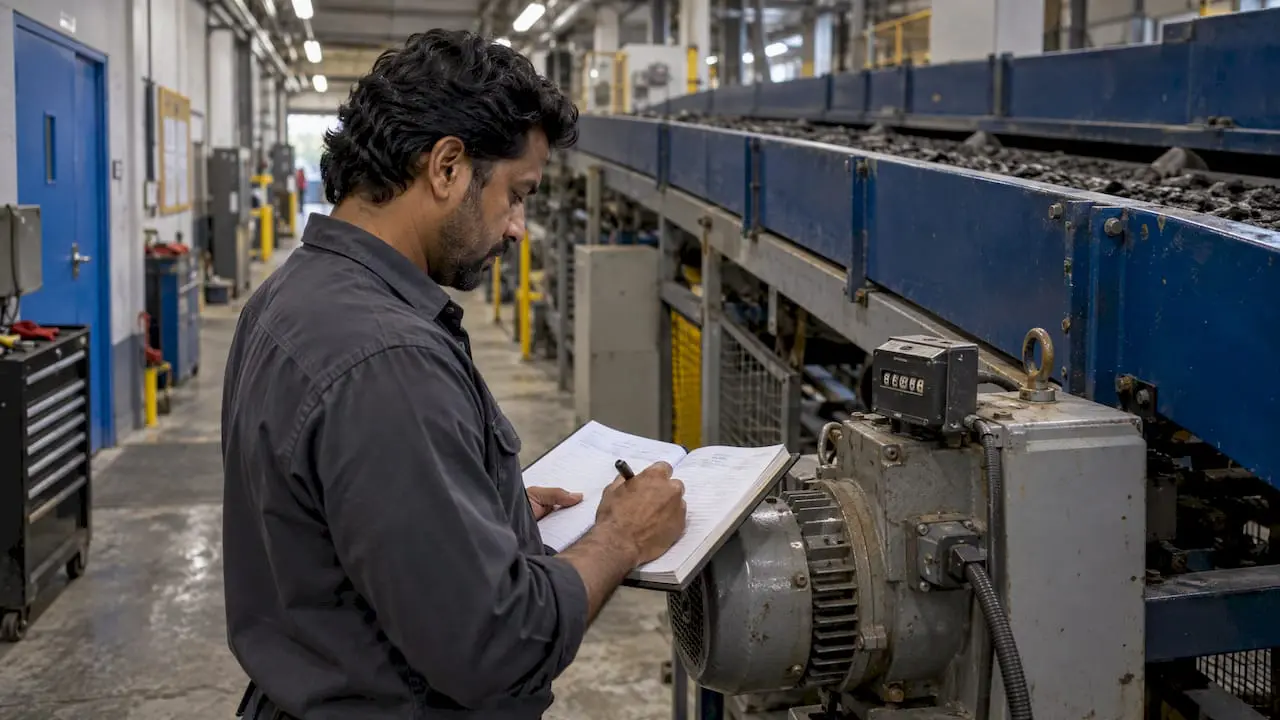
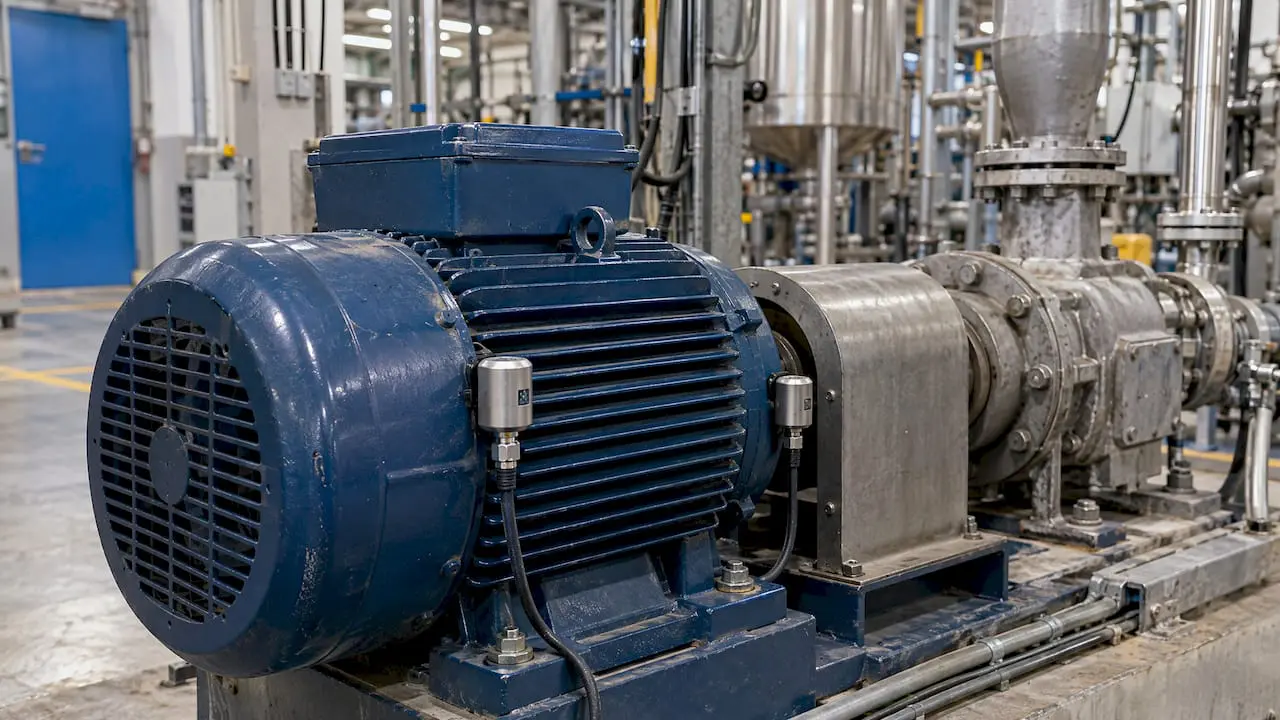
Predictive maintenance AI uses machine learning on sensor and maintenance data to forecast when equipment is likely to fail, so your team can schedule the repair before a breakdown. The model produces the prediction. A maintenance management system turns it into a reviewed, assigned and documented work order. This guide covers how the technology works, which algorithms suit which problem, what data you need and how to begin without a data science team.
TL;DR
- AI predictive maintenance forecasts failures from live condition data such as vibration, temperature and runtime. It replaces fixed calendar intervals with timing based on actual equipment health.
- Algorithm choice follows your data. Classical models such as random forests suit limited failure history, and deep learning needs far more failure examples.
- Data quality, consistent failure records and a clear asset hierarchy matter more than picking the newest model.
- A prediction has no value until it becomes a work order. Connect the analytics to your CMMS so alerts trigger assigned, tracked tasks.
- Start with a few critical assets, a clean maintenance history and a measurable goal such as less unplanned downtime.
Table of Contents
- What predictive maintenance means, and where AI fits
- How AI turns equipment data into a work order
- Which machine learning algorithms are used, and for what
- What data and systems you need first
- What results to expect
- How to tell whether predictions are reliable
- A practical path to start
- Our perspective
- Put predictions to work with MPulse
- FAQ
- Sources
What predictive maintenance means, and where AI fits
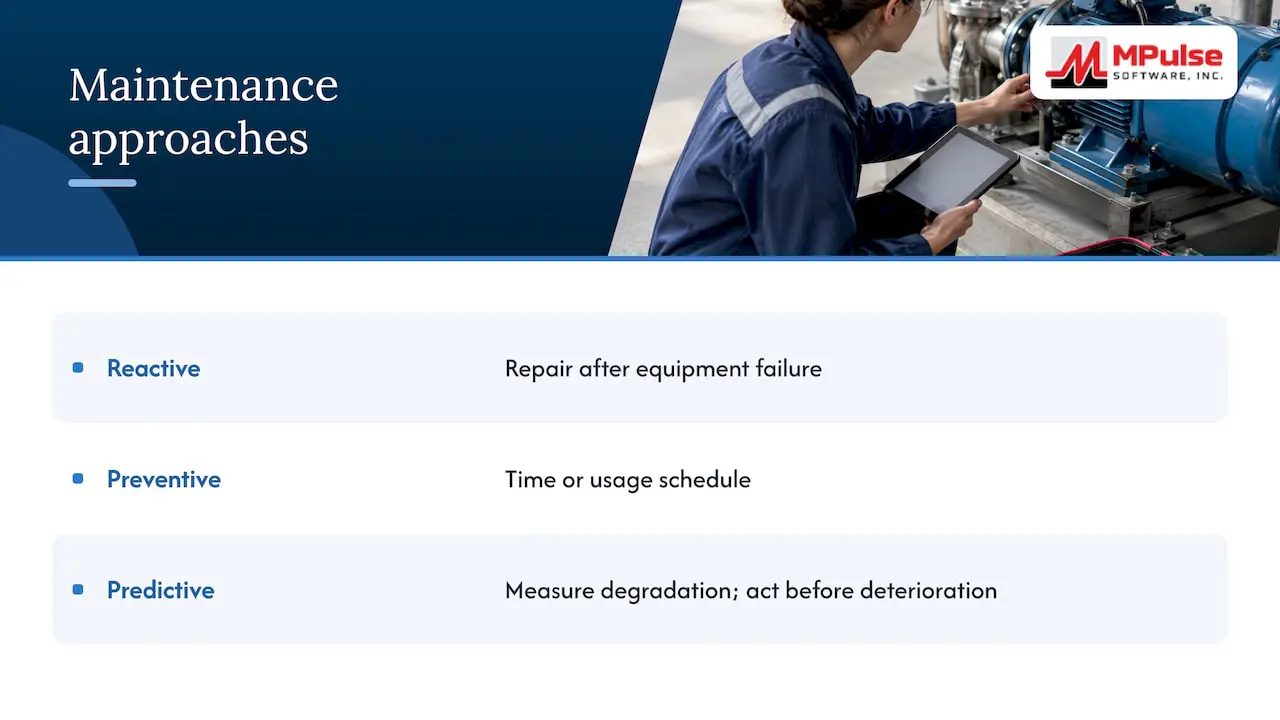
There are three basic maintenance approaches. The U.S. Department of Energy’s Pacific Northwest National Laboratory defines them this way: reactive maintenance repairs or replaces equipment after it fails, preventive maintenance is done on a time or usage schedule, and predictive maintenance measures equipment degradation so you can act before significant deterioration.
NIST describes predictive maintenance as analogous to condition-based maintenance. Failure predictions can draw on observed temperature, noise and vibration. IEEE adds that it combines continuous condition monitoring with data analysis and predictive modeling to forecast likely failure and schedule work in advance.
AI is what makes the analysis scale. A technician can read one vibration trend. A machine learning model can compare thousands of signals across hundreds of assets, learn what a healthy pattern looks like and flag departures that no fixed threshold would catch. If you want the broader strategy first, our guide on how to do predictive maintenance the right way covers the fundamentals, and our overview of reactive maintenance lessons shows what the approach replaces.
Preventive versus predictive in practice
A preventive task might say: lubricate this bearing every 90 days. A predictive approach says: lubricate it when the vibration signature shows early wear. The first can waste labor on healthy equipment or miss a failure that develops between visits. The second ties labor to actual condition. Most mature programs use both, with preventive schedules for assets where failure is predictable by time and condition-based work for assets where it is not. Our article on the four types of preventive maintenance explains where each fits.
How AI turns equipment data into a work order
The flow has four stages: collect, analyze, predict and act.
- Collect. Sensors, building automation systems, controllers and the CMMS supply the raw data. A U.S. Department of Energy research record on data architecture for AI maintenance describes time series, static, text and visual data stored in a data hub.
- Analyze. That data is processed into fault signatures, the patterns that precede a known failure mode.
- Predict. AI and machine learning models use the signatures to diagnose current health and project how it will change. The same source notes that people still decide whether to perform or defer maintenance.
- Act. The prediction becomes a notification, approval or work order for a technician.
Amazon Web Services publishes a reference design that shows the full chain. In its architecture for predictive maintenance with SAP, temperature and vibration telemetry flows through a cloud IoT service to a machine learning model, and the output creates maintenance notifications, orders, approvals or technician alerts through ERP APIs. The point for facility and maintenance leaders is the last step. Without a system that creates and tracks the order, the prediction is only a chart.
A concrete example: HVAC fault prediction
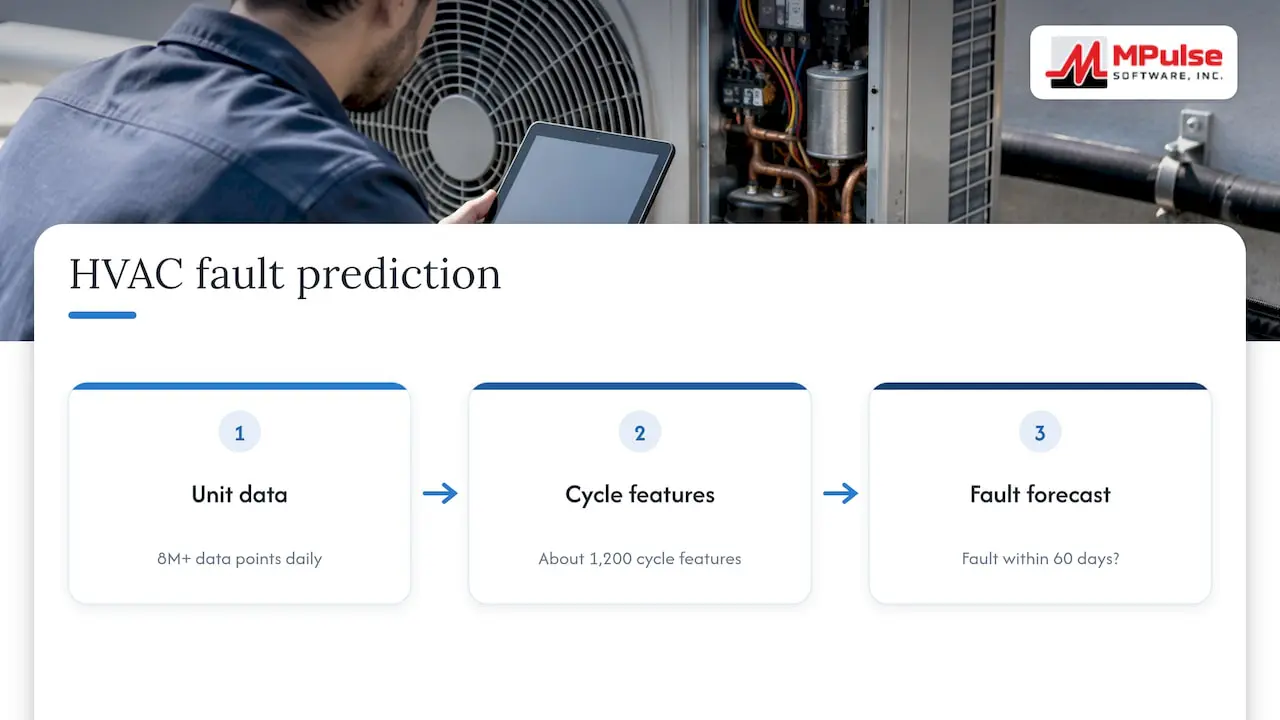
Carrier’s engineers described their approach to forecasting HVAC faults. Each unit produced more than 8 million data points a day. The team reduced that to roughly 1,200 cycle-level features and framed the task as a yes-or-no question: will this unit have a fault within 60 days? Turning a vague goal into a specific, testable question is a habit worth copying at any scale.
Which machine learning algorithms are used, and for what
The phrase “predictive maintenance algorithms” covers several different jobs. Common targets include anomaly detection, fault classification, failure-risk prediction and remaining useful life (RUL) estimation. An ACM survey separates RUL approaches into model-driven, data-driven and hybrid.
A 2026 review of AI algorithms and IoT platforms concludes that algorithm selection should follow the task and the data. The table summarizes the main families.
| Method | Typical job | Works best when |
|---|---|---|
| Logistic regression | Interpretable failure-probability baseline | You need a simple, explainable starting point |
| Random forest, gradient boosting (such as XGBoost) | Fault classification, failure-risk scoring | You have tabular sensor data and labeled failures |
| Support vector machine | Binary or multiclass fault diagnosis | The dataset is small to moderate |
| Clustering, autoencoders | Anomaly detection | Failure labels are unavailable or unreliable |
| One-class SVM, isolation forest | Anomaly detection | Mostly healthy-state data, few labeled failures |
| Convolutional neural network (CNN) | Defect identification from signals or images | You need local feature extraction |
| Long short-term memory (LSTM) | RUL prediction on long sequences | You have long degradation histories |
The descriptions come from several peer-reviewed sources: an IntechOpen overview for logistic regression, random forests and XGBoost, an applied sciences review for supervised versus unsupervised use, and a deep learning survey for CNN and LSTM roles.
Why failure history decides the model
Most well-run plants have few failures, which is good for operations and awkward for machine learning. A 2026 systematic review reports that data-scarce settings favor classical models such as SVM and random forest, because they resist overfitting and need less computing. CNN and LSTM models generally need much larger failure datasets. The same review notes that one-class SVM and isolation forest learn mainly from healthy operation and flag anomalies, which makes them practical when you have few labeled failures.
For most facility and maintenance teams, that means starting with anomaly detection or a simple classifier on your most critical assets, not a deep learning project.
What data and systems you need first
The 2026 review of AI algorithms and IoT platforms lists the foundations. You need:
- reliable sensor and process data
- maintenance and failure history
- an asset context or hierarchy, so a reading is tied to the right equipment
- data storage and integration
- analytics and monitoring pipelines
- cybersecurity controls
- a workflow system that turns predictions into reviewed maintenance actions
The same source says to plan for scarce and imbalanced failures, noisy or missing data, inconsistent labels and formats, sensor drift, model drift, integration cost, limited AI skills, explainability requirements and regulatory constraints in safety-critical sectors. A 2025 applied sciences review adds that nonstandard data formats and high computational overhead remain barriers.
The literature consistently suggests that data quality and labeling often matter more than choosing the newest algorithm. In practice that points to the work you can start today:
- Standardize failure codes so “bearing seized” and “bad bearing” are one cause.
- Record every work order against a specific asset, with the failure mode and the repair.
- Keep asset records, locations and parts lists current.
- Capture meter readings and inspection results consistently.
These are CMMS fundamentals, and they are also the labeled history a future model will learn from.
What results to expect
Results vary by asset, data and process, so treat published figures as examples, not guarantees.
Manufacturing, industry-wide. NIST analyzed U.S. manufacturing establishments and found that among those primarily using preventive and predictive maintenance, with less than 50% reactive work, the top half in predictive maintenance use was associated with 15% less downtime, an 87% lower defect rate and 66% less inventory increase due to unplanned maintenance. This is an association, not proof of cause.
Energy. Argonne National Laboratory reports that its AI solar-inverter project potentially reduced total maintenance costs by 43 to 56% and unnecessary crew visits by 60 to 66%.
Healthcare. In December 2024, UPMC began a monitoring-based commissioning program that pulled data from building automation systems in 10 facilities to show technicians where to focus. FacilitiesNet reported over $1 million in savings within six months. Separately, Cleveland Clinic’s facilities team used automation to cut manual work, projecting savings of more than 75,000 minutes across 18 regional hospitals and its main campus.
Food manufacturing. A Kansas City-area Ingredion plant used vibration sensors and AI diagnostics and, according to Plant Services, realized $1.0M in production savings, $223,000 in maintenance savings and 168 hours of avoided downtime.
The common thread is not a particular algorithm. Each organization had monitored data, a clear target and a way to send people to the right equipment.
How to tell whether predictions are reliable
A prediction is useful only if technicians trust it, and trust comes from measured accuracy. Carrier’s team evaluated predictions per unit against a 60-day window before a fault. At a 0.99 confidence threshold, true-positive precision was about 81%. Counting lockouts in the following 30 days brought effective precision to 91.6%.
You can borrow the method:
- Define the prediction window, for example 30 or 60 days before failure.
- Set an alert threshold and record every alert.
- Compare alerts against the work orders and findings that followed.
- Track false alarms as well as catches, since each false alarm costs technician time.
- Review thresholds on a regular schedule, because sensors and models drift.
This review is only possible when work orders record what technicians actually found. That is another reason the maintenance system is part of the AI project, not a separate one.
A practical path to start
- Pick critical assets. Choose equipment where downtime is costly or affects safety, and where failure history exists.
- Clean the records. Standardize asset IDs, failure codes and work order closeout.
- Add condition data. Begin with readings you can gather reliably, such as runtime meters, temperature, vibration or inspection results.
- Start with condition-based rules. Trigger work when a reading crosses a threshold. This builds the workflow that AI later improves.
- Add analytics. Introduce anomaly detection or a classifier, with people reviewing every recommendation.
- Measure and expand. Track unplanned downtime, emergency work share and maintenance cost per asset, then extend to more assets.
Steps 2 through 4 run inside a CMMS. Our condition-based maintenance software triggers work from meter readings and condition data, and preventive maintenance software keeps scheduled tasks on track alongside it. Technicians who record findings from the field benefit from the practices in our piece on mobile maintenance management. For a view on why sensor output alone falls short, see why predictive maintenance data is not enough.
Our perspective
We see the same pattern across the maintenance teams we work with: the organizations that get value from predictive maintenance are rarely the ones with the most sophisticated model. They are the ones whose maintenance records are consistent and whose alerts land in a system that assigns the work.
That is why we treat AI as the next layer on a solid maintenance foundation, not a replacement for it. Accurate asset records, scheduled preventive tasks, condition-based triggers and complete work order history are what make any prediction actionable and auditable. For compliance-heavy operations, including healthcare facilities and regulated manufacturing, that audit trail is as valuable as the forecast.
MPulse is built around that foundation. Our calendar-based interface keeps scheduled work visible, condition-based maintenance triggers work from readings, and integration with ERP and sensor systems lets data flow into the workflow. Our customers, more than 3,500 worldwide, have reported efficiency improvements of up to 40%. We would start with your critical assets, your records and one clear goal, and let the analytics grow from there.
Mark
Put predictions to work with MPulse
If you are planning predictive maintenance, MPulse CMMS gives you the workflow layer: preventive maintenance automation, condition-based maintenance, work order management, asset tracking, mobile access and barcode scanning, with integration to ERP and sensor systems. The Professional plan is $29 per month per user and the Advanced plan is $79 per month per user, with details on the pricing page.
For sensor and ERP connections, see our DataLink integration add-on. For help with setup and rollout, we offer implementation, training and consulting services. To see the platform, start at mpulsesoftware.com.
FAQ
What is the difference between predictive maintenance and AI predictive maintenance?
Predictive maintenance is the strategy of using actual equipment condition to time repairs. AI is one way to do the analysis. Simple versions use fixed thresholds on a reading, while AI versions learn patterns across many signals and can flag subtler changes.
Do I need a data scientist to start?
Not to begin. Standardizing asset and failure records, adding condition readings and triggering work from thresholds can all be done by maintenance teams. Reviews note that limited AI skills are a common constraint, so many teams add analytics gradually and keep technicians reviewing every recommendation.
Which machine learning model is best for predictive maintenance?
There is no single best model. Peer-reviewed reviews point to matching the model to the task and data: supervised models for labeled faults, unsupervised models for anomaly detection and sequence networks for long degradation histories. With few failures, classical models such as random forests are usually more practical than deep learning.
What are real examples of predictive maintenance?
Examples include forecasting HVAC faults from unit data, monitoring vibration on critical plant equipment and using building automation data to direct technicians in hospitals. The examples above, from Carrier, UPMC and a food manufacturing plant, show each in practice.
Sources
- PNNL, O&M Best Practices: Maintenance Approaches
- NIST, Manufacturing Machinery Maintenance
- IEEE Technology Navigator, Predictive maintenance
- OSTI, Data Architecture and Analytics Requirements for AI
- AWS, Guidance for Predictive Maintenance with SAP using AWS IoT
- AWS Blog, How Carrier predicts HVAC faults
- ACM, Tackling Industrial Downtimes with Artificial Intelligence
- AI algorithms and IoT platforms for anomaly and failure prediction
- IntechOpen, Predictive Maintenance: An Overview
- Application-Wise Review of Machine Learning-Based Predictive Maintenance
- A survey of deep learning-driven architecture for predictive maintenance
- Artificial Intelligence-Driven Predictive Maintenance, systematic review
- Argonne National Laboratory, AI and energy grid maintenance
- FacilitiesNet, UPMC Uses AI and Data to Improve Facilities
- HFM Magazine, System uses AI to help optimize maintenance
- Plant Services, Case study roundup on predictive maintenance