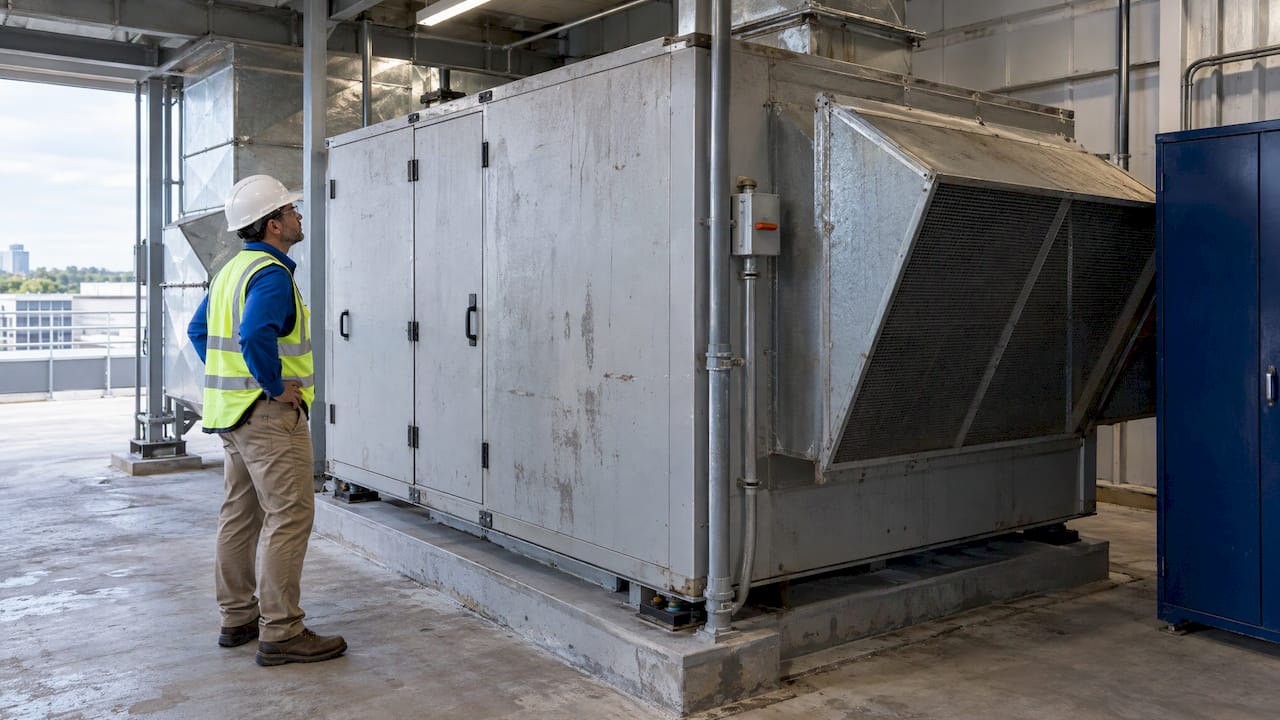

Under OSHA’s lockout/tagout standard, 29 CFR 1910.147, you need three kinds of documentation. The first is a written energy control procedure for each machine or group of similar machines. The second is a signed certification of the annual periodic inspection of each procedure. The third is a training certification for every employee covered. Contractor coordination, shift handoffs and group lockouts add records on top of these. Keeping the three core documents current across dozens of assets is a scheduling and recordkeeping job, and it is the job a computerized maintenance management system (CMMS) is built for.
TL;DR
- Each machine, or group of similar machines, needs a written procedure covering scope, purpose, authorization, rules and techniques for controlling hazardous energy.
- Every procedure must be inspected at least once a year by an authorized employee who does not use that procedure, with a certification that names the machine, date, employees and inspector.
- Training records must show who was trained and when. Retraining is required when an inspection shows gaps.
- Missing written procedures, thin training and skipped annual inspections are the usual failures, and all three are scheduling problems.
- OSHA’s regulatory agenda signals a proposed update to the standard, so build records that are easy to revise.
Table of Contents
- The documents OSHA expects to see
- What a machine-specific procedure must contain
- The annual periodic inspection
- Training records
- Records for shifts, groups and contractors
- How long to keep the records
- What is changing
- Where paper and spreadsheets break down
- A documentation routine that holds up
- Making it easier with MPulse
- Our perspective
- FAQ
- Sources
The documents OSHA expects to see
The lockout/tagout standard (often shortened to LOTO) governs how workers keep machines from starting up or releasing stored energy during service and maintenance. OSHA’s April 30, 2024 notice summarizes the paperwork it creates:
- documented energy control procedures;
- certifications of periodic inspections and of training;
- notification of affected employees before and after lockout or tagout devices are applied or removed;
- mutual notification between a host employer and a contractor about their procedures.
OSHA’s Field Safety Notice on lockout/tagout tells employers to develop, document, implement and enforce these procedures. The standard has a narrow exception to the written-procedure rule, set out in 1910.147©(4)(i), and it is worth reading before you rely on it.
In practice an inspector asks for four things:
- The written procedure for the machine in question.
- The most recent periodic inspection certification for that procedure.
- Training certification for the employees who did the work.
- Evidence that the procedure was followed on a recent job, such as a work order, lock log or notification record.
The first three are required by the standard. The fourth is what makes the first three believable, and it is where most facilities have the thinnest records.
What a machine-specific procedure must contain
The text of 1910.147©(4)(ii) says the procedure must clearly and specifically outline the scope, purpose, authorization, rules and techniques for controlling hazardous energy, plus the means of enforcing compliance. At a minimum it includes:
- a specific statement of the intended use of the procedure;
- specific steps for shutting down, isolating, blocking and securing the machine;
- specific steps for placing, removing and transferring lockout or tagout devices, and who is responsible for them;
- specific requirements for testing to confirm the controls work.
One procedure or many
OSHA’s OSHA 3120 booklet explains that one procedure can cover a group of similar machines that use the same type and magnitude of energy. Separate procedures are needed where equipment has multiple energy sources, different power connections or different shutdown sequences.
The practical consequence: a plant with 200 machines may need far fewer than 200 procedures, but each procedure must still say which assets it covers. A vague “all presses” procedure fails the moment one press has a hydraulic accumulator the others lack.
The sequence to document
Arizona State University’s energy control procedure template is a useful model of the order. It runs through these steps:
- Identify the type and magnitude of the energy.
- Notify affected employees.
- Shut the machine down by its normal stopping procedure.
- Isolate every energy source with energy-isolating devices.
- Apply individual locks.
- Dissipate or restrain stored and residual energy, such as capacitors, springs, flywheels, and hydraulic or pressure systems.
- Verify the isolation.
The template then covers restoration: inspect the work area, position everyone safely, return controls to neutral, remove locks, re-energize and notify affected employees.
Write each step in the language of the actual machine: the valve number, the disconnect location, the bleed-down point. A step that reads “isolate all energy sources” documents nothing.
The annual periodic inspection
Under 1910.147©(6), each energy control procedure must be inspected at least annually. The inspector must be an authorized employee other than the one or ones using the procedure being checked. The certification must identify the machine or equipment, the date of the inspection, the employees included and the person who performed it. OSHA’s 2005 interpretation repeats the date, machine and inspector as the core of what the record must show.
NIOSH’s guidance on periodic inspections adds how the inspection should work:
- It covers both the procedure itself and a review of each authorized employee’s responsibilities.
- It can be done through planned visual observation, random audits or plant safety tours.
- It should include a demonstration of the procedure while the authorized employee does the service or maintenance.
If the inspection finds deviations from the written procedure or gaps in an employee’s knowledge, retraining is required, and the retraining must let the employee carry out the procedure in the right sequence.
A worked example
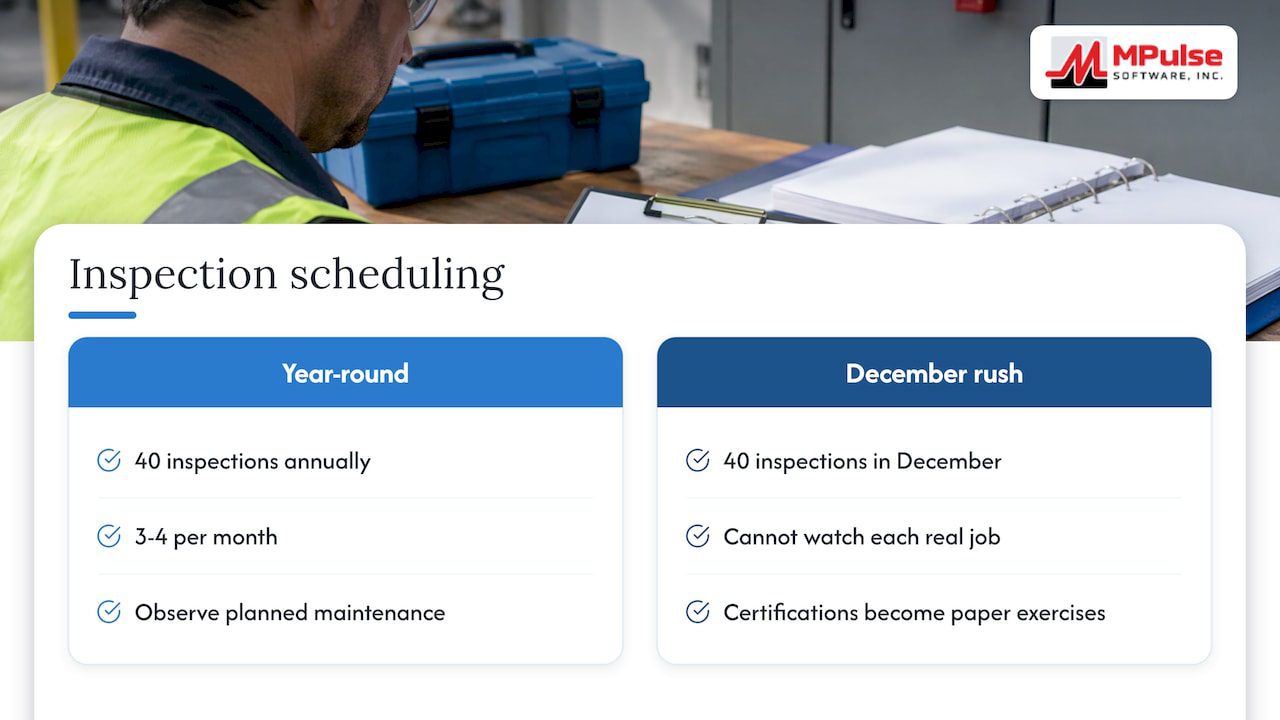
A bottling plant has 40 written procedures. Each is due for inspection every 12 months, which means roughly 40 inspections spread across the year, three or four a month. If all 40 are left for one December push, the inspector cannot watch a real job for each one, and the certifications become paper exercises. Spread across the calendar and tied to scheduled maintenance, an inspector can watch an actual lockout during planned work and sign the certification the same day.
Training records
The standard requires training for authorized employees (who apply locks), affected employees (who operate the machine) and other employees who work nearby. The training certification must show each employee’s name and the training dates, as set out in the standard’s recordkeeping paragraph.
Michigan’s MIOSHA compliance guide is a good checklist of what a state program expects an employer to maintain:
- employee attendance sheets;
- the specific procedures for covered equipment;
- completed periodic inspection forms for all equipment in the program;
- a training summary.
Michigan is a state-plan state, so its rules are its own. The same set of records is a sensible baseline anywhere in the country.
Records for shifts, groups and contractors
Federal rules say these situations need procedures. Facility programs show what the records look like.
Shift changes
Wayne State University’s lockout/tagout program requires the arriving authorized employee’s lock and tag to go on before the departing employee’s come off. Where work spans shifts, departmental locks are logged with the system, the reason and the control points. The program also states that a job briefing or a locked box is not enough: each energy isolation device must be physically verified.
Group lockout
When a crew works on one machine, one person is in charge. The records should name that person, list every authorized crew member and show how group protection was applied. The MIOSHA guide describes this arrangement.
Contractors
The host employer and the contractor must exchange their lockout/tagout procedures. Wayne State documents this through pre-planning meetings that cover the procedures, the energy hazards and the expected dates and times. Keep the meeting record with the work order for the job.
How long to keep the records
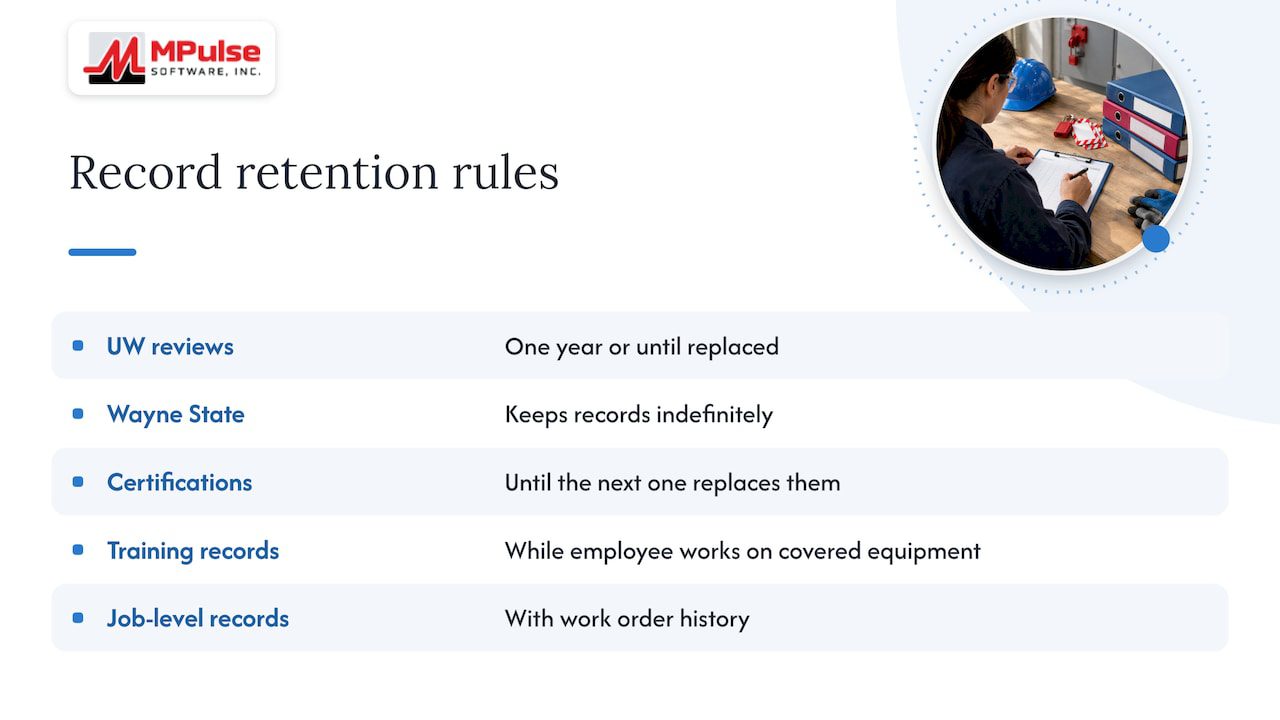
The standard sets the inspection certification as a record to keep current. The University of Washington’s program manual keeps periodic reviews for one year or until a new one is created, and retains training documents under its own policy and regulatory requirements. Wayne State goes further and keeps its records indefinitely, secure, accessible to department record managers and available to auditors and agencies on request.
A workable rule for a business: keep each inspection certification until the next one replaces it, keep training records for as long as the employee works on covered equipment, and keep job-level records (lock logs, notifications) with the work order history. Longer retention costs little when records are digital.
Version control matters as much as retention. Wayne State maintains its official program online and warns that printed or saved copies may not reflect the current version. Your technicians should open the procedure from one controlled place, not from a binder last updated three years ago.
What is changing
A July 2026 report on the federal regulatory agenda says OSHA planned a proposed rule by November to modernize 1910.147, with computer-based controls for hazardous energy likely part of it. The agenda also notes that lockout/tagout was among OSHA’s most frequently cited standards in fiscal year 2025. A proposed rule is not a final rule, and the current text still applies. Check OSHA’s lockout/tagout page for the status before you revise your program.
What this means for documentation: expect to revise procedures, so store them in a system where a change updates one record rather than 40 binders.
Where paper and spreadsheets break down
The documentation requirements are simple to state and hard to sustain:
- Due dates slip. Annual inspections have no reminder unless you build one.
- Procedures drift. A machine is modified, the procedure is not.
- Records scatter. Training sits with HR, inspections with safety, work orders with maintenance.
- Audits are slow. Pulling the procedure, the inspection and the training for one machine can take an afternoon.
A CMMS removes these by putting asset records, recurring tasks, work orders and qualification records in one place. We cover the compliance side in more detail in our guide on how CMMS software helps you meet OSHA requirements, and our explainer what lockout tagout is covers the basics for new team members.
A documentation routine that holds up
- List every machine and its energy sources. An accurate asset register comes first. In MPulse, asset tracking holds this list.
- Group assets into procedures. Use OSHA’s rule: same energy type and magnitude, same shutdown sequence.
- Write each procedure with the four required elements and the machine-specific steps above.
- Schedule the annual inspection as a recurring task per procedure. MPulse’s preventive maintenance automation and calendar scheduling are built for recurring tasks like this.
- Track who is qualified. MPulse includes personal qualification tracking, which suits authorized-employee training records.
- Log the job. Every lockout job gets a work order that records who did it, when and under which procedure. Work order management in MPulse handles this.
- Review after any change. A modified machine, a new energy source or an inspection finding triggers a procedure update and, where needed, retraining.
Making it easier with MPulse
MPulse CMMS supports customizable workflows and compliance and regulatory recordkeeping, along with preventive maintenance automation, work order management, asset tracking, calendar scheduling, barcode scanning and mobile access. Compliance-heavy sites such as manufacturers, healthcare facilities and schools can use those tools to keep lockout/tagout work orders and inspection tasks on one calendar.
Plans are priced per user: Professional is $29 per user per month and Advanced is $79 per user per month. Implementation, training and consulting services are also available. See MPulse pricing or our services.

Our perspective
Most lockout/tagout findings we hear about are not failures of knowledge. The team knows how to lock out a press. The failure is that the annual inspection was never scheduled, or the person trained two years ago has moved to another line and nobody noticed.
That is why we treat lockout/tagout as a maintenance management problem. A procedure is a record tied to an asset. An inspection is a recurring task with an owner and a due date. Training is a qualification tied to a person. A CMMS holds all three, and the calendar keeps them from slipping.
More than 3,500 customers use MPulse, and many of them work under compliance requirements. If you are starting from binders and spreadsheets, begin with the asset list and the inspection calendar. The rest follows.
Mark
FAQ
Does every machine need its own written procedure?
Not necessarily. OSHA allows one procedure to cover similar machines that use the same type and magnitude of energy. Separate procedures are required where machines have multiple energy sources, different power connections or different shutdown sequences. The procedure must list the equipment it covers.
Who can perform the annual periodic inspection?
An authorized employee other than the person or people using the procedure being inspected. The certification must record the machine, the inspection date, the employees included and the inspector. NIOSH guidance describes visual observation, random audits or safety tours as ways to carry it out.
What happens if an inspection finds a problem?
If the inspection shows deviations from the written procedure or gaps in an employee’s knowledge, the employee must be retrained. Update the procedure too if it was the procedure that was wrong, and record both changes.
Do contractors need documentation too?
Yes. The host employer and the contractor must inform each other of their lockout/tagout procedures. Keep a record of that exchange, such as a pre-job meeting note covering the procedures, the energy hazards and the expected dates, with the work order.
Sources
- OSHA, Hazardous Energy Control Standard (Lockout/Tagout), April 30, 2024 notice
- OSHA Field Safety Notice OSHAFS3529, Lockout/Tagout
- eCFR, 29 CFR 1910.147, The control of hazardous energy
- OSHA 3120, Control of Hazardous Energy Lockout/Tagout
- Arizona State University, Energy control procedure template
- OSHA 2005 standard interpretation on periodic inspection records
- NIOSH, Conducting a Periodic Inspection for Each Procedure
- MIOSHA, Lockout/Tagout Compliance Guide (SP-27)
- Wayne State University, Lock Out / Tag Out Program
- University of Washington, Hazardous Energy Control LOTO program manual
- Safety+Health Magazine, regulatory agenda report, July 7, 2026