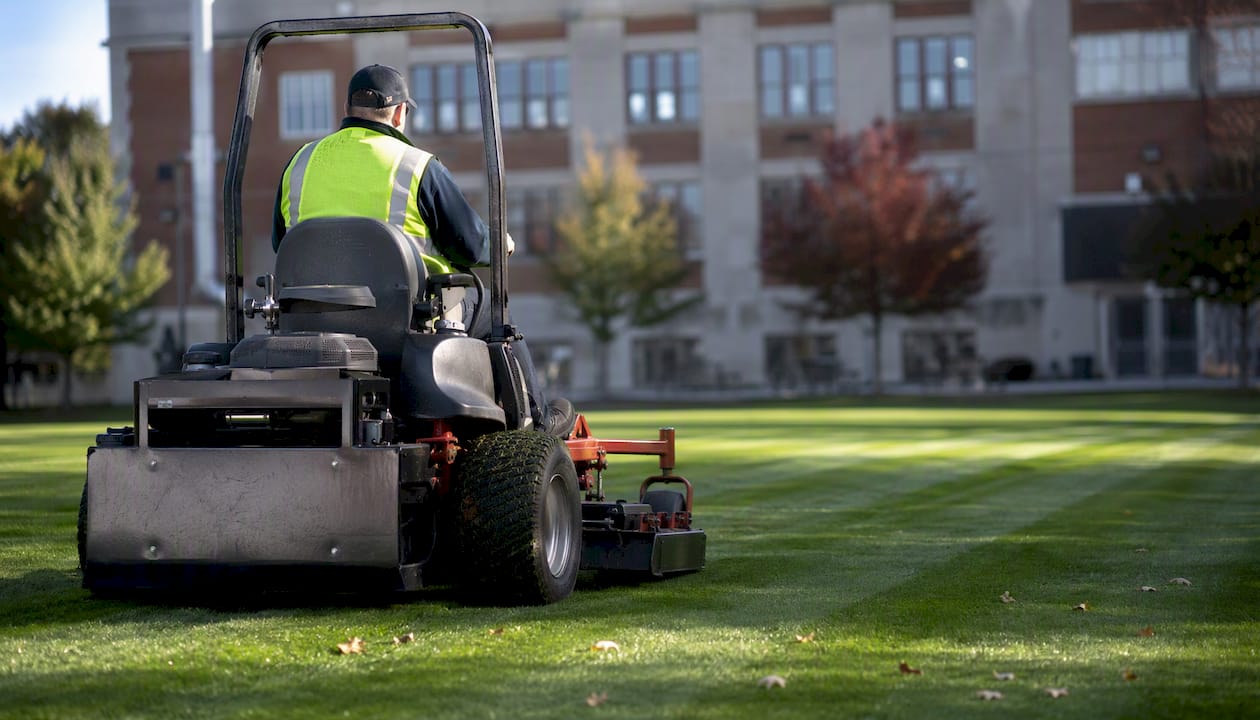
Effective school grounds maintenance comes down to five priorities: documented safety inspections, a formal Integrated Pest Management (IPM) program, a tiered preventive maintenance schedule, sustainable plant selection, and a CMMS to keep records searchable and auditable. Together, these practices produce safer campuses, lower operating costs, and grounds that support student learning rather than drain your budget.
Start here — assign these actions this week:
- Conduct a documented safety walk of all playgrounds, entrances, and pick-up/drop-off zones
- Designate an IPM coordinator and confirm all applicators hold current state licenses
- Enable recurring preventive work orders in your CMMS for high-priority grounds tasks
- Map campus zones by maintenance priority level (Level 1–4) and assign staffing accordingly
- Audit irrigation run times and schedule a uniformity check before the next seasonal transition
- Replace one ornamental bed with native, drought-tolerant species, as a pilot planting zone
- Log all pesticide applications, inspection findings, and corrective actions in a searchable system
- Schedule a post-season field assessment for aeration, topdressing, and drainage repairs
Each item above has a clear owner, a defined frequency, and a measurable outcome. The sections below give you the operational detail to implement every one of them.
Key Takeaways
Effective school grounds maintenance requires documented safety inspections, a formal IPM program, a tiered preventive schedule tied to campus priority levels, and a CMMS to make every record searchable and auditable.
| Point | Details |
|---|---|
| Safety inspections are non-negotiable | Conduct documented daily safety walks of Level 1 areas and log all findings with corrective actions. |
| IPM is the compliance standard | Designate an IPM coordinator, verify applicator licenses, and document every application and re-entry interval. |
| Native plants cut long-term costs | Replacing ornamental beds with native, drought-tolerant species reduces irrigation, fertilization, and pruning demands. |
| Seasonal planning prevents failures | An annual calendar tied to your CMMS prevents missed aeration windows, irrigation shutdowns, and post-storm recovery steps. |
| MPulse Software centralizes records | MPulse Software converts preventive schedules, IPM logs, and inspection reports into searchable, audit-ready records. |
Table of Contents
- What are the best practices for school grounds maintenance?
- How to assess your campus and build a grounds master plan
- Safety, inspections, and IPM: what every school must document
- Preventive maintenance routines: daily, weekly, monthly, and seasonal
- How do you maintain school lawns, sports fields, and playgrounds?
- Water management: how to reduce irrigation costs and drainage hazards
- Native plants and sustainable landscaping: reducing long-term maintenance costs
- Staffing models and contracting: how to match resources to campus needs
- How does a CMMS improve school grounds management?
- Seasonal planning and emergency preparedness for school grounds
- Practical checklists and a sample maintenance schedule you can copy
- How to get started: a 90-day grounds improvement plan
- Grounds management as asset stewardship
- MPulse Software helps you operationalize these practices
- Sources
- FAQ
What are the best practices for school grounds maintenance?
The NCES Chapter 5 guidance on maintaining school facilities and grounds frames grounds care as a planned, documented operation — not a reactive one. The core principle: prioritize tasks by area type, assign frequencies, and build those frequencies into a written schedule or CMMS. That structure is what separates districts that control costs from those that spend reactively on emergency repairs and liability claims.
APPA’s research on grounds maintenance and operations adds a business case that resonates with school boards: grounds create the first impression that influences enrollment decisions. Managing them as living assets, with scheduling and reporting systems, is how you justify the budget to leadership. Well-maintained grounds also directly support student outcomes — from outdoor learning to physical activity to the sense of safety that affects attendance.
How to assess your campus and build a grounds master plan
A site assessment is the foundation of every effective grounds program. Before you can set priorities or assign staff, you need a clear picture of what you have.
Site assessment workflow:
- Walk every entrance, parking area, and pick-up/drop-off zone. Note sightline obstructions, surface conditions, and lighting gaps.
- Map drainage patterns. Identify low spots, ponding areas, and catch basins. Note any areas where runoff threatens foundations or play surfaces.
- Document outdoor learning zones, natural areas, and turf fields. Photograph current conditions.
- Assess microclimate factors: shade coverage, wind exposure, and soil compaction in high-traffic zones.
- Identify ADA compliance gaps in pathways, ramps, and surface transitions.
- Assign each area a maintenance priority level (Level 1 = highest visibility/safety impact; Level 4 = natural or low-use areas).
The Green Schoolyards design and infrastructure resources include site analysis tools, plant lists by climate, and outdoor classroom planning guidance that translate directly into a grounds master plan. The Children & Nature Network’s District Design Guidelines reinforce the value of written maintenance policies: they protect program continuity when staff turn over and give budget planners a multi-year framework.
Once you have your priority map, tie it to staffing hours. A Level 1 area (main entrance, playground, primary athletic field) needs daily attention during the school year. A Level 4 natural area may need only seasonal management. That distinction drives your staffing model and your CMMS work-order structure.
Pro Tip: Map student circulation patterns during peak arrival and dismissal times. The highest-traffic pathways are where surface hazards, drainage failures, and sightline obstructions carry the greatest liability. Prioritize shade planting along those routes first, not just near buildings.
Grounds that lack a written priority map tend to get maintained by habit rather than by need. The result is over-serviced low-risk areas and under-serviced high-risk ones — a pattern that shows up in both budget waste and incident reports.
Safety, inspections, and IPM: what every school must document
IPM and documented inspections are the baseline standard for minimizing chemical exposure and liability on K–12 campuses. IPM requires confirming pest species and population thresholds before taking any action, then applying the least-toxic effective method. All pesticide applications must be performed by licensed applicators and documented for regulatory compliance.
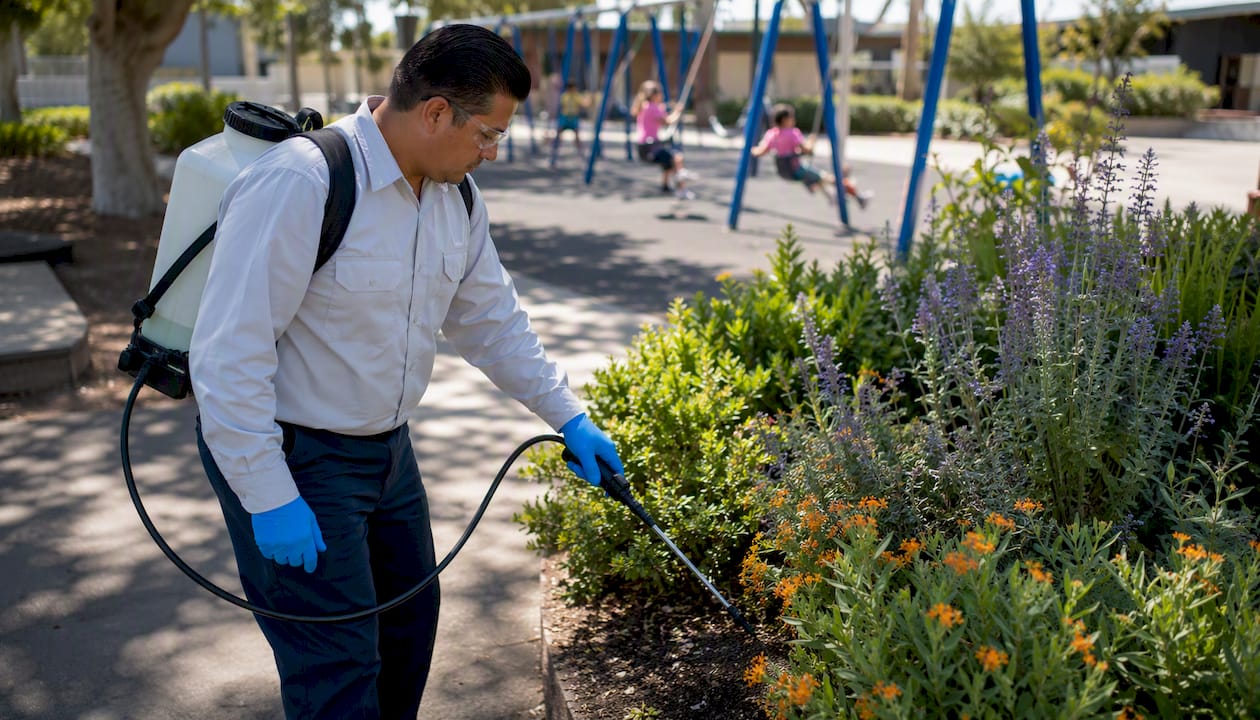
UConn’s Best Management Practices for Pesticide-Free School Landscapes demonstrates that cultural practices — proper mowing heights, irrigation timing, fertilization schedules, and pruning — are the primary tools for reducing pest pressure without chemical intervention. When pesticide bans are in place, those cultural tactics become even more critical, and labor allocation must shift to support them.
IPM compliance checklist:
- Designate a named IPM coordinator responsible for program oversight
- Verify all applicators hold current state pesticide licenses
- Post required pre-application notices per your state’s school pesticide notification law
- Document every application: date, product, target pest, location, applicator name, re-entry interval
- Record inspection findings, corrective actions taken, and follow-up dates
- Store all records in a system that allows keyword search and date-range filtering
Playground and grounds inspection records must capture:
- Date and time of inspection
- Inspector name and role
- Specific findings (surface condition, equipment integrity, drainage status)
- Corrective action assigned and completion date
- ADA compliance status for accessible routes
Linking these records to your maintenance documentation system creates an audit trail that protects the district in liability claims and satisfies state and EPA reporting requirements. A CMMS with photo-attachment capability lets inspectors document conditions in the field and close work orders with photographic evidence.
Preventive maintenance routines: daily, weekly, monthly, and seasonal
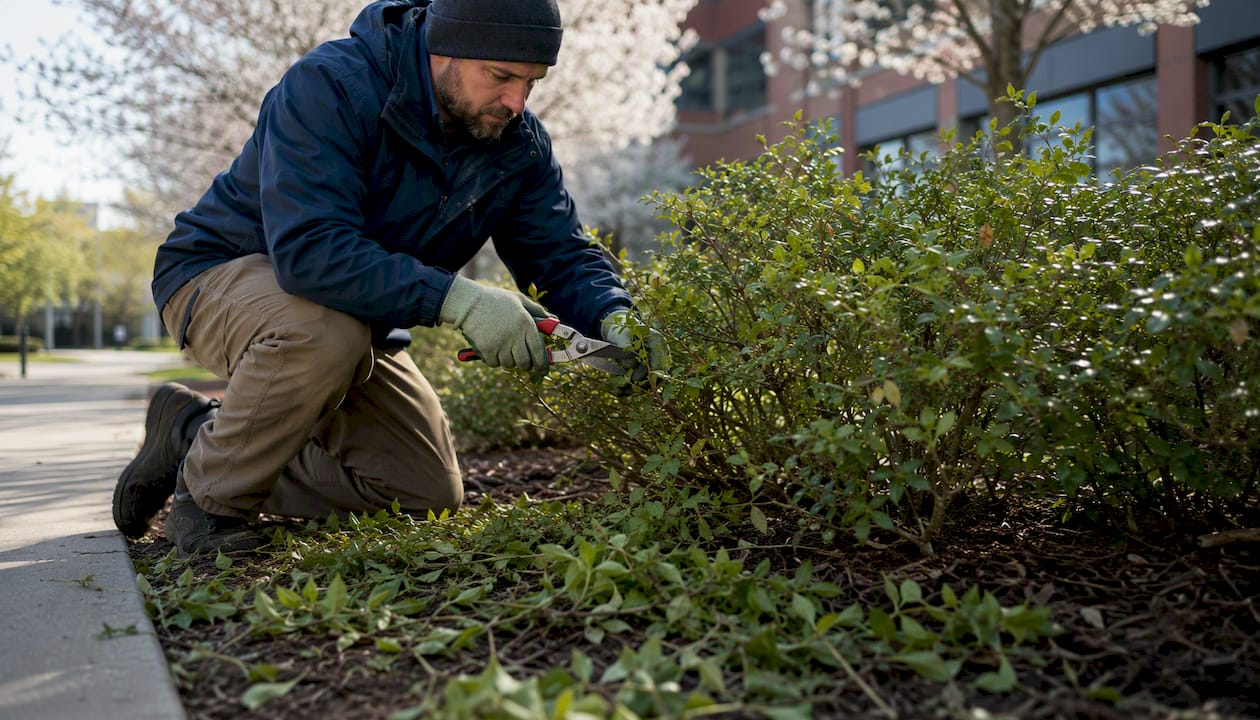
A tiered preventive schedule, backed by a documented work-order system, prevents most grounds failures before they become safety hazards or emergency repairs. The NCES maintenance guidance recommends operations manuals that specify task frequencies by area type — a structure that maps directly to CMMS recurring work orders.
To convert this table into CMMS recurring work orders, assign each task a trigger (calendar date, meter reading, or condition flag), a responsible crew or contractor, and an estimated labor time. A school HVAC maintenance schedule follows the same logic — the CMMS calendar becomes the single source of truth for all preventive work across the campus.
Pro Tip: During staffing shortages, protect Level 1 tasks first. A missed safety walk on a playground carries far greater liability than a delayed mowing cycle on a natural area. Build your CMMS priority flags to reflect that hierarchy.
How do you maintain school lawns, sports fields, and playgrounds?
Match maintenance intensity to use. A varsity soccer field used five days a week needs a fundamentally different program than a natural meadow buffer at the campus perimeter.
Athletic field and turf care checkpoints:
- Mow at the correct height for the grass species (typically 2.5–3.5 inches for cool-season grasses; 1.5–2.5 inches for warm-season)
- Aerate compacted areas at least twice per year, more frequently on high-use fields
- Topdress with sand or compost after aeration to improve drainage and surface consistency
- Inspect and repair drainage channels before and after heavy rain events
- Maintain line-marking schedules tied to game and practice calendars
- Inspect all field equipment (goals, benches, bleachers) monthly for structural integrity
Playground surface compliance steps:
- Test impact attenuation of loose-fill surfaces (wood chips, engineered wood fiber, rubber mulch) at least annually using ASTM F1292 standards.
- Inspect surface depth and coverage weekly; replenish loose fill when depth falls below the minimum for the installed equipment’s fall height.
- Replace worn or cracked rubber surfacing when impact attenuation test results approach the threshold.
- Inspect all equipment hardware monthly for corrosion, loose fasteners, and wear.
- Document every inspection and corrective action in your CMMS.
Pre-event field prep checklist:
- Walk the entire field surface for debris, holes, and surface irregularities
- Confirm line markings are visible and accurate
- Check goal anchoring and net integrity
- Verify drainage is clear and no standing water is present
- Confirm bleacher and spectator area surfaces are clear and accessible
Pro Tip: Schedule post-season field assessments in late fall, before the ground freezes. That window is when aeration, overseeding, and drainage repairs have the most impact on spring recovery.
Water management: how to reduce irrigation costs and drainage hazards
Efficient irrigation plus proactive drainage maintenance reduces both operating costs and safety hazards. Standing water on play surfaces and pathways is a slip hazard and a breeding ground for mosquitoes; over-irrigated turf is also more susceptible to disease and compaction.
Irrigation best practices:
- Install soil moisture sensors in representative zones to prevent over-watering
- Use drip irrigation for shrub beds and native plantings to minimize evaporation
- Adjust run times seasonally: reduce by 30–50% during cooler months and eliminate during rainfall periods
- Conduct an annual irrigation uniformity audit to identify broken heads, uneven coverage, and pressure problems
- Integrate sensor data and audit results into your CMMS for trend tracking
Drainage actions:
- Clean catch basins and storm drains at the start of fall and spring seasons, and after major storm events
- Address ponding areas by regrading, installing French drains, or directing runoff to bioswales
- Where feasible, replace impervious surfaces with permeable pavers or gravel in low-traffic zones
- Inspect roof drainage and downspout discharge points to confirm they direct water away from play areas and foundations
Pro Tip: Schedule your annual irrigation audit immediately after the first seasonal turf transition. That timing reveals pressure inconsistencies and coverage gaps before peak water demand, when repairs are less disruptive and less expensive.
Native plants and sustainable landscaping: reducing long-term maintenance costs
Choosing native, drought-tolerant species is the most effective single change to lower labor and irrigation demands on school grounds. Research from the Alabama Cooperative Extension System confirms that native and drought-tolerant plants reduce irrigation, fertilization, and pruning needs while supporting local ecosystems. That translates directly to fewer work orders, lower water bills, and reduced chemical inputs.
Plant selection criteria for school grounds:
- Low maintenance demand (slow growth, minimal pruning, no supplemental irrigation once established)
- Seasonal interest that supports outdoor learning (bloom cycles, seed heads, fall color)
- Safe for student contact (no toxic berries, thorns, or irritating sap near play areas)
- Pollinator support (native flowering species attract beneficial insects, supporting science curricula)
- Root spread and litter profile compatible with adjacent surfaces (avoid species with aggressive surface roots near pathways)
Practical steps to transition to native plantings:
- Pilot one ornamental bed per campus. Replace with regionally appropriate native species and install a simple interpretive sign explaining the planting’s ecological function.
- Use “cues to care” — a mown edge around a native planting signals intentional management rather than neglect, which matters for community perception.
- Compost or chip clippings and leaves on site. The Green Schools Alliance’s ecological landcare principles frame on-site biomass reuse as a cost-saving, soil-health practice that cuts hauling costs and reduces the need for purchased amendments.
- Estimate labor and water savings from each native bed conversion and report them to leadership as a budget justification for expanding the program.
The Green Schoolyards design resources include climate-specific plant lists and outdoor learning integration guidance that make native bed planning faster and more defensible to school boards.
| Plant Type | Maintenance Demand | Water Need | Educational Value |
|---|---|---|---|
| Native grasses (e.g., switchgrass, little bluestem) | Low | Low once established | Habitat, seasonal change |
| Native wildflowers (e.g., coneflower, black-eyed Susan) | Low | Low | Pollinator observation |
| Drought-tolerant shrubs (e.g., native viburnums, spicebush) | Low–Medium | Low | Wildlife habitat, berries |
| Shade trees (native oaks, maples) | Low (long-term) | Low once established | Shade, air quality, science |
Staffing models and contracting: how to match resources to campus needs
Map your maintenance priority levels to staffing hours before deciding on a delivery model. The APPA Operational Guidelines for Educational Facilities (Grounds, 3rd edition) provides staffing standards across campus space types and covers CMMS, GIS, IPM, and contracting best practices — the most authoritative reference for K–12 grounds staffing decisions.
Common staffing models and their tradeoffs:
- In-house crews: Maximum control over scheduling, IPM compliance, and recordkeeping. Higher fixed labor costs; requires investment in equipment and training. Best for districts with high-priority athletic programs or complex IPM requirements.
- Contracted services: Lower fixed costs; transfers equipment liability. Risk of inconsistent IPM compliance and recordkeeping unless the contract explicitly requires it. Requires active contract management.
- Hybrid model: In-house staff handle Level 1 safety and inspection tasks; contractors handle seasonal or specialized work (aeration, tree care, irrigation repair). Balances control and cost.
Contracting checklist:
- Define scope by priority level and task frequency — do not accept a generic “full-service” scope
- Require proof of current pesticide applicator licenses for all contractor staff
- Specify IPM compliance requirements and documentation standards in the contract
- Require contractor-submitted work records in a format compatible with your CMMS
- Confirm contractor carries adequate general liability and workers’ compensation insurance
- Include a performance review clause tied to inspection scores and completed work-order rates
For contractor scheduling coordination, a CMMS that issues contractor work orders and tracks completion rates gives you real-time visibility without requiring a supervisor on site for every task.
Negotiation tip: Lock IPM documentation and re-entry interval compliance into the base contract, not as an add-on. Contractors who resist that requirement are a liability risk.
How does a CMMS improve school grounds management?
Integrating grounds tasks into a CMMS transforms manual schedules, paper inspection forms, and IPM logs into searchable, auditable records. That shift is what moves a grounds program from reactive to preventive — and from anecdotal to defensible when a liability question arises.
A practical CMMS workflow for school grounds:
- Site assessment: Upload priority zone maps and area photos as asset records
- Priority mapping: Assign maintenance levels to each asset/area and set recurring work-order triggers
- Recurring work orders: Schedule daily, weekly, monthly, and seasonal tasks with assigned crews and estimated labor
- Mobile inspections: Crews complete inspection checklists on mobile devices, attach photos, and close work orders in the field
- Analytics and reporting: Leadership dashboards show completion rates, open corrective actions, and IPM event history
Specific CMMS benefits for grounds teams:
- Preventive scheduling eliminates missed seasonal tasks (aeration windows, irrigation shutdowns, leaf clearance)
- Parts and supply inventory tracking prevents stockouts of mulch, seed, and irrigation components
- Contractor work orders with completion tracking replace phone-and-email coordination
- Photo attachments on inspection records document conditions before and after corrective action
- Searchable IPM logs, playground inspection reports, and irrigation audit records satisfy regulatory and insurance requests in minutes rather than hours
Pro Tip: Store FEMA documentation, insurance inspection reports, and post-storm damage assessments in your CMMS alongside routine grounds records. When a claim or audit arrives, having everything in one searchable system cuts response time from days to hours.
Education maintenance software, designed for K–12 facilities, includes the compliance-specific recordkeeping features that generic work-order tools lack. The difference matters most during audits and after incidents.
Seasonal planning and emergency preparedness for school grounds
An annual seasonal calendar, tied to your CMMS, prevents the missed actions that cause the most expensive problems: frozen irrigation lines, uncleared leaves on drainage grates, and spring fields that never recovered from fall damage.
Seasonal task priorities:
- Fall: Aerate and overseed athletic fields; complete leaf clearance from drainage structures; shut down and winterize irrigation systems; inspect trees for storm-damage risk; stage sand and grit for winter traction management; confirm snow-removal contractor agreements.
- Winter: Monitor drainage for ice formation on pathways and play surfaces; conduct indoor equipment maintenance (mowers, aerators, irrigation components); review spring planting plans and order seed and plant materials.
- Spring: Restart and audit irrigation systems before peak demand; assess field recovery and schedule aeration if compaction persists; complete playground surface impact-attenuation testing; begin IPM monitoring for early pest pressure.
Emergency preparedness actions for grounds incidents:
- Maintain a contractor call list for emergency tree removal, drainage pumping, and surface repair
- Stage chainsaws, generators, and sandbags at accessible campus locations before storm season
- Assign a grounds emergency response lead with authority to close areas and issue work orders
- Document post-storm damage with photos and CMMS work orders before any cleanup begins (required for FEMA and insurance claims)
- Establish re-opening criteria for play areas after flooding or storm events, tied to surface inspection and drainage clearance
Practical checklists and a sample maintenance schedule you can copy
The Facilitron grounds maintenance checklist for school campuses provides a ready-to-use daily, weekly, monthly, and seasonal task structure covering lawns, gardens, sports fields, playgrounds, paths, drainage, and waste management. Use it as a starting template and adapt task frequencies to your campus priority levels.
Copy-ready checklist by frequency:
- Daily: Safety walk (playgrounds, entrances, drop-off zones); litter removal; surface hazard check; drainage spot-check after rain
- Weekly: Mowing (Level 1–2 areas); irrigation run-time review; playground equipment inspection; catch basin check; turf disease or pest observation
- Monthly: Tree and shrub inspection; fertilization per program schedule; irrigation head inspection; playground surface depth measurement; waste and recycling area inspection
- Seasonal: Aeration and topdressing (fall/spring); irrigation audit and winterization/startup; IPM threshold monitoring; native bed establishment or expansion; post-storm damage assessment
To import this schedule into a CMMS, export the table as a CSV and map columns to your system’s work-order fields (asset, task, frequency, assignee, estimated labor). Most CMMS platforms, including MPulse Software, support CSV import for bulk work-order creation, which eliminates manual data entry for recurring tasks.
How to get started: a 90-day grounds improvement plan
A prioritized 90-day plan with three immediate actions and a structured sequence of tactical steps produces measurable improvement without requiring a budget increase in the first cycle.
Three immediate actions (Week 1):
- Conduct a documented safety walk of all Level 1 areas. Log findings and assign corrective actions with due dates.
- Designate your IPM coordinator and schedule a review of current pesticide records for completeness.
- Create one recurring CMMS work order for your highest-priority preventive task (daily safety walk or weekly playground inspection).
Tactical steps (Days 8–90):
- Complete the full campus site assessment and assign priority levels to all areas.
- Build out the full preventive schedule in your CMMS, starting with Level 1 tasks.
- Audit irrigation run times and schedule a uniformity check.
- Identify one ornamental bed for native plant conversion and order regionally appropriate species.
- Review contractor contracts for IPM compliance and documentation requirements; renegotiate where needed.
- Establish a waste management and on-site composting protocol for clippings and leaves.
- Set three KPIs to track: completed safety walks per week, open corrective actions from inspections, and IPM events documented.
- Present a 90-day progress report to leadership with cost and safety metrics.
Quick wins that require minimal budget:
- Relabel campus zones with priority levels and post them in the grounds office
- Fix one drainage bottleneck identified in the site assessment
- Convert paper inspection forms to mobile CMMS checklists
Grounds management as asset stewardship
The most persistent gap in school grounds programs is the failure to treat outdoor spaces as capital assets with measurable depreciation and return on investment. A playground surface that fails an impact-attenuation test is not a maintenance problem — it is a deferred capital liability. When grounds managers frame their work in those terms, they get the budget and staffing approvals that reactive programs never do.
MPulse Software helps you operationalize these practices
Preventive schedules, IPM logs, playground inspections, and contractor work orders are only as good as the system that tracks them. MPulse Software gives grounds teams the preventive maintenance automation to convert a manual checklist into a recurring work-order calendar, with mobile inspections, photo attachments, and searchable records that satisfy auditors and insurance reviewers.

Three specific ways MPulse Software supports school grounds programs: recurring work orders eliminate missed seasonal tasks; mobile inspection checklists with photo attachments replace paper forms and create timestamped evidence; and a centralized record system stores IPM logs, playground reports, and irrigation audits in one searchable location. Over 3,500 customers trust MPulse Software to manage compliance-sensitive maintenance operations. Schedule a demo to see how the platform maps to your grounds program’s specific workflows.
Sources
These authoritative references support the practices covered in this article and give you primary sources to cite when presenting to district leadership or legal counsel.
- Chapter 5 Maintaining School Facilities and Grounds
- APPA — Grounds maintenance and operations (abstract)
- Best Management Practices for Pesticide‑Free Connecticut School Landscapes (UConn)
- Design, Implementation, and Maintenance of Schoolyard and Outdoor Learning Spaces — Green Schoolyards
- Ground Rules for Thriving School Landscapes — Green Schools Alliance
FAQ
What is the most important school grounds maintenance practice?
Documented safety inspections of high-priority areas — playgrounds, entrances, and pick-up/drop-off zones — are the single most critical practice because they directly reduce liability and protect student safety. Pair them with a formal IPM program to address chemical exposure risks.
How often should playground equipment be inspected?
Playground equipment should be inspected weekly during the school year, with a formal impact-attenuation test of surfacing materials conducted at least annually per ASTM F1292 standards. Document every inspection with findings, corrective actions, and completion dates.
What is IPM and why does it matter for schools?
Integrated Pest Management (IPM) is the standard approach for managing pests on school grounds by confirming pest species and thresholds before acting, then applying the least-toxic effective method. It reduces student chemical exposure and satisfies state and EPA regulatory requirements.
How can a CMMS help manage school grounds?
A CMMS converts manual schedules and paper inspection forms into recurring work orders, mobile checklists, and searchable records. MPulse Software, for example, stores IPM logs, playground inspection reports, and irrigation audits in one system, making regulatory and insurance responses faster and more reliable.
What are the best plants for low-maintenance school grounds?
Native, drought-tolerant species — such as switchgrass, coneflower, native viburnums, and native oaks — require the least irrigation, fertilization, and pruning once established. They also support pollinator habitats and outdoor learning, making them a practical and educational choice for K–12 campuses.