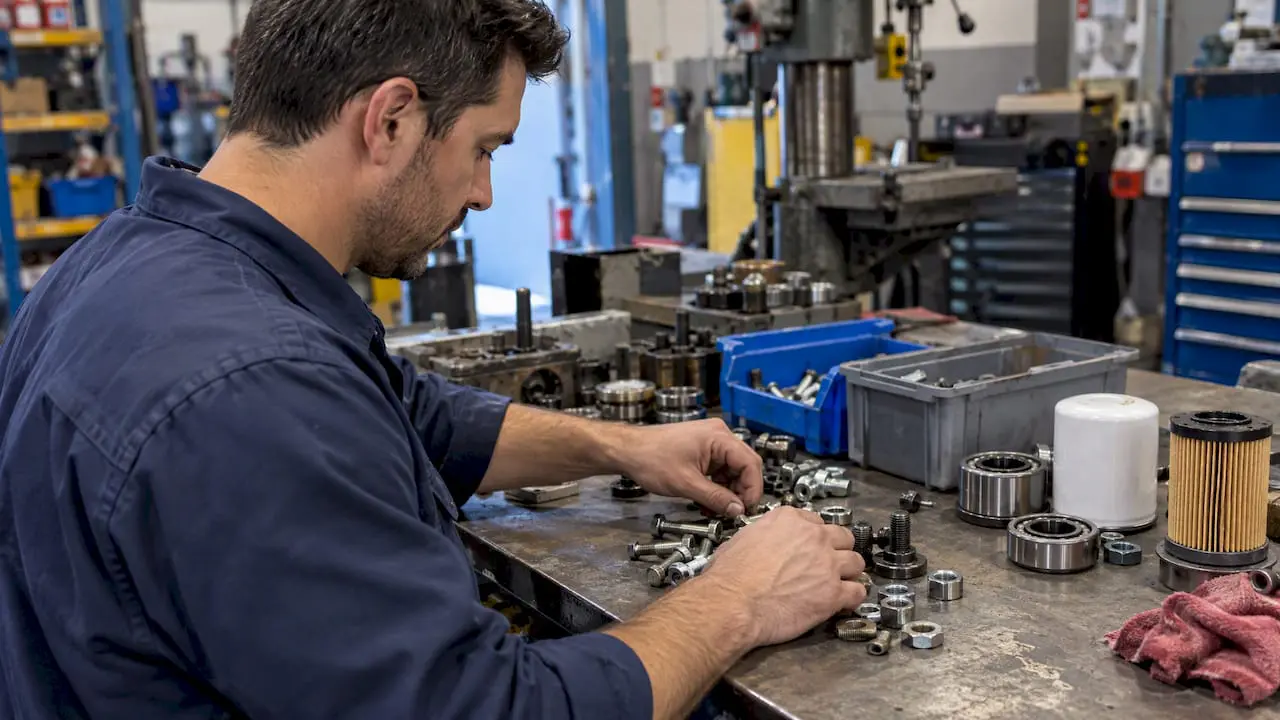

Compliance in the maintenance department requires documentation, specifically for creating procedures and recording maintenance activities.
Luckily, CMMS software excels at compliance documentation. Your CMMS data provides both the big picture and the little details, so your maintenance tasks are both visible and verifiable.
How to Support Compliance in Your CMMS
How can you prepare for inspections and audits from regulatory agencies? Start with proactive compliance procedures supported by consistent documentation.
CMMS software provides the right tools to document important compliance information, as well as features to make reporting on that data quick and easy when inspections or audits occur.
#1: Work Orders
You can use CMMS to link all the elements of repair and maintenance work in one place. Work orders are the backbone of your operations, and CMMS makes scheduling, tracking, and documenting maintenance tasks easy. You’re essentially recording work history with every work order.
This information improves response times and completion rates with better access to historical data and other important details, like documenting preventive maintenance tasks on key assets. The data recorded for assets, employees, inventory, schedules, and work orders provides the basis for your compliance documentation.
#2: Preventive Maintenance
Preventive maintenance (PM) is routine, scheduled maintenance performed to lessen the possibility of equipment or asset failure. CMMS will generate a schedule of PM tasks, making it simpler to follow the manufacturer’s guidelines. These schedules and inspections help spot issues before they occur.
Maintenance intervals can be scheduled based on time, operating hours, or part condition—triggering a work order just before the point when system inefficiencies or failures begin to occur. The use of preventive maintenance software also ensures equipment is properly calibrated and lubricated when it needs to be, and it’s documented for compliance too. Properly maintained assets also perform more efficiently, use less energy, and fail less often—extending their usable life.
#3: Safety Inspections and Checklists
CMMS software also documents work procedures to establish accountability. You can use CMMS to build inspections and checklists into your workflows. That includes tracking employee health and safety information, documenting efforts to keep equipment safe and reliable, and ensuring all safety inspections and tests are done properly and on schedule.
CMMS encourages safety by integrating all compliance codes and maintenance manuals to on-site equipment records. You can use CMMS software to track health and safety data and resolve potential risks before outside auditors do. However, these safety measures aren’t just about protecting your organization in an audit or inspection. It’s in everyone’s best interest to be proactive about your employees’ health and safety.
#4: Monitoring and Alerts
One of the most powerful CMMS features is the ability to monitor assets and set up alerts that improve response times. That starts with a configurable dashboard that reduces the need to search for frequently used data by placing it in a single location. You can put your most important data front and center, where you don’t have to dig for it. CMMS helps you see the most important information at a glance, so you understand where you need to take action.
More advanced features like MPulse Asset Status Board provides a single-screen view of the health of your entire production line, facilities footprint, or fleet of vehicles. You’ll quickly see the status of your entire asset inventory, on one screen. Square boxes (“cells”) can be color-coded according to criteria you’ve defined. You can choose whatever colors you’d like to indicate current status—healthy, underperforming, or critical failure.
#5: Reporting
To make sense of all that great CMMS data, reports help you see how your department is functioning and where you might make changes to improve. And best of all, you can access the information in minutes, instead of spending hours or even days sorting through a paper filing system. Having hard numbers also allows you to measure and use a whole host of key performance indicators, and decide when it’s time to repair or replace malfunctioning equipment.
You can quickly produce status reports and documents giving details or summaries of your team’s maintenance work. With solid data and easy-to-read reports, your organization can support compliance requirements based on hard evidence, which will improve your ability to respond to inspections and audits. You’ll also be able to identify issues long before your organization receives a visit.
Documenting compliance information in a CMMS can save you money and reduce the time it takes to record crucial data. As a result, you know you can respond to inspections and audits with the information required.
Contact us today to learn more about how MPulse Software can assist with compliance.